

This article is incomplete
Some sections are missing or need additional details. Help improve it by contributing.
Combat in Dinghai: The Ocean Pillar is fast and top-down, built around a dual-weapon system. The Abyssal Dragon carries two weapon types at once and switches freely between them during a fight. Swapping between the two weapons lets players build synergies and adapt their approach moment to moment.
At the start of every run, the Abyssal Dragon is given a choice of which weapons to take into battle. That choice shapes how the rest of the attempt plays out, since the two chosen weapons define the synergies available for that run.
Weapons
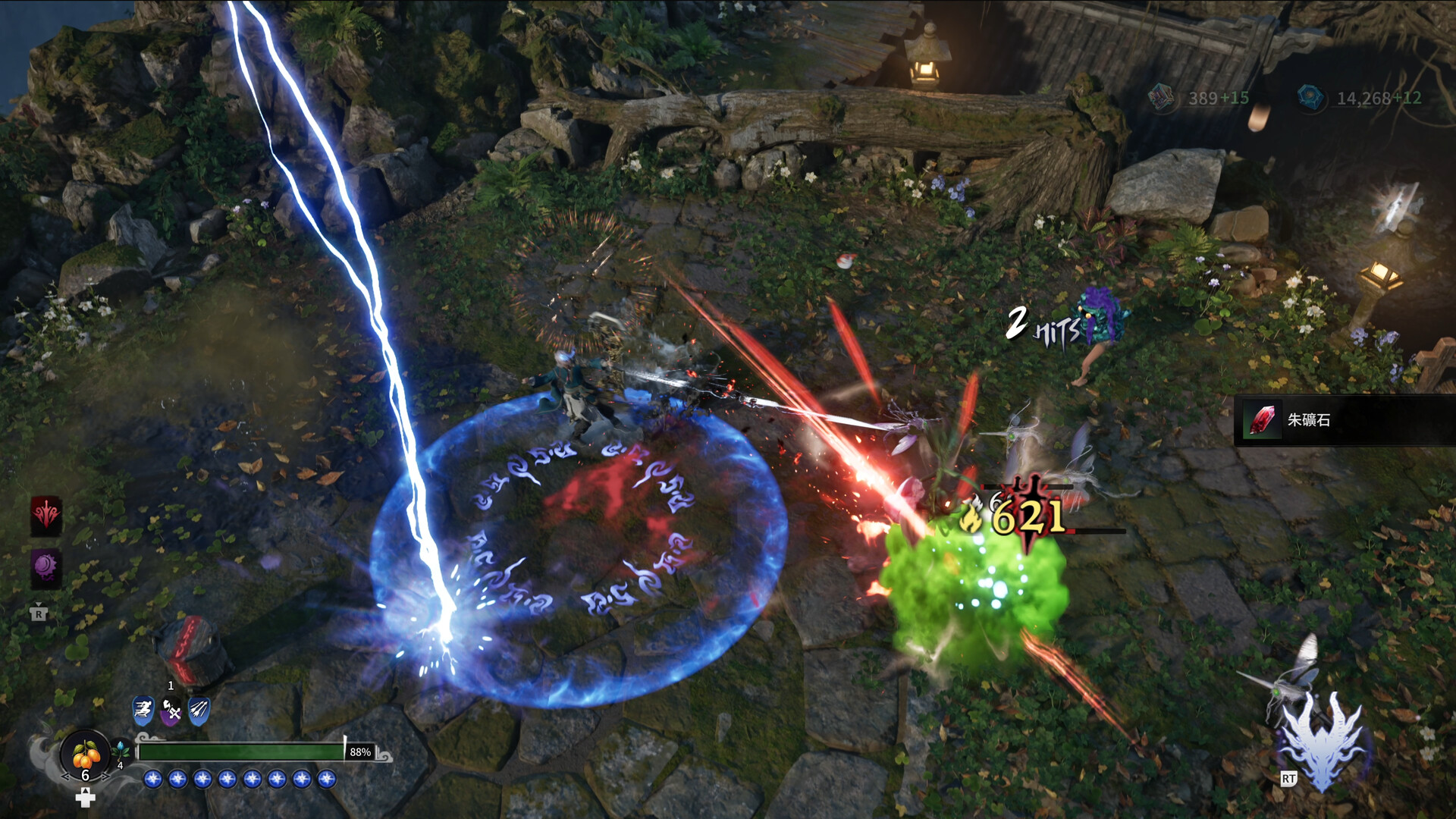
Five weapon types are available, split into three melee weapons and two ranged weapons. Before each run the player equips any two of them. Pairing a melee weapon with a ranged weapon gives flexible coverage for different situations, while running two melee or two ranged weapons leans into the depth of a single fighting style. Official descriptions add that each weapon carries its own traits and linked attacks that chain into combos, and that swapping between the pair in real time is what lets a run's build take shape. Two individual weapons have now been named: the Baixiao Sword (白宵劍), a one-handed sword that turns water to ice and triggers an effect labelled 寒圈, which damages while lowering enemy attack power and slowing the target; and the Wumu Bow (烏木弓), a ranged weapon whose skill lays down a poison mist that drains health and poisons anything inside it. The other three remain unnamed as of 27 August 2026.
Category | Count | Notes |
|---|---|---|
Melee | 3 | Close-range weapon types for direct combat. |
Ranged | 2 | Distance weapon types for attacking from range. |
Equipped per run | 2 | Chosen at the start of each run; any combination is allowed. |
Enemies
Players carve a path through gods, demons, and monsters drawn from ancient Eastern mythology. The opposition reflects the setting of the Classic of Mountains and Seas, a world of divine powers and strange creatures.
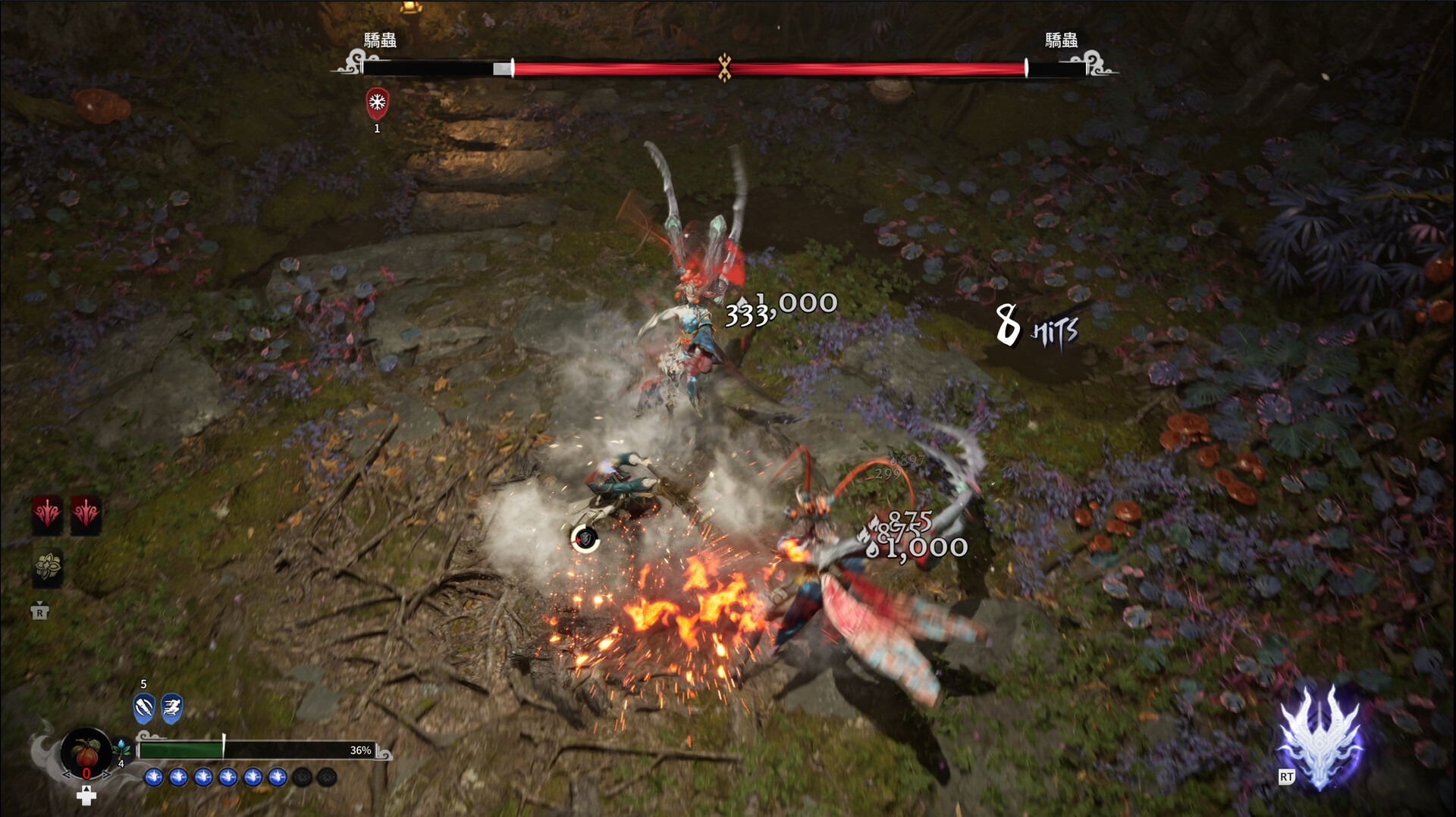
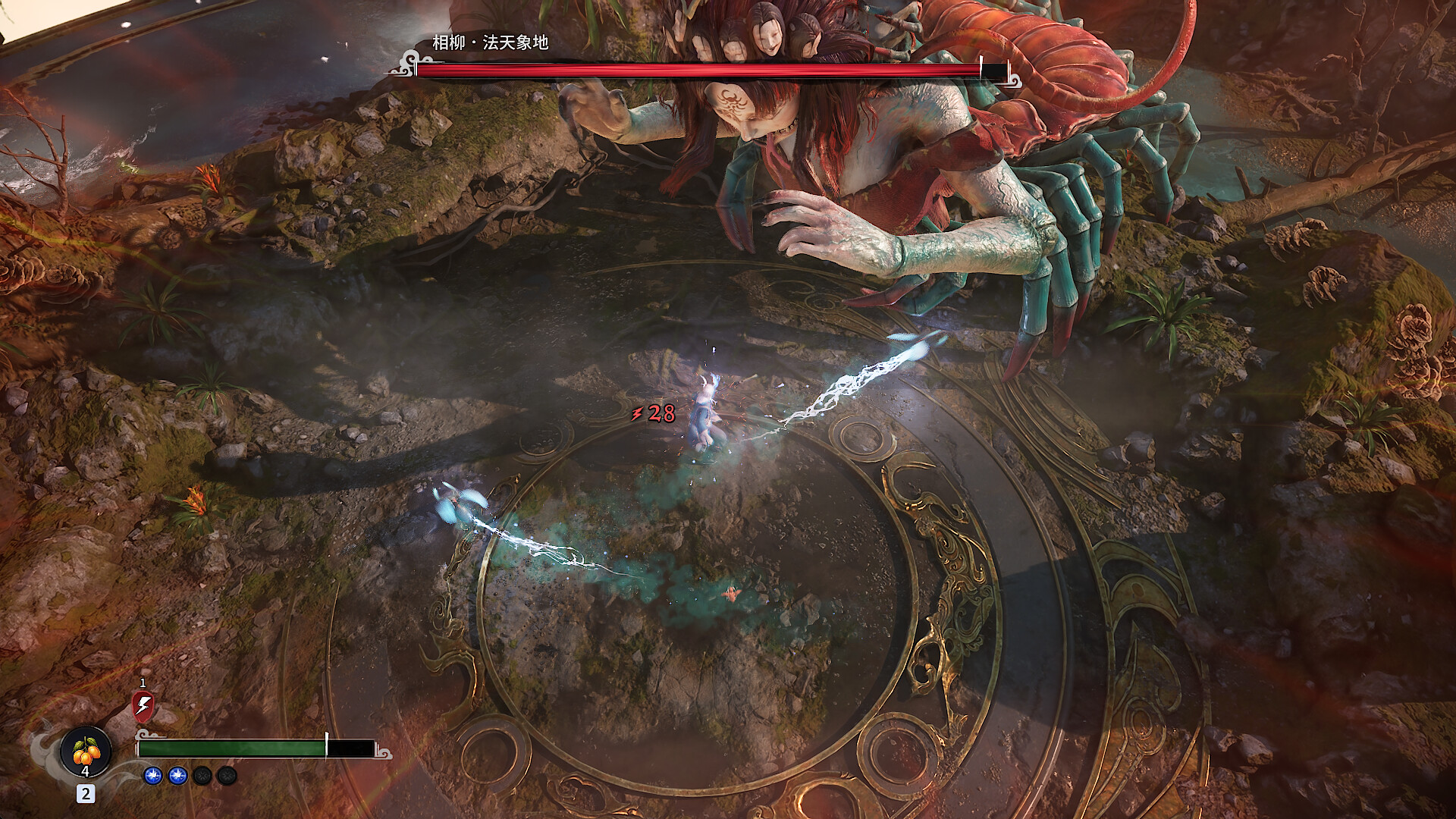
Official descriptions of the world name four beings that inhabit it: Xiangliu, Bifang, Dijiang, and Xingtian. Xiangliu is shown being fought as a boss, and two further named opponents appear the same way: the armoured turtle Xuangui and a paired encounter against two Jiaochong. The Mythic World records how each is described.
Abilities
Alongside weapons, players unlock abilities and discover powerful combinations as they progress. Assembling complementary abilities and weapon pairings is central to surviving each attempt, and the further a run goes, the stranger and more dangerous the challenges become.
Adornments and Vessels
Weapons are not the only thing a run assembles. Justdan names two further categories that combine with them, Adornments (飾品) and Vessels (法寶). Vessels are handed out as a random ability at the end of each round and come in four categories: 攻擊, 生存, 奇詭 and 元素. They stack the player's own stats, add derivations to weapon moves, and weaken enemies, and specific ones extend a weapon's own effect, adding a stun to the sword's cold ring or letting the bow's poison mist pursue enemies by itself. Justdan's English asset naming renders the first two categories as Attack Vessels and Survival Vessels. Adornments are named alongside them but nothing further about them has been published. See Demo for the build they were named alongside.
Bosses
Runs are punctuated by imposing boss encounters. Three named bosses have been shown, each with its own health bar across the top of the screen: Xiangliu, whose bar carries the title 法天象地; the armoured turtle Xuangui, which also displays a level number; and a paired fight against two Jiaochong that share a single linked bar. Floating damage numbers appear in all three, and the paired Jiaochong fight also shows a running hit counter. In the Xuangui fight a row of five small icons, each carrying its own number, sits directly beneath the boss health bar, and a separate row of eight larger card-style icons runs down the left edge of the screen. Specific ability names have not been detailed, and where each boss falls within a full run is unknown. The demo build holds two stage bosses and two hidden bosses alongside three elite enemies, with Xiangliu fought in its opening tutorial section, a boss named Nujiao (女嬌) closing its first stage, and Jiaochong as its final encounter.
On-Screen Information
Justdan has not published an interface breakdown, so most of what the display shows is unlabelled. A few elements do recur across the screenshots released with the reveal. One shot carries a pair of counters in the top corner, both rising at the same moment. The player health bar sits in the bottom corner, carrying a percentage in some shots, with a row of small slotted icons under it, further filled in some shots than others. The level indicator on Xuangui's health bar reads 10 in the shot where it appears.
Items picked up are announced by a labelled prompt at the edge of the screen. The only one named so far is a red crystal called 朱礦石. What the counters track, what the slotted row holds, and what the crystal is for have not been explained.