

The Tang Empire is the historical state at the center of Blood Message. The game opens in 848 AD, deep in the dynasty's declining years, with the Messenger carrying word of the Shazhou Uprising out of the Hexi Corridor toward the imperial capital at Chang'an. See the broader Overview for how this setting frames the rest of the game.
Imperial Backdrop
The Tang Dynasty ruled China from 618 to 907 AD and is remembered as a high-water mark of Chinese civilization. At its peak it stretched from the Pacific coast into Central Asia, with Chang'an as its political and cultural center. Blood Message picks up the story in the mid-9th century, when surface grandeur sat above hollowed-out institutions and shrinking borders.
Field | Detail |
|---|---|
Span | 618 to 907 AD |
Game-era window | 848 AD, late Tang period |
Capital | |
Reigning emperor in 848 AD | Xuanzong of Tang |
An Lushan Rebellion and Its Cost
The fault line that defines this setting is the An Lushan Rebellion of 755 to 763 AD. The revolt cracked the dynasty's military spine, and to stabilize the interior the court withdrew troops from the western frontiers. By 781 AD the Tibetan Empire moved into the gap and seized Sha and Gua prefectures along with the wider Hexi Corridor, the oasis chain that tied the Tang interior to the Western Regions. From that point until the events of the game, those territories sat outside Tang authority.
848 AD: The Game's Window
Blood Message opens more than sixty years into that occupation. The reigning emperor in 848 AD is Xuanzong of Tang, holding court in Chang'an. On paper the dynasty still claims the western prefectures. In practice the Hexi Corridor is cut off from the imperial center, and news travels poorly across the occupied deserts.
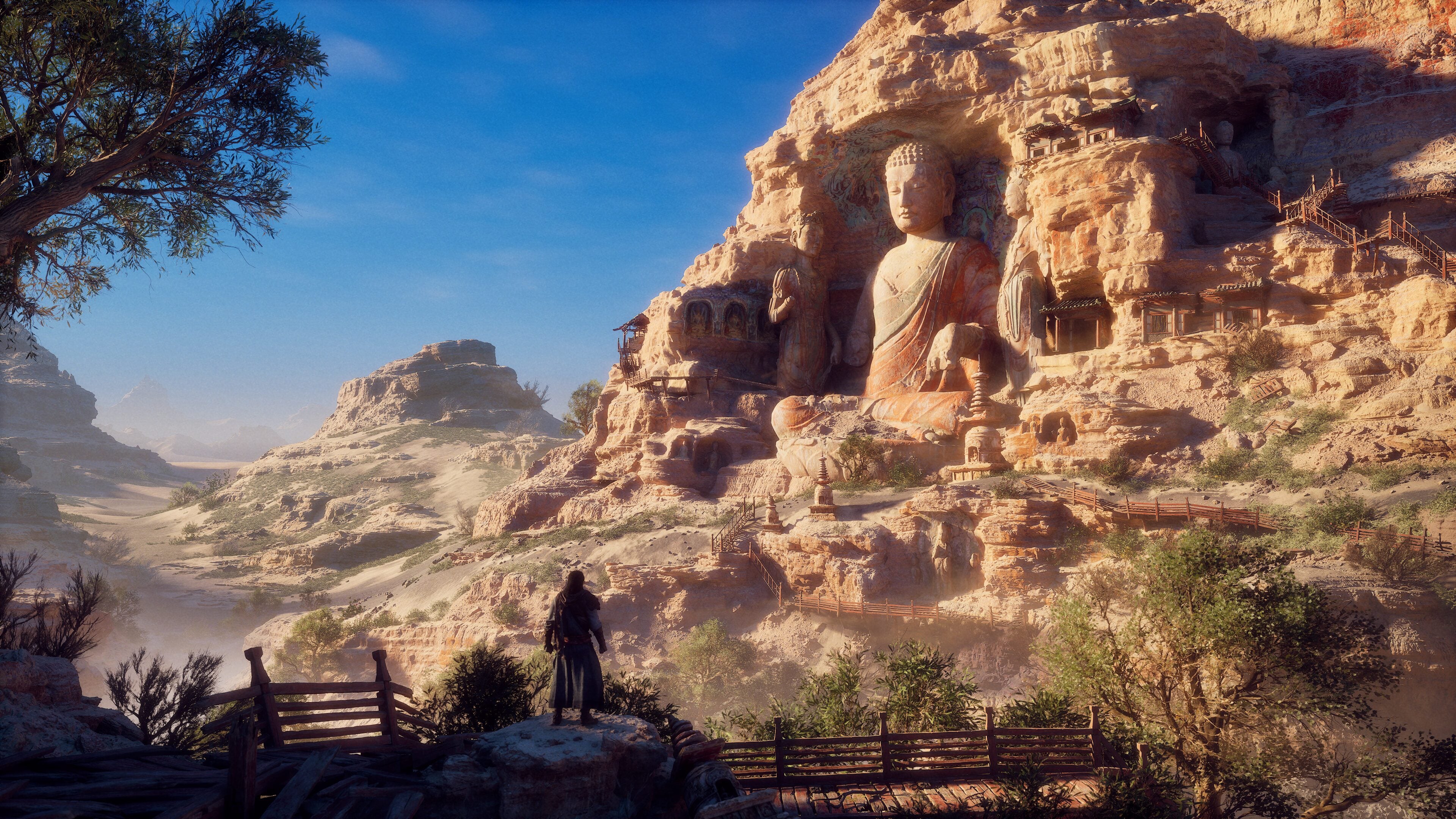
Into that silence comes the Shazhou Uprising. A local revolt seizes back Shazhou and threatens the surrounding prefectures, but the rebellion only matters in the long run if the court learns of it. The game's premise rests on closing that gap across roughly a thousand miles of hostile country.
Aftermath in History
The historical record continues past the journey itself. After word of the uprising reached the court, Emperor Xuanzong formally chartered the reclaimed lands as the Guiyi Circuit, bringing the western prefectures back under Tang administration. Years later, in 867 AD, Emperor Yizong received the rebellion's leader at Chang'an and granted him rank as a general of the imperial guards. None of this alters the stakes during play; the Messenger and Son set out long before any of these honors were known to be possible.

Cultural Authenticity Effort
The development team treats the Tang Empire less as a period skin and more as a research subject. The studio collaborated with the Gansu Provincial Department of Culture and Tourism on the historical groundwork.
Historical site scanning:
Surveys of preserved Tang-era and adjacent locations as reference for in-game architecture and ruins.
Geomorphological restoration:
Reconstruction of how the Hexi Corridor and surrounding deserts read in the 9th century.
Cultural relic digitization:
3D capture of period artifacts so armor, tools, and everyday objects match real surviving items.
Ecological detail reproduction:
Period-appropriate flora, fauna, and weather across the desert and oasis biomes.
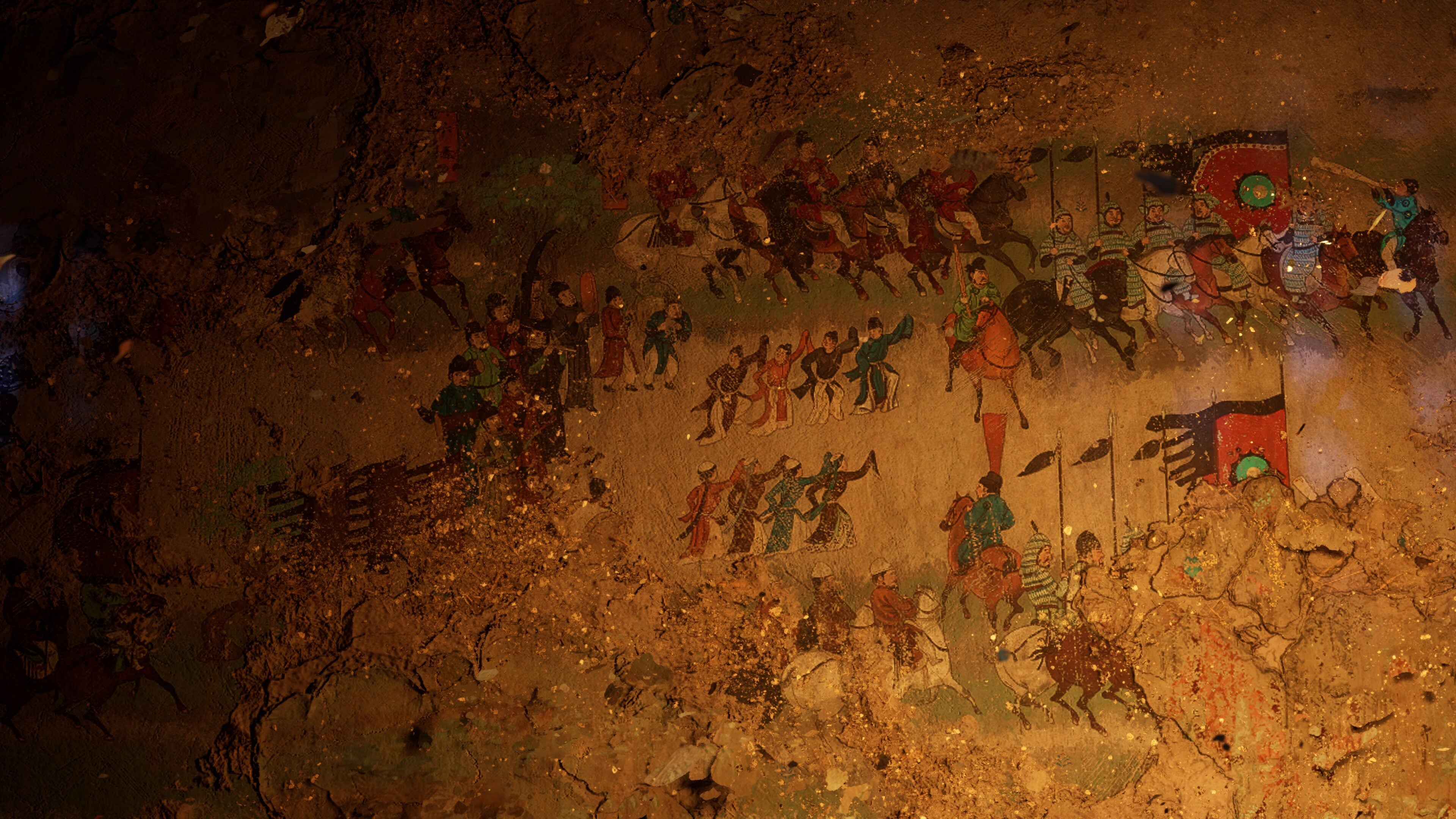
The most visible result in pre-release material is a reveal trailer sequence that reproduces the Tang-era mural from Mogao Cave 156, depicting the army of the Shazhou rebellion's leader on the march. The mural is a real artifact, not invented for the game.
Unconfirmed Details
Which Tang figures appear in-game: pre-release material centers on the nameless Messenger and his Son. No emperor, minister, general, or named court official has been confirmed as an on-screen character.
Provincial coverage: the full list of prefectures and oasis towns the player visits has not been released.
Imperial dialogue and court scenes: none have been shown, and whether the player ever steps into Chang'an itself remains unstated.
Fixed end-state: the developers have not said how much of the Guiyi Circuit charter and 867 AD audience the game depicts versus leaves implied.