
Loading...
Loading...
Mogao Caves
May 16, 2026 at 01:43 AM
Embedded 3 screenshots distributed across major sections
The Mogao Caves are a cliff-side Buddhist cave complex outside modern Dunhuang, in the same area that the game calls Shazhou. Their walls preserve more than a thousand years of murals, including a Tang dynasty piece the reveal trailer reproduces directly. The complex anchors the studio's visual fidelity effort and is one of the few specific named locations the publisher has confirmed in pre-release materials.
Field | Detail |
|---|---|
Location | Cliffside outside Dunhuang, modern Gansu Province; near the western end of the Hexi Corridor |
Modern Status | UNESCO World Heritage Site (real-world) |
Period in Game | 848 AD, late Tang Dynasty |
Game Role | Visual reference and trailer setpiece; in-game mural reproduction |
Featured Mural | Cave 156, depicting the rebellion army of the historical Shazhou leader on the march |
Asset In Reveal | Mountainside Buddha and cliffside cave openings visible in trailer |
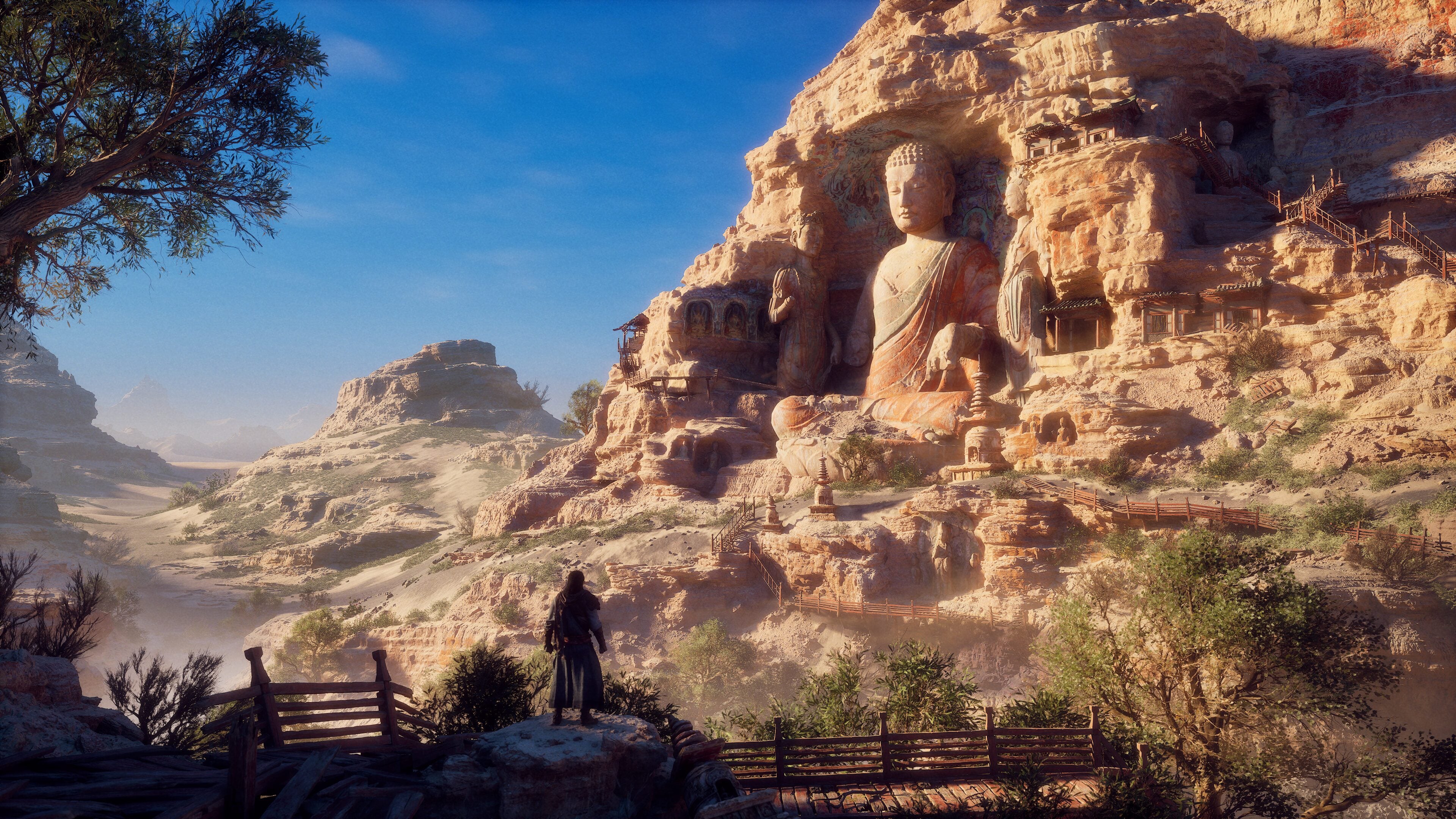
The complex is presented in pre-release materials primarily as a visual and cultural reference. The reveal trailer reproduces a Tang dynasty mural from one of the caves, and several trailer shots are framed around mountainside Buddha figures and the cliffside cave openings characteristic of the real site. The complex sits near Shazhou, the western anchor of the campaign, and is part of the cultural fabric the studio has emphasized as a research priority.
The publisher has not confirmed whether the caves themselves are a playable location, a backdrop, or a fully traversable interior. They appear in the trailer as part of the broader Dunhuang landscape, and the visual research effort behind the murals has been described publicly as a development pillar rather than a level-design announcement.
One of the most direct historical anchors in the reveal trailer is an in-game reproduction of the Tang dynasty mural from Mogao Cave 156. The real-world mural depicts the army of Zhang Yichao, the historical leader of the Shazhou Uprising, on campaign in the corridor. The studio reproduced the artifact accurately rather than inventing a stylized version; this is a real artifact, not a fictional set dressing.
The mural's appearance in the trailer signals the game's commitment to working from primary historical sources rather than stylized reinterpretations. The same approach drives the Tang-era architecture, costuming, and weapon design visible elsewhere in the trailer; see Cultural Authenticity for the broader research collaboration.
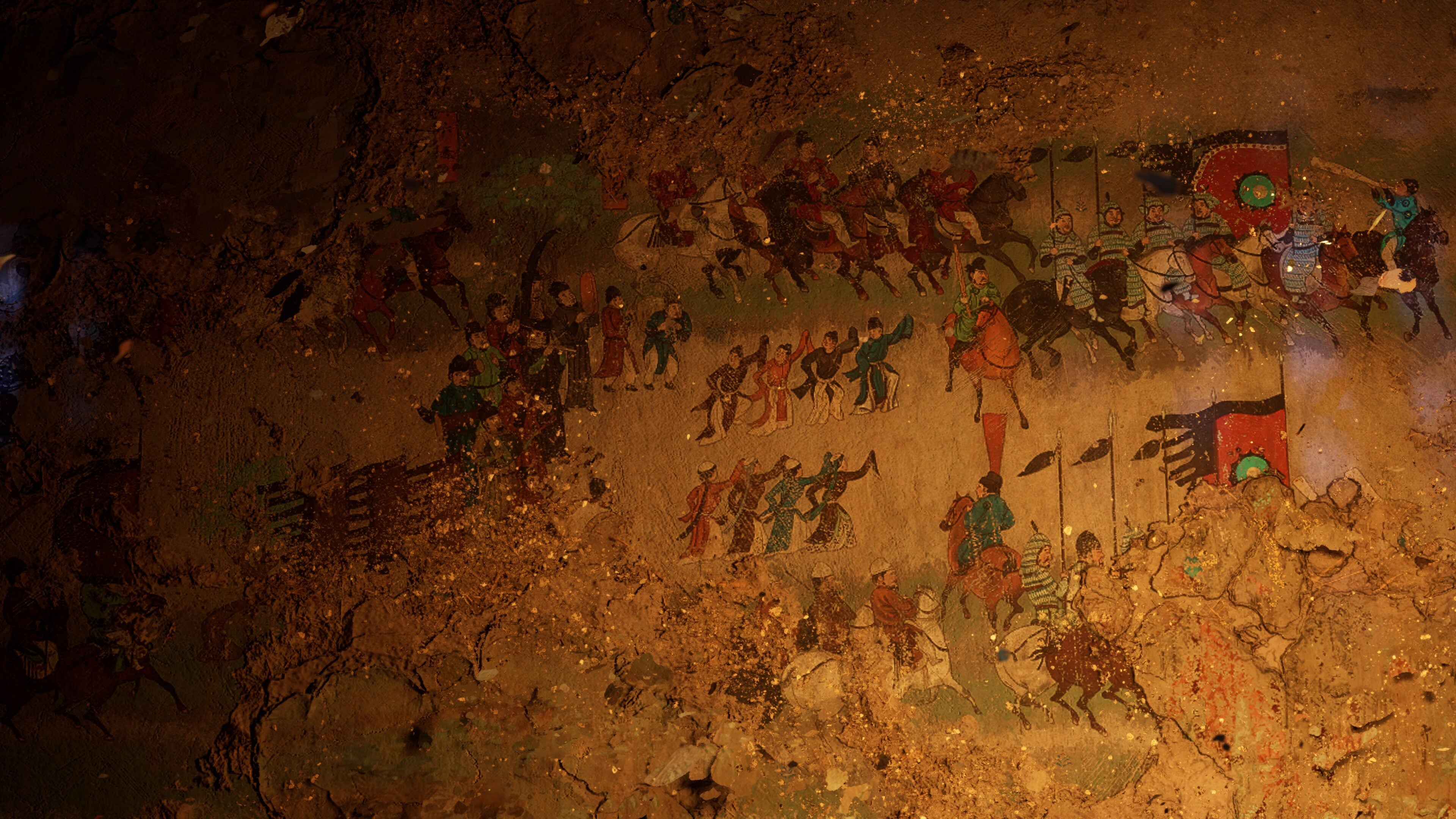
The Mogao Caves were carved into the cliffs over a span of more than a thousand years, beginning in the fourth century and continuing through successive dynasties. By the ninth century the period in which the game is set, the complex had already accumulated centuries of murals and statuary, including the Cave 156 piece that the trailer reproduces. The caves were active places of worship and pilgrimage throughout the late Tang period.
The complex sits in territory that, in 848 AD, was changing hands. For the previous several decades it had been under Tibetan Empire control along with the rest of the surrounding prefectures. The uprising that opens the game is the moment that occupation breaks.
The caves sit at the eastern end of a sandstone cliff just outside the Dunhuang oasis. The setting is striking: cliff faces honeycombed with cave openings rise above a dry valley floor, framed by desert beyond. Several of the uploaded screenshots for the game show this kind of mountainside-Buddha and cliffside-cave silhouette directly, including a vista of a Buddha statue carved into the cliffs and a sunlit pilgrim path overlooking a sandy plateau.
In the corridor's geography, the caves mark the western edge of the route the Messenger will walk. From here the road runs east through the rest of the Hexi Corridor toward the Tang heartland and Chang'an.
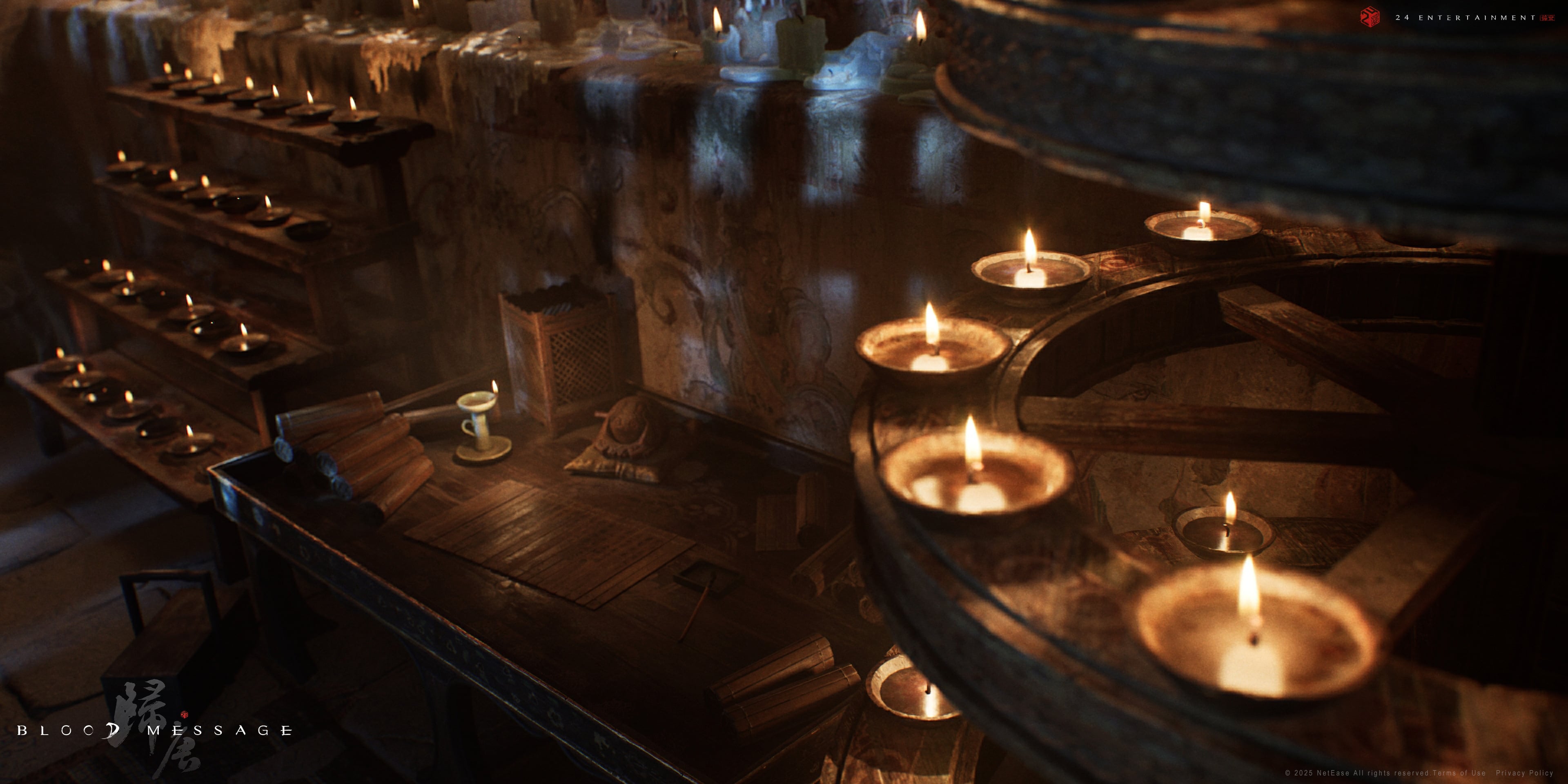
Playable interior: whether the player enters individual caves, walks among the murals, or fights inside the complex has not been described publicly.
Other reproduced murals: only the Cave 156 piece has been confirmed as an in-game asset. Whether additional Tang-era murals appear has not been laid out.
Role in the opening: the reveal trailer mixes mural reproductions with combat and traversal, but whether the caves are an early-game location, a recurring waypoint, or a backdrop in cinematics has not been clarified.
Named monks or NPCs: no specific monastic figures from the caves have been confirmed as on-screen characters.
