Featured Article
This article has been recognized for its exceptional quality and comprehensive coverage.
Developer-cited combat inspirations
The developers have explicitly named two primary combat inspirations:
Dark Souls: The weight of attacks, the stamina management, the read-and-react pattern where observation matters more than reaction speed. The posture system also echoes Sekiro's posture-breaking mechanic
Mount & Blade: The directional melee system where the angle of your attack determines its effectiveness against different armor and body positions
The combination produces something distinct from either source. Dark Souls is third-person action with rolls and i-frames. Mount & Blade is first-person with directional swings. Blight: Survival uses a third-person camera and deliberate Souls-style pacing, then layers Mount & Blade's 5-directional depth on top. The result plays differently from either game while drawing clearly from both.
Developer-cited art and tone inspirations
In an 80 Level interview, the developers named specific games as visual and tonal references:
Item | Description |
|---|---|
Hunt | Showdown: The dark, moody atmosphere and environmental detail. Hunt's oppressive tension and realistic period setting directly influenced the visual tone of No Man's Land |
The Witcher 3 | The grounded medieval atmosphere and sense of place. The way The Witcher 3's world feels inhabited and historical rather than generic fantasy |
The Last of Us | The animation quality and character movement fidelity. The developers aspired to TLOU's standard for how characters move and interact with environments |
Extraction comparisons
Hunt: Showdown: The closest structural comparison. Both are extraction games with horror atmospheres set in historical periods. Both create tension through the risk of losing progress on extraction failure. The key difference is that Hunt includes PvP while Blight is PvE only
Escape from Tarkov: The "extraction-lite" mechanics where death means losing your equipment. Tarkov is modern military; Blight is medieval. The core psychological loop of "extract or lose everything" is similar, though Blight's developers coined "extraction-lite" to distinguish their lighter take on the format
Setting and tone comparisons
A Plague Tale: Medieval setting with plague and infection themes. Both games use disease as a narrative and mechanical force. A Plague Tale is linear and story-driven; Blight is run-based and roguelite
The Last of Us: Beyond the animation inspiration, the fungal infection premise has obvious parallels. Cordyceps vs. the Blight. The execution is very different (third-person narrative adventure vs. medieval co-op extraction)
Co-op comparisons
Item | Description |
|---|---|
Vermintide | Medieval-adjacent co-op action against hordes. Vermintide uses Warhammer's fantasy setting; Blight goes for gritty historical horror with grounded "low fantasy" |
Left 4 Dead | 4-player co-op against infected hordes. The team composition and survival-against-odds dynamic is similar, though Left 4 Dead is a linear shooter and Blight is extraction-based melee |
Deep Rock Galactic | Co-op extraction gameplay with PvE focus and team coordination. Different setting and genre but similar emphasis on group survival and successful extraction |
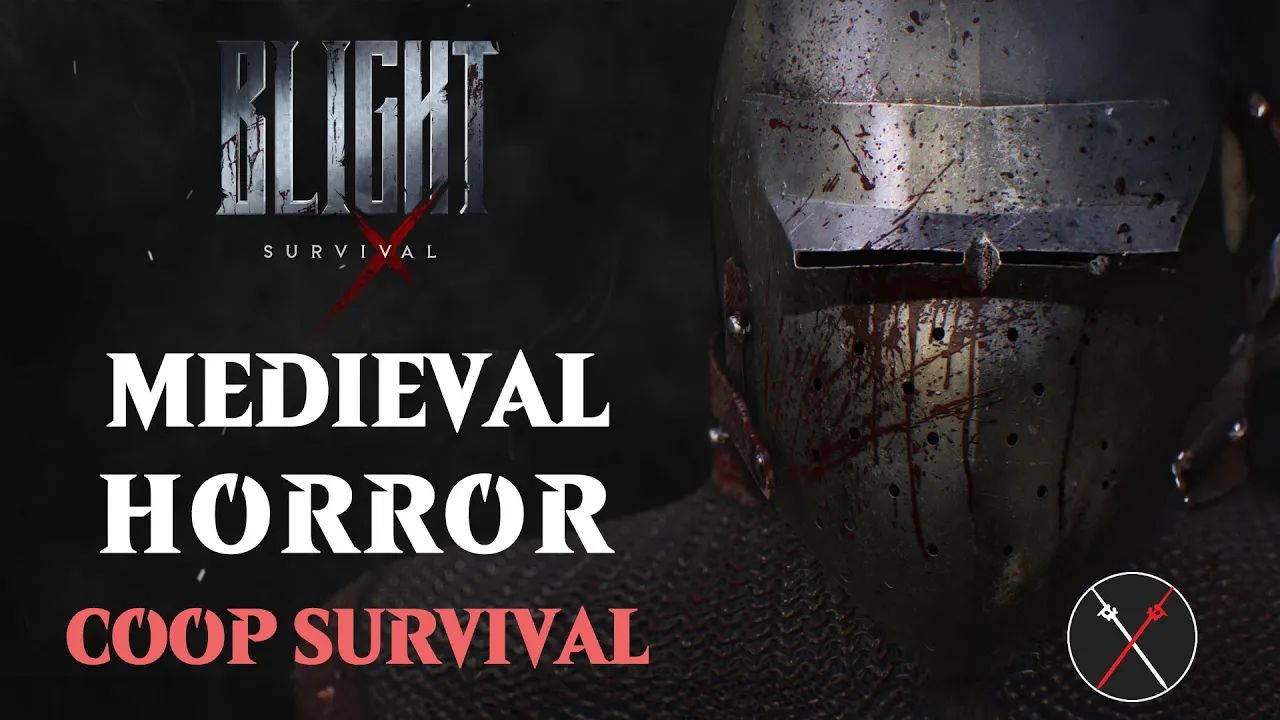
The Elden Ring quote
GamesRadar described the game as looking "like a day in the life of an Elden Ring guard." The comparison stuck because it captures something specific: Blight: Survival takes the grunt-level perspective of a medieval world. You're not the chosen one. You're not a demigod-slaying hero. You're a foot soldier, part of an exiled tribe, trying to survive a world gone wrong. The power fantasy is scaled to human proportions.
The Hades comparison
The shrine blessing system has been compared to the boon system in Hades. Both provide randomized temporary power-ups at specific points during a run, encouraging players to adapt their strategy based on what's offered rather than executing a pre-planned build every time. The per-run nature of blessings gives each mission a unique character.
The market gap
The developers identified their niche as: "There weren't, and still aren't, any gritty grounded PvE medieval co-op games out there." This positioning separates them from games like Vermintide (fantasy, not historical), Hunt (PvP-focused), and traditional Souls-likes (primarily single-player). The specific combination of grounded medieval setting, cooperative PvE, extraction mechanics, and directional melee combat occupies a space no other game currently fills.