

Overview
Beast of Reincarnation takes place in post-apocalyptic Japan in the year 4026. Civilization as it once existed has been devastated by the Blight, a parasitic phenomenon that transforms living organisms into monsters called Malefacts and causes forests to erupt instantly across the landscape. The world blends traditional Japanese aesthetics with science fiction elements, creating an atmosphere that director Kota Furushima described as "beautiful yet harsh", "a mix of warmth, trust, and loneliness."
The game uses a photorealistic visual style built on Unreal Engine 5. Furushima stated that this approach "came naturally" during development, explaining: "This cruel world can only be depicted in a realistic style." Rather than targeting a specific market or trend, he first imagined the feelings and atmosphere he wanted players to experience, then built the visual world around that vision.
Sealers, Malefacts and Nushi
Official material states the world's basic loop in one line: Koo is a malefact, a creature threatening the world, and as a sealer Emma hunts malefacts and absorbs their blight. The same material is equally direct about where the corrupted forests come from, saying that blighted forests are generated by giant malefacts called Nushi.
That gives the setting a closed shape. Nushi sit at the centre of the worst ground, the forests they generate spread outward, the Malefacts inside them were living creatures before the Blight took them, and a Sealer is the only thing that can pull the corruption back out. Emma pays for every one of those extractions by carrying the Blight herself, which is the reason the Colonies treat her the way they do.
World Structure
Confirmed Regions
The shipped game divides the road west into five broad regions. Each contains several named zones, and the route runs roughly in the order below, matching the eastern-countryside-to-Capital journey the developers described.
Region | Named zones |
|---|---|
Kanto | Ogouchi Buffer Zone, Ogouchi Colony, Ancient Civilization Zone |
Mountainous | The Great Wall Terraces, Pilgrim's Zone, Matsukawa Zone, Fuji Frontier |
Drowned | Giant Tree Zone |
Wasteland | Crater Zone, Inumaki or Inukami River Zone, Starfall Tower Zone |
Mount Hiei Zone, Capital Zone |
Several zone names map onto real Japanese geography, consistent with the Kanto-to-Kyoto framing: Fuji Frontier and Mount Hiei both borrow from real places along that route. The river zone in the wasteland is spelled two different ways across guide material, so this wiki shows both until it can be read off the in-game map. Which bosses occupy which zone is listed under Bosses.
Beast of Reincarnation is not an open-world game. Director Furushima clarified: "The game is not an open world. You go through different stages as you go through the game, but the road that you're on, while it might be essentially one road, it's quite wide."
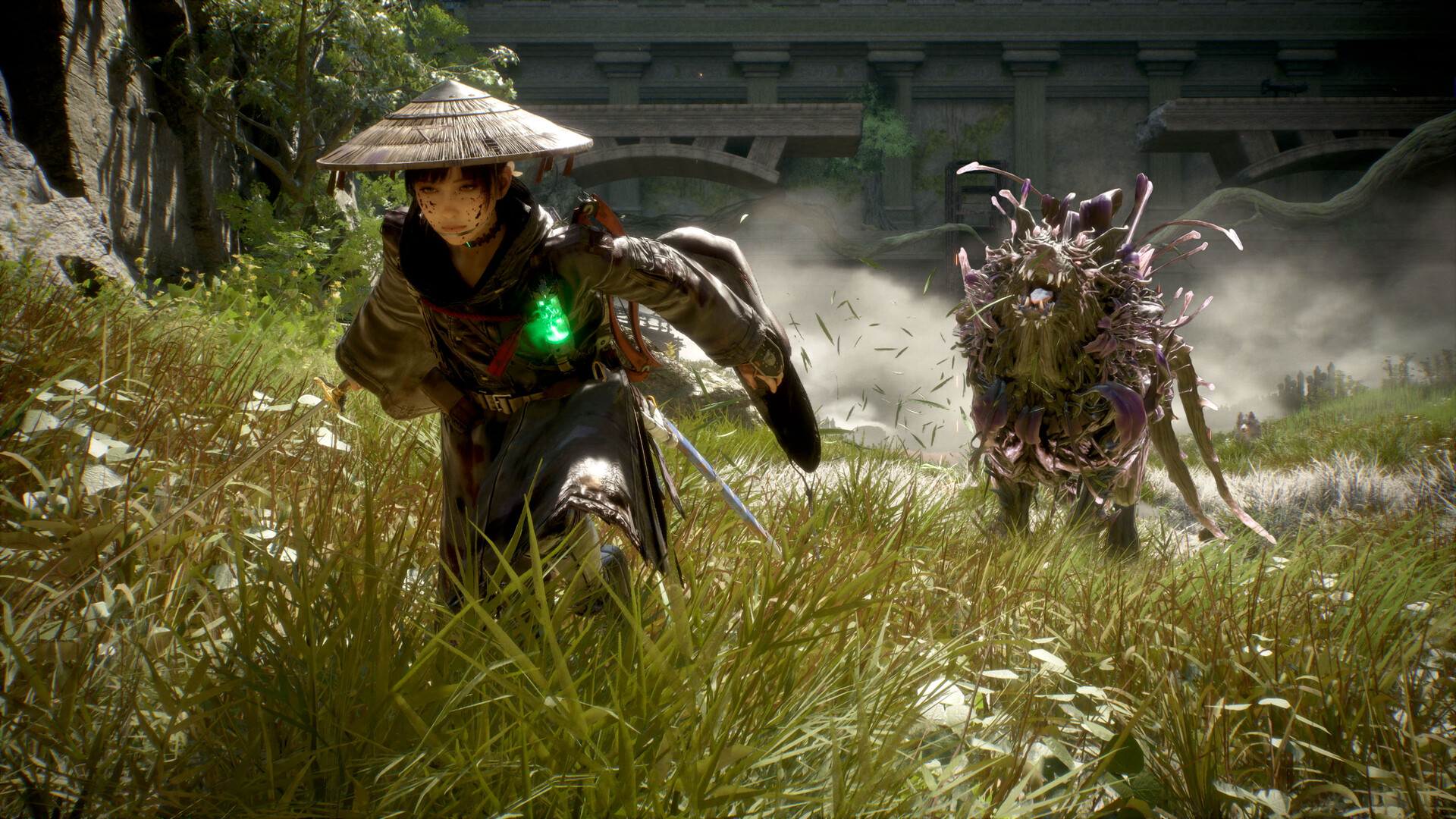
The world is structured as a series of wide, explorable stages organized as "district levels" along a single broad path. The journey has been compared to a trek from the Kanto region to Kyoto, mirroring the real-life mountainous route through Japan's geography as players travel from east to west.
Emma and Koo travel from the eastern countryside westward toward the Capital, with each district featuring its own environments, enemy types, and at least one Nushi boss encounter. Blighted Forests, the corrupted zones generated by Nushi, function as dungeon areas that players explore, fighting through waves of Malefacts to reach the boss at each forest's center.
Named in Official Text
Most zone names come from guide material, but a handful appear in official patch notes, which makes them the firmest of the set. The Fuji Frontier Zone and the Pilgrim's Zone are both named there, and the Pilgrim's Zone is broken down further into a Belfry, a Cave and a Stone Chamber; version 1.0.8 shortened its main route so it now runs straight to the Belfry rather than through the other two. Subcity 01, one of the underground complexes in the Kanto stretch, is named in the version 1.0.7 notes. The Walker, the vessel Emma travels on, is named there too, as the place where conversations with Kagura happen.
A per-zone breakdown, with the boss placed in each and the order they are reached in, is kept on Regions and Zones.
The Colonies
Colonies are the few remaining habitable areas where human civilization persists. The game begins inside a Colony, establishing them as pockets of relative safety in an otherwise hostile world. Colonies serve as the contrast between humanity's fragile survival and the untamed Blight-corrupted wilderness beyond their borders.
Within the Colonies, Blight-afflicted individuals like Emma are feared and ostracized. Despite her role as a Sealer who protects the Colony by hunting Malefacts, Emma's vine-hair and lost emotions mark her as an outsider, a reminder of the very corruption the Colonies seek to keep at bay.
Dynamic Environments
One of the most distinctive features of Beast of Reincarnation's world is that it changes in real time as part of its natural cycle. Plains and wastelands gradually transform into forests, matching the Blight's ongoing influence on the landscape. This is not scripted. The environment evolves as players travel through it.
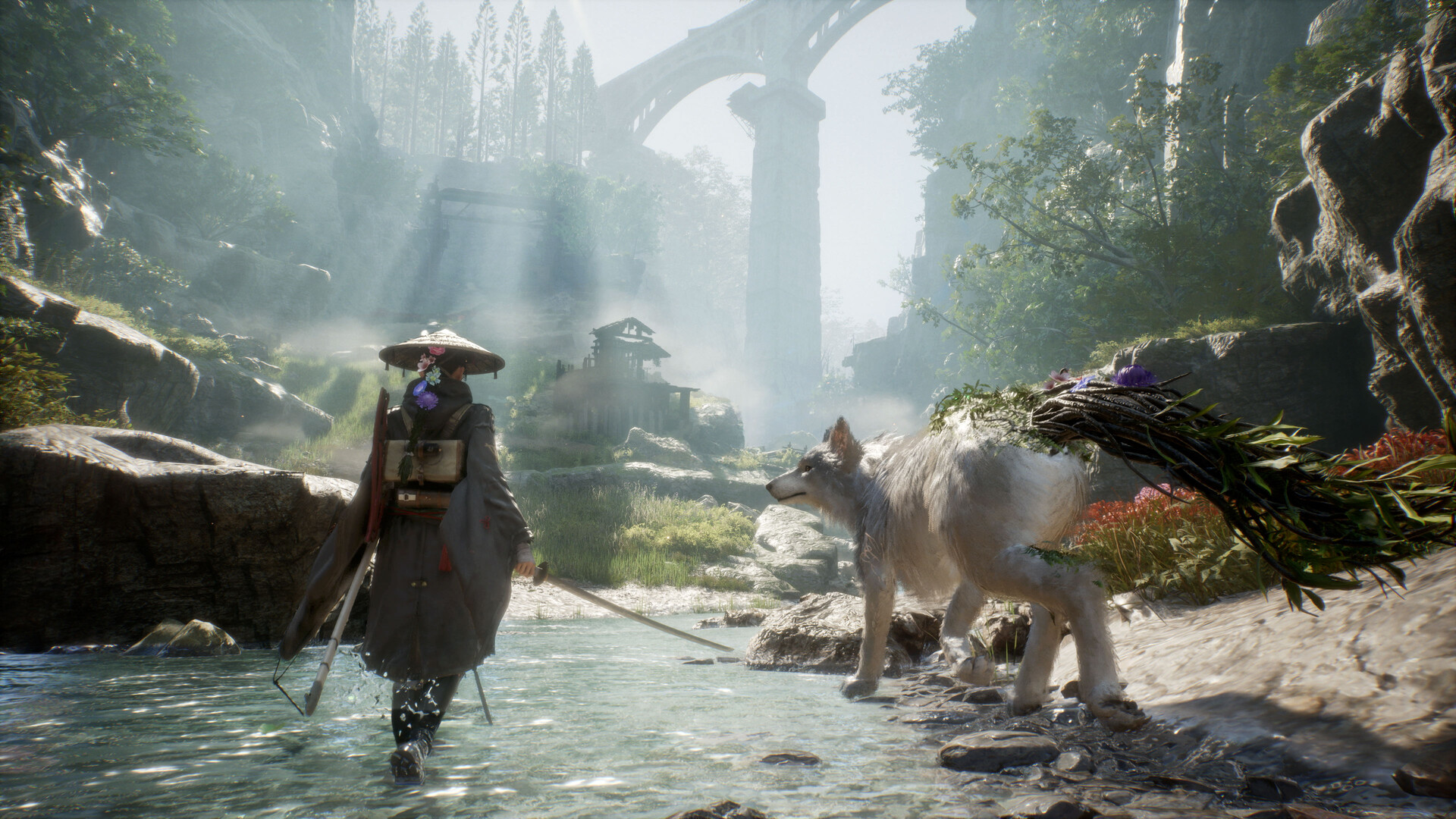
In some areas, the transformation is abrupt, giving rise to unseen Malefacts that emerge alongside the rapidly growing vegetation. These sudden environmental shifts create unpredictable combat encounters and ensure the world never feels entirely safe. Even areas that appear tranquil can erupt into hostile territory without warning.
Blighted Forests represent the most extreme manifestation of this environmental dynamism. Areas where the Blight's corruption is so concentrated that it has generated entire hostile ecosystems around Nushi creatures. These forests spread across the landscape, expanding the corrupted territory and spawning additional enemies.
The Golems
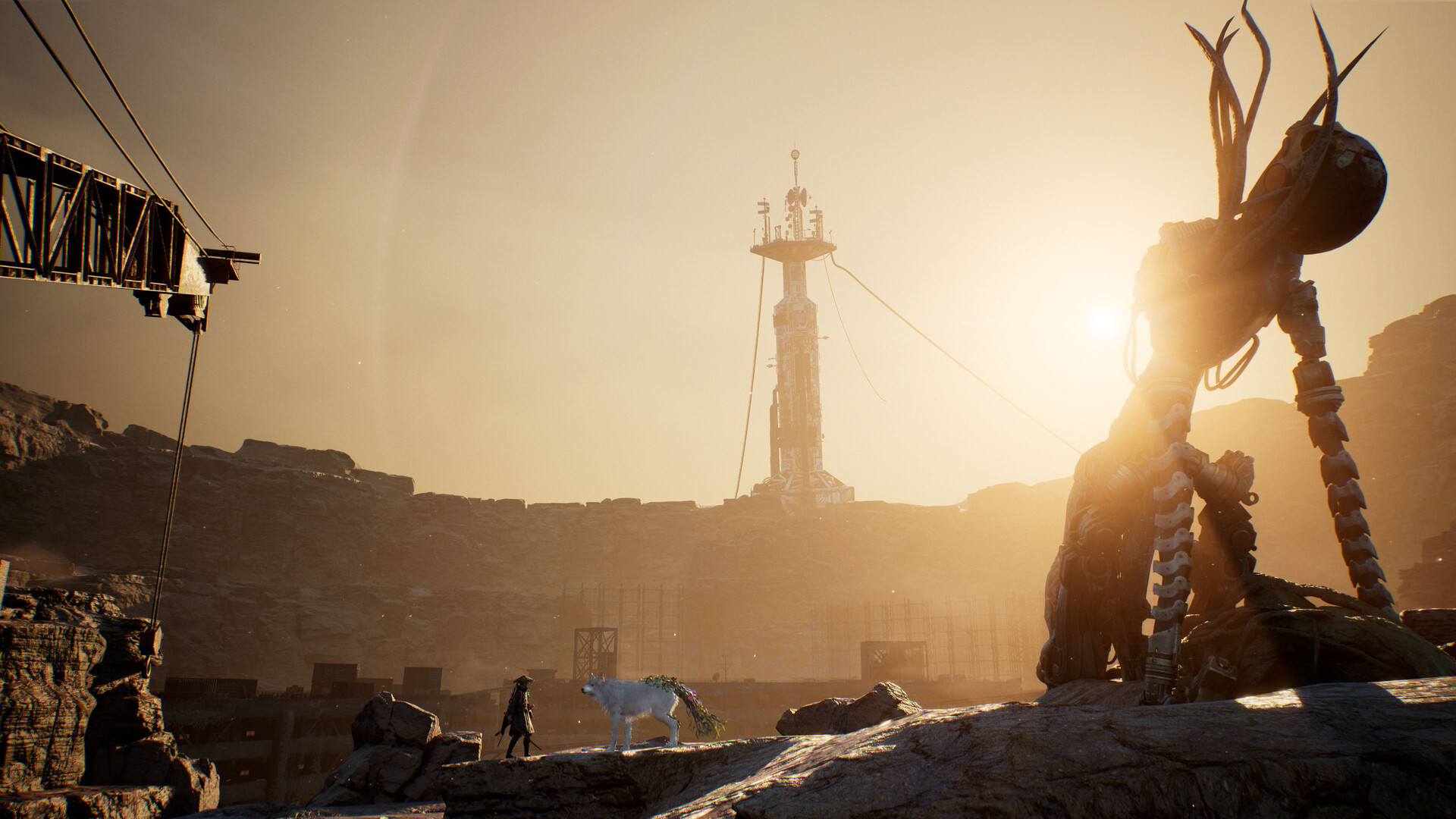
The Golem faction introduces the game's science fiction layer. Golems are mechanical bodies inhabited by human minds that transferred themselves into these robotic forms millennia ago. They have been active for approximately 2,000 years, placing their creation around the year 2026 in the game's timeline.
The Golems create a haunting parallel within the narrative. While nature reclaims the surface through the Blight, another faction of humanity retreated into metal to endure. They feature a stealth detection mechanic based on eye color: their eyes are blue when they haven't spotted Emma and Koo, and turn red once the player is detected. Emma can hack off Golems' robotic limbs to take them down, leveraging a dismemberment system specific to these mechanical enemies.
The Sky Mystery
One of the world's most deep mysteries is an ancient warning: "Never look up at the sky." According to legend, something enormous floats above the world, and witnessing it brings ruin. This warning is woven into the game's lore as an ominous, unexplained threat that hangs over Emma and Koo's journey. The shipped game keeps it as an easter egg with teeth: staring up at the crescent moon in the sky kills Emma, and doing it is what unlocks the Horror in the Sky achievement. Just under 19 percent of players had triggered it by September 13, 2026, up from about 18 percent in late August and roughly 17 percent in the middle of that month. It climbs slowly and steadily, which is what a deliberately obscure interaction looks like as word of it spreads.
Spider Lily Imagery
Red spider lilies (higanbana) feature prominently throughout the game's world design. In Japanese Buddhist culture, the higanbana symbolizes death, the afterlife, and reincarnation. It is traditionally associated with the paths that guide the dead between worlds. The game uses spider lily imagery extensively: the flowers appear in the environment, in Emma's combat abilities (the Spider Lily Grapple), and as thematic markers throughout the narrative.
This symbolism connects directly to the game's title and themes. The Beast of Reincarnation accelerates growth and decay simultaneously, and the red spider lily, a flower associated with the boundary between life and death, is the perfect visual metaphor for the world's condition: beautiful, ominous, and perpetually caught between creation and destruction.
Aesthetic and Tone
The visual design pairs photorealistic backgrounds with slightly stylized character models. Environments feature blooming lotus flowers, red spider lilies, dense Blighted forests, crumbling ruins of modern civilization overtaken by plant life, and traditional Japanese architecture contrasted with futuristic cyberpunk elements such as holographic technology and the Golem faction's mechanical infrastructure.
The art direction was not designed with any specific market in mind. Furushima described the photorealistic look as something that came naturally. He first imagined the feelings and atmosphere he wanted players to experience, then built the visual world around that vision. The result is a world that feels simultaneously ancient and futuristic, serene and dangerous.
Influences
The game draws from multiple cultural and gaming inspirations. Director Furushima has cited Princess Mononoke's exploration of corrupted nature and civilization's relationship with the wild as a key influence. The game also draws on Japanese mythological and nature-spirit traditions, on classic open-world exploration framing, and on Buddhist and Shinto thematic explorations. An ethereal, post-apocalyptic beauty informs the world's melancholic atmosphere.
Buddhist concepts of reincarnation and death are central to the narrative framework. The cycle of corruption, absorption, and transformation that defines both the Blight and Emma's role as a Sealer echoes the Buddhist concept of samsara, the cycle of death and rebirth. The game's title itself invokes this cycle, and the Beast of Reincarnation's ability to accelerate growth and decay makes it a literal embodiment of the reincarnation process.