

Overview
Golems are mechanical bodies inhabited by human minds, one of the enemy factions in Beast of Reincarnation. Unlike Malefacts, which are corrupted organic creatures created by the Blight, Golems represent the technological side of the game's conflict: machines animated by human consciousness that was transferred into robotic forms millennia ago. They introduce the game's science fiction layer and raise strong questions about identity, survival, and what it means to remain human.
Origin
Golems were created when a branch of humanity chose to transfer their minds into mechanical bodies as a survival strategy against the devastation caused by the Blight. Rather than face extinction in a world increasingly hostile to organic life, these humans abandoned their flesh and retreated into metal. They are described as mechanical bodies inhabited by human minds that transferred themselves millennia ago.
Golems have been active for approximately 2,000 years, placing their creation around the year 2026 in the game's timeline, roughly the present day from the player's perspective. This detail creates an eerie resonance: the Golems represent a possible future path for humanity, one chosen by people who existed in a time period recognizable to the player. The decision to abandon biological existence in favor of mechanical survival was made by people who could have been contemporaries of the player, making the Golems both alien and deeply familiar.
Eye Color Detection System
Golems feature a distinctive stealth detection mechanic based on eye color. Their eyes are blue when they have not spotted Emma and Koo, and turn red once the player has been detected. This provides clear, immediate visual feedback on the player's stealth status when navigating areas populated by Golems.
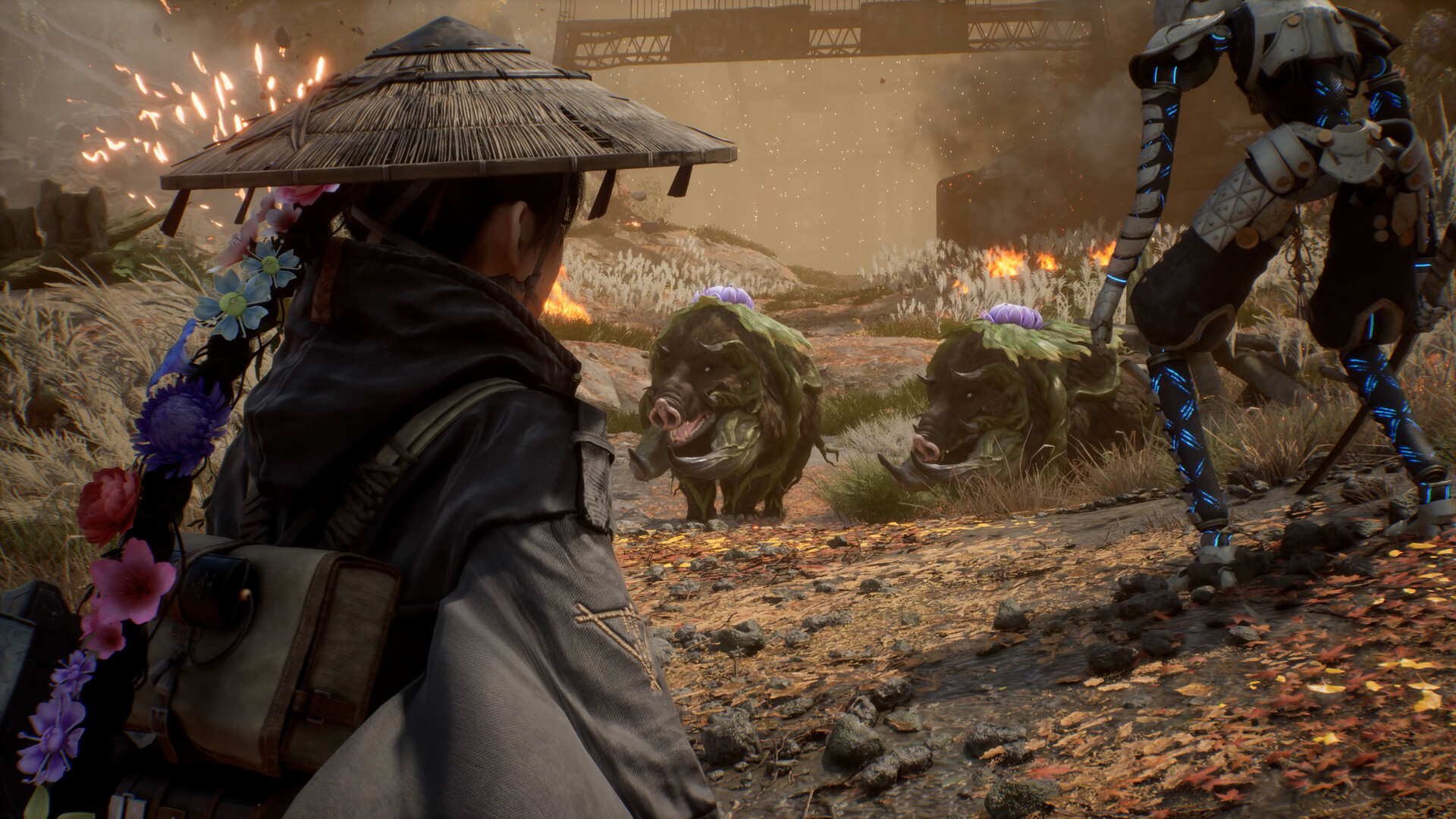
The eye color system creates tactical opportunities. Players can observe Golem patrol patterns, identify which enemies are aware of their presence, and plan stealth assassinations accordingly. Emma's stealth abilities, enhanced through the stealth skill tree, allow her to thin out Golem patrols before engaging the remaining enemies in open combat. A shift from blue to red eyes signals that the player has been compromised and must either flee, fight, or reposition.
Dismemberment System
Golems feature a unique dismemberment combat mechanic. Emma can hack off Golems' robotic limbs to take them down, a system specific to these mechanical enemies that does not apply to organic Malefacts. This creates a distinct combat feel when fighting Golems compared to other enemy types: rather than simply depleting a health bar, players can strategically target and remove limbs to disable Golem capabilities.
The dismemberment system reinforces the game's visual storytelling. Severing a Golem's mechanical limbs is a visceral reminder that these enemies are machines, not living creatures, yet the human minds trapped inside them add a layer of unease to every encounter. Dismembering a Golem's body while knowing a human consciousness inhabits it blurs the line between fighting a machine and harming a person.
Combat Encounters
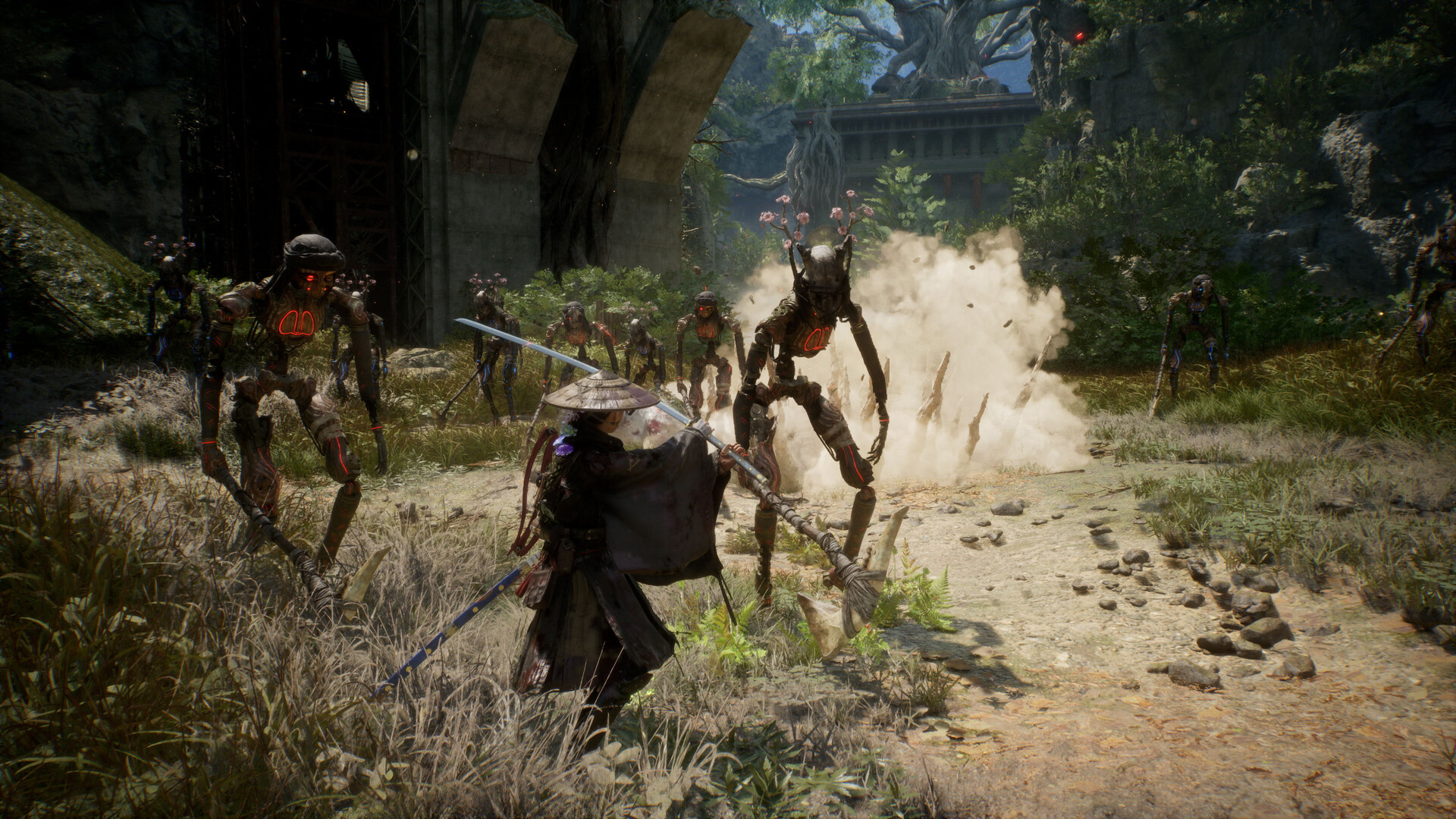
As enemies, Golems present a distinctly different challenge compared to Malefacts. Their mechanical nature means different weaknesses, resistances, and attack patterns, requiring players to adapt their combat approach and Bloom Arts selections when facing them.
Key differences in Golem combat include:
Item | Description |
|---|---|
Stealth Viability | The eye color detection system makes stealth approaches particularly effective against Golems. Players can methodically eliminate sentries while their eyes remain blue. |
Limb Targeting | The dismemberment system rewards precision over raw damage, encouraging players to target specific limbs to disable Golem capabilities. |
Weaknesses | Golem lines carry their own innate weaknesses, shown beside their health bars, and acid and bind land on more of them than on the animal-derived enemies. Koo's Bloom Arts elements compared to organic Malefacts. |
Patrol Patterns | Golems appear to operate with structured patrol behaviors, creating predictable movement patterns that can be exploited through observation and planning. |
Enemy Roster
The hostile Golem lines documented in the shipped game are the Agile, Archer, Giant, Heavy, Light and Rusted Golems, with stronger elite variants standing along the route as optional duels rather than as story gates. The achievement list expects hundreds of kills across both enemy families, so neither is rare. Two elite-enemy problems were addressed on August 24: elites that failed to spawn in the Fuji Frontier Zone now appear as intended, and a case where they recovered their full health too quickly after losing sight of Emma mid-fight was corrected. Full recovery once they have gone undetected for a set period is the intended behaviour, so the fix tightened the timing rather than removing the recovery.
Drop | Rarity |
|---|---|
Scrap Metal | Common |
Chemical Reagent | Rare, used in crafting |
Mechanical Part | Rare, used in crafting |
Random amount, dropped by Golems and Malefacts alike |
Keeper Golems
Not every machine is hostile. Keeper Golems still carry out the duties they were built for and can be spoken to. Koo picks up their scent and marks them on the map alongside other points of interest, which is the practical way to find them, and they are tracked as their own collectible category. One of the fixes in version 1.0.7 was for a sixth golem in Subcity 01 that players were struggling to locate, which confirms the counting objective attached to them.
Thematic Role
The Golems introduce a compelling philosophical dimension to the game's narrative. While the Blight represents nature's violent reclamation of the surface world through corruption and overgrowth, the Golems represent humanity's technological escape from that same nature. Two survival strategies exist in tension: one organic (enduring the Blight, as the Colonies do), one mechanical (transcending the body entirely).
This duality extends to Emma herself, who occupies a middle ground: a human fused with the Blight's plant matter, neither fully human nor fully corrupted. The Golems, having willingly abandoned their humanity for survival, raise questions about identity and what it means to remain human, questions that mirror Emma's own internal struggle. She lacks memory and emotion at the start of the story; the Golems have preserved their minds but lost their bodies. Both represent different forms of diminished humanity.
The Golems also create a historical bridge between the player's world and the game's far-future setting. Created approximately 2,000 years before the events of the game, around the year 2026. They represent a decision made by people from an era the player recognizes. This grounds the game's science fiction elements in something tangible and raises the question: if faced with the Blight, would the player have made the same choice?
Visual Design
Golems contrast sharply with the game's organic enemies. While Malefacts are fusions of animal and plant matter, monstrous and wild, Golems are structured, mechanical, and eerily human in form. Their design incorporates the cyberpunk elements visible elsewhere in the game's world, such as the holographic figure who directs Emma at the start of her journey.
The eye color system (blue for unaware, red for alerted) adds expressiveness to their otherwise mechanical faces, making them feel more alive than typical robot enemies. Combined with the knowledge that human minds inhabit these metal shells, the visual design creates an unsettling tension between the mechanical exterior and the human consciousness within.
Life and Death in the World's Design
Director Kota Furushima has described the Golems and the Malefacts as a deliberate pair of opposites. Malefacts are lifeforms in which animal and plant have run together, and they stand for life reasserting itself over a ruined world. Golems stand for death: human souls transplanted into machines, still moving long after the human part of them has thinned out, so that they are alive in appearance and dead in substance.
He has also placed them above the survivors in the world's hierarchy. Golems were once people, and in what is left of civilisation they rank higher than the humans still living in the Colonies. Some have held together across the centuries; others have lost their egos entirely and now run wild, which is when the player meets them as enemies. That framing also explains what Kagura survived, since her official profile has her growing up mistreated by Golems inside her own settlement.
Door Golem
The shipped game includes one named Golem boss encounter, the Door Golem, fought at level 7 in the opening chapter. Guide material also files it under its enemy line name, the Agile Golem. It sits outside the Nushi progression and functions as an early hard-stop that teaches players to pay attention to status effects rather than raw damage.
It is weak to acid and to bind, an unusual pairing that separates it from the animal-derived bosses. The reliable opening is Koo's Higanbana: Roots to bind it, which buys a long damage window; its combo attack punishes a missed parry harder than anything else in the chapter, so dodging through that string is the safer line until the timing is learned. It drops scrap metal. The full encounter list is under Bosses.