

This article is incomplete
Some sections are missing or need additional details. Help improve it by contributing.
Overview
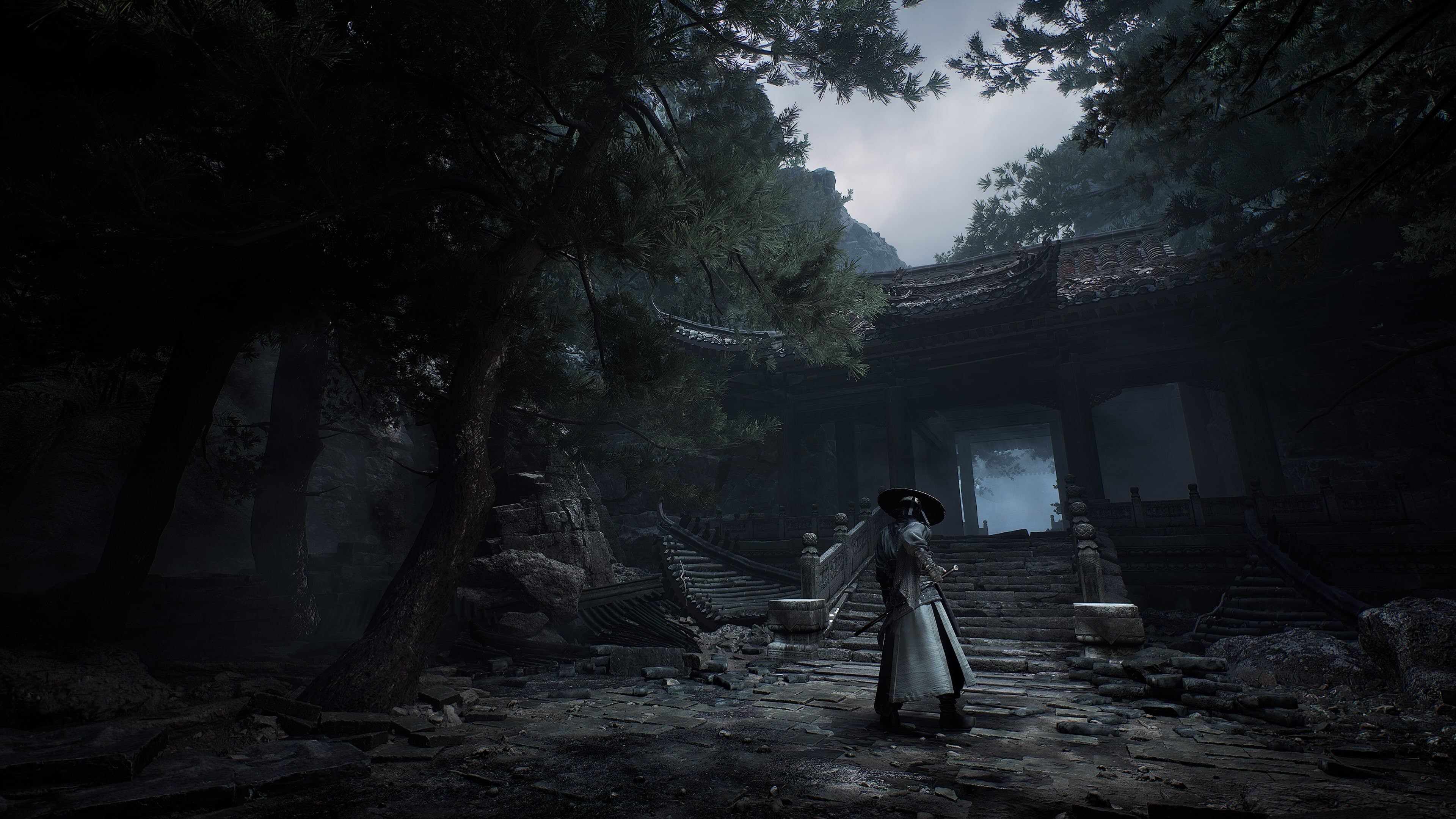
The protagonist of A Whisper of Fall: Jinyiwei can walk on walls and climb vertical surfaces, a movement type known in Chinese as 飞檐走壁 (literally "flying eaves, running walls"). This ability is rooted in the Wuxia Tradition of supernatural martial arts agility and forms part of the game's traversal system.
Traversal Use
Wall running allows the player to reach elevated positions, cross gaps, and access areas that would be impossible to reach on foot. Combined with Rooftop Traversal and lightness skills, wall running gives the player a high degree of vertical mobility across the game's Sandbox-Style Levels.
Combat integration
Wall running is not limited to navigation. The gameplay trailer showed a full combat encounter taking place while all characters involved were running along a wall. The protagonist ran across ship sides while fighting enemies, with wall-running combat functioning as a seamless extension of the Combat System rather than a separate mechanic.
Cultural Lineage
The Chinese phrase 飞檐走壁 (literally "flying eaves, running walls") is centuries old, rooted in classical wuxia fiction and the martial-arts cinema that descends from it. The expression frames the ability as supernatural in degree but legible as practiced skill: a trained body moving with cultivated qi, not a magical leap. The Wuxia Tradition article covers the broader literary context.
In game terms the move is the long-form expression of qinggong, the same family of techniques that powers Rooftop Traversal and the broader Lightness Skill set. Where rooftop work is mostly horizontal, wall running gives the protagonist vertical and inverted reach: along the face of a courtyard wall, around the curve of a city gate, or up the side of a sea-going ship's hull.
Demo-Confirmed Use Cases
Public footage has demonstrated a few distinct use cases:
Cross-gap traversal: running along a wall to reach a ledge or balcony that an ordinary jump cannot clear, then dropping down into a new playspace.
Vertical access: ascending a tall wall to reach a rooftop or second-storey window that bypasses guarded ground-level entries.
Wall-borne combat, which is the most distinctive use case shown in the January 2026 trailer: an extended fight along a ship's side where the protagonist and the enemies all stay attached to the wall throughout the exchange. The Combat System treats wall-running as a first-class fighting surface, not a movement abstraction that combat suspends.
Integration with Other Systems
Wall running is wired into the same input vocabulary as ground movement, so transitions are continuous. A run along an alley wall can drop into a parry against an enemy who steps out of a doorway, then continue back onto the wall once the swing has been deflected. This blend extends the Sandbox-Style Levels upward and sideways, letting the player route around guarded ground-level approaches by treating walls as additional paths.
Because swordplay and traversal share one animation system, a wall sequence and the fight that interrupts it are the same continuous motion rather than two states the game switches between. That is the property worth noting about the design, and it is what separates this from a traversal system that exists beside combat rather than inside it.