Loading...
Loading...
Martial Arts Styles
August 6, 2026 at 08:40 PM
Repointed generic wikilink targets to the articles that actually cover them
The martial arts styles system (武学, Wuxue) is the loadout layer of A Whisper of Fall: Jinyiwei's Combat System. Rather than giving each weapon a single moveset, the game allows players to equip multiple martial arts styles per weapon and switch between them in real time during combat.
Each martial arts style is a distinct combo tree or fighting philosophy. A style defines the player's available attack chains, with each style generating two or more derived follow-up attacks. Players can equip multiple styles simultaneously and swap between them mid-combo, creating opportunities for custom attack sequences that chain across styles.
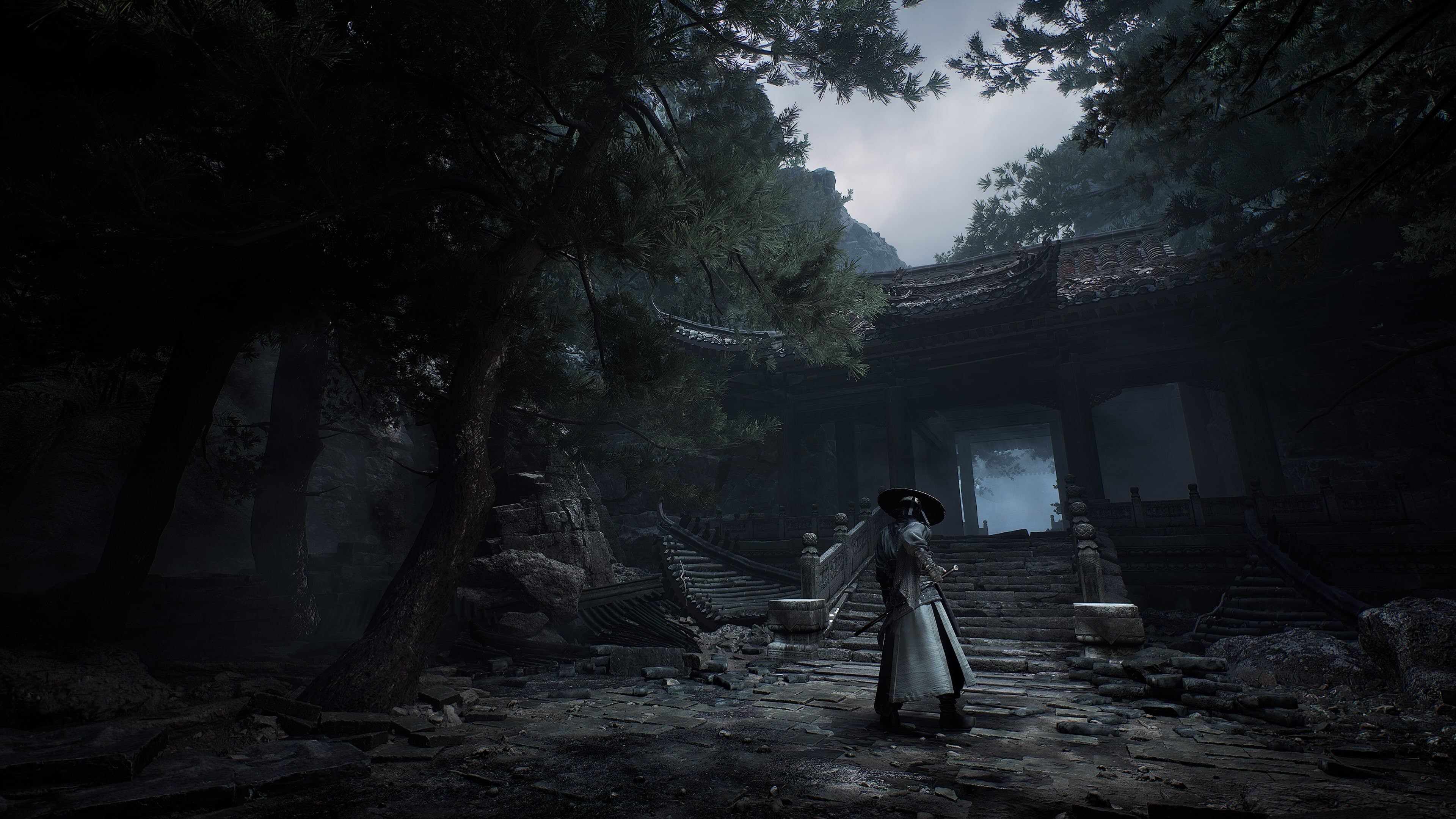
This means two players using the same weapon can fight very differently depending on which martial arts they have equipped. A blade user with one set of styles might favor slow, overwhelming combos, while another blade user with different styles could prioritize quick counter-attacks and repositioning.
Martial arts styles are bound to weapon types. A style designed for blades (刀) cannot be used with swords (剑), and vice versa. The combination of weapon type and equipped styles defines the player's complete combat identity for a given loadout.
Separate from martial arts styles, players can equip two interchangeable light kung fu (轻功) movement systems. These govern traversal options, wall-running, aerial combat, and vertical repositioning during encounters. Light kung fu and martial arts styles together form the player's complete combat-and-movement build.
Hands-on coverage emphasized that the martial arts system requires players to "think about move frame data like in a fighting game." Each style's attacks have distinct startup frames, active damage windows, and recovery frames. Knowing these windows (both for the player's own attacks and the enemy's) is how players exploit vulnerability damage (破绽伤害) openings and avoid being punished during recovery.
Two schools have been named in playable builds. Both were selectable in the public build shown in July 2026, which let players switch between them freely in the middle of a fight.
School | Chinese | Weapon | Character |
|---|---|---|---|
Taichu Guixuan Sword | 太初归玄剑 | Lighter and more mobile, with wider swing arcs and a technique that slips past an attack to come out behind the target. Lower damage per hit than the saber. | |
Qianqiu Saber Method | 千秋刀法 | Saber | Slower, with heavy two-handed downward finishes on its combo tails, and a guard stance that turns aside most incoming attacks. |
Schools are swapped with a modifier and a face button, so a player can open with one school's approach and finish with the other's without leaving the combo. Techniques within a school cover distinct jobs: closing distance quickly for heavy damage, punishing a staggered enemy, and holding ground behind a guard.
Hands-on coverage of the 2026 convention builds filled in what each school actually does with its signature move. Taichu Guixuan Sword is built around a side-slip, a short evasive step that is invulnerable while it runs and that ends with the player behind the target. Hitting an opponent from behind triggers a break the game calls 破招, which plays like a short execution and takes a large bite out of their True Qi. The school therefore rewards a player who treats evasion as the opening of an attack rather than the end of a defensive sequence.
Qianqiu Saber Method works the opposite way, on charged strikes. Holding the attack builds it, and a released charge lands for heavy damage while draining a large amount of the target's Inner Breath. An opponent whose Inner Breath is emptied cannot block at all, so the saber's job is to open a guard that the sword would have to go around. Between them the two schools cover the two ways of solving the same defensive problem, and a player carrying both can pick per opponent rather than per loadout.
Switching is a modifier plus a face button on both supported pads: left trigger with X or B on an Xbox controller, L2 with square or circle on a DualSense. The swap holds inside a combo, so a chain can open in one school and close in the other.
Official store copy places internal-energy manuals (内功心法) beneath the schools rather than beside them: the manual is described as the root of a school, and the visible moveset grows out of it. Once the practitioner has opened the body's acupoints, a manual can be practised in reverse (逆练). The store copy frames this as a deliberate gamble, capable of producing striking results against an opponent while carrying the risk of a backlash the wuxia tradition calls going astray in cultivation (走火入魔).