
Loading...
Loading...
Romance System
October 14, 2026 at 11:18 AM
Updated the roster to eleven romanceable characters with Evadne Gladwin, and added asking out and breaking up with cards, two-activity dates, date chatter, going steady and romantic rivalry in co-op
Witchbrook has an optional romance layer that sits alongside the game's schoolwork, shopkeeping, and exploration. Players can pursue romantic relationships with a rotating cast of classmates and townspeople, building affection through conversations, shared activities, dates, and gift-giving. Chucklefish has described the dating side as a less forgiving, more school-flavored take on the genre, where relationships grow over time but can also fail, and where falling in love is optional rather than the central goal of the academic year.
Romance in Witchbrook is woven into the everyday loop of student life at Witchbrook College and the surrounding town of Mossport. Players attend classes, take part-time work, run errands, and explore the map, and they meet potential partners through that natural flow rather than through a dedicated dating menu. Each datable character has their own storyline, personality, and reason for being in Mossport, and relationships deepen through conversations, quests, and shared experiences rather than through gift-giving alone.
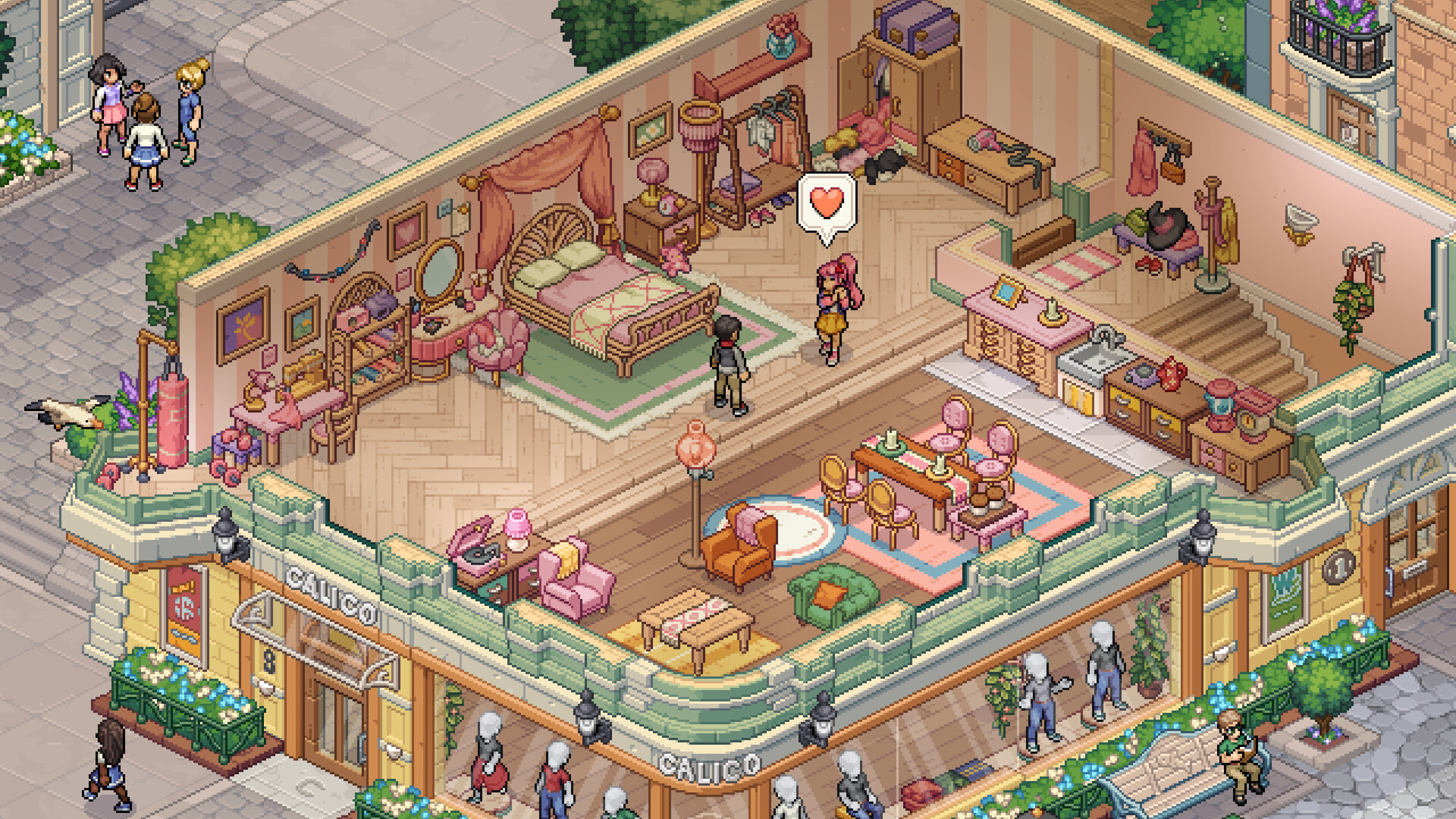
The studio has framed the romance layer as something players can ignore entirely if they prefer to focus on arcane arts coursework, alchemy projects, or divination practice. Friendships are treated as first-class relationships in their own right, and a player can finish the year with a tight circle of close friends and never enter a romantic storyline. Romance is pitched as one of several ways to spend the limited hours of each school week, not as a requirement for progressing through the main game.
The developers have confirmed that eleven characters in Witchbrook can be romanced. Six had been named publicly as of October 2026: Hana Sato, Eli Ivers, Cormac Fitzroy, Pip Marin, Leif Blomgren and Evadne Gladwin. The September 2026 dev blog that gave the total introduced the romanceable cast as the player's fellow covenmates, deliberately spread across different personality types so that there is someone for everyone, and teased further reveals without naming the other five. Each candidate has their own personality, interests and story arc, which develops across the player's time at the college.
Character | Role | Where to Meet Them |
|---|---|---|
Covenmate, part-time shop assistant at the boardwalk clothing boutique | Shared coven lessons on campus, shifts at her shop on the boardwalk | |
Covenmate, postgrad, editor-in-chief of the student newspaper, part-time school shop cashier, occasional tutor | Editorial office at 2 Adelard Cross, the School Shop near the college, classroom buildings during tutoring hours | |
Covenmate, gifted painter, self-proclaimed family black sheep | The Briny Brush gallery and art-supply shop on a pier near Parasol Sands | |
Covenmate, witch-mechanic running her own dockside garage | Her garage and workshop by the Mossport docklands | |
Covenmate; Mossport's favourite greenthumb, associated with gardening and herbs | Not stated | |
Covenmate and Witchbrook student, described as Mossport's walking daydream | Not stated |
The four earliest reveals share the player's coven and tend to appear together in promotional material and the game's dev blogs. The two 2026 reveals, Leif in August and Evadne in September, were each introduced with a short character video, and the dating dev blog that followed referred to both as covenmates. Chucklefish had asked players to treat the pre-launch roster as still growing, and the confirmed total of eleven bore that out.
The studio has outlined a progression model that emphasizes slow, steady relationship building over a burst of gifts or a single scripted event. The three pillars the developers have publicly described are conversation, shared quests, and shared experiences, each of which nudges affection upward over the course of the school year.
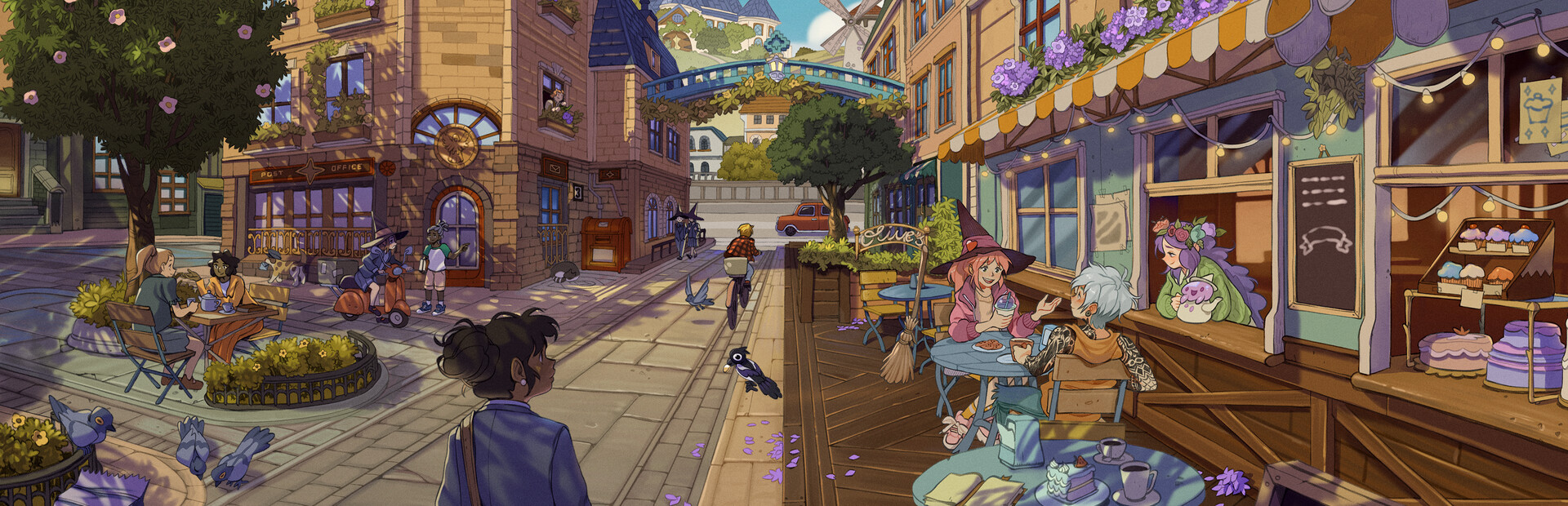
Conversation: regular dialogue with a potential partner. Each character has their own interests, their own workplace, and their own schedule, so maintaining a romance involves actually knowing where to find them and what they care about.
Shared quests: storylines that pull the player into a character's life, whether that is helping a shopkeeper set up a display, chasing a scoop for the campus paper, or lending a hand with a coven project.
Shared experiences: small everyday moments that add up over the school year. Attending the same festival, running into each other on the beach, or bumping into a candidate at a seasonal event all count as shared time.
Dates: dedicated outings that the player asks for with a card. Different characters are ready to date at different times depending on what is going on in their own lives, so a shy character can take longer to open up than an outgoing one. Dates are a more formal relationship beat than a casual chat.
Gift-giving: a supplementary way to show attention. The studio has described spending weekends picking out the right gift as part of the romance loop, though gifts alone are not enough to carry a relationship.
Chucklefish has mentioned plans for an in-game meter that tracks the player's bond with each major character. That meter is intended to cover both friendships and romances, so a player tracking their progress toward a date is looking at the same kind of affection number as a player focused on a tight coven friendship. The meter's exact visual form and point values have not been detailed in public materials.
Gift-giving is described as part of the romance loop, not its engine. Each datable character has specific tastes and interests drawn from their personality and daily routine, and the right gift is the one that lines up with the things that already matter to that person. A stylish covenmate who works at a clothing shop will notice a different kind of present than a postgrad editor who spends his free time writing essays for the paper, and the player is expected to pay attention to what each candidate actually talks about before buying anything.
Because gifts supplement the larger conversation and quest loop, bringing the wrong item rarely ends a relationship on its own, but it also does not substitute for time spent together. Players who treat dating as a gift-matching puzzle alone will find their candidates polite but unmoved. The intended shape of the system is a mix of present, conversation, and shared activity, with gifts acting as punctuation rather than as the main sentence.
Mossport has a long-standing tradition of expressing affection through cards, and the romance system is built on it. Cards are sold at the town's post office, with one for each step of a relationship: cards to ask someone out, cards to go steady, and cards to break up. Alongside the classic stationery the post office keeps a rotating seasonal stock, so the same message can go out as a springtime tulip card or, for a breakup, as a jack-o-lantern card.
In the fiction, nobody is quite sure how the custom started. One story credits old Mayor Wrigglesworth, who fell in love with someone three towns over and invented excuses to send cards for every occasion he could think of, from birthdays and the changing seasons to Tuesdays. The other explanation the developers offer is that the people of Mossport are a little emotionally repressed and find it easier to write their feelings down than to say them aloud, and they suggest both are probably true.
Dates are planned outings rather than dialog menus, and the player decides where they go. Each date involves taking the partner to two different activities, and part of the challenge is working out what that character actually enjoys. The journey between activities matters as much as the activities themselves: the developers say there are more than 200 date chatter spots across the world, context-specific moments where a date reacts to whatever catches their eye, from the jewellery shop and the college's romantic bridge to seaweed on the beach. That chatter doubles as feedback, because a date will often hint that they would love to stop somewhere, or make it plain that they would not. Weekends are flagged as a natural window for date activities, in line with the game's weekday class schedule.
Dates can also go wrong. The studio has described the dating layer as less forgiving than in other cozy life sims, with the deliberate design goal that players might get a few hard knocks across the school year. That framing applies both to the small beats inside a single date and to the overall arc of a relationship. Saying the wrong thing, ignoring a candidate for too long, or mishandling a quest choice can push the relationship backward.
Whether a date went well is revealed at the end, when the player drops their partner off at home. A bad date makes itself very obvious at that point, while a good one can lead to another, and a run of good dates is how a relationship builds toward going steady. Characters also differ in how quickly they open up: some are ready early on to let the player in, both emotionally and into their homes, while others need more effort before they share their secrets.
A major set-piece on the romance calendar is the Witchbrook prom. If the player has built up a strong enough bond with a particular candidate by the time the event arrives, they can attend as that character's date. Players without a strong bond can still attend the prom, but the romantic angle of the evening is reserved for couples who have put in the hours across the preceding weeks.
Once a relationship is going well, built on gifts, good dates and regular contact, the next step is to send the partner a going-steady card. Going steady is the formal start of a relationship and opens up relationship privileges, including sleepovers. Ending a relationship uses the same system in reverse, with break-up cards on sale at the post office alongside the rest.
Friendships run on the same infrastructure as romances and are not treated as a lesser path. The player's classmates become their Covenmates, a group of young witches moving through the same year at college but following their own reasons for being there. Coven bonds deepen through shared lessons, group projects, and time spent in shared spaces on campus, and a strong coven is its own endgame for players who are not interested in dating.
Because several datable characters are also covenmates, the boundary between friendship and romance is porous. A player who spends the whole year being a good friend to a covenmate has not failed a romance; they have simply chosen the friendship arc for that character. The game's framing treats that as a valid outcome rather than as a missed opportunity, and Chucklefish has repeatedly stressed that the colorful cast of the town is built for both friendship and romance, not just for dating.
Relationships in Witchbrook can fail. Being rejected or dumped is an explicitly supported outcome, and the studio has been clear that the dating layer is meant to feel like a real school experience rather than a guaranteed happy ending. Players who push a candidate too hard, miss enough shared events, or make choices that run counter to that character's values can see their affection stall or drop back to friendship level.
Marriage is not available. Chucklefish has publicly confirmed that the player character cannot get married in the game, which places Witchbrook alongside the subset of life sims that treat long-term commitment as out of scope. The intended endpoint of a successful romance is a steady relationship carried through the school year, punctuated by dates and key events like prom, rather than a wedding ceremony or a permanent household arrangement.
Romance in Witchbrook is gender-inclusive. The studio has framed the datable cast as open to every player regardless of the gender of their character, and the character creator itself is built around the idea of any hairstyle, clothing type, or facial hair without gender-locked options. That design philosophy carries into the dating layer, where a candidate's availability as a romance option is not restricted by the player's chosen body, pronouns, or look.
The confirmed candidates are available to every player on the same terms, with each character pitched as a potential partner for any player who puts in the time and makes the right choices. Any further romance reveals are expected to follow the same rule.
Witchbrook supports four-player online co-op multiplayer, and the romance system works inside that shared save. In multiplayer each player can date a covenmate, and that includes the case where two players fall for the same character: the developers say both can vie for that character's affection until one of them ends up going steady, and describe the result as a little heated rivalry. Co-Op groups can mix romance paths freely, but two witches chasing the same partner are competing rather than progressing in parallel.
Co-Op sessions also open up shared social activities that sit next to the romance loop. Group outings, festivals, and coven events can involve the whole party at once, which means players can be in a romance track on their own save while still participating in the broader group rhythm of school life with their friends.
Feature | Status |
|---|---|
Optional romance layer | Confirmed |
Progression through conversations, quests, shared experiences | Confirmed |
Gift-giving supplements, does not replace, relationship time | Confirmed |
Affection meter tracking bonds | Planned, not yet fully detailed |
Dedicated dates and date outings | Confirmed |
Dates can fail; player can be dumped | Confirmed |
Witchbrook prom with bonded date | Planned |
Marriage | Not available |
Same-sex romance and gender-inclusive options | Confirmed |
Friendship track treated as a first-class outcome | Confirmed |
Works alongside four-player co-op | Confirmed |
Eleven romanceable characters | Confirmed; six named as of October 2026 |
Asking out, going steady and breaking up with cards from the post office | Confirmed |
Two activities per date, with more than 200 date chatter spots | Confirmed |
Sleepovers after going steady | Confirmed |
Co-Op players competing for the same character | Confirmed |
The romance system touches several other parts of the game. Home consultations draw the player into the private lives of townsfolk and can raise affection with candidates who live in town. Coursework in arcane arts, alchemy, and divination regularly puts the player next to their covenmates, which feeds naturally into both friendship and romance tracks. Seasonal festivals across the academic year give players scheduled moments to appear next to a candidate at a key event, and shared shifts or errands at shops like the one where Hana Sato works give quieter settings for the conversation beats that carry a relationship forward.
Two of the coven's romance options, Cormac Fitzroy and Pip Marin, sit a little outside the standard student track and are worth a closer look.
Character | Role | Where to Meet Them |
|---|---|---|
Coven member and gifted painter; self-proclaimed black sheep of his family | The Briny Brush, the gallery and art-supply shop on a weathered pier near Parasol Sands | |
Coven member and witch-mechanic, runs her own workshop near the harbour | Her workshop near the Mossport harbour, where she experiments with combining magic and machinery |
Cormac Fitzroy was confirmed as a third bachelor in the run-up to launch. The studio has framed him as the self-proclaimed black sheep of his family: a gifted painter who would rather capture the changing hues of Mossport on canvas than sit through another classroom lecture. His look leans into the rebellious-artist archetype, with a perpetually paint-streaked outfit and a tendency to disappear into a piece for hours at a time.
Players are most likely to find him hunched over an easel at The Briny Brush, the boardwalk art shop near Parasol Sands. The space, run by retired fisherman Sal, has been converted from a working pier shack into a sunlit gallery and supply store, and Chucklefish has positioned it as the right kind of room for the meaningful work Cormac wants to do. Like the other romance options, Cormac is shared between the coven and the wider town, so he turns up at college events alongside Hana and Eli as well as in the art shop between his own canvases.
Pip Marin is a coven member who has stepped outside the standard student track to run her own witch-mechanic workshop near the Mossport harbour. Chucklefish has framed her personality as colourful and slightly chaotic, fitting the tinkering side of her practice: she loves nothing more than figuring out the perfect way to mesh magic with mechanical know-how, and her workshop handles everything from moped repairs to enchanted machinery for the rest of the town.
She also surfaces in the in-universe newsletter as a beachfront tinkerer. The Quiet Side of Summer, the issue Eli writes after a chance encounter on the beach, is built around Pip Marin testing a seaweed-collecting contraption out on the sand, the same mechanical streak shifted from the harbour to the coast. Players who pursue her romantically are expected to spend time at the workshop, take an interest in her experiments, and choose to help bring her magical inventions to life rather than only show up between dates.
In a four-witch coven, players can spread their dating attention across different candidates or end up competing for the same one. The developers describe that second case as a rivalry that lasts until one witch goes steady with the shared crush, so a group that wants to see several romance arcs in one school year can split the candidates between its witches, while two witches who pick the same partner will be racing each other to the going-steady card.