

Witchbrook is a life-sim and social role-playing game set at a magical college in the seaside town of Mossport. A new player takes on the role of a fresh enrolee at Witchbrook College, customises their appearance and wardrobe, moves into a cottage on the edge of town, and spends the school year attending classes, running errands for the locals, building friendships, and learning magic on the job. The game is built for solo play or up to four players in online co-op, and the first in-game weeks are designed to ease a new witch into all of those threads at a relaxed pace. This guide walks through what to expect in those opening days and the systems a new player should focus on first. For a broader framing see Overview and for release information see Platforms and Release.
What to Expect in Your First Days
A Witchbrook run opens with arrival in Mossport and a welcome onto the College grounds. Before anything else a player builds their witch through character creation, choosing skin tone, hair style and colour, clothing, and accessories. The developers have been explicit that nothing in the wardrobe is gender locked: any hairstyle, garment, or facial hair option is available to any character. The salon in town can later change any of these choices, so nothing picked at the start is permanent.
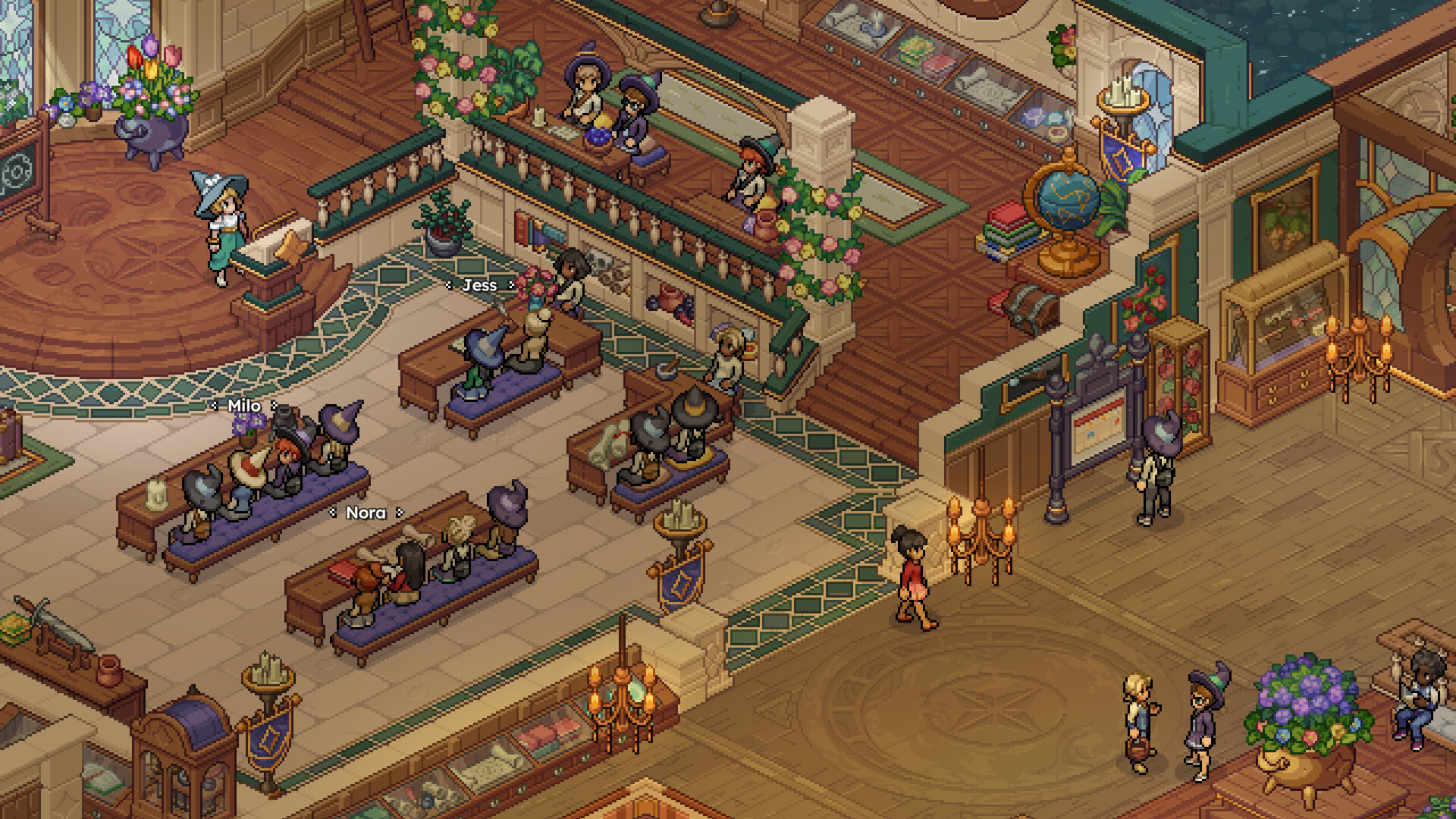
After character creation the witch is given a cottage on the woodland edge of Mossport with its own small garden plot. From there the academic year begins. A new player should expect the first handful of in-game days to feel like a relaxed orientation: a tour of the college campus, a look at the daily class timetable, a short walk along Mossport's high street, and a first look at the cottage and its surrounding garden. Chucklefish has described the opening as grounded and practical rather than high fantasy, so expect lessons about herbal teas and tarot spreads before any dramatic ritual work.
Arrive and enrol. The game opens with the witch arriving in Mossport to enrol at Witchbrook College.
Create the character. Pick appearance, hairstyle, wardrobe, and accessories. The choices are cosmetic and can all be changed later at the town salon.
Move into the cottage. The witch moves into a small woodland cottage on the edge of town with a garden plot of its own.
Start the academic calendar. The school year begins with a class schedule and a list of introductory activities to try around Mossport.
Choosing What to Study
From day one the College offers coursework in two of its three magical disciplines: Alchemy and Divination. A new player does not have to commit to one over the other, and the natural rhythm of the first semester is to sample both and see which lessons fit the player's preferred pace. The third discipline, Arcane Arts, unlocks later in the year after the witch has passed the first and second semester exams, so it is not something to plan around in the opening weeks. Running alongside the disciplines is Civic Witchcraft, which is not a separate school of magic but a community-facing track that puts whatever a witch has learned in class to work helping residents with small magical tasks.
Track | When It Opens | What a Beginner Learns |
|---|---|---|
From day one | Brewing herbal teas, incense, and topical salves from local flora, with more complex potions arriving later in the year | |
From day one | Tarot card meanings and simple spreads in daytime class, with celestial work under the stars in night class | |
After semester 1 and 2 exams | Ritual magic and advanced coursework gated behind academic progress | |
From day one (program, not a magic discipline) | Applying classroom skills to help Mossport residents through deliveries, consultations, repairs, and market trade |
Getting Around Mossport
Mossport is a working seaside town, not just a school campus. The high street is the bustling commercial heart of the town with shops and stalls, while the Student Village sits on the college side of the map. Beyond those central zones the witch can wander into woodland, along a winding river, onto quiet farmland, and out to the coast. The first in-game weeks are a good time to simply walk the streets, note where each shop is, and start recognising which residents keep which daily schedule.
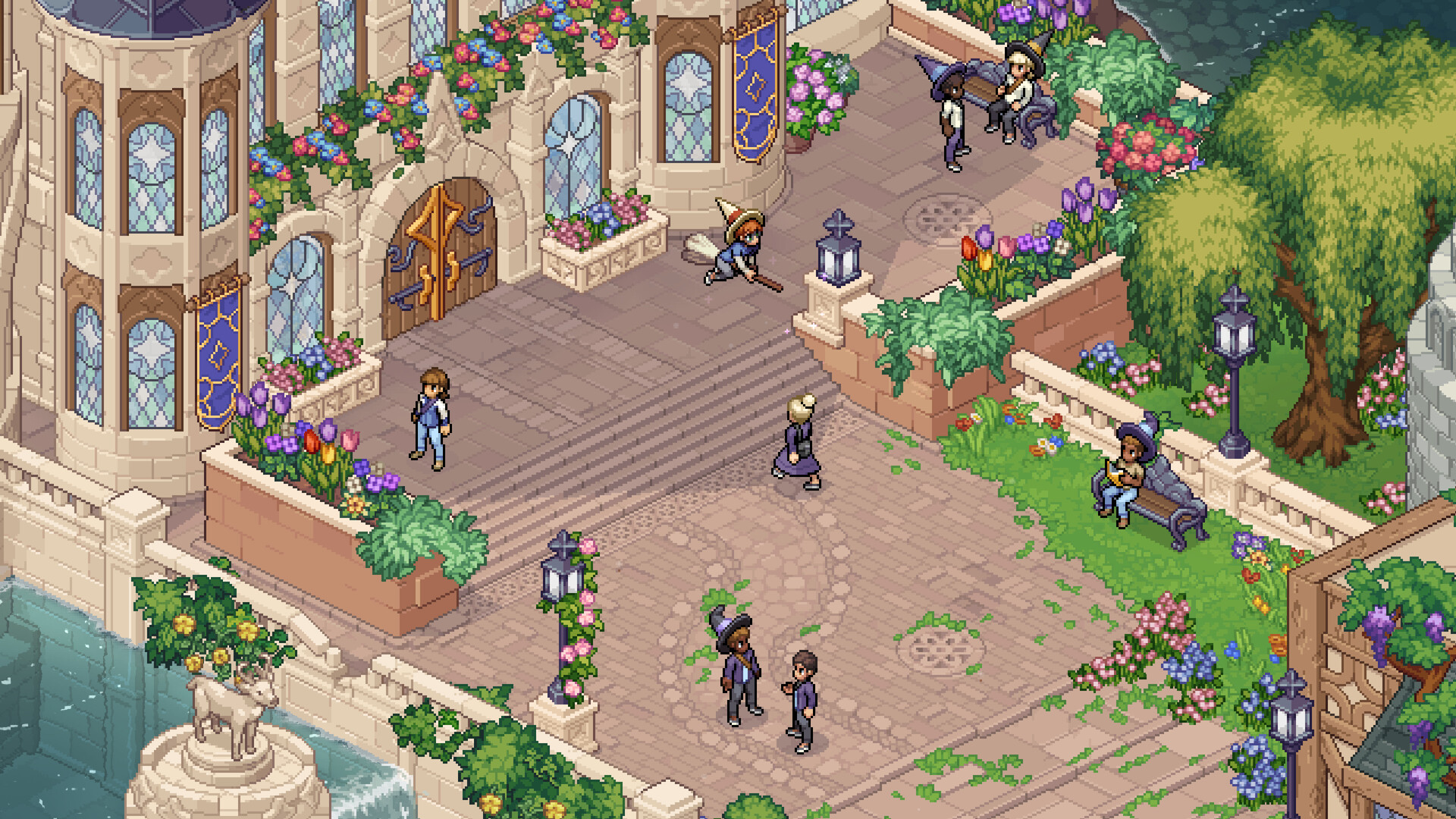
High street. Shops, cafes, and stalls. A new player will pass through here often to buy supplies, deliver orders, and bump into residents on their daily rounds.
Student Village. The residential quarter around Witchbrook College, where the witch's classes are held and where many classmates live.
Woodland and river. Foraging and fishing areas outside the town proper. Useful early for gathering ingredients before alchemy class.
Farmland and coast. Open-country walks that fill out the map and introduce seasonal resources tied to weather and season.
Your First Consultations
One of the first practical activities the game encourages is running home consultations for the residents of Mossport. A consultation is a private house call where the witch visits a client, reads their situation with a discipline like tarot, and in some cases brews or prescribes a remedy on the spot. This is the clearest way Witchbrook turns classroom study into income and reputation: tarot spreads from divination class become paid readings, herbal teas from alchemy class become prescribed remedies, and each successful call builds the witch's standing in town. Chucklefish has shared in-world guidance on the etiquette of these visits, including small practical details such as doormat manners and the correct number of knocks, which signals that consultations are meant to be treated as a real social interaction rather than a menu-driven transaction.
Earning Your Keep
Classes are not cheap, and surviving on instant noodles is no way to spend a school year, so a new witch needs an income. Help arrives from the cottage familiar, Fable, a greedy little creature who hatches a plan that benefits both the witch's studies and her bottom line. The answer is to start a witch business: the townsfolk of Mossport are always after goods and services only a witch can provide, and each class the witch takes widens the range of things she can supply. A trusty moped, or a broom once she has earned her flying license, carries deliveries all over town.
Fulfilling business orders builds a relationship with each customer that unlocks perks and upgrades, and the Sunday market offers a weekly chance to bring goods into town, stock a stall, and haggle directly with residents. Alongside the familiar, the witch also has her coven for company and the guiding hand of its leader, Professor Carlyle.
Looking After Yourself
Witchbrook tracks a wellbeing level that rewards a witch for taking care of herself between her studies. Petting a dog, walking in nature, or chatting with a friend nudges wellbeing up, while staying up far too late or upsetting someone pushes it back down. The day's events are tallied each evening, and a healthy level pays off in better income, better deals, extra gifts, and stronger marks at exam time. New players should treat downtime as part of doing well, not a distraction from it.
Class Schedule Basics
Classes at Witchbrook College run on a fixed weekly timetable rather than on demand. Daytime classes cover topics that benefit from bright light and an active campus, such as brewing and tarot basics, while nighttime classes cover celestial work that only makes sense under the stars. Optional summer classes sit outside the main semester structure for players who want extra study time. A new player does not need to attend every session on offer, but consistent attendance makes the semester exams far easier and is the most direct way to earn school badges and climb the top-of-class rankings.
Skipping the occasional class is survivable and often necessary when a festival or a consultation overlaps with a lesson. Skipping long stretches, however, leaves the witch unprepared for the first semester exam, which in turn delays the unlock of Arcane Arts and the more advanced coursework that follows. A practical rule of thumb for the opening weeks is to attend every scheduled class in the disciplines the player most enjoys and to treat other classes as optional.
Meeting Fellow Students
Mossport is full of named characters with their own daily routines, including a cohort of fellow Witchbrook students. Early introductions include Hana Sato and Eli Ivers, and a wider cast of classmates, shopkeepers, and townsfolk fill out the social map over the semesters. Every resident runs on a schedule, so bumping into the same people in the same places is how a new player starts to learn who works where and who is most easily found at which time of day. Friendships feed naturally into the romance system for players who want to pursue a relationship, but the game does not require romance to progress and platonic friendships are equally valid.
Customising Your Cottage
The furnishing and gardening systems are covered in full on Cottage and Garden, including where furniture comes from, how placement works, and the extra cottages that appear in a co-op session.
The witch's cottage is both a home base and a sandbox. A new player is free to decorate the interior, lay out the garden, and grow what they like in the attached plot. Early on the garden is a practical asset: a few raised beds of common herbs save trips into the woodland for alchemy ingredients, and seasonal planting ties in cleanly with the calendar. Interior decoration is almost entirely taste driven and does not gate story or class content, so there is no pressure to buy the most expensive furniture in the first semester. Shopping around the high street and the Sunday Market tends to surface cheaper and more characterful pieces than any single catalogue.
Solo and Co-Op Play
Witchbrook supports both solo runs and online co-op for up to four players. In a co-op run every participant has their own witch, their own cottage, and their own class schedule, and the calendar runs for the whole group together. A solo player experiences the same systems on their own timeline and can pause, save, and replan freely. New players are welcome in either mode; the solo campaign is fully self-contained, and there is no requirement to bring friends to unlock content. Groups who want a shared experience can start a co-op session from day one with a full party, or join an already-established run and catch up on the school year alongside returning players.
Pacing Advice for New Players
A common pitfall in school-life sims is to try to do everything in a single in-game week and burn out on systems that reward patience. Witchbrook is built to be played at a slower pace: the same residents return each day, the same classes run each week, and the same seasonal events come back around on the calendar. A new witch does not need to max every skill in the first semester. Pick one or two disciplines to focus on, pick a handful of residents to befriend, and let the rest emerge as the weeks pass.
Attend class. Daily class attendance is the single highest-impact habit for a new witch. It feeds exams, badges, and consultation skills all at once.
Take consultations early. Running home calls from the first week turns new coursework into income and reputation without waiting for a specific unlock.
Walk the map. Time spent learning which residents are where at which hours pays off across the entire year.
Keep the garden small. A handful of raised beds for common herbs is more useful early than an ambitious full-garden layout that demands daily watering.
Do not rush the story. Arcane Arts and the mid-year storylines unlock on the exam calendar, not on how fast a player grinds, so pushing harder in the first semester does not skip ahead.
Further Reading
Once the opening weeks feel comfortable, the articles below go deeper on each system introduced here.
Overview gives the full picture of how the game fits together.
Academic Year breaks down the calendar, semesters, and exam structure.
Witchbrook College covers the campus, staff, and curriculum in detail.
Mossport maps the town and its districts.
Alchemy, Divination, Arcane Arts, and Civic Witchcraft each detail a school of magic.
Home Consultations explains how paid house calls work in practice.
Romance System and Co-Op Multiplayer cover the social and multiplayer threads.
Platforms and Release lists the confirmed platforms and the current release window.