Loading...
Loading...
Clay Tablets
May 23, 2026 at 08:14 PM
Corrected wikilink existence flags
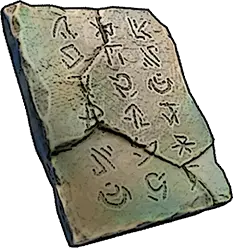
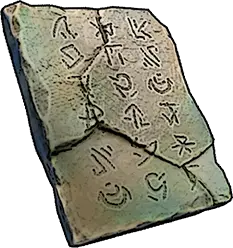
Clay Tablets are a seven-piece Legendary collectible set that documents the final centuries of the Senkamati Artifacts people. Three of the tablets (the Murals) carry first-person narration from a surviving priest, separated by twelve-winter intervals. The other four tablets record the same text in varying states of physical preservation.
Together the tablets explain why the archipelago's ruins are still dangerous: the Senkamati attempted to resist a great curse, a few of them succeeded, and their sealed tombs (plus the guardians bound to them) are what adventurers now disturb when they loot ancient chests.
Property | Value |
|---|---|
Type | Lore collectible set |
Set size | Seven tablets: three Murals plus four preservation variants |
Rarity | Legendary |
Stack size | 10 |
Faction of origin | Senkamati Artifacts people |
Acquired from | Reanimated guardians in the ancient ruins and sealed chests |
Craftable | No |
The Murals are the narrative backbone. Read in order, they follow one surviving priest over generations.
Image | Mural | Timestamp | Key Event |
|---|---|---|---|
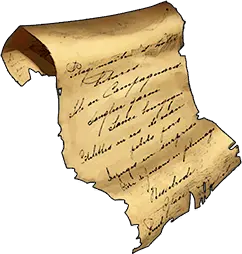
| Twelve winters after the Day of Great Sorrow | The priest records that the god has not returned, that sickness is in the water and the earth, and that the mountain city is raising temples to the Lord of Death. | |
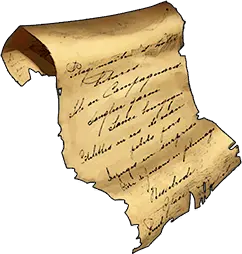
| Twelve times twelve winters later | Yuknom rises from his tomb; the priest's guardians lay him to rest. One guardian grows stronger from his blood; the other is corrupted. The curse may itself be the answer. | |
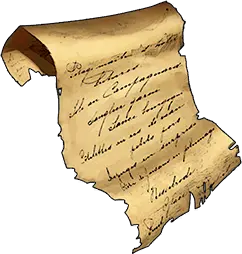
| Countless winters later | Almost no one remains. The priest prepares one final ritual with a relic from distant lands, cutting his own blood with an obsidian blade at the full moon, before the sacred beasts of the Lord of Death. |
"Scratches On The Altar" is the closing entry, found carved into the altar where the ritual happened: "There's no reason left to resist. No one left to remember. This sanctuary will be my grave. It was all in vain."
Image | Tablet | Condition |
|---|---|---|
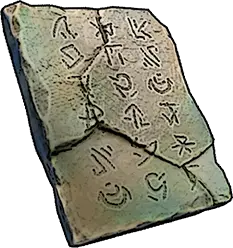
| Well-Preserved Clay Tablet | The characters of a long-vanished language are clearly visible on the burned clay. |
| Damaged Clay Tablet | Part of the inscription is illegible, with a warning to be more careful next time. |
| Cracked Clay Tablet | Cracks make the hieroglyphs almost indistinguishable. |
The condition affects only the flavor text, not vendor price. All tablets are Legendary rarity with stack size 10.
Beyond their flavor text, the tablets are a working quest item. Gathering the set advances the archipelago's deep-lore quest line: the player collects the Senkamati tablets from separate sealed ruins across the swamp islands and brings them to a researcher, who then marks the nearby island where the three Murals must be examined in turn. Each Mural narrows down the location of the priest's final ritual site, which sits inside another stretch of ancient ruins guarded by reanimated, plague-touched defenders. Examining the central altar at that site is the payoff the tablets build toward.
Because the recovery sites sit in the Cursed Swamps and other late-game zones, most players finish the set well after their first ship and faction unlocks. The reading order matters for the narrative: the three Murals are meant to be read First, Second, then Third, with the altar inscription saved for last.
Dropped by Senkamati-bound guardians reanimated in the ancient ruins.
Found in sealed chests unlocked with the Ancient Foothills Key and Ancient Swamp Key.
Cannot be crafted. Tablets that transcribe the murals (paper copy of clay tablet variants) are sometimes distributed separately as quest rewards.
Read the Murals in order. The First Mural sets the "Day of Great Sorrow" framing; the Second introduces Yuknom and the guardian split; the Third concludes the priest's vigil.
The Altar text is the narrative payoff. Save it for last even if looted early.
Tablets are Legendary and stack to 10, so they are worth holding as trophies rather than selling unless inventory is tight.