

The Combat Director is the system in Warhammer 40,000: Dawn of War IV that stages how battles look and feel as they play out. KING Art describes it as an expanded version of the choreographed combat the series is known for, designed to make every engagement more cinematic and visceral. Rather than a separate game mode, the Combat Director runs continuously in the background of normal play, shaping the animations of units across all Factions as they fight.
What the Combat Director Does
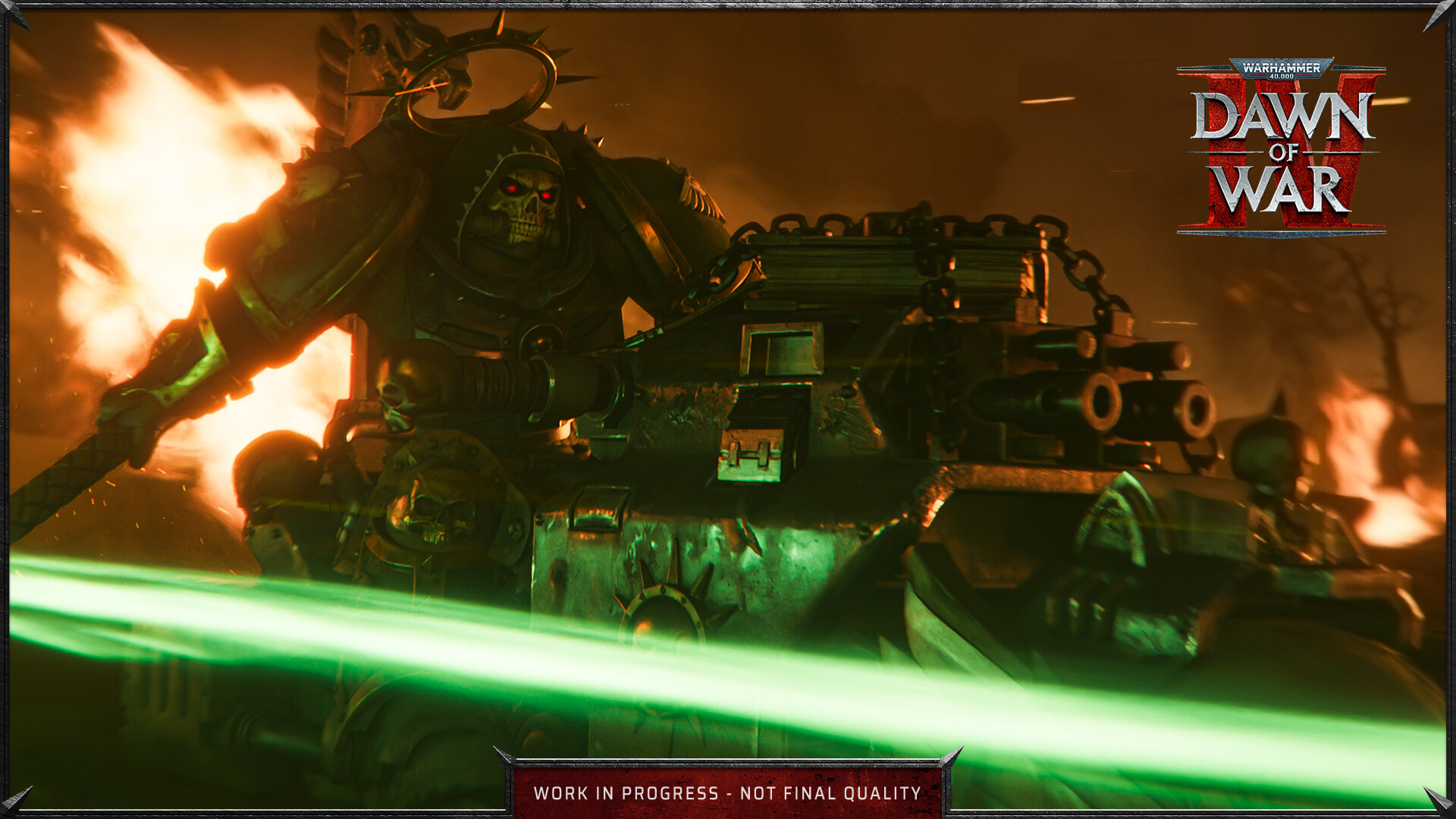
Earlier Dawn of War games are well known for their sync kills: special, choreographed finishing animations that play when one unit lands the killing blow on another. The Combat Director takes that idea and broadens it so that the cinematic treatment is no longer reserved for the final blow. Instead, the system gives every participant in a fight personalized combat-animation choreography throughout the engagement, so the drama is present from the first clash rather than only at the moment of a kill.
How It Differs From Before
The key change is one of scope and timing. In the past, the choreography was limited in two ways: it applied mainly to the unit delivering a killing blow, and it appeared at a single dramatic moment near the end of a duel. The Combat Director removes both limits.
Aspect | Earlier Approach | Combat Director in Dawn of War IV |
|---|---|---|
Who gets special animation | Mainly the unit landing the final blow | Every participant in the fight |
When it appears | At the killing blow | Throughout the engagement, all the time |
Goal | A dramatic finishing flourish | Continuously cinematic, visceral battles |
Because the choreography is applied to all combatants and not just to the winner of an exchange, ordinary skirmishes are meant to read as full melee and ranged duels rather than as units trading damage until one falls over. The system is positioned as a centerpiece of the game's presentation and as one of the main ways the fourth entry distinguishes its combat from earlier games in the series.
Effect on the Feel of Battles
The intended result is combat that stays cinematic at every stage of a fight. When two squads meet, individual models are choreographed against one another, so a clash of lines looks like many small duels happening at once instead of a single scripted finisher at the end. KING Art frames this as making battles more visceral and dramatic, reinforcing the large-scale squad combat that the game is built around.
The Combat Director governs how engagements play out for every faction, so the same cinematic treatment carries across the Space Marines, the Adeptus Mechanicus, the Necrons, and the Orks. Each faction keeps its own distinct look and animations while sharing the underlying system that drives the choreography.
Relationship to Other Systems
The Combat Director is the presentation layer over the game's combat; the underlying outcomes still depend on the units involved and how they are used. Units that survive fights grow stronger over time through Unit Veterancy, so keeping squads alive matters both mechanically and for the moment-to-moment spectacle the Combat Director produces. Together, the two systems reward players for committing veteran squads to drawn-out, choreographed engagements rather than throwing away fresh units.
Animations for Every Clash
Rather than scripting only the final blow, the Combat Director continually checks which units are near each other and synchronizes animations across every interaction in a fight. It accounts for the weight and type of the units involved and draws on a very large library of combinations, including synchronized melee exchanges, throws, and graphic injuries. The developer frames it as a visual and presentation system that makes battles feel more brutal and cinematic, not as a separate rules layer that changes how combat is calculated, and it is made practical by modern hardware.
Pre-Release Note
Dawn of War IV has not yet released. The Combat Director has been described by the developer at a high level, focusing on the shift to all-participant, all-the-time choreography. Finer details, such as exactly which animations trigger in which situations or how the system scales in very large battles, have not been fully detailed and may change before launch.