
Loading...
Loading...
Guannandao
August 18, 2026 at 06:01 AM
Removed 1 repeated internal link so each term links once in the body text
Guannandao is the land in which Sword Sage: Awakening takes place. It is a fantastical ancient world shaped by the catastrophe of the leaked celestial books, and it is the home of both the Yuangong Sect and the protagonist, Pei Sanniang. It is also the region plagued by the Yaoguai that she is sworn to vanquish.
Sword Sage: Awakening has not released yet. It is listed as "Coming soon" with no confirmed date, so every detail below reflects pre-launch material and is subject to change before launch.
Guannandao is the name used on the game's Steam store description, where it is written 关南道 in Chinese. Some pre-launch materials, including the game's own English landing page, romanize the region as Jiannandao instead. Both refer to the same place; the spelling simply varies across sources, as can happen with proper nouns in a pre-launch title that originates in Chinese.
A thousand years ago, the leaking of the celestial books unleashed eternal calamities and monstrous infestations across this land. Guannandao has lived under relentless natural disasters ever since. Rather than a peaceful backdrop, it is a world that has been tested and reshaped by disaster, summarized by the game's line "Disasters forge wonders and temper souls."
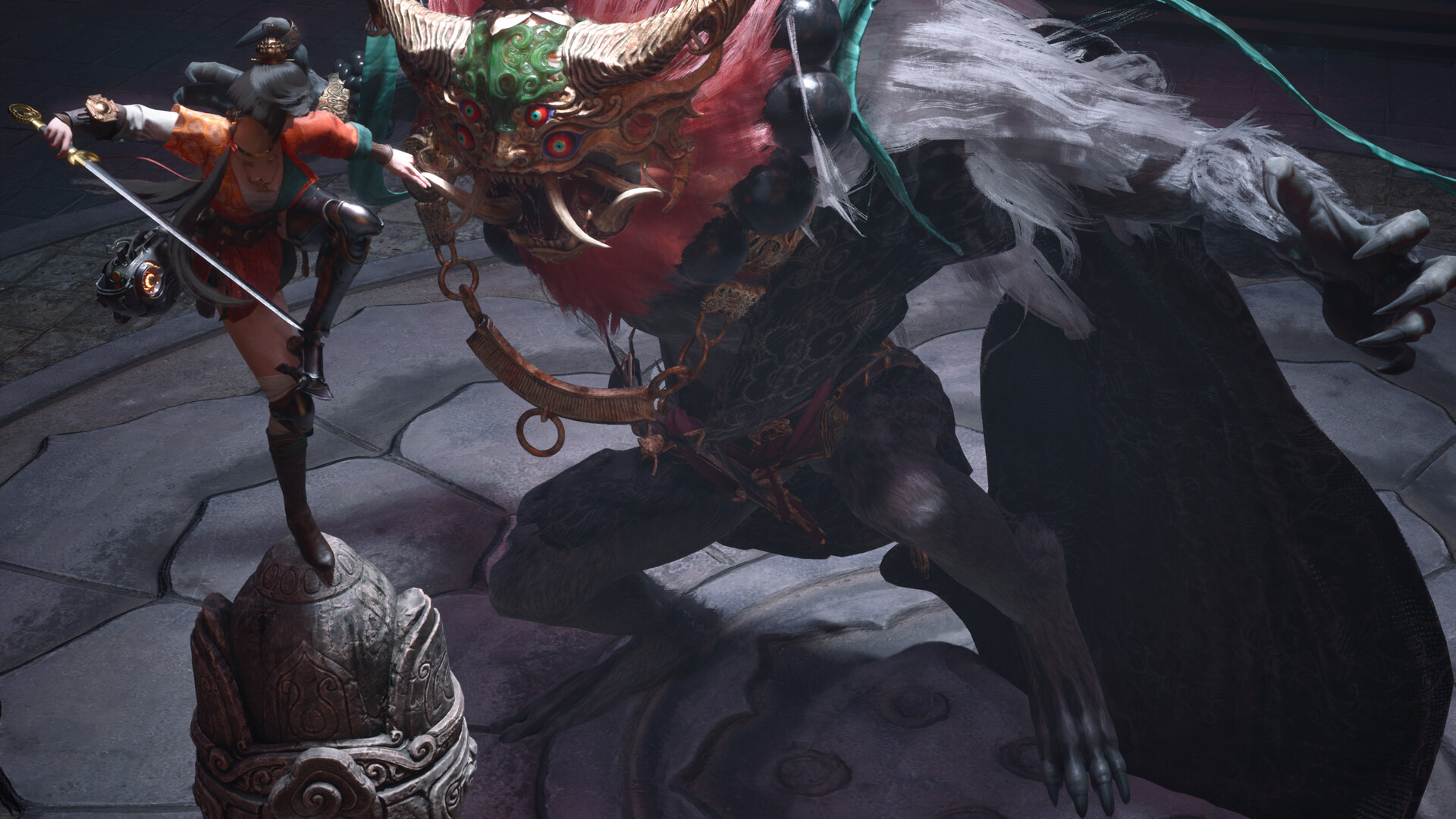
The defining trait of Guannandao's people is their response to the calamities. According to the game, they united to forge "mechanical wonders," turning disaster into triumph. This is the source of the setting's distinctive blend of the mythic and the mechanical: an ancient world of folklore that also contains invented machinery built to survive a hostile age. The interplay of myth and machine is explored in Chinese myth and sci-fi setting.
Although Guannandao is invented, hands-on coverage of the 2026 demo builds describes it as drawing heavily on southwestern China, the region the studio itself is based in. Reported touches include Sichuan dialect in the spoken dialogue, Daoist temple architecture in the Sichuan and Chongqing style, and mountain routes built from narrow rope bridges and steep cliff paths in the manner of the historic Shu roads. A red panda, an animal native to that part of China, appears as a recurring character at the game's rest points. These details come from pre-release builds rather than from the studio's published descriptions, so they are recorded here as observed in the demos rather than as final.
The Chinese materials point at a real place. The official site and the Chinese-language press render the region 剑南道, Jiannandao, which is also the name of a historical Tang-dynasty circuit covering the Sichuan basin, while the Steam listing renders it 关南道, Guannandao. Separately, the game director has said he took the scenery of his home province of Sichuan as the visual motif for the game. The wiki notes the two facts side by side without claiming the game has stated a connection between them.
Guannandao is also the stage for the game's "road-movie odyssey." As described in story, Pei Sanniang travels across the land as a rookie Yaoguai Vanquisher, confronting undocumented horrors, unraveling folkloric mysteries, and venturing into colossal wonders. The setting is therefore framed as something to be traveled and explored rather than a single fixed location.
Material published alongside the July 2024 reveal sketched a corner of the land in more detail than anything released since. None of it has been confirmed as still current in the builds shown during 2026, so it is recorded here with its date attached rather than as settled fact.
In the Jiannan country, heroes and valiant generals were enshrined after death on altars as local gods, tasked with keeping the people safe. Then a meteoric heavenly fire fell and a demonic miasma spread. The altar god who took up his spear against it was overwhelmed by numbers and defeated by a demon lord that walked out of the fire, and has been missing since. The demon lord led his lesser demons into a place called the Doudan Grotto and styled himself Nuotan Wenjun.
Name | What the 2024 material says |
|---|---|
Altar gods | Heroes and generals of the region enshrined after death to protect the living |
Heavenly fire | A meteoric fall that preceded the spread of the demonic miasma |
Demonic miasma | The corrupting spread that followed the fire |
The demon lord | Walked out of the heavenly fire, defeated the altar god and took his lesser demons underground |
Doudan Grotto | The cave the demon lord occupied |
Nuotan Wenjun | The title the demon lord took for himself |
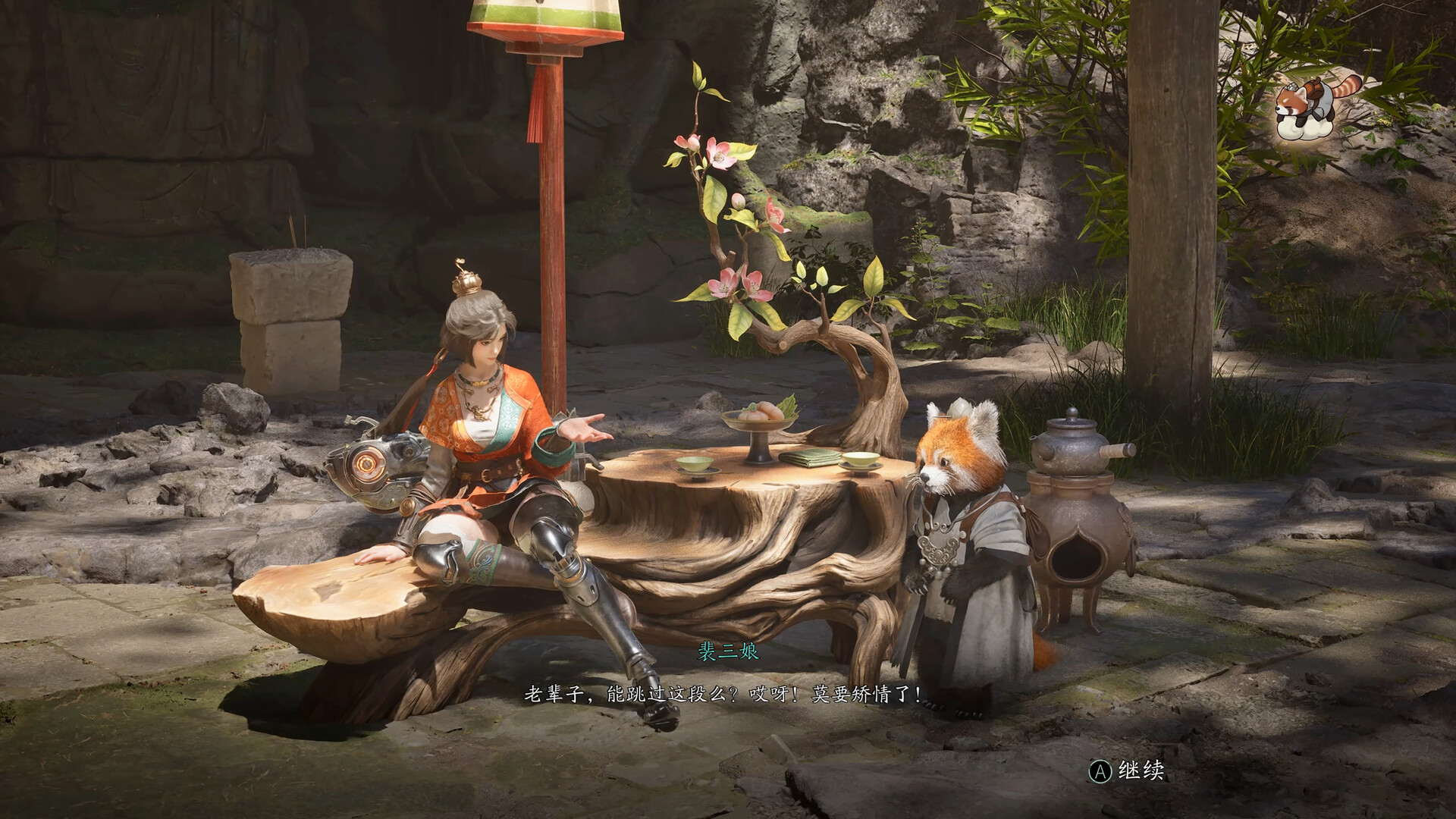
The land is not uniformly hostile. Preview builds placed rest points along the route in the form of a bench cut from a tree stump, tended by a red panda in robes who pours tea to restore health and prepares consumables that give temporary combat buffs. A published screenshot shows one of these stops in daylight, with a tea stove, cups, a hanging lantern and a blossoming branch, and a line of dialogue on screen between Pei Sanniang and the red panda. Routes double back so that a rest point can usually be reached again through a shortcut rather than by retracing the whole way.
Aspect | Detail |
|---|---|
Setting type | A fantastical ancient world rooted in Chinese myth and folklore, blended with sci-fi. |
Condition | Scarred by a thousand years of calamities born from the leaked celestial books. |
Its people | Resilient inhabitants who forged "mechanical wonders" to survive. |
Threats | Plagued by Yaoguai warped by the books. |
Defenders | The Yuangong Sect and its Yaoguai Vanquishers. |
Naming | Rendered "Guannandao" on Steam; also romanized "Jiannandao" in some materials. |
Pre-launch material does not detail specific cities, regions, or named locations within Guannandao, nor a map of the world. The wiki will add such places only once they are confirmed.
