

Combat in Sword Sage: Awakening is built around fluid traditional swordsmanship that blends softness with strength. Pei Sanniang does not fight with the sword alone. She seamlessly weaves heavy leg attacks, celestial artifacts, and Taoist spells into her offense to vanquish the Yaoguai empowered by the forbidden celestial books.
Sword Sage: Awakening has not released yet. It is listed as "Coming soon" with no confirmed date, so every detail below reflects pre-launch material and is subject to change before launch.
The Core Loop: Evade Cyan, Strike Red
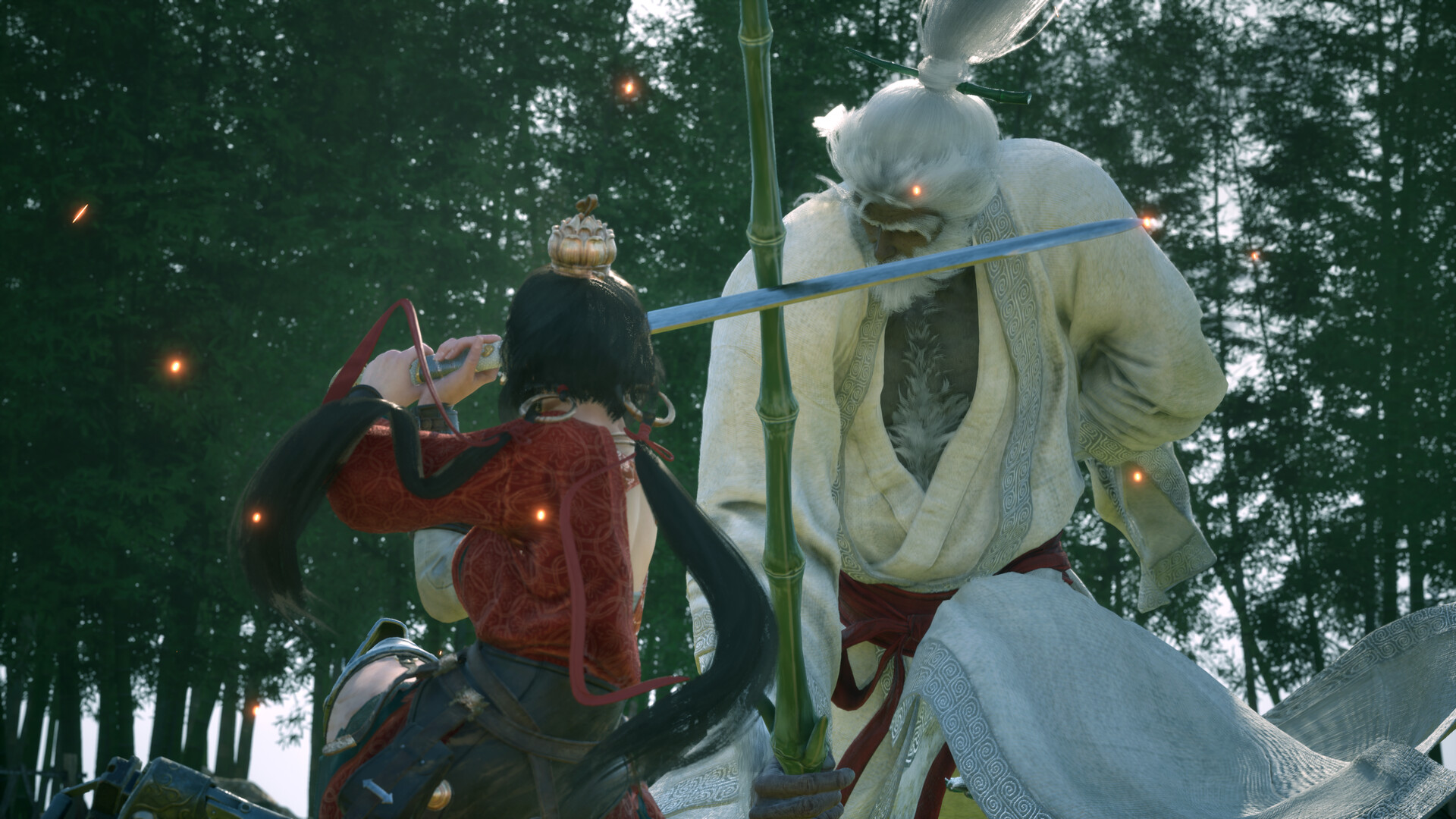
The defining mechanic is a secret technique the game renders as "Evade Cyan, Strike Red." Rather than treating dodging and attacking as separate actions, the technique fuses avoidance and counterattack into a single motion. The two halves of the name describe the two halves of that motion: a flexible evasion that slips past an enemy's weapon without meeting it head-on, followed immediately by a strike that dives into the opening created. The developers describe the approach as overcoming hardness with softness and using an opponent's strength against them. Because the avoidance and the counter are compressed into one action, the game does without a conventional dodge roll. The dedicated page, Evade Cyan, Strike Red, covers this in full.
In the original Chinese the technique is written 避青入红 (bi qing ru hong), literally "avoid the cyan, enter the red." Chinese material for the game pairs it with 义腿重击, the heavy strike delivered by the protagonist's prosthetic leg, so the limb that supplies her kicks is an artificial one rather than an ordinary leg. That detail ties her fighting style to the "mechanical wonders" that define the setting.
Doing without a dodge roll is not the same as doing without a guard. Hands-on accounts of the 2026 preview builds describe blocking with the sword as available and useful, with two limits attached. It does not work at all against the heaviest enemy techniques, which the game marks as unblockable, and every block spends weapon durability. Attacking spends it too, tracked on a gauge low on the screen, and a blade that empties the gauge snaps outright, leaving her unable to attack or guard until it is dealt with. One input feeds the broken blade into the furnace-like sword case she carries on her back, and roughly two seconds later it is drawn newly forged with the gauge refilled, a second weapon covering the gap in the meantime. That the case holds two blades and forges them inside itself is now stated outright in the store description rather than only observed in a demo. Meeting force with force is therefore possible, but the game prices it, which is what pushes play back toward the evade.
The colours in the technique's name are literal. An incoming attack that can be answered is flagged in cyan, and the counter that follows reads in red, so the two halves of "Evade Cyan, Strike Red" are visible on screen rather than only in the name.
Aiming, Timing and Failure
The evade is aimed. Reports from the playable builds describe holding the guard input and pushing in the direction that answers the shape of the incoming attack: up against a high sweep, down against a low one, and left or right against a strike aimed at the middle. Timing alone is enough to slip the blow. Getting the direction right as well is what converts the evade into the counter, which breaks the attacker's posture and opens either a quick combo or the special attack carried by the equipped weapon.
Enemy finishing moves change the terms. They cannot be blocked, and they only answer to the direction the game prints on screen. Choose wrong and the evade fails outright and the hit lands, which is why boss patterns that end a long chain of ordinary swings with one unblockable are the game's central test.
The shape of the threat is set out by the game itself. Powerful enemies keep up an unbroken offence built from two kinds of move: ordinary strikes that are deliberately hard to read, and critical skills that hit far harder and cannot be blocked at all. Both kinds shift between the upper, middle and lower lines, which is why the answer the description recommends is not a better guard but repeated, accurate use of the technique.
Situation | What the player does | Outcome |
|---|---|---|
Ordinary attack, correct timing | Hold guard, push any direction | The blow is slipped, no counter |
Ordinary attack, correct timing and direction | Hold guard, push the matching direction | Evade flows into the counter, posture broken, combo or weapon special opens |
Enemy finishing move | Hold guard, push the direction shown on screen | Damage avoided and the attacker takes heavy damage in return |
Enemy finishing move, wrong direction | Any other input | The evade fails and the attack connects |
Any attack, guard used as a block | Hold guard without evading | Damage absorbed at the cost of weapon durability; does not work on unblockable moves |
Pillars of Combat
Pillar | Description |
|---|---|
Swordsmanship | Fluid traditional sword techniques that blend softness with strength, the backbone of every encounter. |
Prosthetic leg strikes | Heavy blows from an artificial leg (义腿), woven between sword combos for variety and pressure. |
Celestial artifacts | Mystical artifacts that bring supernatural options to bear against supernatural enemies. |
Taoist spells | Taoist magic layered into combat to deal with creatures warped by the celestial books. |
Evade Cyan, Strike Red | The fused evade-and-counter technique that replaces a traditional dodge roll. See Evade Cyan, Strike Red. |
Weapons
The game's weapons are swords. Pre-launch material indicates that the full version is planned to feature multiple sword types, with a publicly shown build demonstrating a subset of them. Certain styles, such as fighting with dual swords, are described as rewarding precise timing, where landing consecutive hits within the right window chains into stronger combinations. Exact weapon names, full movesets, and stat values are not detailed in pre-launch sources and are treated here as unconfirmed.
The full game is planned to feature three sword types, two of which appeared in the build shown publicly. The game director confirmed the count on the record: the goal is three final sword types in the full version, two were playable at the June 2026 preview event, and the one held back is the dual swords (双剑). First-hand accounts of that build agreed on the pair that was playable but not on what to call the first of them, rendering it either 长剑 or 三尺剑; the store description has since settled it in favour of 三尺剑. The second is the horse-cleaving sword (斩马剑), described as a greatsword and as the weapon newly opened up for that build, and the two do not handle alike. The horse-cleaving sword demands a tighter evade window and pays it back with a counter that hits harder and stacks; its swings are slow to start and slow to recover, but the first two segments of a swing can be charged to dump damage in a short burst. The dual swords are described as a timing weapon: land the first and second hits on the input frames the game prints on screen and a longer, showier combo follows. No ranged weapons are planned.
All three are now named outright, in English as well as Chinese. They are the Three Chi Sword (三尺剑), the Horse-Cleaving Sword (斩马剑) and the Twin Swords (双剑). Each type carries a body of martial techniques that can be studied, and on top of that every individual weapon has a signature skill of its own, so two blades of the same type do not play the same way.
Where the weapons come from has a name too. Disciples of the Yuangong Sect practise the Spirit Shaping Craft (聚形术), gathering spirit and shaping it into weapons. That is the in-fiction reason a vanquisher can carry a forge on her back and draw a finished blade out of it in the middle of a fight.
The two attacks that come out of that draw are named as well. The Unsheathed Chop (出鞘斩) lands a quick strike on an enemy while the weapon is still being forged. The stronger Unsheathed Fire Chop (出鞘炼火斩) asks for a faster and better-timed forge, and pays out fire damage when it connects.
Each weapon carries its own ultimate skills, its own action style and its own Five Elements attribute, which is where variety is meant to come from in a game with no ranged option and only swords. A weapon-crafting system, described by the studio as the Forging System, is planned to unlock partway through the full campaign and is not present in any build shown so far.
Weapons are also found rather than only chosen. Enemies and chests drop them, and two weapons that share a name share the same signature skill while differing in quality, values and affixes, so the same blade can arrive in better or worse form. Some affixes stack a protective effect that pairs with matching charms for a set bonus. Character levels arrive on their own as experience accumulates and do not raise base statistics directly; what they hand over is a pool of merit points to spend at will. Progression and Upgrades covers that side of the game in full.
Systems Seen in the Demo Builds
Playable builds shown to the public during 2026 exposed several systems that the store description does not mention. All of them come from pre-release builds and can still change, so they are recorded here as demo behaviour rather than as final design.
System | What the demo builds showed |
|---|---|
Composure (精气) | A meter carried by enemies rather than a stamina bar carried by the player. Sustained offence drains it. While it holds, bosses shrug off flinches and take reduced damage; empty it and damage spikes, and the finisher that follows permanently lowers that enemy's maximum health. |
Sword durability | Blades wear down through attacking and through blocking alike, tracked on a gauge low on the screen. A blade that empties it snaps, and until it is dealt with the protagonist can neither attack nor guard. |
Reforging | One input feeds the broken blade into the furnace-like case carried on the protagonist's back, and about two seconds later it is drawn newly forged with the gauge refilled, a second weapon covering the gap. An upgrade later turns that draw into an attack in its own right, adding quick-draw and flame-wreathed variants. |
Directional evasion | The evade half of the technique is aimed rather than automatic. An evade in any direction still slips the blow at no cost and can flow into follow-up moves, but only the direction that answers the incoming attack converts it into the counter. |
Weapon drops and affixes | Enemies and chests drop weapons. Two weapons sharing a name share one signature skill; their affixes and values vary with quality, and some affixes stack a protective effect that combines with matching charms for a set bonus. |
Rest points | Checkpoints take the form of a tea post rather than a campfire, tended by a red panda who pours tea to restore health and helps prepare consumables that grant temporary combat buffs. |
The demo builds also showed a duel against a figure named 猿公 (Yuangong), whom one first-hand account of the preview build describes as the protagonist's own sword teacher and the fight as a teaching bout. He cannot be hurt at first. Three counters landed in a row break that state and open a short window in which he takes damage, and to make it possible at all he calls out the direction of each attack in a continuous string, so the player answers the call rather than reading the animation. The studio has run timed versions of that fight as a challenge at its show-floor booths.
Difficulty and Accessibility
The preview builds carry a single difficulty setting with no selectable easy or hard mode. What they offer instead is a pair of talismans that the game hands over after the player has died three times in the story. The first removes the directional requirement, so a counter fires on timing alone. The second goes further and drives the evade and the counter automatically from the guard input. Neither is permanent, the two can be swapped at will, and turning them off returns the fight to its original terms.
A second accessibility change is planned rather than present. The prompts that call out high, middle and low currently print as Chinese characters, and the developers have said the finished game will let players replace them with arrows pointing up, across and down.
Aid | What it changes | Status |
|---|---|---|
Single difficulty setting | No mode select; the aids below carry the adjustment instead | In the preview builds |
First talisman | The counter no longer needs a correct directional input | Granted after three story deaths |
Second talisman | Evade and counter run automatically from the guard input | Granted after three story deaths |
Arrow prompts | Replaces the Chinese high, middle and low characters with directional arrows | Stated as planned for the full version |
Encounters and Level Structure
Levels double back on themselves. Doors unlock and ladders drop to open shortcuts, so a stretch already cleared can be skipped rather than fought again, and rest points can be reached without retracing the whole route. Enemies with their backs turned invite a stab, which is regularly used as bait for a second enemy waiting out of view. Powerful optional opponents stand quietly away from the critical path. Some chests only open once an environmental rune puzzle has been solved. Rival groups of enemies sometimes fight each other, which the player can watch out or interrupt for the spoils.
Those levels are built as self-contained boxed gardens rather than as one continuous world, which is what lets a single stage fold back on itself so densely. The named boss of the June 2026 preview build, 野犬 (Wild Dog), ran in two phases and shows how that structure is used. The first phase throws wide, well-signalled swings that the counter handles cleanly. The second speeds up and plants delayed fire pillars, so even a clean evade and counter can be knocked flat by the blast that follows a beat later.
Enemy density is deliberately shaped. Play testers of the preview build reported being surrounded with no way out, and the studio's answer was not to add a dodge. The early stages of the full game are meant to rarely surround the player, with several enemies at once arriving toward the middle and end. Items and abilities that create space are instant, with no long recovery, and are held in check by cooldowns rather than by animation length. The studio has also said that a fix for the related problem, having no way to break off and heal at low health, was finished after the mid-2026 show circuit and will arrive in a later build.
Design Influences
The combat draws openly on martial-arts philosophy. The fused evade-and-strike concept is compared by its creators to Jeet Kune Do, the martial art associated with Bruce Lee, with its emphasis on softness overcoming hardness and redirecting an opponent's force. This influence shows up directly in the mechanics: defense and offense are meant to flow into each other rather than alternate.
The team has also named the action game God Hand as a reference point for the fast, physical feel of the fighting.
Facing the Yaoguai
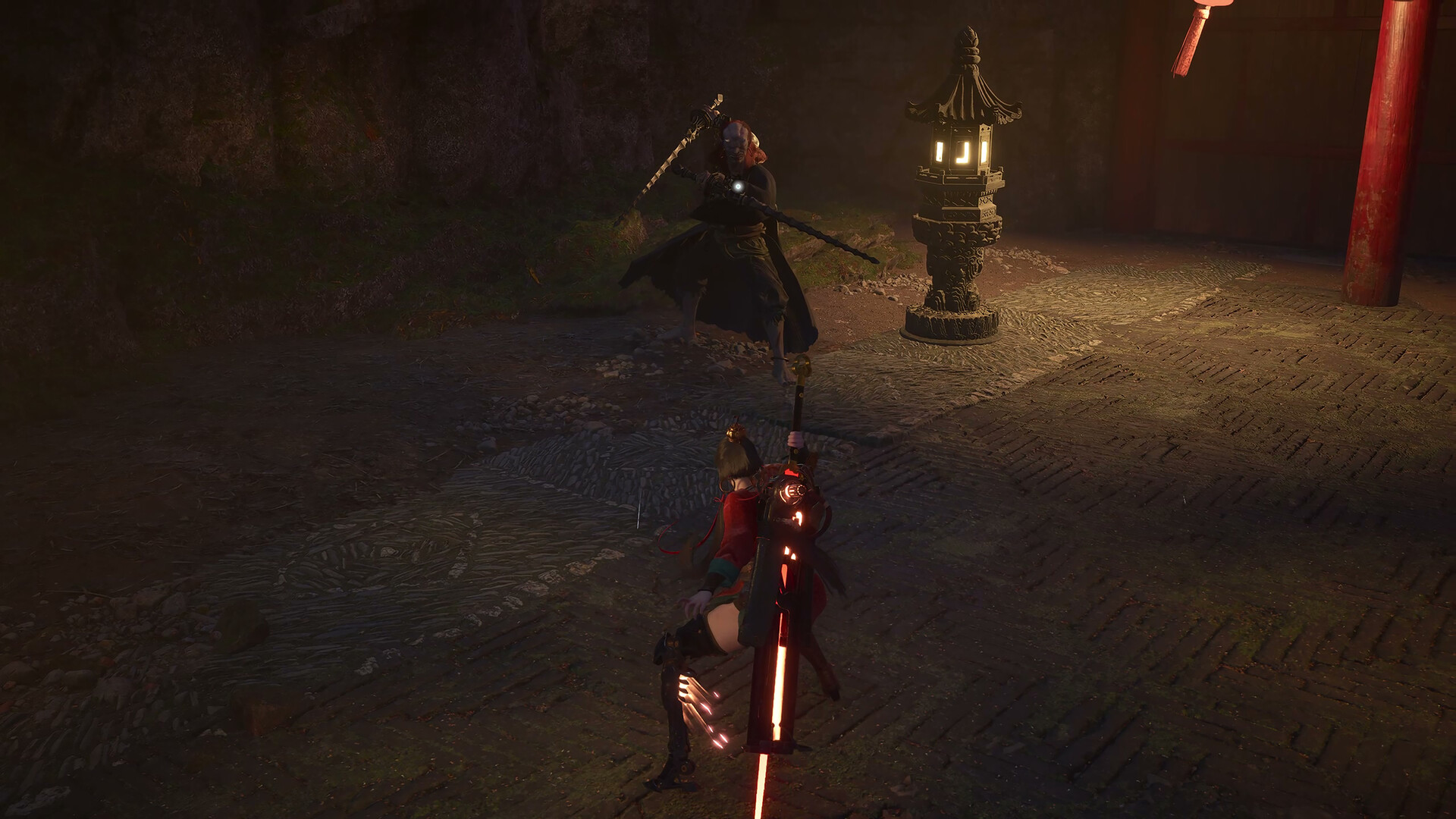
The enemies of the game are the Yaoguai, supernatural creatures affected by the power of the celestial books. Combat exists to vanquish them. Because the vanquisher's toolkit mixes physical strikes with artifacts and spells, encounters are framed around adapting the right tool to each threat. Specific enemy movesets, boss mechanics, and difficulty options are not detailed in pre-launch material.
Scope
Pre-launch interviews put the target campaign length at roughly 15 to 20 hours, in line with other focused action games. The team has also said it is aiming for at least 20 types of bosses. Both figures are pre-launch targets and can still change before release.
Character customisation is planned for the full version, with hairstyles and outfits unlocked as the player progresses rather than configured at the start. Coverage of the mid-2026 hands-on builds put development at roughly sixty percent, with occasional performance dips on the preview PC build. No release window has been announced.
What Is Confirmed
Fluid swordsmanship blending softness with strength is the core of combat.
Heavy leg attacks, celestial artifacts, and Taoist spells supplement the sword.
The signature technique Evade Cyan, Strike Red fuses evasion and counterattack and replaces a traditional dodge roll.
Weapons are swords, with multiple sword types planned for the full game.
Combat is built around vanquishing Yaoguai empowered by the celestial books.
Blocking exists but spends weapon durability, and does not work against attacks the game marks unblockable.
The evade is directional, and a correct direction is what turns it into the counter.
There is one difficulty setting, supported by two talismans granted after three story deaths.
The three sword types are the Three Chi Sword, the Horse-Cleaving Sword and the Twin Swords.
Weapons are made by the sect's Spirit Shaping Craft, and the sword case forges two blades inside itself.
Enemy offence divides into hard-to-read ordinary strikes and unblockable critical skills, both shifting between the upper, middle and lower lines.