
Loading...
Loading...
Chinese Myth and Sci-Fi Setting
September 7, 2026 at 12:37 AM
Added the cliff-carving of the celestial books as the setting's founding act
One of the most distinctive things about Sword Sage: Awakening is its setting, which deliberately blends two traditions that rarely meet: Chinese mythology and folklore on one side, and science fiction on the other. The official framing of this mix is the phrase "Chinese mythology meets Sci-Fi."
Sword Sage: Awakening has not released yet. It is listed as "Coming soon" with no confirmed date, so every detail below reflects pre-launch material and is subject to change before launch.
The game describes itself as an action RPG rooted in Chinese myth and folklore. Its core elements draw on that heritage: the Yaoguai as supernatural creatures, the Taoist spells in the combat system, and the "Zhiguai folkloric mysteries" the protagonist unravels on her journey. Zhiguai is a classical Chinese tradition of strange and supernatural tales, and the game uses it as a wellspring for its mysteries and monsters.
Because the game is an original work inspired by this heritage rather than a retelling of any single myth, the wiki treats real Chinese folklore as inspiration. Only what the game's own sources confirm is presented as in-game canon; broader mythological detail is described as the tradition the game draws from, not as confirmed plot.
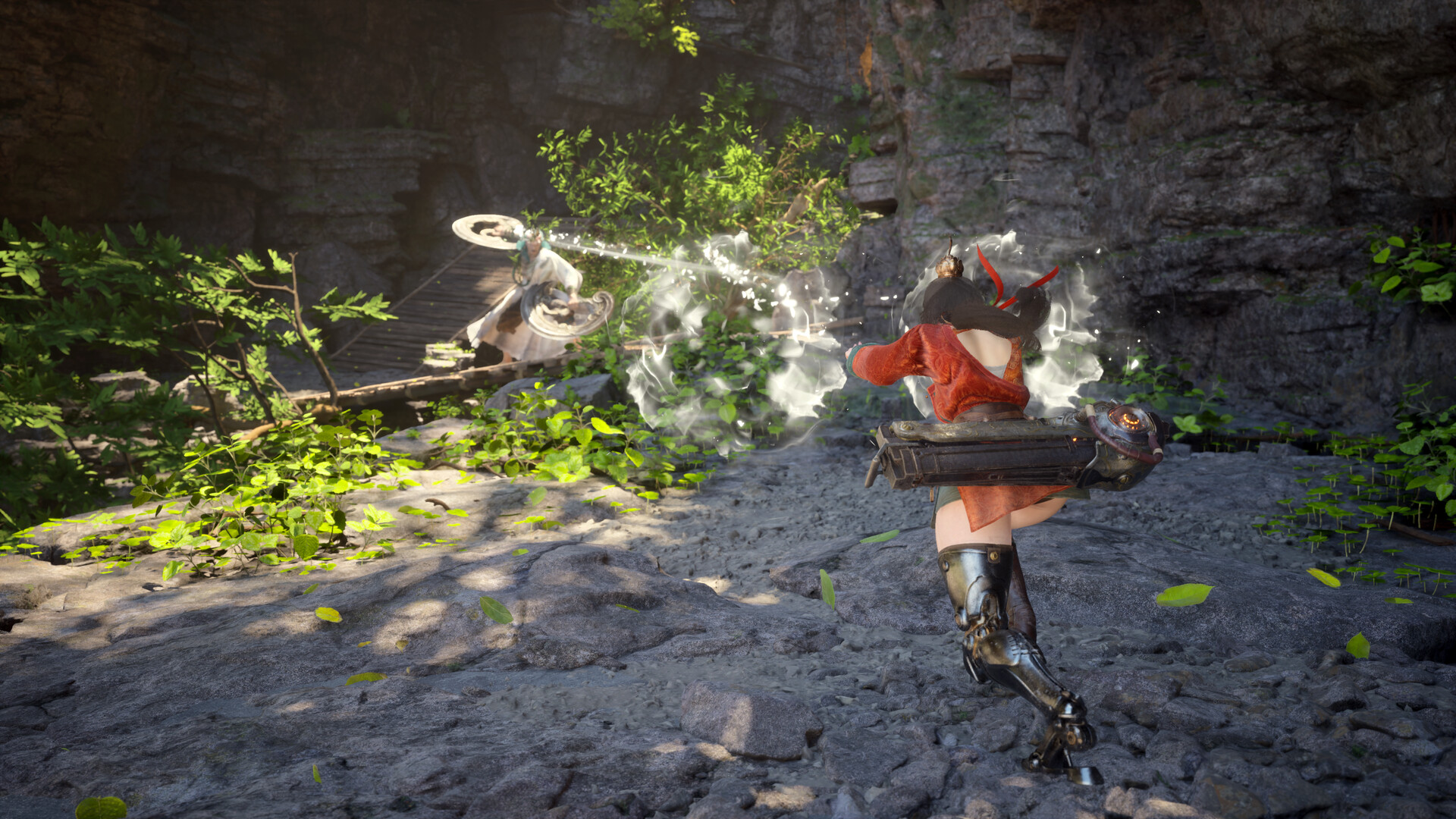
The science-fiction side of the setting comes from the world's response to disaster. After the leaking of the celestial books unleashed calamities, the people of Guannandao forged "mechanical wonders" to survive. These invented machines sit alongside the ancient and mythic, producing a world where folklore and machinery coexist. The game's motto, "Disasters forge wonders and temper souls," captures this idea: the wonders exist because of the disasters.
The catastrophe at the root of it is itself an act of writing. The celestial books were not stolen and not destroyed. Their keeper annotated them and cut the annotations into a cliff face, turning a guarded secret into a public monument and loosing a thousand years of calamity. A world that answers disaster with engineering therefore begins with a disaster caused by scholarship, which sits well in a setting that keeps putting the ancient and the built side by side.
The game's framing uses the language of "wonders" repeatedly. One of its feature headings is "World of Wonders," and the journey described in story includes venturing into "colossal wonders." Taken together, these point to a setting where the player explores large, strange, and impressive constructs, though pre-launch material does not detail exactly what these wonders are.
The studio's own site is more specific than the store copy about what those wonders look like. Where the storefront text says the player ventures into "colossal wonders," the game's landing page and its publisher's product page both call them "colossal amber-punk wonders," naming a distinct aesthetic rather than generic machinery. The same pages describe the people of the land as having "pioneered advanced mechanical technologies for survival," a slightly stronger claim than the storefront's "advanced technologies."
The machinery is not confined to the scenery. Pei Sanniang delivers her heavy leg attacks with a prosthetic limb, named 义腿 in the Chinese store description, so the protagonist carries a working example of the setting's engineering on her own body. The blend the game advertises therefore runs from landscape-scale constructs down to a single character's stride.
The team has a working name for the blend. In interviews the game director calls it "Cyber-Xiuxian", joining xiuxian, the Chinese tradition of cultivating one's way toward immortality, to a cyberpunk sensibility. The world is described as a fictional xiuxian setting rather than a historical one, which is what allows a sword with mechanical parts and a narrative about becoming an immortal to sit in the same story.
The in-fiction basis for the machinery is named as well. The studio points to the Mohist school of ancient China, whose engineers built tools and war machines, as the precedent it drew on, on the grounds that mechanical craft genuinely existed in the period the game evokes. The official site now calls the great structures the player travels into "amber-punk" wonders, a label that first appeared in 2026 alongside the existing description of colossal engineering projects.
The look runs against the current in its genre, and the director has given three reasons for it. He adapted the scenery of his home province of Sichuan as the motif. He wanted a different visual experience from the dark atmosphere most recent action games choose. And he takes the journey toward immortality to be a cheerful story in itself. Darker areas are expected to appear later in the full game as the story turns, but the overall tone is meant to stay bright and colourful.
Element | Description |
|---|---|
Mythic foundation | Rooted in Chinese myth and folklore, with yaoguai, Taoist spells, and Zhiguai tales. |
Sci-fi layer | "Mechanical wonders" forged by the people to survive the calamities. |
Unifying theme | "Disasters forge wonders and temper souls." |
Tone | A "road-movie odyssey" where "Chinese mythology meets Sci-Fi." |
Stage | Guannandao, an ancient world scarred by a thousand-year catastrophe. |
The game's store listing carries a mature content notice. It states that the game may contain content not appropriate for all ages, specifically frequent violence or gore, general mature content, outfits and light or stylistic partial nudity, and imagery that some players may find disturbing. This reflects the darker tone of a world built on calamity and monstrous infestation.
