
Loading...
Loading...
Runs and Tours
September 11, 2026 at 09:29 PM
Added the branching tour map, the three-crashes-per-race allowance and the post-race choice of three stat upgrades or credits as hedged hands-on detail; corrected the three paths from a difficulty choice to an event preview; recorded that planet order within an act is fixed while events randomize
Star Wars: Galactic Racer is built around runs rather than a fixed campaign ladder, and the unit of a run is a tour. The developers describe the game as a roguelite, and the tour is where that label earns itself. You enter a tour, race through it, and either come out the far side or wreck out and start over with a little more than you had before. This page covers how a tour is put together and what survives between attempts.
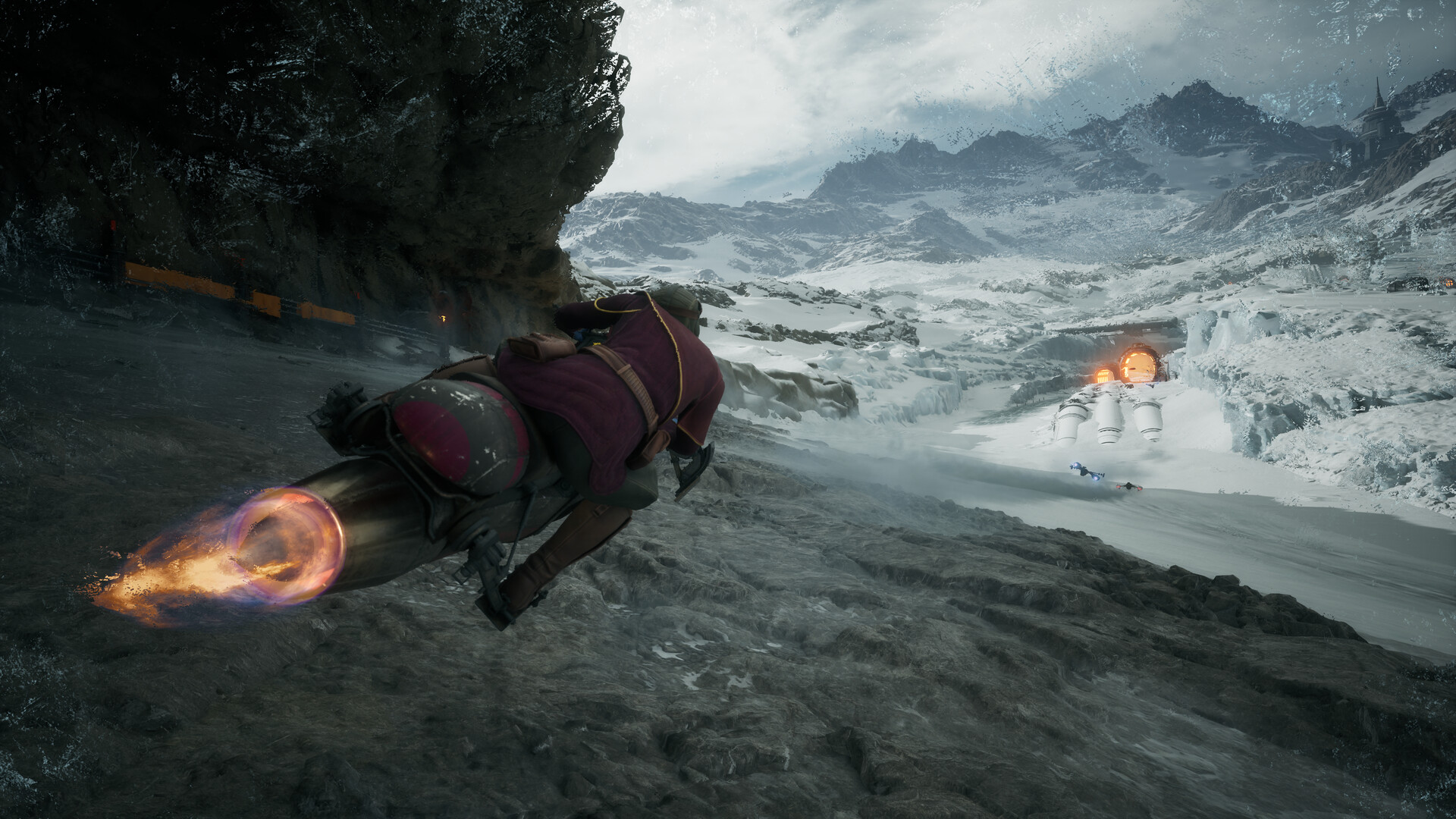
A tour spans three acts and is randomized each time you start one, so the exact sequence of events changes from run to run. Over its length a tour carries you across multiple worlds, roughly six distinct ones, with the challenge escalating as you go. Branching paths through the tour hand out different rewards, so part of the strategy is choosing which events to chase and which to skip. The worlds themselves are covered in Planets and Circuits.
Early hands-on accounts describe that branching as a map you pick your way across between events, choosing one node at a time and taking the rewards that come with the route. One detail is worth keeping straight, because it is easy to overstate the randomness: coverage of the campaign structure has said that you race the planets of an act in a set order, and it is the events waiting on each planet that shuffle from run to run.
The events that fill a tour are not all the same kind of race. Alongside standard races, a tour mixes in a handful of distinct event types, and the variety is part of what keeps a run from feeling repetitive.
Event | What It Asks Of You |
|---|---|
Standard race | A normal race against the rest of the field; place near the front to keep your run alive |
Field Test | A time challenge: hit a target time in a vehicle you may not be used to, described in hands-on builds as a time trial |
Eliminator | Competitors are culled as the race goes on until only the top three remain; hands-on accounts add that dropping to the back of the pack as you cross a checkpoint is what puts you out |
Mystery Encounter | An event whose nature is not revealed up front, and which may turn out to be a conversation rather than a race |
When you begin a run you also choose between three different paths. The choice is framed as information rather than as a difficulty slider: each path shows you what kinds of events you will face, so you go in with some idea of what is coming. Combined with the branching routes through the tour itself, that choice shapes both the challenge and the rewards on offer.
You cannot just join a tour. Competing requires a League Entry Token, which is the gate into The Galactic League's tour. You earn the Token by qualifying, and holding onto it is the whole game.
The Token is conditional. If you crash too many times, or you fail to place in the top three of an event, the League revokes it and you wreck out of the tour. Wrecking out drops you back to the qualifiers, where you race to re-earn a Token and start a fresh tour. This is the roguelite loop in plain terms: a strong run can collapse, and when it does you go again from the front of the line.
Hands-on accounts put a number on the crash half of that rule. They describe an allowance of three crashes per race, which sounds generous right up until the third one arrives, and once the allowance is gone you are out of the League and starting again on the next tour. The same accounts report that outside of Eliminators, where position decides survival outright, where you finish a race affects the rewards you collect rather than whether you continue. That sits awkwardly beside the top-three rule stated in campaign coverage, so both are recorded here until an official source settles which applies where.
Element | Detail |
|---|---|
Tour length | Three acts, randomized each run |
Worlds per tour | Around six distinct worlds |
Entry requirement | League Entry Token |
Wreck-out triggers | Too many crashes, or failing to finish top three in an event |
After wreck-out | Restart qualifiers to re-earn a Token |
Crashes per race | Reported as three in hands-on builds; not stated in official copy |
Route through a tour | A branching map of events picked node by node, per hands-on accounts |
Planet order | Set within an act; the events on each planet are what randomize |
Not everything resets. Only certain perks and unlocks earned on earlier attempts carry into the next one, so you start each tour fresh but not from zero. The narrative goal, toppling Kestar Bool, persists across runs regardless of how any single tour ends, which keeps the campaign moving forward even through a string of bad tours.
There is a persistent resource economy attached to the loop, and the currency behind it is Galactic Credits. Credits buy parts from vendors in the paddock and are kept even when you wreck out, and wrecking out itself pays out a bundle of them, which can then go into raising your base stats or into cosmetics. So a failed tour is not a wasted one. One early preview referred to a persistent upgrade resource under a different name, Tuning Parts, and no later material has repeated it, so treat Galactic Credits as the name and the alternate as unconfirmed rather than as a second separate resource.
Hands-on accounts describe how that economy is actually fed. After each race you are offered a choice of three stat upgrades, so the reward might go into handling, or into resilience to knocks, or straight into an overpowered Ramjet. There is a fourth option: skip the upgrade entirely and take the credits instead, to spend at a merchant further along the route, where parts and abilities are sold. Parts give passive buffs and abilities are gadgets fired manually on a cooldown, so the decision is partly about which of the two you expect to need. That post-race credit option also points at credits being the run currency in the shipped build, though it remains hands-on reporting rather than official copy.
The runs-based campaign is single-player, but the game also carries PvP multiplayer in the form of grudge matches for two to twelve players, with cross-platform support and no season pass. It sits beside the tour structure rather than inside it; the customization and class choices you learn in Gameplay and Controls carry across into it.
