
Loading...
Loading...
Combat and Takedowns
September 11, 2026 at 09:29 PM
Added hedged hands-on detail on the two boost systems, the Ramjet overheating and destroying your own craft, the slow-motion takedown camera, and the passive parts versus active abilities split
Racing in Star Wars: Galactic Racer is a contact sport. The game does not treat clean lines as the goal. You can slam, shunt, and take down rivals, and bumping a competitor off the track is something the game actively encourages rather than penalizes. This page covers how that aggression works and why it is worth the danger it brings.
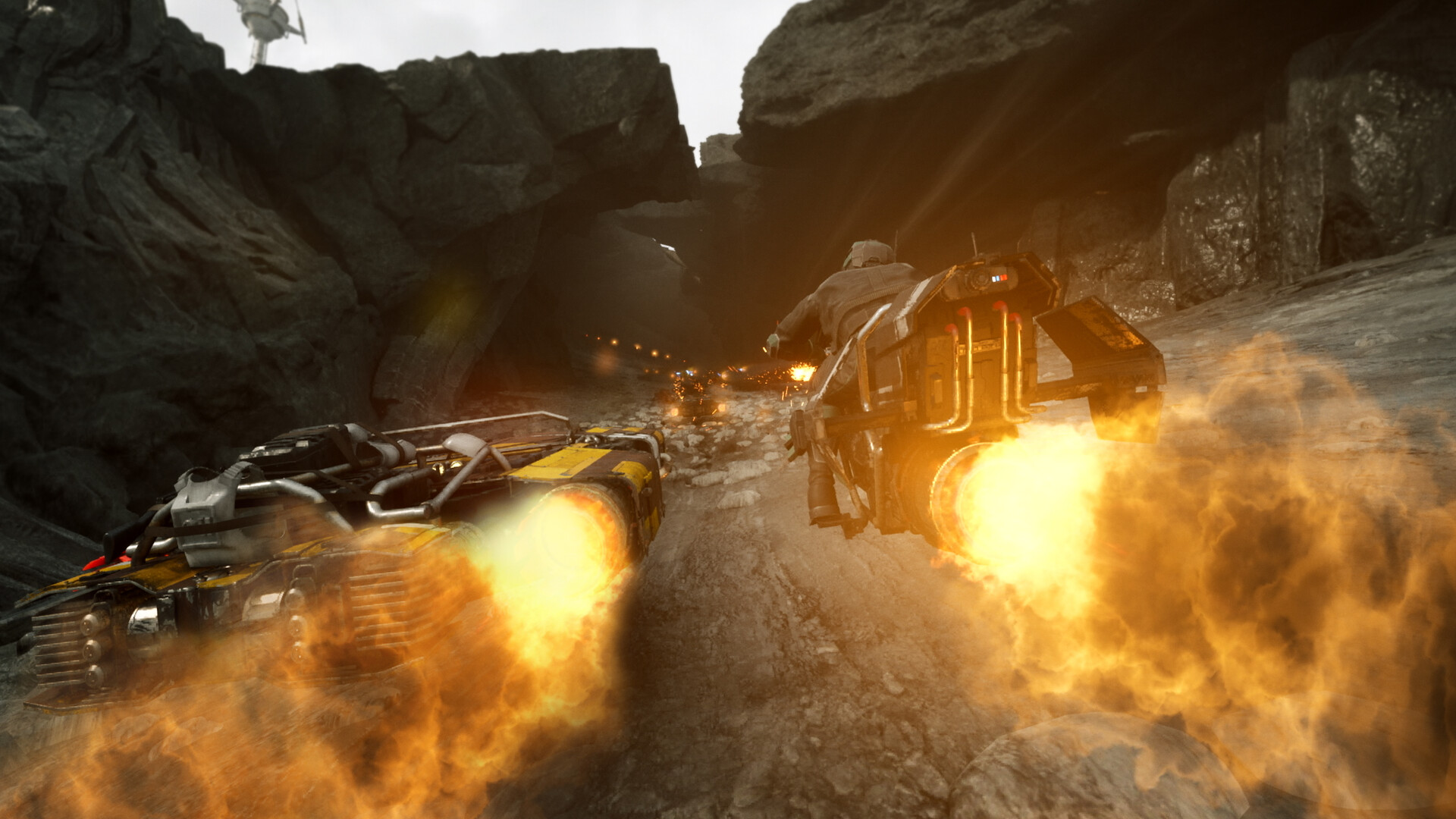
The core verbs are slamming and shunting other racers, with takedowns as the payoff. You use your vehicle's weight and speed to knock rivals around, push them into walls and hazards, and clear them out of your way. Because the field is fighting back, a race is as much about who you can remove as about the racing line you hold.
The Ramjet boost component is built for this. As covered in Gameplay and Controls, it gives great speed and helps knock opponents off the track, which makes it both a way to gain ground and a way to end someone else's race. The catch is that it overheats, so using it as a weapon competes with using it to go fast, and you cannot do both forever.
Early hands-on accounts from press builds go further on both halves of that trade, and they are worth reading as reporting rather than as confirmed specification. Those accounts describe a craft carrying two separate boost systems, with the Ramjet being the one dedicated to smashing into other drivers and sending them off the road and into canyon walls. They report that a landed hit cuts to a slow-motion takedown camera on the tumbling wreckage. They also report the failure case in plain terms: hold the Ramjet too long, it overheats, and your own craft blows up right there on the track.
Official material has so far gone no further than calling the Ramjet mechanic game defining, so the overheating threshold, the self-destruct and the takedown camera all sit at hands-on confidence until a first-party source spells them out.
Detail | What Early Hands-On Accounts Describe | Status |
|---|---|---|
Two boost systems | A standard boost alongside the Ramjet, with the Ramjet the one built for ramming rivals, as laid out on Gameplay and Controls | Hands-on reporting, not official copy |
Ramjet overheat | Holding it too long overheats the component and destroys your own craft mid-race | Hands-on reporting, not official copy |
Takedown camera | A successful hit cuts to slow-motion footage of the wreckage coming apart | Hands-on reporting, not official copy |
Beyond the Ramjet, you can unlock and equip special abilities and bring them into a race. Examples shown so far include shields and weapons, which give you another tool for either protecting your run or pressuring rivals. Like your parts and stats, the ability you equip is a choice you make before a race rather than something every craft carries by default.
Early hands-on accounts draw a clean line between the two kinds of gear you can carry. Parts are passive: one example given is a part that extends how long the Ramjet takes to overheat, which directly buys you more aggression per race. Abilities are active gadgets, energy shields and ion weapons among them, that you fire off manually and that refill on a cooldown, and they are bought from merchants encountered along a tour. That split is reported rather than officially stated, but it matches the equipped-ability framing official material already uses.
Aggression is tied directly to the game's central trade: the greater the risk, the greater the reward. Throwing your vehicle at a rival can win you a position, but it can also be the crash that wrecks you out of a tour. Since wrecking out costs your League Entry Token and sends you back to qualify, as described in Runs and Tours, every takedown attempt is a small gamble against your own run.
Surviving a tour, not just winning a single race, is what the combat is really about. You have to finish near the front, event after event, while the rest of the field is trying to put you into a wall. The handling differences between the Repulsorcraft classes matter here: a frame that takes contact well plays a very different aggression game than one built purely for speed.
