
Loading...
Loading...
Corporations and Co-Op
September 21, 2026 at 02:02 AM
Added a Corporation emblem editor screenshot
While you can play SpaceCraft solo, much of its scale comes from playing with others. The game supports multiplayer, including online co-op, and lets players band together into Corporations.
True power lies in teamwork. By working together, players can take on far larger projects than they could alone, pooling resources, labor, and ships toward shared goals.
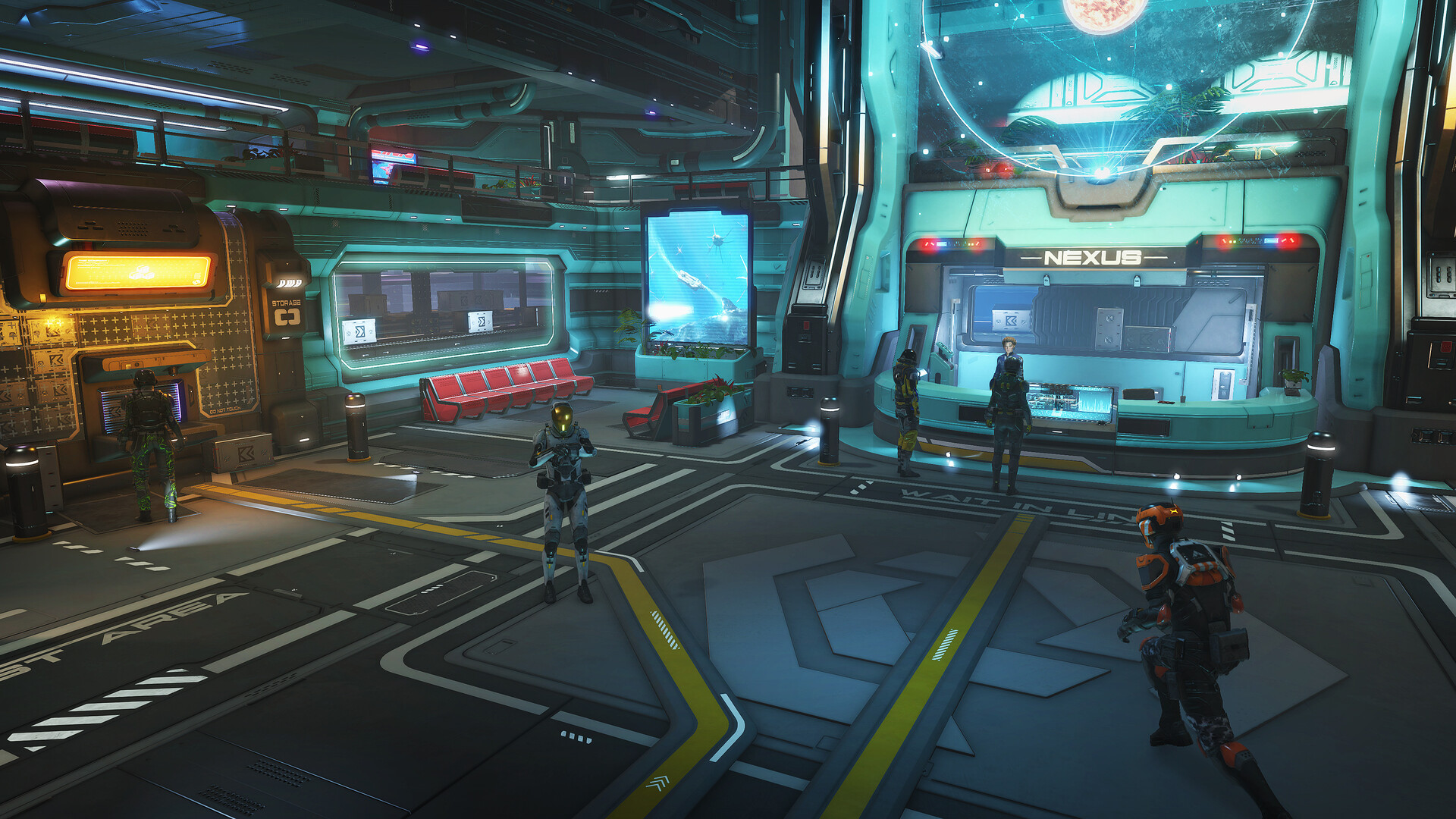
You can create or join Corporations and collaborate on a larger scale. Within a Corporation you develop interplanetary production and logistics by assigning roles, dividing tasks, and managing everything from small crews to vast commercial empires. A Corporation can grow from a handful of players into a major force in the economy.
Function | What It Enables |
|---|---|
Assign roles | Give members responsibilities suited to their strengths. |
Divide tasks | Split mining, crafting, building, trading, and logistics across members. |
Interplanetary production | Coordinate operations that span multiple planets and systems. |
Scale | Run anything from a small crew to a vast commercial empire. |
SpaceCraft includes single-player as well as multiplayer and online co-op, so you can choose how social you want your game to be. You can explore and build alone, team up with a few players cooperatively, or commit to a large Corporation.
Corporations tie directly into the wider systems: shared trading on the marketplace and automated logistics let an organized group operate at a scale no individual could match.
Corporations take on Requests, time-sensitive contracts offered by specialized NPCs located in space stations around the galaxy. The Requests themselves are the same for all Corporations, but each NPC offers a different selection. A Request asks you to produce or collect large quantities of a specific resource or item and deliver the cargo; this rewards well-organized automated production and logistics. Failing to deliver in time loses the goods already delivered. Completing one rewards the Corporation with valuable currencies.
The developer has described three Corporation currencies (names subject to change):
Currency | Use |
|---|---|
License Points | Unlock Licenses that give permanent bonuses, such as allowing more buildings in a single Corporation base. |
Corpo Credits | Buy Corpo Permits, powerful upgrades that grant performance boosts but carry a daily upkeep cost. Standard Credits can be converted into Corpo Credits and donated. |
Reputation | Used to rank Corporations; rewards for top-ranked Corporations are not yet decided. |
A Corporation Manager assigns roles to members, each with its own permissions, from managing assets and activating Corpo Permits to inviting or removing members. The current structure is a simple hierarchy with a single Manager, with more leadership models planned. Corporations can own shared ships and bases that are not tied to any one member; the maximum is currently 12 bases and 12 ships, raised through Licenses and Corpo Permits, and this is on top of every member’s personal ships and bases. The experience paths feed into this: high-level Explorers extend a Corporation’s reach, Technologists build bigger automated bases, and Scientists supply exotic materials. See Progression: Permits and Experience.
Corporations were designed with larger groups in mind, and the developer acknowledged that the system could feel built for multiplayer only. Community Update #1 on September 16, 2026 made the one-person Corporation a supported option in its own right. A Solo Corporation has a simplified interface that shows only what is relevant to a single player, and it competes on a ranking of its own, separate from multi-member Corporations, so the two are not measured against each other. You can convert a Solo Corporation into a multi-member Corporation when you are ready to expand, but a multi-member Corporation cannot be converted back.
The same update added the tools the developer had flagged in July for finding a Corporation and recruiting members. The Corporation interface opens with P by default.
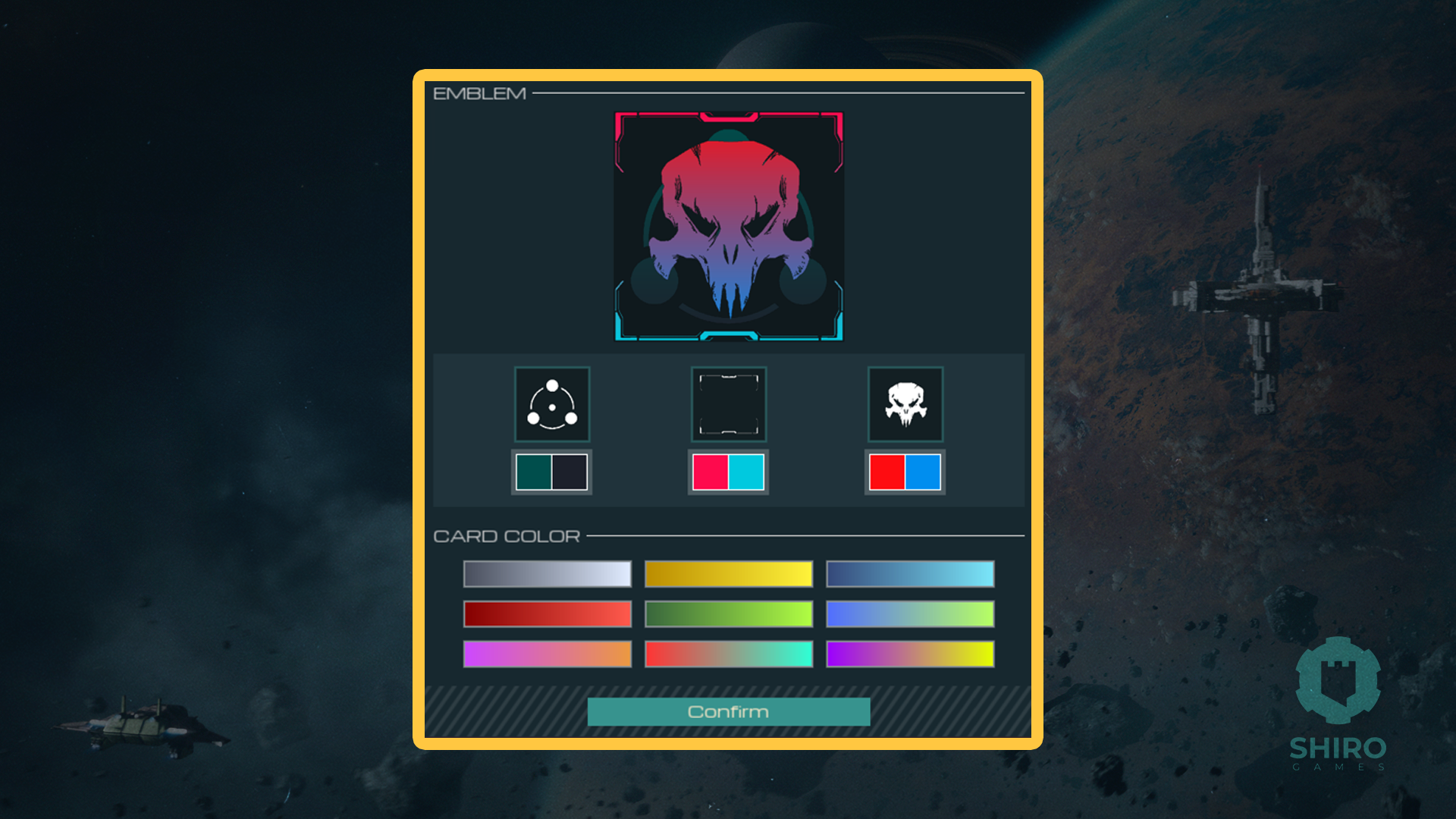
Feature | What it does |
|---|---|
Recruitment Board | Corporation leaders publish a Header Card that introduces their Corporation and what makes it distinctive. Applicants browse and compare Corporations, including the member list, ship levels, description and emblem, before applying, and Corporations can compare applicants in turn. |
Applying while in a Corporation | You can open another Corporation's recruitment page and apply even if you already belong to one, and players already in a Corporation can receive invitations from others. |
Emblems | Each Corporation can create a custom emblem. |
Inspection | Corporations and individual players can be inspected directly from the ranking or the Recruitment Board. |
Corporation Logs | Credit transfers now appear in the logs. |
Map | Your Corporation's members are shown on the map as their bases. |
Renaming | Renaming a Corporation costs more the higher its level. |
You can whisper another player in a private one-to-one conversation, which the developer frames as the discreet channel for recruiting. Both players must be in the same quadrant for whispers to work. Players can also be ignored. See Servers and Regions for how quadrants are chosen.
Two exploits were closed in the same update. Corporation base and ship permits could previously be refunded without consequence; now bases over the permit limit are disabled and shared ships cannot be boarded until the permits are bought again. Trade Nexus sell orders also no longer stay active indefinitely: they expire after 14 days, or as soon as a player leaves their Corporation, switches quadrant, or resets their account. A September 18 patch fixed Technology experience that could not be claimed from multi-member Corporation bases. See Updates and Patch Notes.
A solo player can run a Solo Corporation, a formal option since Community Update #1, and use the same mechanics. The developer describes SpaceCraft as an online multiplayer game but deliberately avoids calling it a traditional MMO. The whole game runs on official servers (there are no private dedicated servers), with the aim of supporting several thousand players per server. The game must be online, but it is fully playable alone: your factories keep producing and market prices keep changing even while you are offline. Official servers are deployed by region for Europe, North America, Asia, and Mainland China.
Each server is called a Quadrant. Because the universe is split across quadrants, you and a friend need to be in the same quadrant to play together. You can move to another quadrant by talking to a dedicated NPC near the elevator at the Space Stations hub of Raqmu. When you change quadrant you keep your in-game progression, including your inventory, your current ship, and your credits, but you lose access to your bases and your galaxy-map exploration, and any unfinished missions reset as if they had just started. Quadrant transfer had an unsettled first two months. It arrived in the June 15, 2026 update and was switched off again in that same announcement once a progression issue was found. A fix for transfers that could lose progress landed on June 19, and the feature was turned back on in the August 18, 2026 update. It is available again as of that update.
Regions, quadrants, what a transfer keeps and what it discards, and where offline play sits in the region menu are covered in full on Servers and Regions.
Alongside the always-online multiplayer galaxies, SpaceCraft added a separate Solo Offline Mode after Early Access launch, in response to player requests. It lets you play the whole game offline, at your own pace, without sharing a galaxy with other players. You switch to it from the menu under Options, then Change Region, then Offline Mode.
Because the offline mode is not a persistent online world, the systems that depend on other players are turned off in it. Nexus Trading and Corporation Rankings are unavailable offline, as are the other multiplayer-connected systems. Your trading in offline play is limited to what you can do without the shared marketplace.
Solo Offline Mode and Multiplayer Mode are completely separate experiences, and progress cannot currently be shared between them. A solo offline save stays exclusive to offline play, while your multiplayer progression stays tied to the online galaxies.
To keep solo progression at a satisfying pace without a persistent server, a few systems are tuned for offline play: Assemblers in space bases craft faster, Extractors in space bases run faster, and production facilities pause when you leave the game and resume when you return to the save.