

This article is incomplete
Some sections are missing or need additional details. Help improve it by contributing.
SILENT HILL: Townfall leans on the PlayStation 5 hardware more than most of its systems suggest. Screen Burn has described the controller work as a way to weave intricacies into interactions, add weight to combat, and amplify the tension of encounters. The PlayStation Store listing carries a PS5 Pro Enhanced badge, lists one player with offline play enabled, and confirms vibration and trigger effects on the DualSense wireless controller.
DualSense
Feature | How it is used |
|---|---|
Adaptive triggers | Mimic the feel of firearms, so the player feels the weight of a weapon rather than just its recoil. The September 16 breakdown says the weight of the trigger is recreated uniquely for each weapon. |
Haptic feedback | Rumbles with the heavy impact of a creature's footsteps as it approaches a hiding spot, and gives every swing of a weapon and pull of a trigger a tactile sensation of its own. In combat it carries the smash of a plank against an enemy and the blast of blocking a counter-attack. |
Gyro aiming | Motion control is offered for aiming firearms, moving the whole controller to fine-tune a shot and line up a headshot at a key moment. McKellan has said he was sceptical about motion controls early in development and could not go back to traditional controls once they were implemented. |
Gyro tuning | Twisting the controller physically tunes the CRTV into weak signals, and certain puzzles require the device to be tilted, imitating the everyday motion of holding a phone up to find reception. |
The map in hand | Motion controls also let the player manipulate the map as if holding it directly. The map, and the phone booths that save the game, are covered on St. Amelia. |
Enemy alert | A haptic pulse through the controller when a new enemy is near, described in PlayStation's own explainer of September 21, 2026. See CRTV |
Okamoto has framed the point of all of it plainly: the series has historically been praised for its visuals and sound, and being able to bring the sense of touch into the horror is what the PlayStation 5 adds.
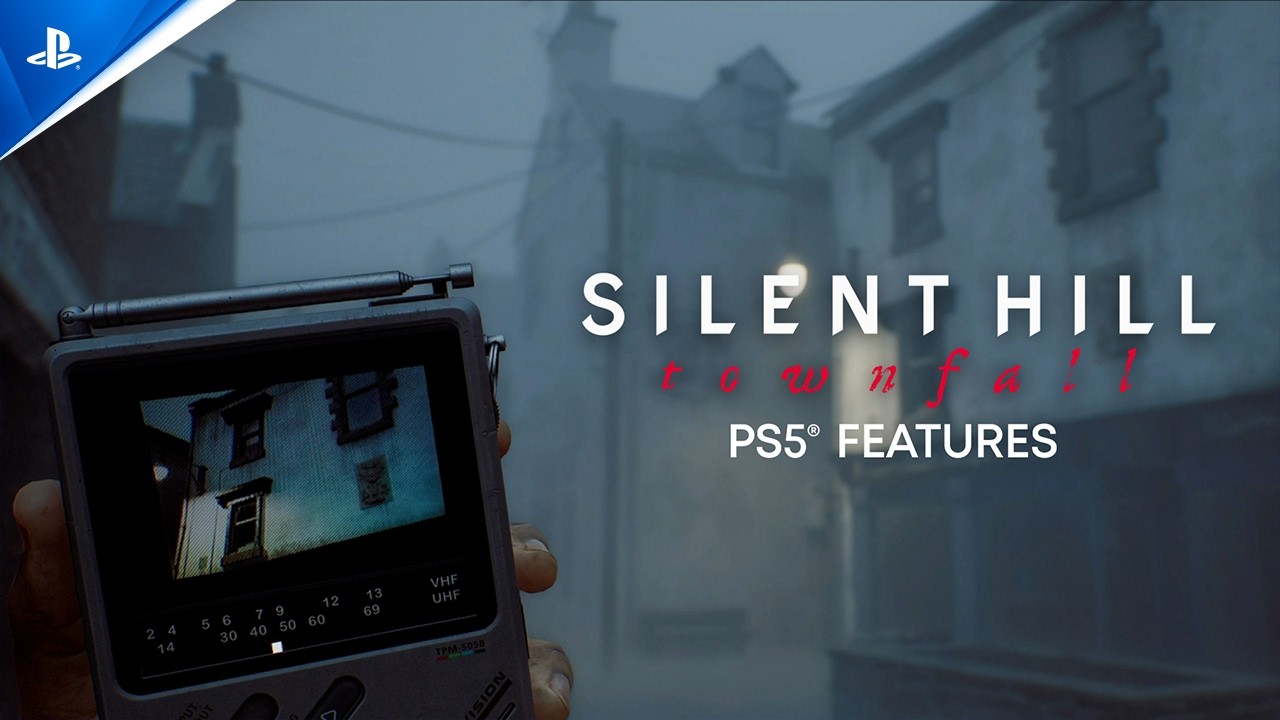
The fullest first-party account arrived on September 16, 2026, in a post co-written by Okamoto and Jon McKellan and published alongside a ninety-second Features Trailer on PlayStation's own channel. It confirms that the motion controls for tuning the CRTV and for aiming firearms are all customizable in the game's menu options, and the PlayStation Store's accessibility list, published the same week, tags the game as playable without motion controls, without controller vibration and without the adaptive trigger effect. Those entries are collected on Age Ratings and Content Warnings.
3D Audio
The first-person view narrows what the player can see, and the audio design is built to fill that gap. "We intentionally created situations in which players must rely heavily on subtle noises and audio cues to perceive threats lurking beyond what their eyes can see," McKellan has said. The dynamic score does part of that work too; see Music and Audio.
Display Modes
Mode | Target |
|---|---|
Quality | 30 fps |
Performance | 60 fps |
Both modes are confirmed in the released game: Quality targets 30 frames per second and Performance targets 60. Reviewers testing the base PlayStation 5 found that neither mode holds its frame rate perfectly steady. Every hands-on session held for press before release was played on a PS5 Pro.
PS5 Pro
Ray-traced lighting is part of the PlayStation 5 presentation. The September 16 post describes it painting scenes in soft ambient light from the fog outside, making environments react believably to the flashlight and to flashing alarm lights, and carrying the sudden change from blue-grey fog to the bright red of the Otherworld. That description is given for the PlayStation 5 version without confining it to the Pro. The earlier account of PS5 Pro play adds that the Pro uses the console's upgraded PSSR upscaling. Comparisons of the released game on both consoles report that the Pro upscales with PSSR where the base console uses the engine's own temporal upscaling, with sharper textures and shadows, and that it still dips below its target in the heaviest scenes.
The game is presented in a 2.35:1 frame by default, which can be switched to 16:9 in the options; that and the rest of the visual approach are on Art Direction and Presentation. PC specifications are on System Requirements.