

St. Amelia is the fictional island town where SILENT HILL: Townfall takes place. It sits in Scotland and the game is set in 1996. Store copy describes a town "lying quiet beneath a heavy fog, seemingly abandoned but not at rest," where fog-soaked streets, abandoned communities and forgotten corners tell their story through atmosphere and history.
St. Amelia is invented for this game. It is not a real place, and it is not the town of Silent Hill. Screen Burn built it out of real Scottish coastal towns the team knows, but the island itself is fiction.
The same September 16 post draws a distinction the series' fans may not expect. The town is not as dilapidated as earlier entries' towns, the developers write; St. Amelia feels like a place that has recently gone through its own trauma rather than one left to rot after years of abandonment. Its world is recently lived in, and the post says it matters to the story that players get a sense of the community on the island, care about the issues it has faced and understand what it stands to lose. Okamoto said on stage at Tokyo Game Show on September 19 that the town is modelled on a real Scottish town, with the unease of a realistic townscape placed in an unreal situation as the guiding idea.
The Fog
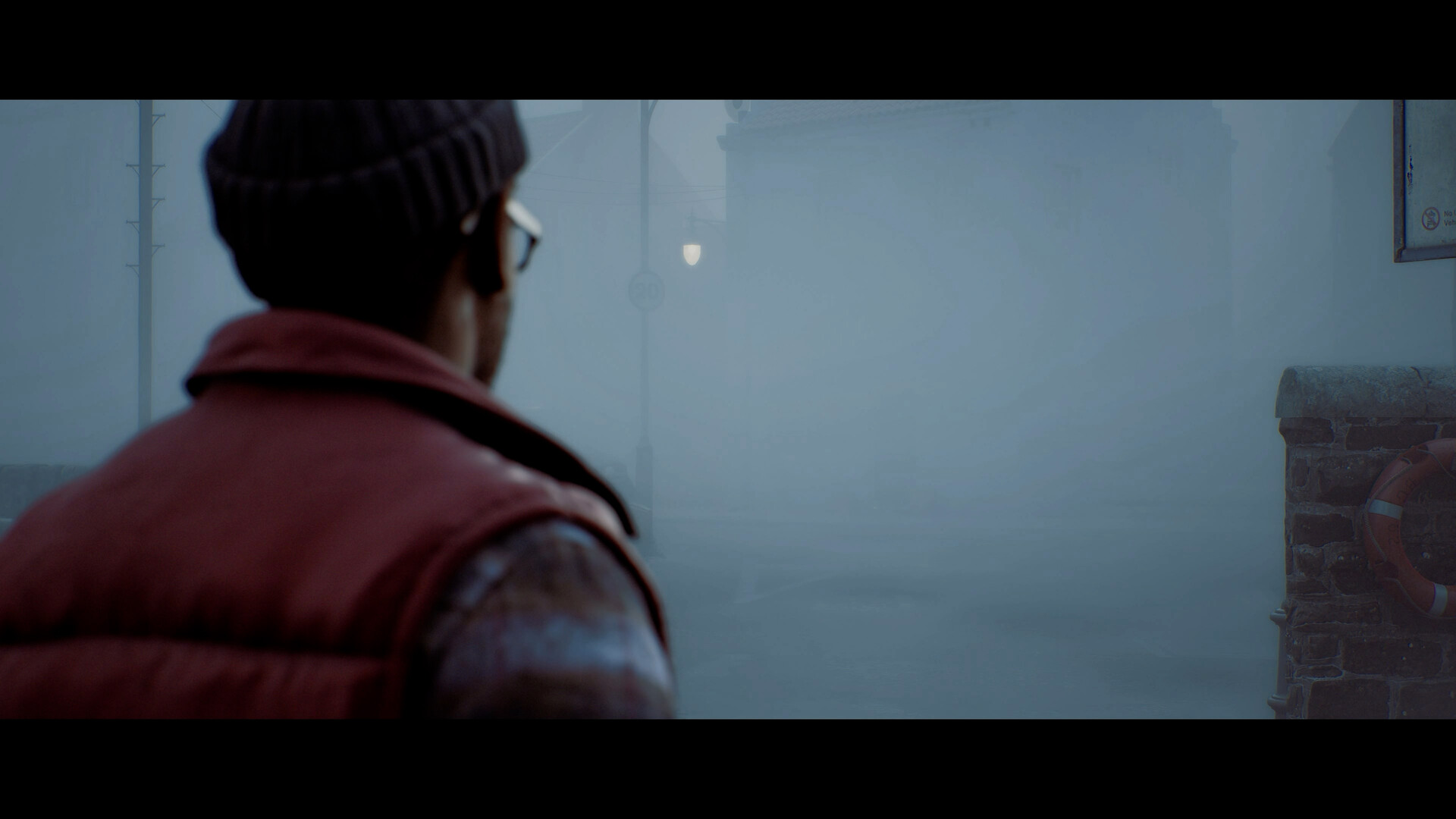
The fog has a name. Jon McKellan has described chasing a Haar, the sea fog that rolls in on the east coast of Scotland, and photographing it rather than imagining it: "I could go to a town that looks like St. Amelia and find a fog that looks like SILENT HILL and come back and show the team, here's what the game needs to look like." On one of those trips the fog closed in until the team could no longer tell which direction the coast was in, and McKellan has said that moment is where the game's opening came from.
Scotland was picked partly for that. "Scotland is naturally a very foggy region, making it a perfect fit for Silent Hill," McKellan said. For a long time the team considered a generic Northern European setting before locking it down.
Landmarks
These are the places named in official material or seen in the sections shown to press. Nothing else about the island's geography has been published.
Simon does not arrive by road or by boat. Press accounts of the opening have him coming out of the water at the harbour front with an IV line still attached to his arm, and starting from there.
Konami's own Japanese copy describes it directly: Simon is carried on a grey sea and washes ashore on the island. That was the first first-party wording for an arrival previously described only in press accounts, and it does not resolve the ambiguity in the footage so much as confirm the water. The English followed on September 16, 2026, in a post co-written by the producer and the director: Simon drifts through the cold seas and shores up on St. Amelia. Konami's launch announcement of September 24, 2026 names the spot, calling Simon "an outsider who has washed onto the icy-cold marina" of the island.
Place | What is known |
|---|---|
The pier | A working harbour front. The team walked several real piers to study their shapes and uses before building St. Amelia's. A ring lifebuoy and street lamps have been shown along the water there, with the fog sitting heavily over it. |
Shorefront | A named region of houses and apartments, used as the setting for part of the gameplay trailer. See Shorefront. |
The town square | Simon reaches it after hearing shouting and seeing flashes that suggest a protest or riot, and finds it empty of people. |
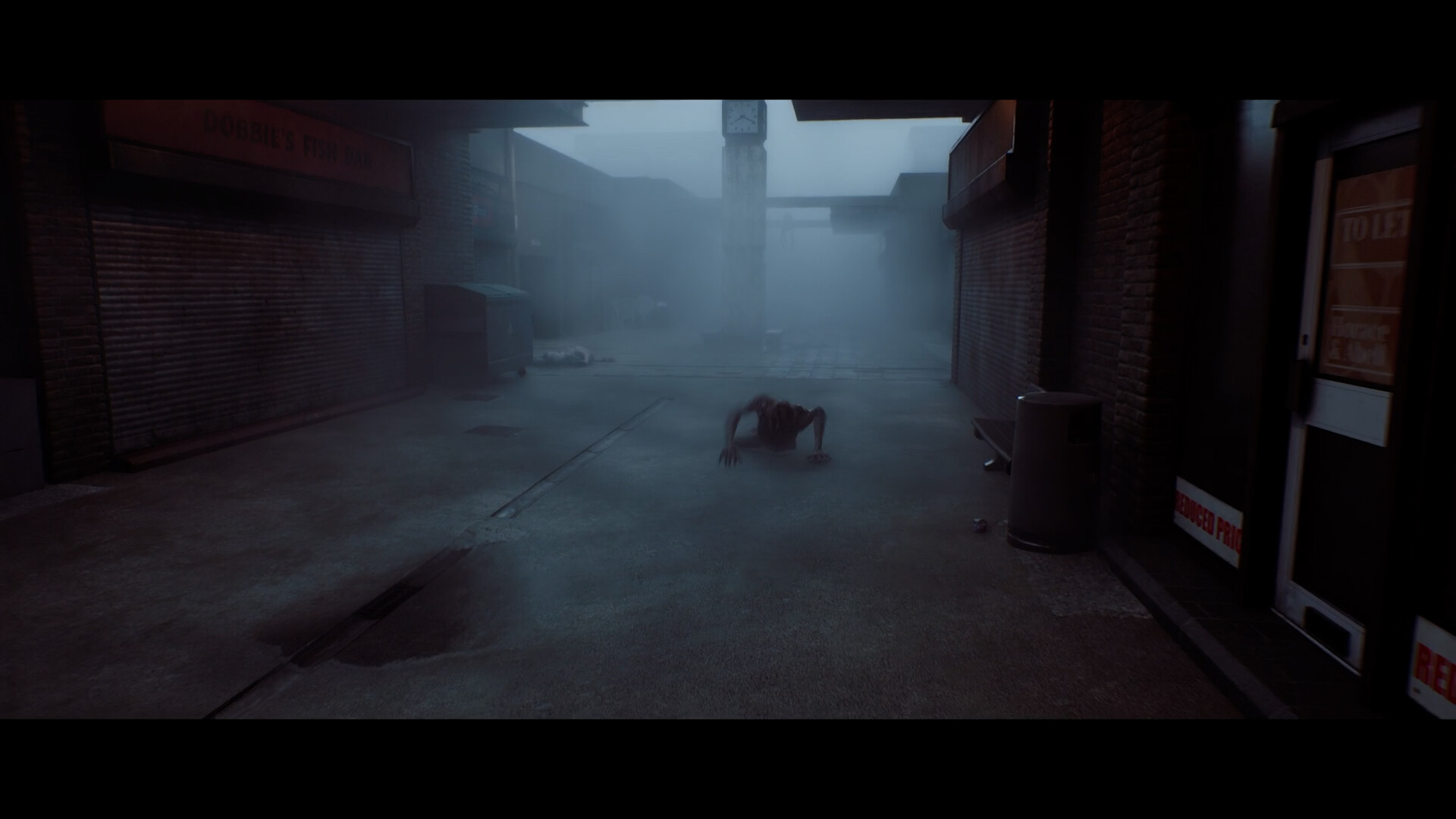
The alleyways | Narrow lanes that, in McKellan's words, "snake through the entire town." Fun to walk in the real towns they came from, much less so with a creature behind you. |
The family clinic | Where Zoe worked. Her office holds a set of three scales. |
The pharmacy | Holds a prescription Zoe called in at the wrong dosage, and a passcode puzzle fed through the CRTV. |
The hospital | A separate medical centre, distinct from the family clinic, and the setting for the second section shown to press. |
Zoe's house | An explorable location, marked as its own chapter in the official gameplay trailer. |
The memorial | Stands in the town square, inscribed "The Heart of St. Amelia". |
The high street | A run of shopfronts carrying "To Let" and "Reduced Price" notices, shutters down. |
Dobbie's Fish Bar | A named storefront in the town, its sign readable from the street. |
Alder Antiques | A second named storefront, along the same run of shops. |
Phone booths | Dotted around the island. They are where the game saves, and they are marked on the map. |
The Town Square
A memorial stands in the town square, inscribed "The Heart of St. Amelia". The square around it has been shown twice over: once under the town's ordinary heavy fog, and once with the same memorial standing in a red-lit version of the same space. That second version is covered on The Otherworld.
The square is also given over to a protest. Hand-painted placards and a strung banner have been raised in it, the banner reading "Whatever heart this town had has stopped" and one of the placards "A crime on our community". The wording answers the memorial's inscription directly. What the protest was against, and what became of the people who made the signs, has not been published.
Getting Around
Previewers who played the July build described the town as freely walkable early on: you can wander the streets and take in the sights, but new areas open by triggering story progress rather than by unlocking on their own. Backtracking is built into that. Some items can be used the moment they are found, and others only make sense on a return visit once Simon knows more.
Navigation runs through two objects. The CRTV tunes signals that name the next place Simon needs to reach, leaving the player to work out where that is. The map does the rest: it is drawn on a pamphlet Simon doodles on, it marks his position along with telephone boxes and locked doors, it uses a numbering system with no legend, and it gathers concepts, names and codes as the game goes on. There is no map screen behind it. The pamphlet is a physical double-sided sheet Simon holds up in front of him, and reading the other side means turning it over by hand rather than tabbing through a menu. In practice it works as a journal as much as a map.
Saving happens at the phone booths, and the phones do more than that. Specific numbers can be dialled on them: in one press session dialling 100 returned a message telling the player to save themselves, which is literally how progress gets saved. Autosaves appear as red squares. Numbers picked up elsewhere in the town can be called the same way, and they are easy to walk past. One previewer put a long stretch of aimless wandering down to having missed a few of the numbers worth ringing. Running is not available from the start; the ability is handed over partway through the prologue.
The map, the phone booths and the numbers that can be dialled on them have their own page at Map and Saving.
A Town With a History
Set dressing does a lot of the storytelling. Previewers noted protest signage and notices posted around town, and homes for sale lining the streets. The town appears to have suffered some kind of medical outbreak, which is what ties Zoe's story to it.
The shopfronts tell the same story. "To Let" and "Reduced Price" notices sit in the windows along the high street with the shutters pulled down, and two of the businesses have names on their signs: Dobbie's Fish Bar and Alder Antiques. Set against the homes for sale, the picture is of a town that was already emptying out.
Okamoto has framed the game's social angle as "the dynamic between the individual and society at large and corporations," and said the series had not explored that before. One account of the backstory adds a specific: a labour union that fought a corporate institution, with the conflict boiling over and giving way to something worse. That detail is single-sourced and unconfirmed.
Isolation
McKellan has named isolation as the thing he was writing about: "There's like an existential dread that comes with that. Silent Hill has always had a sense of not being able to leave the town, and face why you're there. That isolation isn't just for the protagonist, but also for the town." Lead game designer Graeme McKellan put the practical version of it more bluntly: there is no running away, so you have to solve the problem.
The look of the place came out of real photography trips rather than concept art alone. That work is covered on Art Direction and Presentation.
Companion Media
The island is also the setting of a tie-in comic prequel Konami announced on September 10, 2026, which follows a harbour master at the town's dock house. The comic is a narrative companion rather than part of the game, and none of its locations or characters are recorded here as game content. See The Dock House.