
Loading...
Loading...
Roguelite Progression
September 9, 2026 at 01:35 AM
Added official screenshot (2026-09-08)
The roguelite layer is what separates PUBG: DED.NET from a conventional battle royale. A player does not simply queue for one match at a time. They start a run, choose a contestant, and carry that character across several matches, growing stronger and more damaged at the same time. The store copy puts it as death being only the beginning, and the studio has said that in this game every loss moves you a step closer to the build you were chasing.
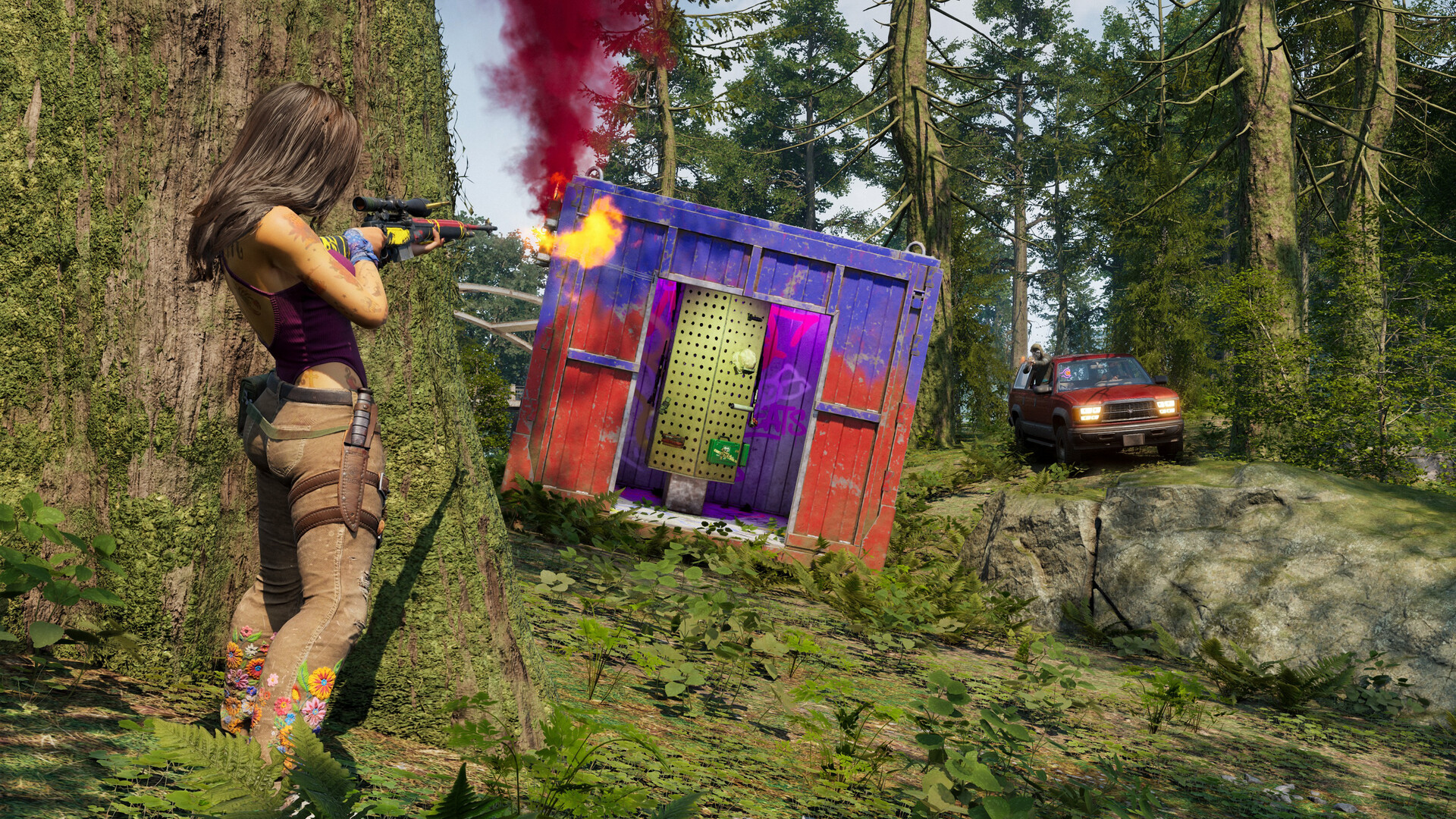
A run is a continuous journey across multiple matches. At the start of one, the player picks a character and sketches a rough direction for how they want that character to develop. The studio has given three example archetypes: a support role, an overwatch or covering-fire role, and a close-quarters door breaker. That plan is only a starting intent, because what the run actually offers you depends on how matches go.
Aspect | Confirmed Detail |
|---|---|
Unit of play | A run made up of several matches, not a single match |
Typical length | Around 6 to 10 matches, and about 8 to 12 before a character is pushed to its limit |
Single match length | About 30 minutes for the surviving squad |
What carries forward | Abilities gained from ROMs, and injuries taken along the way |
What ends a run | Accumulated injuries, or a player choosing to stop and cash in |
Reset | Starting a fresh run with a new character |
The numbers vary because the studio has given several figures in the same breath. Around 6 to 8 matches was described as common, sometimes 6 to 10, with 8 to 12 given as the point where a character tends to hit its ceiling. All of those are pre-release estimates from internal and early tests, and the studio has been clear that the real answer depends on wins, losses, injuries and player skill.
Abilities come from ROMs: cartridges or chips found out in Cascadia and then plugged directly into a character's head. Each one unlocks a gameplay ability rather than a stat increase. The studio deliberately kept flat multipliers out of the pool, so a ROM does not double your damage or your health; it gives you something new to do.
Confirmed examples span the ordinary and the absurd.
ROM Effect | What It Does |
|---|---|
Faster reloading | A conventional handling improvement |
Longer dive distance | Extends a movement option |
Prone crawling | Lets the character slither flat on their stomach |
Doll form | Turns the character into a small, lethal doll |
Car door shield | Rips a door off a vehicle to carry as a riot shield |
Peekaboo | Shows outlines of players within about 10 metres through walls and buildings |
Blade hands | Replaces hands with blades for close-quarters killing |
Creeper | Hides the character inside a refrigerator, peeking out through the door gap |
Killer Vibes | Vibrates the controller faintly when an enemy is nearby |
Boombox | Plays music that heals the carrier and their squadmates |
Because ROMs are gained across matches rather than within one, a lobby contains players at very different stages. Someone on their first match can be dropped in beside someone on their twelfth. The studio treats that asymmetry as a feature rather than a bug, and the phase-gating described on Gameplay is the mechanism that keeps it from becoming one-sided inside a single match.
Power comes with damage. Every match adds injuries, and the studio has described progression in this game as bartering your body for power. Confirmed injury effects include coughing when smoke is deployed, fumbling and dropping a weapon during a reload, and taking worse penalties in water. Injuries are not reversible during a run.
The interesting part is that injuries are not equally bad. An injury that punishes you in water can be shrugged off by staying dry. An injury that occasionally makes you drop your gun mid-reload is close to fatal in a firefight, and the studio has said a bad enough one makes players want to burn the character down and start fresh. Deciding what to tolerate is the core tension: what you want out of a build against what you can actually carry.
A run ends in one of two ways. Either the injuries stack up until the character can no longer function, or the player decides to stop while ahead and take the rewards out. Knowing when to stop is a deliberate decision point rather than an afterthought, and it connects directly to the extraction behaviour described on Extraction and Loadouts.
The creative director has stated plainly that the team does not want a pay to win game, and that putting paywalls on abilities or gameplay would be poison for both the community and the title. Paid content is expected to be cosmetic, with gameplay elements earned through play. No storefront, currency or pricing has been shown.
The full ROM list, how ROMs are categorised, and their drop rates
Whether runs can be paused and resumed, and how many can be active at once
Any numeric run health or scoring system governing when a run ends
The exact injury list and whether injuries can be treated or removed
What rewards are kept when a run is cashed in
Whether meta progression exists between runs beyond the run itself
