

PUBG: DED.NET borrows one idea straight from the extraction shooter: what you take out of a match is yours. Squads scavenge gear and items into a backpack during a match and try to leave carrying it. The creative director has said that because players are trying to extract with hard-earned gear and items packed into backpacks, calling the game an extraction shooter is not entirely wrong, while insisting the game is better understood as a heavily twisted battle royale.
Scavenging
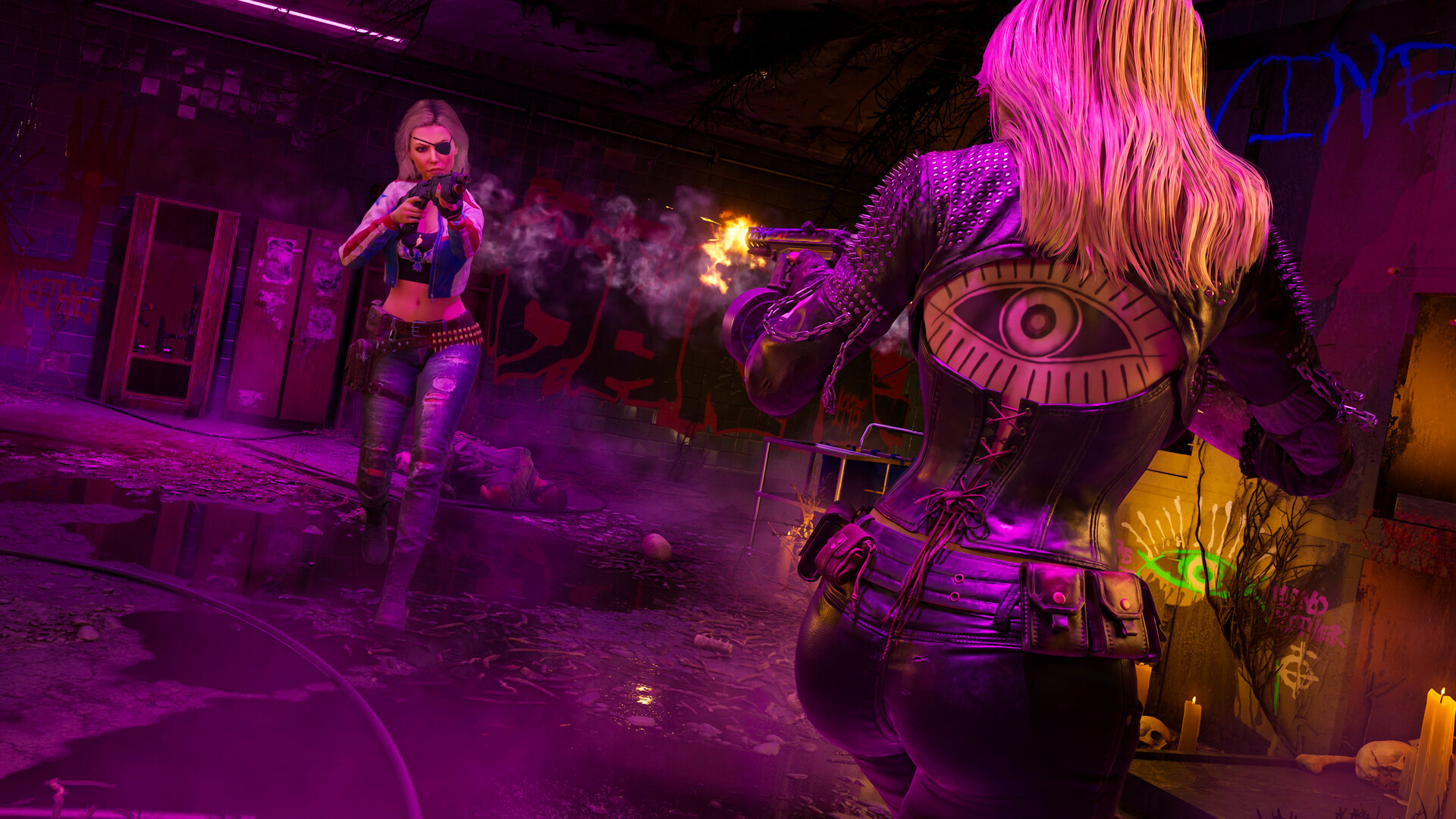
The store copy frames the loop as scavenging resources, keeping progression and evolving a build. What you pull out of the world changes the character, and that in turn changes how the character fights. Matches are fought over a roughly 2.5 km by 2.5 km slice of Cascadia, and towns are described as densely built with a lot of interior space, so looting is not confined to open ground. Named landmarks that reward exploration are listed on Points of Interest.
Money is part of the loop as well. The store description lists hacking payphones to steal money from rivals among the tactics available, which makes the payphones scattered around the world an interactable target rather than set dressing.
Carrying It Out
The backpack is the confirmed carrier for extracted gear. Beyond that, the studio has said the decision of when to leave is a strategic one: players develop abilities, try to minimise damage, and then have to judge the point at which cumulative injuries make continuing a bad bet. That judgement sits at the run level rather than the match level, and it is described in more detail on Roguelite Progression.
Element | Confirmed Detail |
|---|---|
What is carried | Gear and items packed into a backpack |
What persists | Abilities gained from ROMs and the injuries taken alongside them |
Money | Present in matches, and payphones can be hacked to take it from rivals |
When to leave | A player decision, weighed against accumulated injuries |
Studio framing | A heavily twisted battle royale, with extraction shooter accepted as also fair |
Where It Differs From an Extraction Shooter
Two differences have been stated. The first is that the game is still a 60-player last-squad-standing contest rather than a raid you enter and leave at will. The second is character lifespan: in a traditional extraction shooter a player nurtures one character for a long time, while here a character is expected to burn out after roughly 8 to 12 matches and be replaced by a fresh run.
The design also rejects the idea of a level playing field on principle. Players start a run with a rough plan rather than an identical kit, and the lobby deliberately mixes characters at different stages of their runs. The studio has said it built the game for higher peaks and lower troughs rather than for perfect symmetry.
Loadout Planning
Loadouts are treated as something you steer over a run rather than pick from a menu before a match. The starting point is an archetype, with support, overwatch and close-quarters door breaker given as examples. From there the character is shaped by which ROMs the run offers, which injuries it inflicts, and how the squad chooses to play. The studio has said field conditions and squad playstyle end up dictating the build as much as the original plan does.
Not Yet Confirmed
Whether there are dedicated extraction points, timers, or extraction objectives
Backpack capacity, inventory management, and stash or storage systems
What happens to carried gear if a squad is wiped
Weapon and armour tiers, and whether gear itself carries between matches
Currency types and what money can be spent on
Whether loadouts can be pre-selected before a match