

Overview
Parli (pronounced par-lee) is the fictional spoken language created for Parafolk communication in Paralives. When Parafolk chat together, argue, laugh, or express themselves, players hear Parli rather than any real-world language. The language serves a deliberate design purpose: by making dialogue incomprehensible, players are free to fill in the gaps and craft their own stories around what their characters are saying. The Paralives team designed Parli to sound distinct from any existing fictional game language used in the genre.
All voice-over recording and integration for Parli is complete. Audio designer Andrei Castanon, who is the game's Music Composer and Sound Designer, recorded over 500 takes to add voices into the game and is now considered fluent in Parli by the development team.
Design Philosophy
When the Paralives Studio team began developing Parli, they had no formal linguistics background. The team studied how actual linguists create constructed languages (often called conlangs) by first choosing a specific palette of sounds and then establishing rules for combining them. The developers described the process as a real adventure, jumping into brainstorming sessions with no prior experience in language construction.
The team set out with several guiding principles for the language:
Parli should be incomprehensible gibberish; players should never be able to decode specific words or phrases into real-world meanings.
The language should sound distinctly different from fictional languages in other life simulation games.
Parli should emphasize a minimalistic and realistic vision, sounding natural enough that it feels like a real language without actually being one.
The language should support emotional expression so that players can tell when a Parafolk is happy, angry, sad, or excited based on tone and cadence alone.
Phonetic Rules and Structure
Parli was built using a custom phonetic alphabet with a deliberately limited sound inventory. The language consists of fourteen consonants and five vowels. This constrained set of sounds gives Parli a consistent and recognizable sonic identity.
The development process began with improvised brainstorming of made-up words. Over time, the team introduced formal rules to shape the language into something more cohesive and identifiable:
Each word is limited to a maximum of two vowels.
Two consonants can be placed one after the other within a word, creating consonant clusters that give Parli its distinctive rhythm.
Word length and syllable structure follow patterns that keep the language sounding conversational rather than overly complex.
These rules ensure that Parli maintains internal consistency. Even though individual words carry no literal meaning, the language sounds structured and intentional rather than random.
Voice Recording Process
Andrei Castanon handled all Parli voice recording in addition to his primary role composing the game's soundtrack. Recording took place in his home studio, the same space where all of the game's music and sound effects were produced.
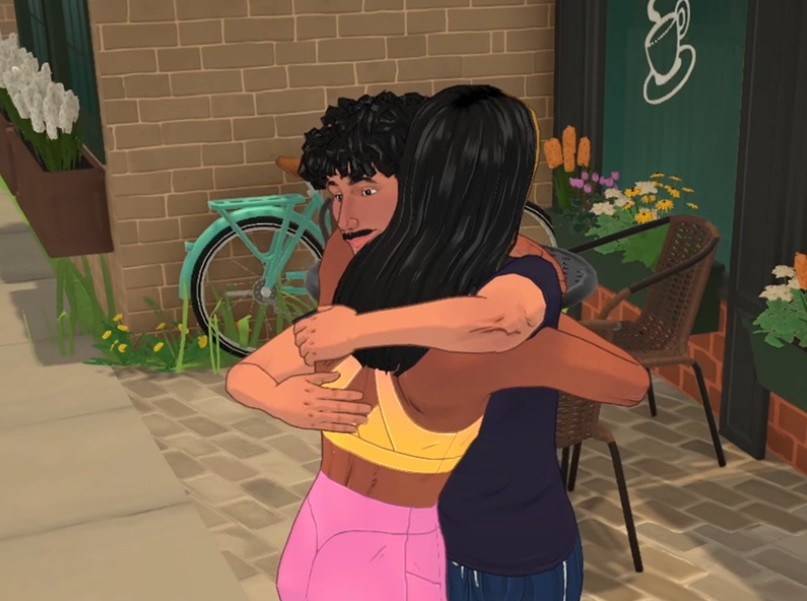
The recording process was extensive and methodical. For each animation that required voice-over, Andrei recorded roughly 40 takes to capture the right emotional tone and delivery. From those 40 takes, the team selected the best three to four recordings, edited them, and integrated them into the game as random variations. This approach means that the same action (such as greeting another Parafolk or reacting to an event) can sound slightly different each time, adding variety to everyday gameplay.
With the help of animators Alice and Lina, the team compiled animations for voice-overs and recorded everything within the game itself using in-game storyboard features. This workflow ensured that all recorded voices matched the specific situations and body language of each animation accurately.
Voice Presets and Selection
In the Paramaker, players can select a voice preset for each Parafolk from an age-specific selection. Each of the eight lifestages (Baby, Toddler, Child, Preteen, Teenager, Young Adult, Adult, and Elder) has its own set of voice options. This ensures a child's voice sounds age-appropriate and distinct from an adult's. Voice is treated as a core identity marker alongside name, gender, and lifestage.
The recording process involved extensive iteration. For each animation requiring voice-over, Andrei Castanon recorded roughly 40 takes to capture the right emotional tone and delivery. From those 40 takes, the team selected the best three to four recordings, edited them, and integrated them into the game as random variations. This means the same action, such as greeting another Parafolk or reacting to an event, sounds slightly different each time, adding variety to everyday interactions. Over the course of production, more than 2,000 individual words and expressions were recorded across multiple approaches.
Animators Alice Joubin and Lina Molard worked closely with Andrei to compile the animation list and recorded everything within the game itself using in-game storyboard features. This workflow ensured that all recorded voices matched the specific situations and body language of each animation accurately, keeping the spoken Parli tightly synchronized with character movement and expression.
Written Text
While Parli governs spoken communication, written text in Paralives works differently. By default, all written text that appears in the game (such as signs, book titles, and interface elements) is displayed in the player's real language. However, this text is fully customizable. Players can edit phrases and replace them with any language or text they want, giving full control over the written world.
This design choice reflects the team's broader philosophy of player freedom. The spoken language remains fictional to preserve storytelling flexibility, while the written language defaults to something readable so that gameplay information is always accessible.