

The development of Paralives spans over seven years, from a solo side project begun in September 2018 (full-time from January 2019) to a full studio effort preparing for Early Access in May 2026. The game was created by Alex Massé, a French Canadian game developer from Montreal, and has been funded entirely by a sustained community supporter program.
Background: Alex Massé
Alex Massé is a game developer who had been creating games since high school. After graduating, he spent approximately five years working as a programmer in the game industry. His professional credits include work on a commercially successful mobile game and several demo projects for a Unity engine initiative focused on lightweight, high-performance deployments. As a lifelong fan of simulation and city-building games, Massé saw an opportunity to create a life simulation game with the kind of powerful building tools and simulation depth he had always wanted to play with.
He was specifically inspired by the road-drawing tool from a popular city-builder game, which allows players to draw roads at any angle and curve. Massé adapted this concept for house construction in Paralives, creating a wall placement system that works without a fixed grid. In 2019, he quit his job with enough savings to begin working on Paralives full time.
Timeline
2019: Solo Development and Public Announcement
Development of Paralives began in January 2019 as a solo project by Alex Massé. For the first several months, Massé worked alone, building the core systems for the game's grid-free construction tools.
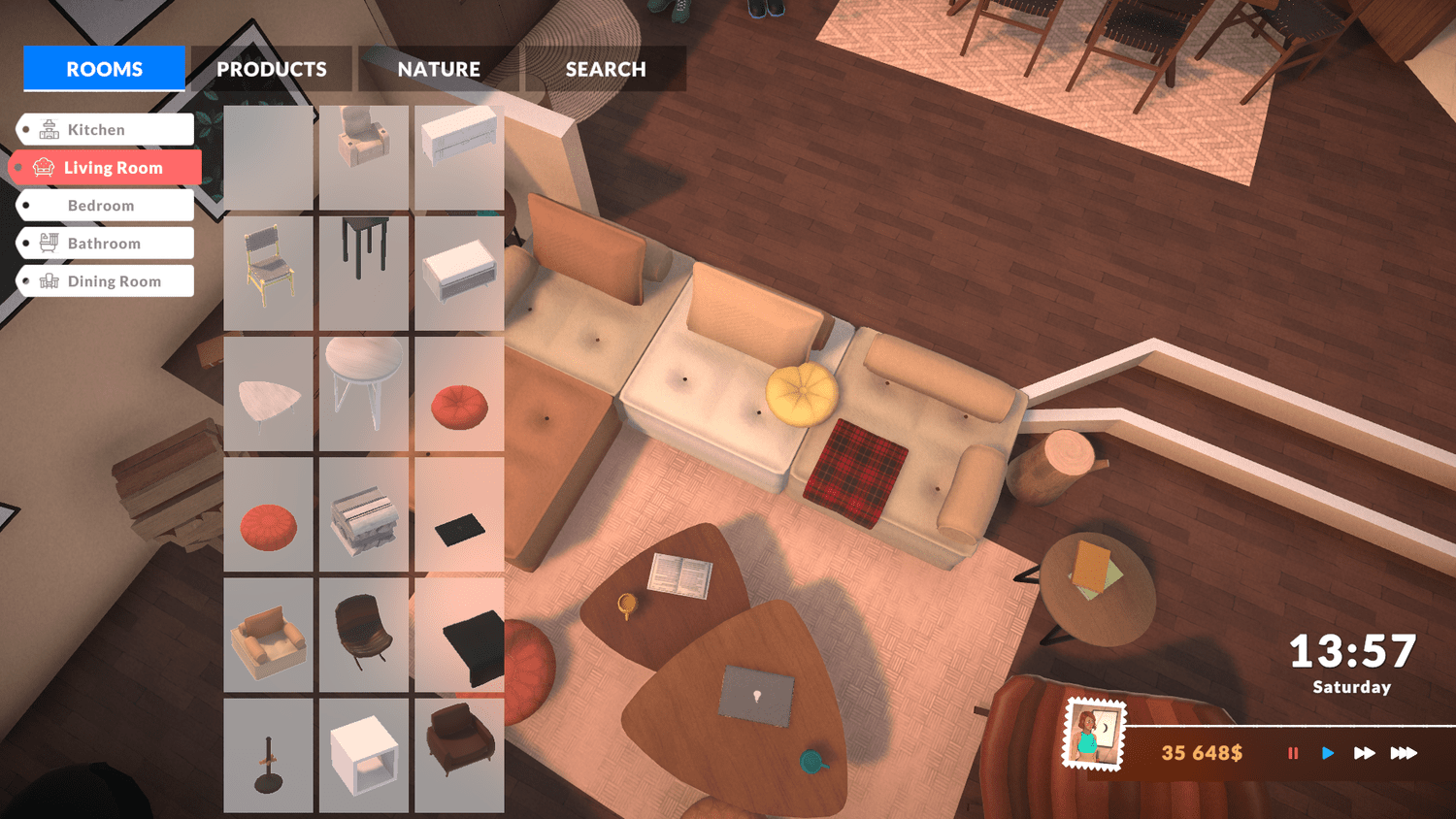
In June 2019, Massé publicly announced Paralives on his newly created social account. A few days later, he posted the first ever in-game footage in a public video release. The video demonstrated the game's innovative wall placement system and generated immediate interest from life simulation fans who had been seeking alternatives in the life-simulation genre.
Following the announcement, Massé launched a community supporter program (nicknamed the "supporter program" by supporters) to fund development. The response was overwhelming. He had originally hoped to raise enough money to hire one additional artist, but support quickly surpassed that goal. By the end of 2019, he was able to make his first hire.
In October 2019, Léa Sorribès joined as the first employee, working as a 3D artist. Sorribès holds a master's degree in Video Game Art and had previously worked part-time on Paralives before joining full time. Her hiring marked the transition of Paralives from a solo project to a team effort.
2020: Team Growth and Art Direction
Throughout 2020, the growing community supporter program revenue allowed Massé to hire additional team members. The studio focused on planning the Live Mode's core features, improving the art style of environments, researching vegetation art styles, and developing hair and clothing textures for the Paramaker. New emotion animations were created during this period, and the team conducted community brainstorming sessions to gather player input on game features.
Additional hires during this period included Christine Gariépy and Anna Thibert, among others. As community supporter program contributions continued to increase, the company invested in specialized roles such as game artists, programmers, and a communications director. The team formally organized as Paralives Studio.
2021: Awards and Public Shows
In January 2021, Paralives won the "Most Anticipated Canadian Game" award in a community poll. This recognition brought additional visibility to the project and validated the growing community interest.
On June 12, 2021, Paralives was featured in the Wholesome Direct event. This shows the game's building tools to a wider audience. The team also released an 11-minute house-building gameplay video that demonstrated curved walls, split-level platforms, object resizing, and the color customization system. These videos helped establish Paralives' identity as a game with building tools that go beyond what existing life sims offer.
In December 2021, the team released the Paramaker Overview video, providing the first major show of the character creation system. This video revealed the slider-based body customization, color wheel for skin and hair, clothing layering system, and other features that would become core parts of the Paramaker.
Throughout the year, the team improved body and face shapes, created various character animations, and integrated new sound effects into the build mode.
2022: Roadmap and Continued Development
In May 2022, the team shared their full development roadmap, outlining the planned features and milestones leading up to Early Access. This gave the community a clearer picture of what to expect and when. Development during this period focused on refining the Build Mode tools, expanding the furniture catalog, and beginning work on Live Mode systems.
2023-2024: Live Mode Development
The team shifted focus toward Live Mode development, building out the simulation systems that would govern Parafolk behavior, needs, emotions, relationships, and careers. By November 2023, the supporter base had grown to over 15,000 contributors contributing over $35,000 per month.
In July 2024, Paralives Studio set up a booth at the 2024 Montreal Comiccon, where attendees were able to try the Build Mode demo hands-on. This was one of the first times the public could play the game directly, and the feedback helped inform further development.
2025: Release Announcement, Live Mode Reveal, and Delay
On June 8, 2025, Paralives was featured in the PC Gaming Show, a major annual gaming show. During the event, the team revealed the Early Access release date: December 8, 2025. A new trailer accompanied the announcement, and the game's pricing was confirmed at $39.99 USD. By this time, the team had expanded to 14 people.
On November 25, 2025, Community Manager Rina hosted a Live Mode livestream, providing the first extended look at the game's simulation features. The 48-minute stream showcased Parafolk autonomy, the needs system, cooking interactions, career mechanics, skill progression, Together Cards, and town exploration with multiple shops and cafes.
On September 25, 2025, the team announced that Paralives had surpassed one million Steam wishlists. For the small indie team, this milestone exceeded all expectations and validated the years of community-driven development.
On November 14, 2025, Alex Massé published a statement announcing that the Early Access launch would be delayed from December 8, 2025 to May 25, 2026. The reasoning was that feedback from a larger playtest group indicated "the game isn't up to the standard we wanted it to meet for release." The team chose to take the additional time to polish and improve the experience before putting it in players' hands.
2026: Final Preparations and Feature Reveals
With the new May 25, 2026 release date set, the team entered an intensive period of polishing, bug fixing, and content reveals. Weekly supporter posts and social media updates kept the community engaged as the launch approached.
On January 8, the team previewed the Genetics System. This shows how children inherit traits and physical features from two parent Parafolk. A basic genetics feature was confirmed for the Early Access launch, with a more advanced system planned for later updates.
On January 16, the studio published a Year in Review post recapping 2025's achievements. The update also celebrated the milestone of over 1,000 townies populating the game's open-world town.
On January 22, a Want System tutorial was shared, explaining how players pick a Want in response to their Parafolk's emotions and fulfill it to earn Personality Points.
On January 29, the team revealed further Town Polish work, including mountain scenery around the town and various environmental improvements.
On February 6, a L'Armoire Speedbuild video was released, demonstrating the Build Mode furniture catalog and customization tools in a real-time building session.
On February 12, a Behind the Scenes video introduced the Parli language, the fictional spoken language created for Parafolk. Parli was built through improvisation with made-up words and a phonetic alphabet, with rules limiting vowels and doubling consonants to give the language a distinct identity.
On February 17, a Town Lots for Sale update showcased available lots in the game's open-world town. This points to the variety of residential and commercial spaces players can build on.
On February 25, the team revealed 26 new animation situations, covering a wide range of Parafolk behaviors and daily activities to bring the simulation to life.
On March 5, the Bus Stops system was introduced. This shows the fast-travel mechanic that allows Parafolk to travel between different parts of the town using bus stops.
On March 13, Community Manager Rina and game artist Sonia M'Hamdi hosted a Paramaker Gameplay stream, providing the first in-depth demonstration of the Paramaker in action. Using a fan-created Pinterest board, they transformed a base character into five unique sisters, each with a distinct style.
On March 19, Town Snapshots were shared, giving the community a closer look at various corners and locations across the open-world town.
On March 22, the team revealed the Modding Tools and provided official guides for creating custom content. The modding toolkit allows editing existing game content, adding new items, and sharing creations through Steam Workshop.
On March 24, the Help Menu was shown, demonstrating the in-game tutorial and help system designed to guide new players.
On March 26, Music for Live Mode was revealed. This shows the original soundtrack composed by Andrei Castanon that accompanies everyday Parafolk life.
On May 25, 2026, Paralives launched into Steam Early Access for PC and macOS at $39.99 (with a 10 percent launch-week discount). The launch sold over 250,000 copies in its first eight hours, peaked at 78,603 concurrent players, and held the #1 spot on the Steam global top sellers chart for nearly a day. A Day-0 patch and four free launch-day collaborations shipped alongside the build.
On May 29, 2026, the studio released its first post-launch update, Patch 0.1.2, a stability and bug-fix patch with no new gameplay systems. It addressed a memory leak, reduced save-file corruption, cut initial load times by roughly 20 percent, and fixed a range of fire, autonomy, and interface bugs. By that point the team reported collecting over 150,000 bug and suggestion reports from the launch audience. For the running list of fixes and outstanding problems, see Known Issues.
On June 10, 2026, founder Alex Massé said in an interview that Paralives had sold about 900,000 copies in its first 15 days, roughly nine times the studio’s original goal of around 100,000 copies. The studio had built the game over seven years on community funding and described the launch response as far beyond its expectations. Sales passed a further milestone on June 24, 2026, when the studio announced that Paralives had sold 1,000,000 copies, about a month after the Early Access launch.
The supporter program stopped accepting financial contributions when the game launched commercially on May 25, 2026, and development since then has been funded by sales revenue. The Early Access period is expected to last approximately two years before the full 1.0 release.
Team Growth Summary
Period | Team Size | Key Additions |
|---|---|---|
January 2019 | 1 (solo) | Alex Massé begins development alone |
October 2019 | 2 | Léa Sorribès joins as first hire (3D Artist) |
2020 | ~5 | Christine Gariépy, Anna Thibert, and others join |
2021-2024 | Growing | Specialized roles added: programmers, artists, communications director |
June 2025 | 14 | Full studio as of PC Gaming Show; 1 million Steam wishlists in September |
Early 2026 | 17 | Final preparations for May 25, 2026 Early Access launch |
Funding Model
Paralives is one of the most prominent examples of a community-funded game development project. Unlike most indie games that rely on publisher deals, crowdfunding campaigns with fixed goals (like Kickstarter), or self-funding, Paralives has been sustained by ongoing monthly contributions from its community. This model allowed the team to grow organically as revenue increased, hiring new members when funding milestones were reached. The approach gave the developers creative independence while maintaining a direct feedback loop with their most invested players.