

Overview
Neverness to Everness is built on Unreal Engine 5, upgrading to version 5.7 for its global launch from an earlier UE5 build used during development and beta testing. Epic Games' Unreal Engine 5 provides the foundation for the game's large-scale seamless open world, advanced lighting, and high-fidelity character rendering. Hotta Studio chose UE5 to push visual quality beyond what was achievable in their previous title, Tower of Fantasy.
Ray Tracing and Path Tracing
The PC version of Neverness to Everness supports both real-time ray tracing and full path tracing. Ray tracing enhances reflections, shadows, caustics, and global illumination with physically accurate light behavior. Ray-traced caustics simulate realistic light refraction through transparent materials like water and glass. Path tracing goes further by simulating every light bounce in the scene, producing cinema-quality visuals at the cost of additional GPU performance.
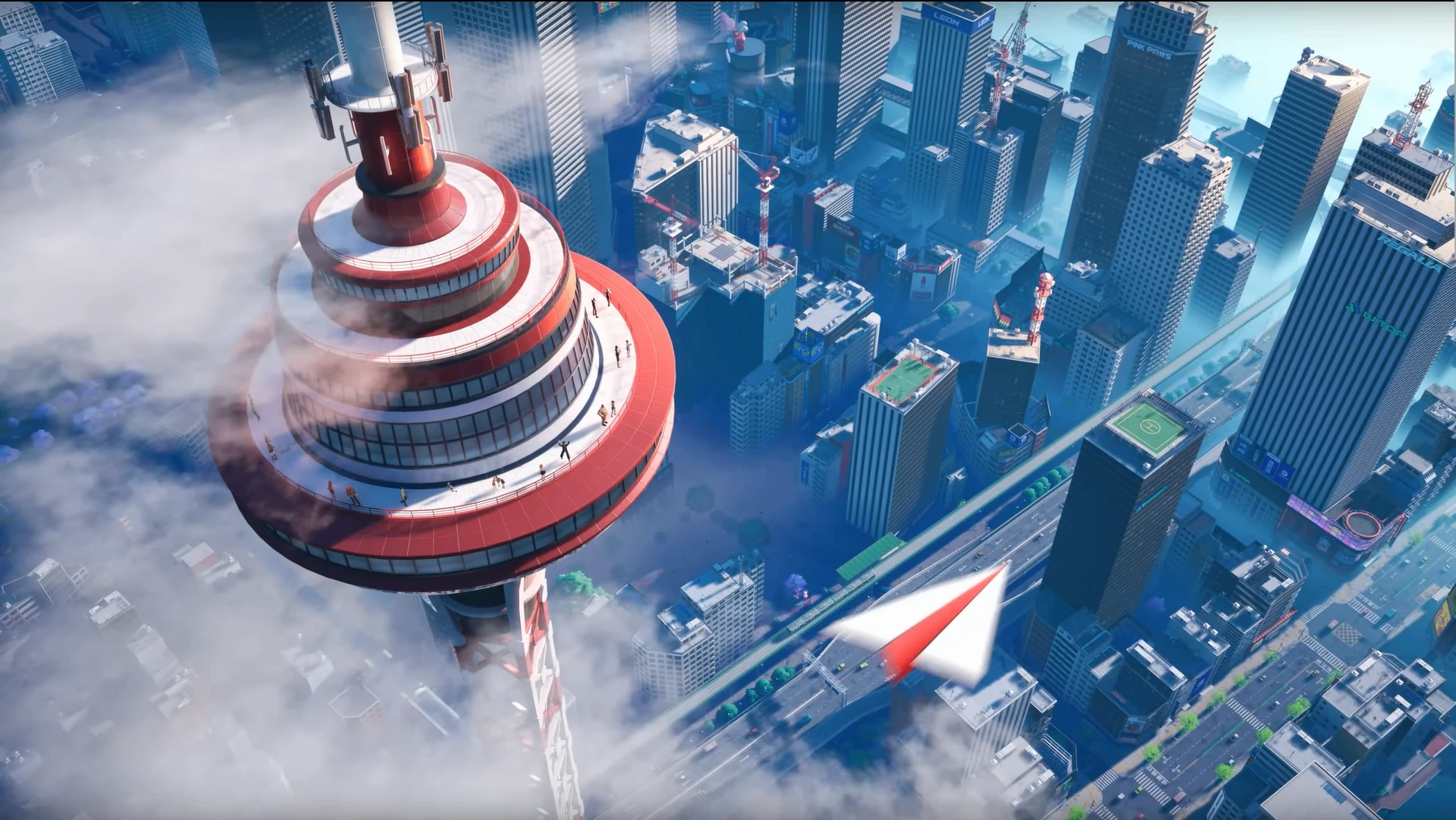
These features were prominently showcased at Gamescom 2025, where Hotta Studio debuted a trailer titled "Hethereau Exclusive Feature" running on NVIDIA GeForce RTX 50 Series GPUs. The demonstration highlighted the city of Hethereau rendered with path tracing. This shows realistic light interaction with glass buildings, wet streets, and neon signage.
NVIDIA DLSS 4
On PC, the game supports NVIDIA DLSS 4 with Multi-Frame Generation. DLSS (Deep Learning Super Sampling) uses AI-powered upscaling to render frames at a lower internal resolution and then reconstruct them to the target output resolution. The Multi-Frame Generation component generates additional interpolated frames, further boosting perceived smoothness. This technology allows players with RTX-series GPUs to enjoy ray tracing and path tracing at playable frame rates.
Lumen Global Illumination
Unreal Engine 5's Lumen system provides software-based global illumination and reflections without requiring dedicated ray tracing hardware. This makes high-quality lighting accessible on a wider range of hardware, including the PlayStation 5 and mid-range PCs. Lumen dynamically reacts to changes in the environment, meaning light behaves realistically as the time of day shifts or as the player enters and exits buildings.
PBR Materials and Weather Effects
The game uses physically based rendering (PBR) materials throughout its world. Of particular note is the implementation of subsurface scattering for weather effects. Rain creates realistic wet surfaces with appropriate reflectivity and light scattering. Snow accumulates with convincing depth and translucency. These material properties respond dynamically to weather changes, creating a living city environment that shifts in appearance with the conditions. Beyond visual changes, dynamic weather directly affects gameplay: rain makes surfaces slippery and can alter combat conditions, snow slows movement in affected areas, and clear skies offer optimal visibility for exploration.
Character Rendering
Character models in Neverness to Everness benefit from UE5's enhanced rendering pipeline. The studio refined character designs with additional geometric detail, improved skin shading with subsurface scattering, and high-resolution texture work. Hair rendering uses strand-based techniques for natural movement and lighting interaction.
Seamless Open World
The entire city of Hethereau loads seamlessly with no loading screens. UE5's world partition and streaming systems allow the game to load and unload city blocks dynamically as the player moves through the environment. Whether driving at high speed across districts or transitioning between outdoor streets and interior spaces, the world remains continuous.
Technology Summary
Feature | Details |
|---|---|
Engine Version | Unreal Engine 5.7 |
Ray Tracing | Full hardware ray tracing (reflections, shadows, caustics, GI) |
Full path tracing mode for cinema-quality visuals | |
DLSS | NVIDIA DLSS 4 with Multi-Frame Generation (PC) |
Global Illumination | |
Weather | PBR materials with subsurface scattering (rain, snow, clear skies); weather affects gameplay |
Dynamic Weather | Rain, snow, and clear skies affect both visuals and gameplay |
World Streaming | Seamless, no loading screens |
Upgrade From Unreal Engine 4
Hotta Studio's previous title, Tower of Fantasy, was built on Unreal Engine 4. For Neverness to Everness, the studio moved the entire production pipeline to Unreal Engine 5, which is confirmed by Hotta Studio announcements. The switch was motivated by the studio's goal of building a seamless, lifelike modern city rather than the stylised planetary vistas of their earlier work. Many of the systems that define Hethereau as a setting, including its dense urban geometry, volumetric atmospherics, and physically based weather, rely on UE5 features that were either unavailable or much weaker in UE4.
This upgrade also reflects the broader trajectory of its parent company. Hotta Studio is a subsidiary of Perfect World, and the transition to UE5 aligns with the publisher's push toward console-grade visuals on cross-platform releases. For historical context on how the engine choice evolved across beta phases and the Co-Ex Test, see the development history article.
Nanite Virtualized Geometry
Nanite is Unreal Engine 5's virtualized micropolygon geometry system. Instead of building low-polygon game meshes from high-detail sculpts, Nanite streams clusters of triangles directly from source assets, allowing environments to display far more geometric detail than traditional pipelines. Multiple outlets have confirmed that Neverness to Everness uses Nanite for its urban environments, giving the city of Hethereau very high geometric density across buildings, signage, furniture, and street props. The practical result is that small details like stacked crates, antique shop shelves, and convenience store interiors stay crisp at close range without visible polygon simplification.
Nanite also reduces the cost of drawing thousands of unique objects at once, which is what makes a city the size of Hethereau feasible on a single streamed map. Combined with Lumen's software fallback, it allows the same art pipeline to ship to both high-end PCs and the PlayStation 5.
Cross-Platform Rendering
One of the core reasons Hotta Studio chose Unreal Engine 5 is that the same codebase targets very different hardware. Neverness to Everness launched on PC (Windows and Mac), PlayStation 5, iOS, and Android on the same day, with cross-platform play between them. Shipping that many targets from one engine means the rendering pipeline has to scale from desktop RTX cards down to phone SoCs without re-authoring assets.
In practice this is handled through tiered feature sets. High-end PCs unlock hardware ray tracing, path tracing, and DLSS 4 Multi-Frame Generation. The PlayStation 5 uses Lumen for software global illumination along with console-tuned settings. Mobile devices run a reduced shader path with lower-resolution textures, scaled effects, and conservative post-processing, but still share the same world data so cross-platform play works without asset drift. See the platforms overview for the full matrix of supported devices.
Upscaler and Frame Generation Support
On PC, Neverness to Everness uses AI and temporal upscalers to make ray tracing and path tracing playable at high resolutions. The upscaler that is publicly confirmed by Hotta Studio and NVIDIA's Gamescom 2025 coverage is NVIDIA DLSS 4 with Multi-Frame Generation. Additional upscalers may be offered, but only DLSS 4 has been officially confirmed across multiple verified sources, so this article only documents that support. Check the graphics settings and system requirements pages for the most up to date per-platform toggles.
Technology | Role | Where It Applies |
|---|---|---|
NVIDIA DLSS 4 | AI-based upscaling plus Multi-Frame Generation for extra interpolated frames | PC with GeForce RTX 50 series (full MFG), older RTX for base DLSS |
Software global illumination when hardware ray tracing is off | All platforms, including PlayStation 5 and mid range PCs | |
Hardware Ray Tracing | Real reflections, shadows, caustics, and GI | PC with a ray tracing capable GPU |
Full unbiased light simulation for reference quality visuals | PC, showcased on RTX 50 series at Gamescom 2025 |
Hair, Skin, and Facial Animation
The existing article mentions strand-based hair and subsurface scattering skin. Unreal Engine 5 is the reason those features work at this scale. UE5's groom pipeline renders hair as individual strands rather than polygon cards, so each head of hair reacts to wind, gravity, and motion without the obvious seams older engines show. Subsurface scattering in the skin shader gives characters soft light falloff on cheeks, ears, and noses instead of the plastic look common in anime styled games.
Facial animation uses UE5's improved rigging and blend shape system, which lets the studio pack more expression data per character without blowing out the frame budget. This is especially visible in cutscenes where close-up shots hold up at PC resolutions.
Performance Optimization
Running an open world this dense on mobile hardware is the harder half of the engineering problem. Hotta Studio has publicly described mobile optimisation as a significant engineering effort, and several coverage outlets echoed the same point during the Gamescom 2025 and Tokyo Game Show appearances. UE5 features like world partition (which streams only the parts of the map near the player), virtual shadow maps, and Nanite's culling pipeline all help reduce the per-frame cost of rendering Hethereau.
On PC, the performance strategy layers DLSS 4 on top of hardware ray tracing so RTX owners can run heavier lighting at a playable frame rate. On PlayStation 5, Lumen handles indirect lighting without hardware ray tracing. On phones, the shader quality drops further and some effects are baked or simplified, but the underlying world geometry remains consistent across platforms so that cross-platform play works without players seeing different layouts.
Launch Roadmap Improvements
Path tracing and the latest DLSS 4 features are part of the game's launch roadmap. Hotta Studio's Gamescom 2025 reveal confirmed that full path tracing would be included at or near the official launch window, and NVIDIA's own Gamescom 2025 rollup listed Neverness to Everness among the DLSS 4 and full ray tracing announcements for the show. The upgrade from earlier UE5 builds used in beta testing to the launch build brings additional lighting, rendering, and streaming refinements that were not available during the Co-Ex Test.
Because Unreal Engine 5 continues to receive updates from Epic Games, some visual features may land in post-launch patches rather than at day one. The roadmap page is the best place to track what has shipped versus what is still in progress.
Tips for Best Visual Fidelity
Enable hardware ray tracing on a ray tracing capable GPU to get true reflections, shadows, and indirect lighting instead of Lumen's software approximation.
Turn on DLSS 4 with Multi-Frame Generation on an RTX 50 series card. The upscaler offsets the cost of ray tracing, and MFG multiplies the perceived frame rate for smoother motion.
Try path tracing for screenshots. Even on strong hardware it is the heaviest setting in the game, but it produces the most accurate lighting by far, which is how the Gamescom 2025 Hethereau demo was captured.
Use high shadow and reflection quality even when ray tracing is off so Lumen has enough budget to produce a clean image, especially at night under neon lighting.
Keep weather on Dynamic to see PBR materials react to rain, snow, and drying surfaces. Fixed weather presets skip some of the per-material blending that UE5's material graph enables.
Check the graphics settings and system requirements pages before tweaking presets for your hardware tier.
Related Pages
Platforms: system requirements for all supported platforms.
Neverness to Everness: main game overview.