

Monster Fantasy gives your customizable hero four classes to choose from, and each one approaches the action of the game with its own distinct combat mechanics. The four classes are the Warrior, the Mage, the Archer, and the Martial Artist. Whether you prefer to stand your ground behind heavy armor, rain down spells, strike from a distance, or dance through close quarters, there is a style that fits.
The fourth class appears under a few translated names across official material. The Steam store lists it as the Martial Artist, while the Kickstarter campaign and some announcements call the same class the Swordsman or Swordmaster, and Chinese- and Japanese-language material uses Musha or Ronin. They all refer to one class, described as a movement, dodging, and timing focused fighter.
The Four Classes
Class | Combat Style |
|---|---|
Warrior | Switches between offense and defense, relying on heavy gear and precise guarding to hold the front line |
Mage | Combines different elements to create and cast custom spells |
Archer | Excels at ranged combat, using precise aim to win from a distance |
Martial Artist | A classic action fighter built around movement, dodging, and timing |
Weapons and Signature Traits
Official class showcases have since named the weapon each class carries and the idea behind its playstyle. These descriptions come from the studio's own class introductions.
Class | Weapon | Signature Trait |
|---|---|---|
Warrior | Sword and shield | Blocks incoming attacks with precise timing, then answers with heavy damage. The studio sums the class up as steady in defense and thunderous on the counter. |
Mage | Elemental spellcasting | Combines elements into custom spells. Official footage also shows the Mage holding its own in melee rather than relying only on ranged casting. |
Archer | Bow | Fights at range with precise aim, on the principle that distance alone is no protection from a skilled archer. |
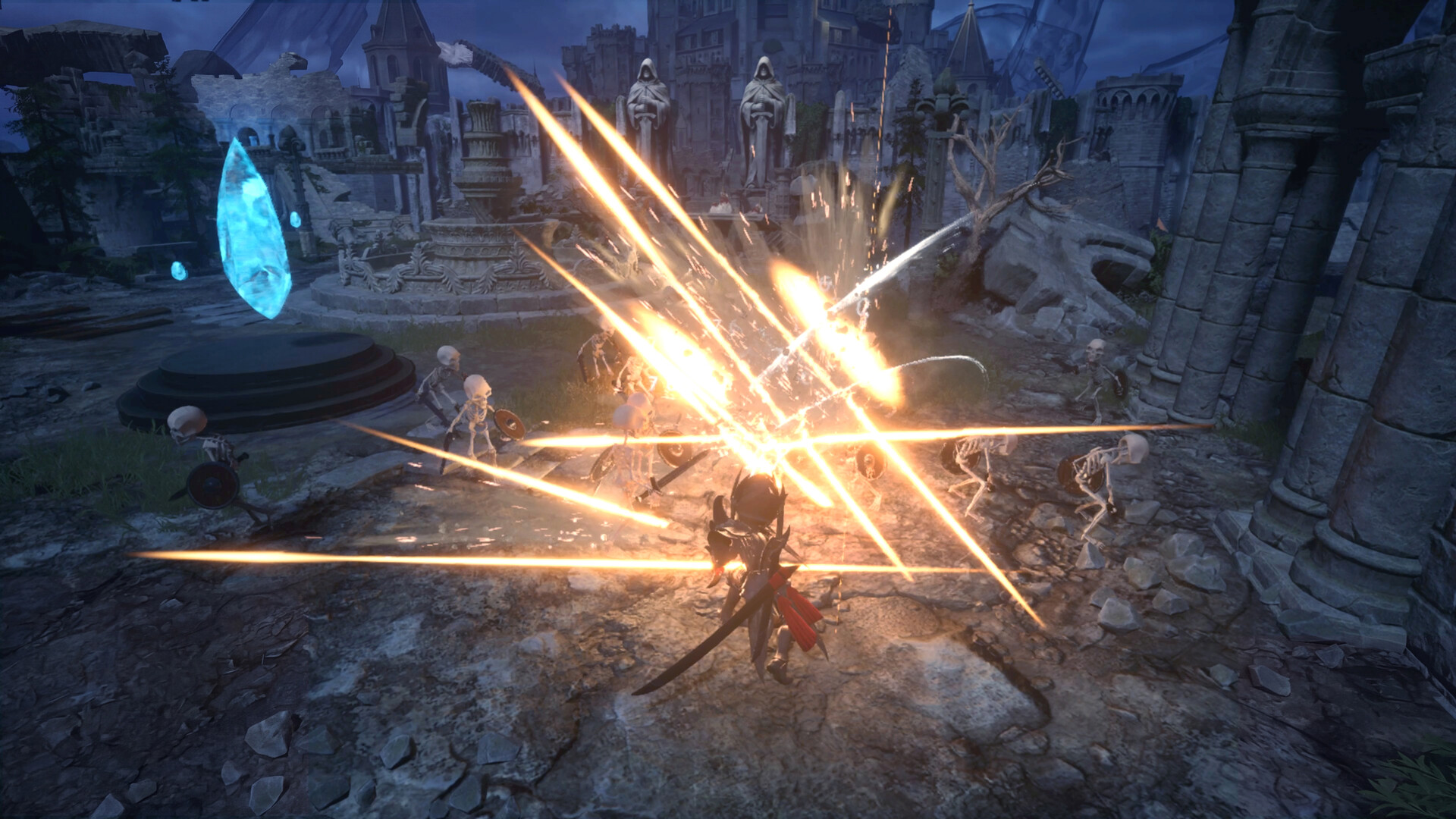
Swordsman | Long sword | Dodges with agility, reads the opening, and lands a decisive counterattack. Speed rather than armor is what keeps this class alive. |
The four classes above are the same four listed earlier on this page; the naming simply varies between official sources. Because skills follow the weapon under the free class system, picking up a different weapon is what shifts you into another class's toolkit.
The Free Class System
The classes are not rigid boxes. Monster Fantasy uses a free class system in which skills are tied to weapons rather than locked to a fixed role. Because of this, a single character can unlock all of the skills in the game. You are free to specialize deeply in one class and master its playstyle, or you can develop all of the classes on the same character and switch between them as the situation demands.
This flexibility means your choice of weapon shapes how you fight at any given moment, and changing weapons opens up different skills. A player who loves the Warrior's defensive, precise guarding can still pick up a bow and learn the Archer's ranged techniques later, all without starting over. The result is a system that respects both players who want a focused identity and players who want to experiment, making your approach to Combat System encounters truly your own.
In the build Jotoyo showed to media in June 2026, that switch was automatic: picking up a class's weapon turned you into that class, and weapons could be swapped at any point, including in the middle of a fight.
Class Mechanics in the Playable Build
That same preview build gave each class a core mechanic sitting on top of its weapon. Jotoyo has said the game is still being reworked, so read the table below as the state of that build rather than as final design.
Class | Core Mechanic in the Preview Build |
|---|---|
Warrior | Builds a defense level. Landing ordinary attacks fills a gauge that raises the level, and a well timed guard raises it outright. The higher the level, the less damage the Warrior takes and the less it is staggered, so the class hardens as a fight drags on. Its damage output is modest in exchange. |
Mage | Holds up to four elemental orbs on the staff, drawn from fire, water, earth, and wind. Holding the cast button lifts the character off the ground and draws a casting circle; what comes out is single target, area, enchanting, or defensive magic depending on the orbs held and how long the cast was charged. One enchantment reshapes the staff into a scythe-like form that adds melee attacks. |
Archer | Marks whatever it hits, and striking the same part again raises the damage that part takes. A slower charged shot tracks its target instead, trading setup time for a guaranteed hit. |
Swordsman | Enters a drawing stance that different inputs branch out of, including one that turns an incoming attack aside. Landing certain techniques fills a gauge in three steps, and at full charge the class draws a second, shorter blade and fights with both. |
Jotoyo has said every class can bring down every boss on its own, so no group is ever short a required role. What a party gains instead is overlap: some skills influence each other across classes, and a group that builds around those interactions has an easier time than four players fighting side by side independently. See Multiplayer and Co-op for how groups are put together.
How many classes ship is still open. The studio has said it may add a fifth and expects the final count to land at roughly four or five, but had not settled the question when it last spoke about it.