

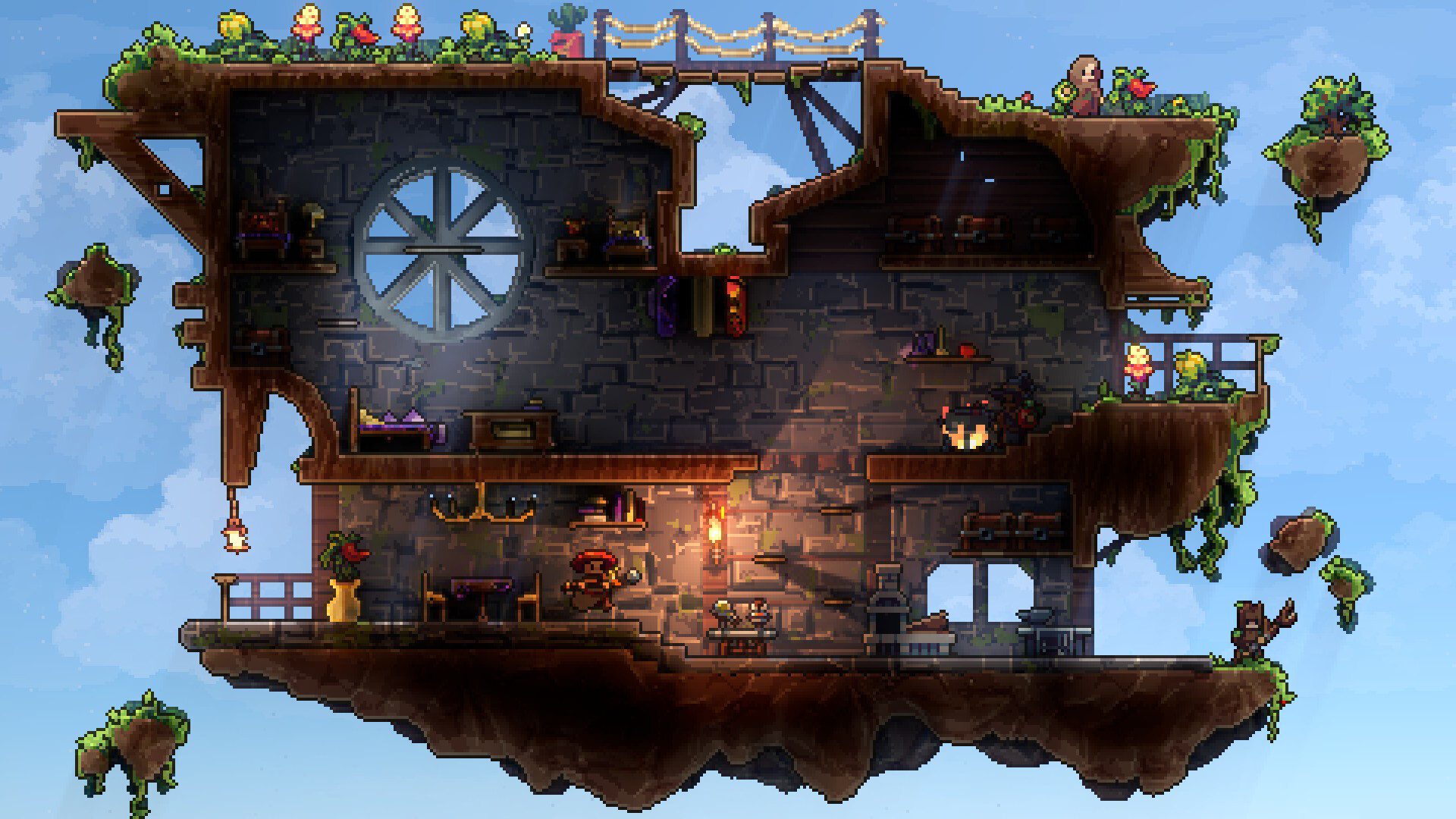
KYORA is a 2D side-scrolling sandbox adventure where exploration, resource gathering, crafting, and combat are tightly interwoven. Players enter a procedurally generated open world and are free to dig into the earth, build upward, and reshape the terrain from the very beginning of the game. The game supports one to eight players in cooperative play.
Exploration and World Generation
The world of KYORA is procedurally generated, meaning each playthrough produces a unique layout of terrain, caves, greenery, resources, and points of interest. Players traverse ruins, underground caverns, and open landscapes, encountering distinct Biomes with their own environments, resources, and threats. Exploration leads to the discovery of new materials that unlock further crafting options.
The developers describe pacing the world around three qualities they call the three As: ambience (calm outdoor moments and weather), adventure (actively digging toward something glimpsed at the edge of the screen), and action (combat or escaping hazards). World generation is tuned so these moments alternate at a satisfying rhythm rather than overwhelming the player.
Caves and Platforming
Because KYORA is a side-scroller, gravity plays a major role: every dynamic object tends to fall downward. Caves are a significant part of the world and turn exploration into a platforming challenge, with vines to climb and chasms to avoid. The terrain is shaped to keep objects and players from simply piling up at the bottom, using techniques such as gentler slopes and fall stops in key locations.
Traversal and Movement
Gravity governs how players get around. The team splits movement into a controlled mode, where the player lands where they meant to, and an uncontrolled mode, where an explosion or an unseen drop takes over and blocks input until the character recovers. Climbing back up is the harder direction, so several experimental traversal tools have been shown, including a glider with a simulated flight model, Gust Beetles that push players upward through the air, and slingshrooms that fling a player into a tumble. All of them were presented as work in progress.
Terraforming
Terraforming is a foundational mechanic available from the start of the game. Players can modify the terrain pixel by pixel, digging tunnels, sculpting hillsides, placing blocks to build platforms or bridges, and leveling ground for base construction. Terraforming is also used tactically during combat, for instance by creating cover or elevated positions in the middle of a fight.
The developers refer to the material used for building and customizing a base as terrapixel materials. The generation and authoring systems that produce the terrain being reshaped are covered on World Generation and Environment Design.
Resource Gathering and Crafting
Players gather materials from the world and from defeated enemies, then use those materials to craft equipment and consumables. The crafting system is built around unlocking modules as players progress, rather than presenting every option immediately. This encourages early tree-punching and rock-breaking, and makes later upgrades feel more meaningful. Early progression involves basic gathering, while later stages unlock tiered weapon, armor, and wand upgrades.
Gear comes from two broad sources: crafting from collected resources, and loot. Looted gear turns up in chests and microdungeons, and also drops from defeated bosses. Players can progress largely on crafted gear, while looted gear adds variety and the occasional surprise, since it can reflect the enemy that dropped it or the biome it came from and carry properties that crafted gear may not. Players can also upgrade existing equipment using found materials.
Cooking
Players can plant seeds and cook recipes using gathered ingredients. Prepared meals can provide stat boosts that help with tougher challenges, making food preparation one of the smaller goals that supports the larger push toward the next boss.
Day and Night Cycle
KYORA features a day and night cycle. Daytime encourages exploration and resource gathering and acts as a safer window for learning the basics, while night raises the level of danger and pushes players to prepare, defend themselves, or focus on survival. Players are advised to set up before nightfall, for example by building a small shelter.
Progression
Progression in KYORA is structured around a combination of large goals and smaller objectives. Major milestones include boss encounters against the Heralds that gate access to new areas and materials. Smaller goals such as crafting a new weapon, preparing a stat-boosting meal, or completing an armor set provide a steady sense of advancement alongside the larger objectives. The developers aim for moments where earning a rare item or a long-sought upgrade feels like a genuine reward.
Multiplayer
KYORA supports up to eight players in online co-op. When playing together, players can combine their Wands abilities to produce synergistic effects that are not available in single-player. To keep co-op smooth, clients only receive the essential world changes and generate most of the rest locally, with that data delta-encoded and compressed. The game also supports solo play with no changes to the core world or mechanics.