This article is a stub
It lacks sufficient information and needs to be expanded. You can help by adding more content.
Health is the Living body's final measure of endurance in HUNGER, the last line of defense beneath a player's armor. When it fails, there is no recovery and the run ends. Health can only be restored through medical items, making healing a deliberate and risky act rather than an automatic one.
The Health Pool
Every player begins each life with a default of 100 health. This value is standardized across all players rather than scaling dramatically with progression, so a new player and a veteran enter a fight with the same health pool. Keeping health consistent lets the developers balance time-to-kill across every weapon and encounter: better weapons may shorten the time to kill, but they do not grant invulnerability, leaving skill, positioning, and decision-making as the deciding factors. Damage is taken through combat, the environment, or status effects.
Medicine
Health is recovered using Medicine, specialized items that must be equipped to a dedicated Medicine slot and actively used to take effect. Medicines fall into repeated-use items, which can be used indefinitely but heal slowly, and single-use consumables, which act quickly but are lost after use. Healing is designed to be possible during combat but never instant or limitless, so every choice to heal carries the risk of being seen, caught, and interrupted.
Medicine | Type | Behavior |
|---|---|---|
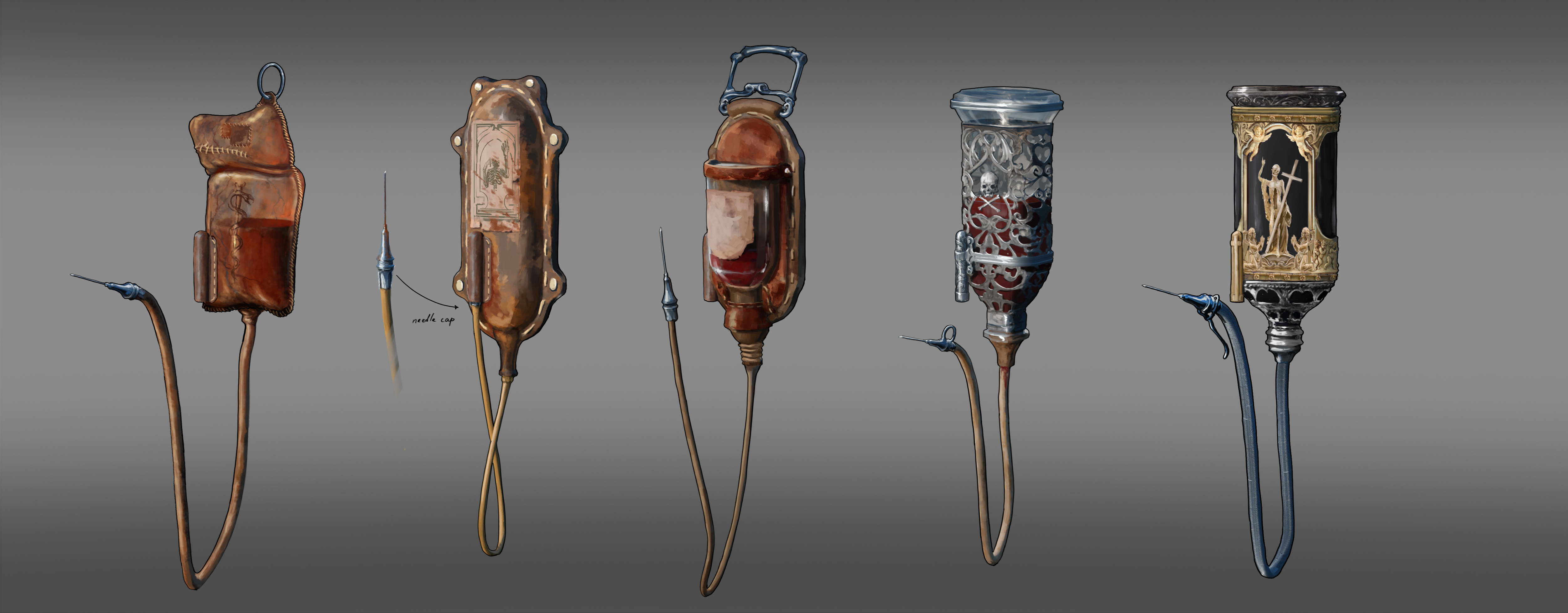
Bloodbags | Repeated-use | A self-transfusion filled with the player's own blood before an Expedition. Must be equipped and triggers a continuous heal-over-time. Higher rarities recover faster, but the player is vulnerable throughout. |
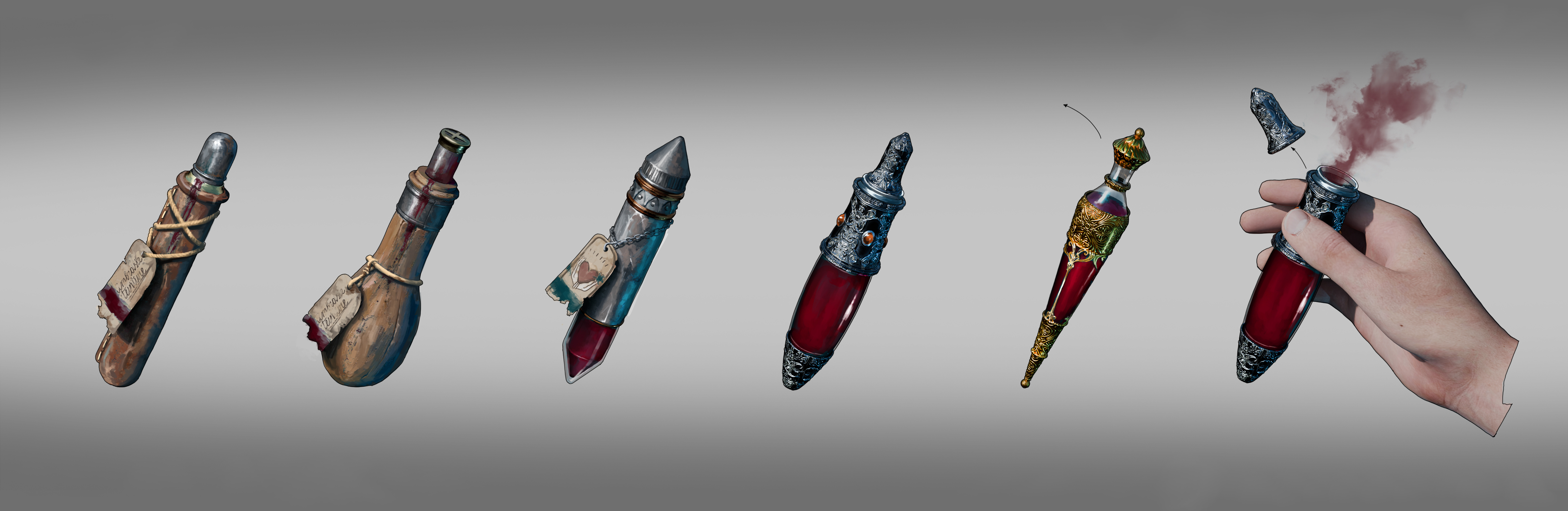
Ampoules | Single-use | Inhalable medicines that restore health quickly over a few seconds. Can be stacked and carried as emergency supplies, but the effect is canceled if the player takes damage. Higher rarities improve potency and speed. |
Bloodbags and Ampoules are the two categories the studio has detailed rather than the complete set. Medicine covers more categories than these, and the rest have not been described.
Bloodbag recovery is not a flat rate. Sustained use becomes progressively more effective, with the rate of recovery accelerating the longer a player stays committed to the transfusion. The change came out of the third technical test, where a flat restore rate meant that climbing back from very severe injuries could occupy something like seven minutes of continuous healing. Recovery still asks a Living to find somewhere safe and give it time, and it still leaves them exposed while it runs, but the total no longer scales linearly into absurdity at the worst end of the damage range.
Design Goals
Healing in HUNGER follows the rule that recovery should be possible but not perfect. Medicine is deliberately limited, either in how quickly or how often it works, forcing players to weigh timing, position, and the cost of attention against the danger of interruption. The contrast between slow repeated-use recovery and fast single-use consumables mirrors the armor repair system and reinforces the game's rhythm of preparation versus reaction. The developers have said that additional medicines, including items to stabilize allies, stop bleeding, or share health between players, are planned after the Early Access launch.