

Extraction is how an Expedition ends for a survivor who intends to keep what they found. Loot only counts once a Living is out of the region, which makes the last stretch of a run the most dangerous part of it. The studio has deliberately built leaving as part of the Expedition rather than an epilogue to it: an extraction has to open, it has to be reached, and it has to be taken while everyone else on the map can see roughly where it is.
The Extraction Timer
Entering an active Extraction Zone starts a 30-second timer. Completing that timer does not remove a player from the Expedition. It makes them eligible to leave, and the departure itself still requires reaching the extraction balloon and interacting with it.
The developers have explained the split directly. They did not want the game pulling a player out of a run simply because a countdown finished. Extraction Zones can cover ground players are naturally fighting over, so a timer can easily expire while a survivor is pinned behind cover or circling the edge of the zone looking for a safer approach, and ending the run at that exact moment would take control away just as the situation became interesting. Completing the timer means a Living may leave. Choosing when is still theirs.
Leaving the Zone Mid-Countdown
Stepping outside the Extraction Zone does not reset progress. The timer counts backwards instead, so time spent outside is subtracted from time already banked rather than wiping it.
The studio's own example: a player with five seconds remaining who then spends five seconds outside the zone comes back to find ten seconds remaining. Stay out long enough and the count-back eventually returns the full 30 seconds.
The practical effect is that fighting around an extraction is viable. Briefly breaking the radius to dodge an attack, reposition, or chase somebody down costs progress without erasing it, while sitting outside the zone for a long stretch still surrenders everything banked. The timer asks for commitment to the area without treating a moment across an invisible boundary as a failed attempt.
Extracting as a Party
Parties do not each run a separate countdown. The first member to enter an Extraction Zone starts the timer for the whole group, and anyone arriving afterwards inherits whatever progress it has already made. A player who reaches a zone whose timer has already finished is eligible to extract immediately.
The extraction itself stays individual. Every member has to reach the balloon and interact with it personally, and one player leaving does not carry the rest of the group out with them. Groups can therefore come apart in the final moments of a run, with one Living gone while another is still pinned down or approaching the zone. Being in a party makes the countdown easier to coordinate; getting out is still each player's own problem.
Extraction Balloons
Extraction points open through the arrival of extraction balloons. When one is due, it begins descending toward its landing site and can be seen from a considerable distance across the region. The surrounding Extraction Zone only becomes active once the balloon has reached the ground.
Making the balloons physically descend is a deliberate broadcast. Players who want to leave can start moving toward it, and everyone else can read the same signal and anticipate where traffic across the map is about to converge. The developers are explicit that extraction is not meant to be private information: once a balloon starts coming down, anyone who can see it knows roughly where survivors trying to leave will gather.
Where Balloons Land
Landing sites are not random. Each region contains more than ten possible landing locations, and only a small number of them are used in any given Expedition.
That balance is intentional. Players who learn a region come to recognise the candidate sites, the routes between them, and which approaches offer cover or expose a sightline, without ever being able to plan a whole run around a guaranteed exit. The sites themselves vary: some sit in open ground, others among buildings, courtyards, or more broken terrain. That variety is another reason the zone timer and the balloon interaction are kept separate, since a player needs to be able to move and fight through a landing site without being extracted by accident.

Deadsmoke
Deadsmoke is the visual warning that an extraction is contested. Earlier in development it could be set off simply by a player lingering near a balloon, which made it ambiguous: seeing smoke did not tell you whether a rival party was closing in or whether your own group had triggered it.
Following the third technical test it was changed so that Deadsmoke activates only when two or more separate parties are inside the Extraction Zone, and the range at which the system detects those parties was increased. The smoke now carries one specific meaning: more than one party is at this extraction. A solo player, or a party that has the area to itself, no longer sets it off.
The system is not intended to make extractions safe, and ambushes remain viable. An attacker can watch the routes in, position themselves outside the detection area, or move in when they judge another group to be vulnerable. The warning is deliberately visual rather than audible: balloons land in everything from open fields to enclosed courtyards, and a persistent alarm would be both intrusive and less precise than the smoke.
When Extractions Open
Extraction points open progressively across an Expedition rather than all being available from the start.
Stage | Behaviour |
|---|---|
First balloon | Arrives shortly after the Expedition begins and provides the first opportunity to leave |
Second and final balloon | Its timing varies from run to run, so the gap between the first opportunity and the final phase is never the same twice |
Final warning | Reynauld broadcasts a warning across the region when the final balloon arrives |
Closing countdown | A 10-minute countdown appears on screen. When it reaches zero the Expedition ends and any player who has not extracted is lost |
The variable timing is a deliberate measure against routine. The studio wants players to learn the general rhythm of an Expedition without being able to plan every stage of a run against a predictable clock.
Hidden Extractions
The two standard balloons are not necessarily the only way out. Certain Masteries can open access to a third extraction balloon during an Expedition, and unlike the public ones it is not visible to players who have not invested in the relevant Mastery.
The developers frame this as progression that changes how a player navigates and understands the world rather than simply how hard they hit. A character with the right investment may know a route home that everyone else in the region is deciding around without knowing it exists, which can mean avoiding a heavily contested public extraction entirely or keeping an option open that nobody can watch.
Finding an Extraction in the Field
Several pieces of field information support the system. A studied map marks the active extraction locations for the current run and shows the player's own position and facing, and the compass reports the distance to extraction. Some extractions are reached aboard dirigibles, which carry their own interaction prompt. Currency gathered on a successful run transfers straight to The Stash on the way out, while gear has to be deposited there manually.
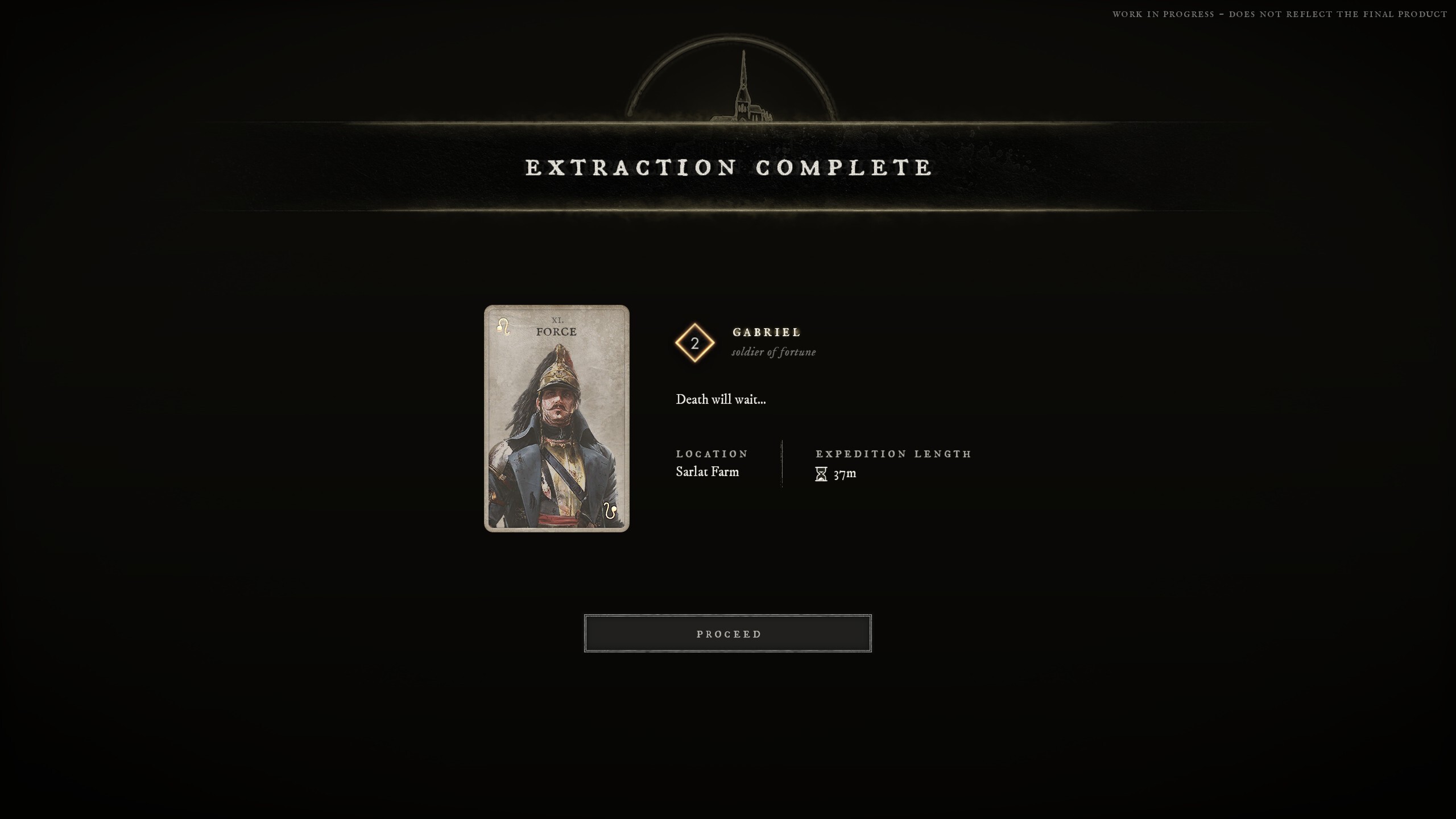
Planned Expansion
The system shipping at Early Access is described as a foundation rather than a finished feature set. Two additions are named as being in development:
Player-controlled extraction, giving players ways to influence or create extraction opportunities themselves instead of relying entirely on the balloons an Expedition provides.
Smaller gadget extraction balloons that send items home rather than the player, so a survivor who finds something valuable early can secure it and keep pushing deeper instead of abandoning the run for it.
Neither has a date, and neither is confirmed for the Early Access launch build. The studio's stated intent is that adding more ways out should make the system more strategically interesting rather than simply easier, and that leaving should keep involving commitment, information and risk.
See Expeditions for the wider structure of a run, The Expedition Map for how a destination is chosen in the first place, and Gameplay for where extraction sits in the loop as a whole.