

How it Works
Combat in Honkai: Nexus Anima follows an auto-chess format built on a hex-tile battlefield. Before each battle, players place their Anima on the lower half of the hex grid. Once deployment is set, the fight plays out automatically. Anima execute their attacks, abilities, and movements without player input during the round. The strategy happens before the battle starts: choosing which Anima to deploy, where to position them on the hex tiles, and which Kardia leaders to bring.
A key difference from games like Teamfight Tactics: Nexus Anima uses pre-built decks rather than random unit rolling. Players select their Anima team before entering a fight from their collection. There's no shared pool, no rerolling for units mid-match, and no economy-based purchasing between rounds. You bring the team you've built and trained, position them on the hex grid, and the fight plays out.
The Hex Grid
The battlefield is divided into two halves: the player's deployment zone on one side, the enemy formation on the other. Ability text places units on hex tiles and describes effects that reach 'adjacent hexes' or land 'within 2 hexes', so range is counted in tiles rather than as a straight-line radius. Released footage renders the arena as an open field once a round begins and never shows the tile lattice clearly, so how the grid is drawn on screen is not yet documented.
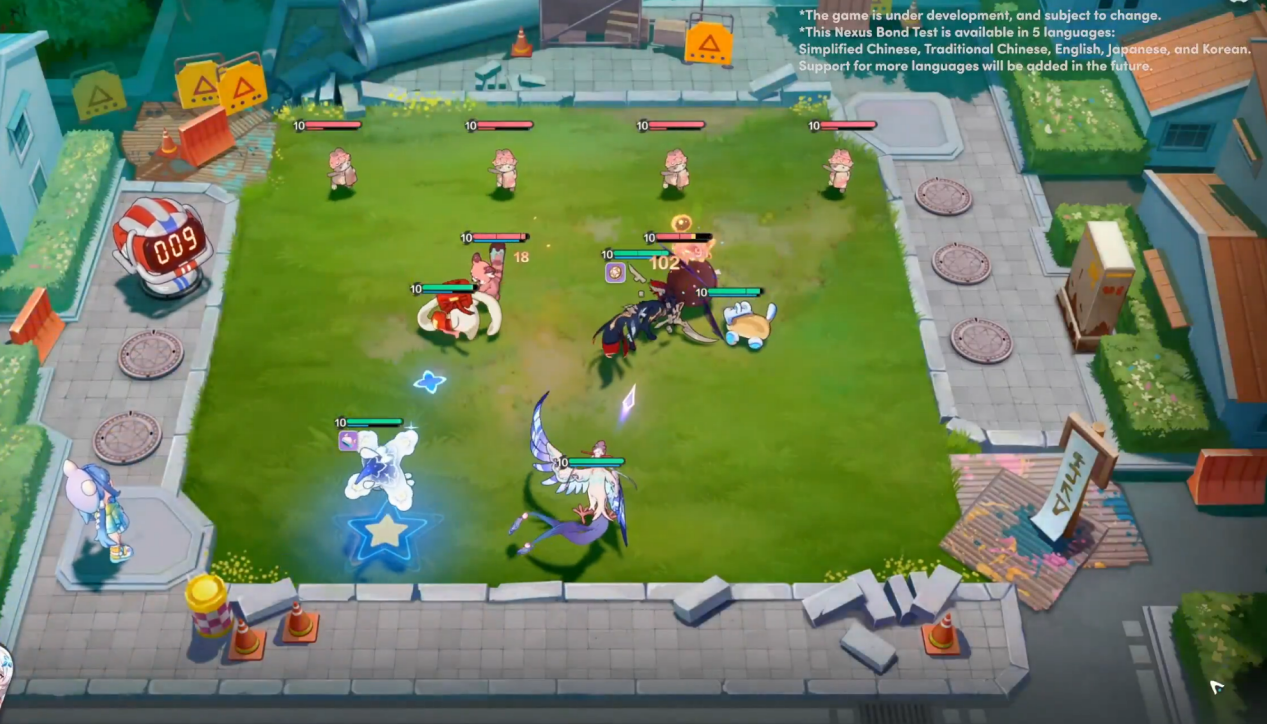
Positioning on the hex grid directly affects combat outcomes. Frontline Protectors absorb damage from nearby enemies. Ranged Blasters in the back can hit multiple targets in a cone. The hex layout means flanking angles matter. A unit positioned at the side of the grid can sometimes bypass the front line entirely.
Deployment
Players can deploy up to 9 Anima simultaneously on their side of the grid. The enemy formation is visible before deployment, so players can adjust their lineup to counter specific threats. Tanks and melee fighters go in the front row to absorb damage, while ranged damage dealers and support units sit in the back.
Assistance Slots
In addition to the 9 deployed Anima, players have 6 assistance slots for bench Anima. These Anima don't fight directly but can still contribute to Aspect synergy counts. This means a team of 9 deployed + 6 bench can activate synergies using up to 15 units' worth of Aspect and Trait tags, even though only 9 are on the field. Building around this (putting Anima on the bench purely for their synergy contribution) is part of the team-building depth.
Heat Coins
Heat Coins are an in-battle currency earned as fights progress. Players spend Heat Coins between rounds to temporarily upgrade their deployed Anima. Boosting stats, unlocking stronger ability tiers, or triggering special effects. The system adds a layer of decision-making during multi-round encounters: do you spend Heat Coins early on a quick power spike, or save them for a bigger upgrade in later rounds?
Synergies
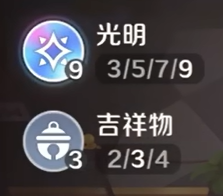
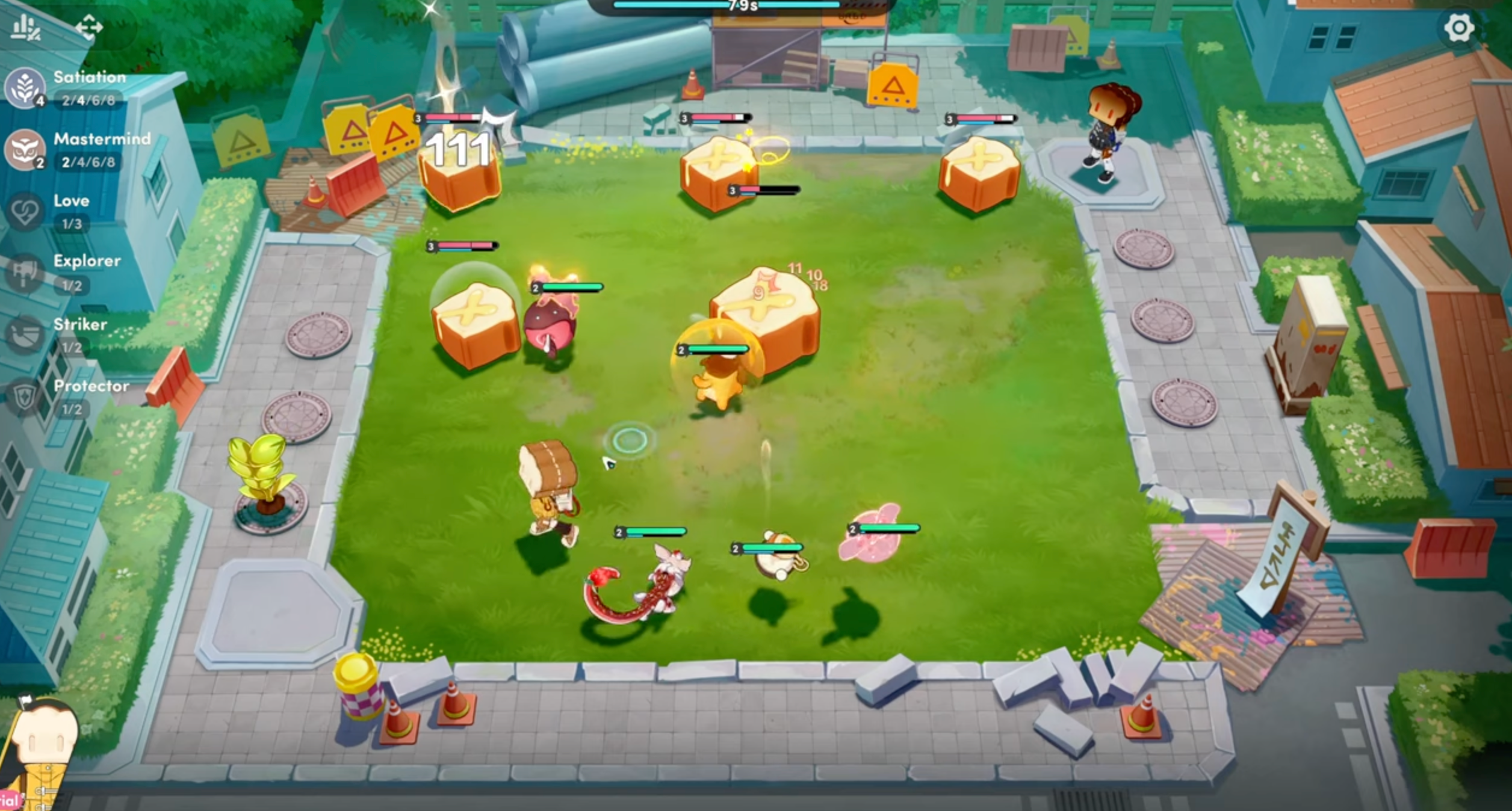
The depth of the system comes from synergy stacking. Each Anima belongs to one of the Aspects and one of the Traits. When you field multiple Anima sharing the same Aspect or Trait (including bench units in assistance slots), you unlock escalating buffs at the 2/4/6/8 thresholds. More units of the same type means stronger bonuses.
For example, the Satiation synergy at higher tiers triggers an ability called "Summon Bountiful Seed", which recovers 12% of an allied Anima's Health, boosts ATK and MP, and stacks up to 5 times. This kind of compound buff rewards players who commit to a focused Aspect composition rather than spreading units across many different types.
Kardia and Exclusive Principles
Players bring three Kardia characters into each battle. Kardia don't fight on the field themselves; they act as commanders providing off-field support. The lead Kardia generates an Exclusive Principle a unique battle ability that activates automatically. Different Kardia have different Principles, so the choice of leader shapes your strategy as much as your Anima composition.
The two non-leader Kardia contribute their Talisman equipment bonuses to the team instead. This means all three Kardia slots matter, even though only the leader's Exclusive Principle activates.
Blue Energy Bar
Each Anima has a blue energy bar that fills during combat. When full, the Anima unleashes its ultimate ability. Energy generation rate varies by Anima. Some fill quickly for frequent ultimates, others build slowly toward a single devastating attack. Managing which Anima get their ultimates first through positioning and Kardia buffs is part of the strategic layer.
Augments
Mid-battle, players are presented with augment choices. Power-ups divided into four categories: Synergy, Upgrade, Combat Power, and Economy. These work similarly to the augment system in Teamfight Tactics. The augments aren't tied to specific units; they're presented as choices at certain rounds, letting players adapt their strategy as the fight progresses.
Roles on the Battlefield
Each Anima's Trait determines its combat behavior:
Class | Description |
|---|---|
Strikers | Single-target damage dealers focused on eliminating priority targets |
Blasters | AoE damage with DoT effects, knockback, and stuns |
Gladiators | Duelists with strong 1v1 capability, often with healing or CC immunity |
Protectors | Tanks that defend backline damage dealers |
Masterminds | Utility units that set traps, summon allies, enhance teammates, and alter terrain |
Hotheads | Crowd control specialists with forced displacement and group taunts |
Cherubim | Healers and buff providers |
Explorers | High-mobility units focused on objective capture |
Mascots | Rare passive buffers providing team-wide stat bonuses |
Design Intent
Preview coverage has described the combat as having a low skill threshold aimed at casual players. There's no manual unit control during fights, no frame-perfect timing, and no twitch reflexes required. The skill expression comes from team building, positioning, synergy planning, and Heat Coin management. Most of the game is PvE. The one head-to-head mode, Friend Battles, is challenge-based against players already on your friends list rather than matchmade, and no ranked ladder has been shown, so there is still little pressure to chase meta compositions.
Beta feedback indicated some players found the combat too simple in early stages. The DevTalk response promised reworked Kardia combat models and skills, suggesting deeper strategic options are planned for launch.
Two-Axis Classification
Each Anima carries two classification axes that map onto the race and class systems familiar from other auto-chess games. Its Aspect works like a race or faction, while its Trait works like a class that sets its battlefield role. Assembling pieces so that matching Aspect and Trait tags stack is the central logic of team building: each shared tag drives a synergy bond, and different combinations of Anima skills, classes, and races produce widely varied builds. Because every Anima caught in the open world becomes a usable piece, expanding the collection directly widens the pool of combinations available in Nexus Battles.