

Setting: The Year 2251
The Fragmentary Order universe is set in 2251, more than two centuries after humanity narrowly avoided a near-collapse in the early twenty-first century. The megacorporation Core unified the surviving world governments, drove Solar System colonization, and pioneered the advanced biotech that underpins the game's clone-soldier gameplay. By 2251, Core's monopoly is fracturing and rival factions are emerging to seize control of the CORIE framework.
On This Page
This article is a stub
It lacks sufficient information and needs to be expanded. You can help by adding more content.
The events of Fragmentary Order take place in 2251, more than two centuries after a near-collapse of human civilization in the early twenty-first century. The Solar System the player inhabits is advanced enough for synthetic biology and remote-piloted clone soldiers, and unstable enough that the order holding it together is breaking apart.
Quick Facts
Field | Value |
|---|---|
Setting Year | 2251 |
Scope | Solar System |
Tone | Hard sci-fi with cyberpunk elements |
Dominant Power | |
Operating System | |
Player Avatar | |
Era Status | Core fracturing; rival factions emerging |
From Collapse to Core
During the early twenty-first century, humanity comes to the brink of a societal collapse. Exact causes are not detailed in the public material, and no specific year or named event has been confirmed. The framing is consistent: the collapse was averted at the last possible moment, and the rescue came from a single megacorporation, Core. Core steps into the vacuum left by failing institutions and brings the surviving world governments under one banner, ending the immediate crisis and setting the conditions for the centuries of expansion that follow.
The Age of Strife
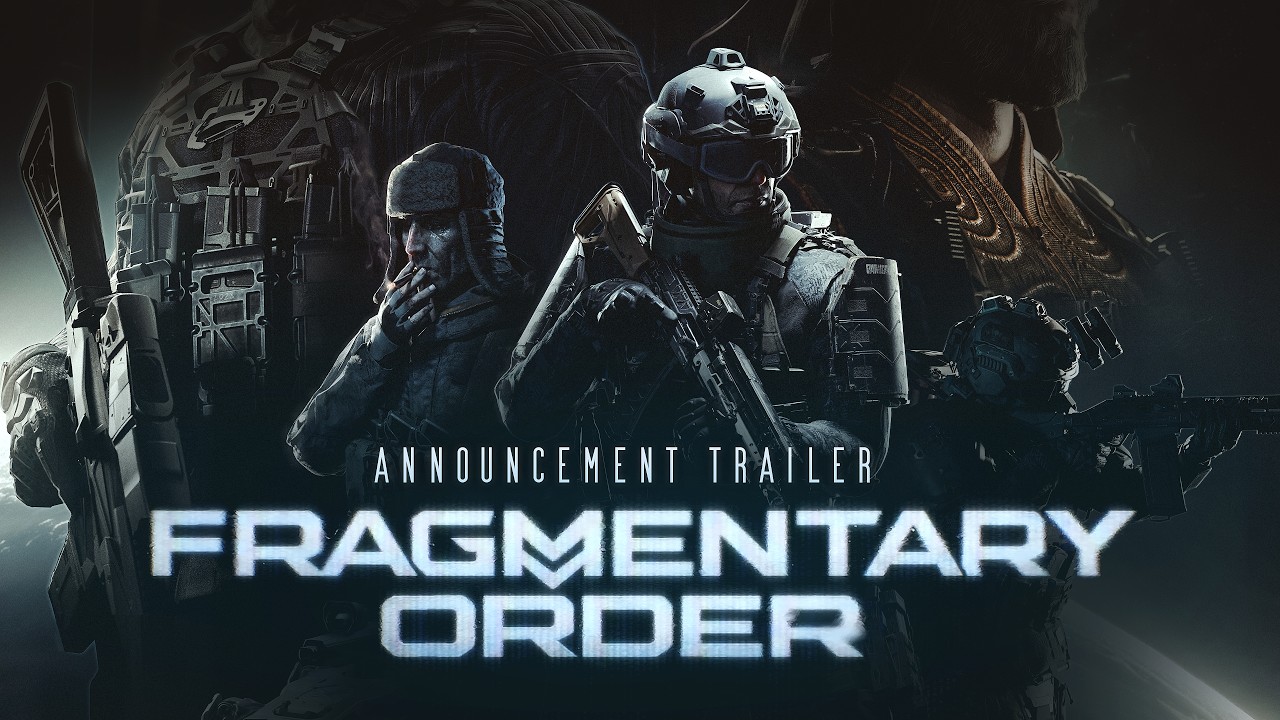
The early-twenty-first-century collapse has a name in the project's marketing material: the Age of Strife. The phrase is used in the seven-minute CGI lore trailer released alongside the April 12, 2026 reveal to label the long stretch of social, economic, and political fracture that preceded Core's rise. No specific calendar year is attached to the Age of Strife in the public material, and the trailer narration deliberately keeps the cause vague.
The trailer also gestures at a triggering event the studio has only described in atmospheric terms: "You could say it all started with a flash. A moment that changed the course of history." That "flash" is presented as the seam between business-as-usual history and the run of catastrophes that became the Age of Strife. The full nature of the flash, who or what caused it, and what immediate consequences flowed from it, are all left for in-fiction unraveling rather than spelled out in the announcement materials. Treat the phrase as canonical narrator language rather than a documented in-universe event.
Solar System Era
Under Core, civilization stops looking inward and starts moving outward. Colonization extends beyond Earth on the back of infrastructure projects only a unified power can sustain. Alongside the off-world push comes a parallel revolution in biotechnology and synthetic life that underpins the disposable clone bodies known as Replicated Entities. Without that biotech the loop would not exist.
The scope is the Solar System rather than a single planet. Mars is the first confirmed location: in June 2026 the studio detailed Blue Mars, a partially terraformed, post-apocalyptic version of the planet that has been cut off from outside supplies. An orbital space station, Earth, and Venus are named as the next environments in development. Full map details live on the Maps and Scale page.
The 200-Year Arc
The reveal frames the path from the present day to 2251 as a roughly two-century arc, presented in the trailer as fragmented news reports spanning decades. The broad beats are: secret Cold War-era experiments and anomalies; the global collapse known as the Age of Strife; the rise of Core as humanity's unifying force; rapid technological expansion and colonization of the Solar System; Martian independence movements and conflict; and a gradual erosion of centralized control that sets up the fracturing present.
Several in-fiction institutions and programs are named only in passing by the narrator and should be read as flavor rather than documented systems. Core's post-collapse settlement is attributed to a "Core reestablishment structure," a "purification program" said to rehabilitate exhausted land that citizens can take part in, and an off-world push routed through an agency the trailer calls UASA, the setting's stand-in for a present-day national space agency. These are presented as narrator language in the announcement materials, not as confirmed gameplay features.
Fracturing Power
By 2251, the unified order is no longer holding. Core's monopoly is fracturing from within: internal divisions are widening, and rival factions are emerging from the cracks, positioning themselves to seize control of the systems Core built. Chief among those systems is the CORIE Framework, the global apparatus that structures and monetizes warfare, technology, and economic activity across human-controlled space. Whoever controls CORIE controls the rules under which contracts are issued and risk is rewarded. Beyond the Prime Colonial Forces on Mars, the rival factions contesting Core had not been named in public material as of August 2026.
Tone
The setting is positioned as hard science fiction with cyberpunk elements. The framing prioritizes plausibility: the technology, the corporations, and the social arrangements read as extensions of trends today, not fantastical leaps. The result is a grounded this could happen atmosphere paired with the vocabulary of cyberpunk: corporate dominance, commodified violence, fragile humanity behind synthetic flesh.
Unconfirmed Details
Several details fans frequently ask about have not been confirmed in the public material as of the April 2026 reveal:
The specific year or triggering event of the twenty-first-century collapse
The names of human governments or coalitions that existed before Core's unification
Named historical figures from the pre-Core era or the unification
Named planets, moons, stations, or colonies beyond the Solar System
Named factions beyond Core, the Core Colonial Structure, and the Prime Colonial Forces