
Fragmentary Order
Hardcore sci-fi multiplayer first-person combat simulator from Rant Gaming and publisher Cor3, created by Nikita Buyanov. Set in 2251, players remotely pilot disposable clone soldiers called Replicated Entities through contested zones across the Solar System under the CORIE framework. Built on Unreal Engine 5, with a closed alpha targeted for late 2026.
On This Page
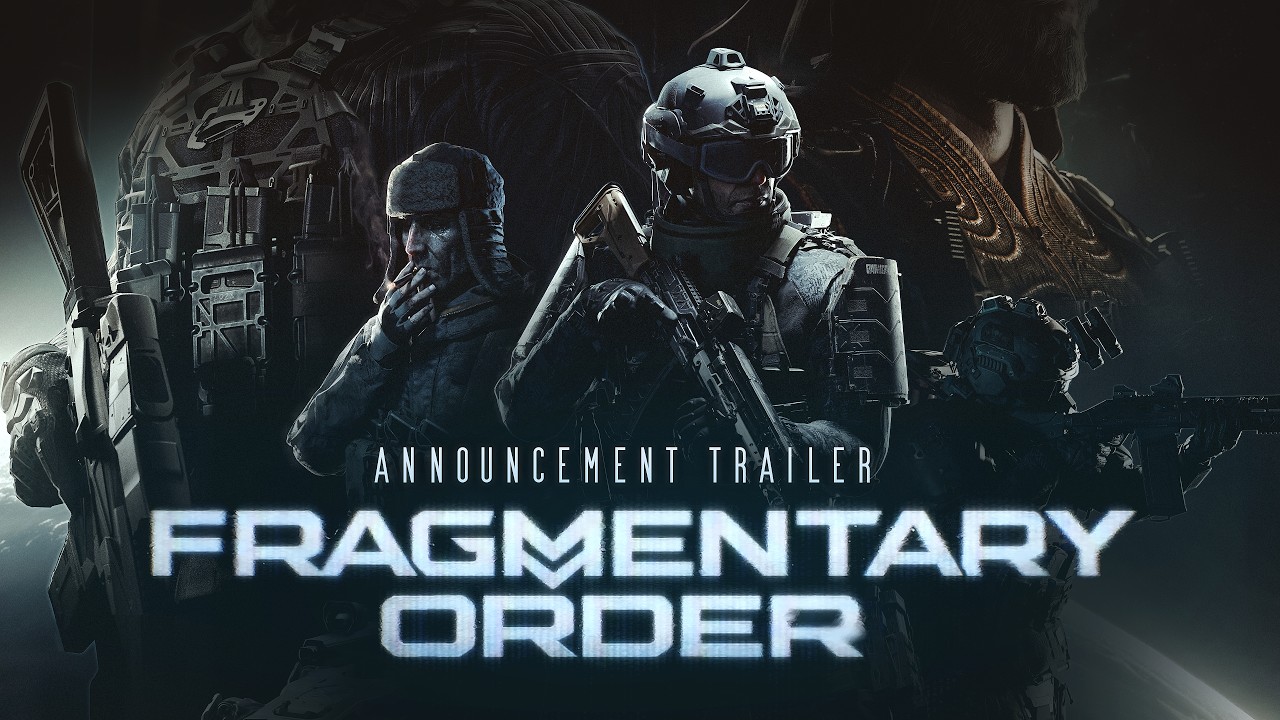
Fragmentary Order is a hardcore science fiction multiplayer first-person shooter in development for PC. The game is being made by Rant Gaming, a newly formed studio of roughly 130 staff, in association with publisher Cor3. Its creator and lead is Nikita Buyanov, best known as the originator of Escape from Tarkov, working alongside visual director and lead concept artist Aaron Beck. The project was officially announced on April 12, 2026 after a roughly three-month alternate reality game (ARG) campaign that ran through the cor3.gg portal. Active development began in 2025 on Unreal Engine 5, with a closed alpha targeted for late 2026. The first gameplay footage, a 49-second first look, was published on August 25, 2026, and the studio has said a longer gameplay video follows in September.
The team frames Fragmentary Order as a "next-generation multiplayer combat tactical simulator in hazardous environments" rather than a traditional extraction shooter. While extraction is part of the loop, the developers have repeatedly described the game as a combat simulator with deep weapon, health, and economic systems. It is positioned in deliberate contrast to lighter, more casual shooters in the same broad space.
Important: Fragmentary Order is not a sequel, spin-off, or follow-up to Escape from Tarkov. Rant Gaming and Cor3 are separate from Battlestate Games, and Nikita Buyanov has stated he continues to work on Tarkov in parallel with this project. Fans calling the game a Tarkov successor are using community shorthand only; the developers have explicitly denied any such relationship.
Quick Facts
Field | Value |
|---|---|
Developer | |
Publisher | Cor3 |
Creator and Lead | |
Visual Director | |
Engine | |
Platforms | PC |
Genre | Hardcore sci-fi multiplayer FPS, combat simulator |
Setting Year | |
Reveal Date | April 12, 2026 |
First Alpha | Targeted late 2026 (closed) |
Early Access Path | |
Pre-Orders | None available |
Premise and Setting
The game is set in the year 2251. In its backstory, humanity narrowly survives a catastrophic societal collapse during the early twenty-first century. From the ashes, a single megacorporation, Core, unifies the surviving world governments, ushers in colonization of the wider Solar System, and drives rapid advances in biotechnology and synthetic life. By the 23rd century, however, Core's monopoly is fracturing. Internal divisions widen, rival factions emerge, and the unified order that defined the post-collapse era is starting to come apart.
Tying everything together is the CORIE framework, a global system that structures and monetizes warfare, technology, and economic activity across human-controlled space. The framework operates on a guiding principle that value is defined by risk: the more dangerous a contract or operation, the greater the rewards on offer. Out in the contested zones, this means that elite operators do not deploy in person. Instead, they sit safely in fortified bunkers and remotely pilot disposable clone soldiers known as Replicated Entities (RepEnt). The tone leans toward hard science fiction with strong cyberpunk influences, and the Solar System provides the broad canvas. The first confirmed location is Blue Mars, a partially terraformed, post-apocalyptic version of the planet, with an orbital space station, Earth, and Venus named as the next environments in development.
How You Play
The player takes the role of a Core Era citizen who logs into the CORIE framework from a secure bunker and remotely controls a Replicated Entity in a contested zone. See Gameplay Overview for a detailed breakdown. The basic loop is:
Accept a contract or objective from a corporation or faction
Deploy your clone into a contested zone
Engage other human-controlled clones, scavenge resources, complete tasks
Reach an extraction point alive to keep what you brought back
The core threat in a session is other players. The operators you fight are not AI aliens or scripted bosses; they are other people piloting their own clones, and when a clone dies that disposable body is gone while the operator behind it deploys a fresh one into the next contract. Around that player-versus-player core, the world is also populated by non-player bodies (local inhabitants, drones, and other artificial units), making the design player-versus-player-versus-environment rather than a pure deathmatch. The studio has confirmed a PvE-focused mode at launch for players who want the contract and survival loop without facing other operators head-on, and it has said a single map is built to hold up to 40 to 50 operators with raids running one or two hours.
Combat and Customization
The developers have positioned weapon handling and customization as a centerpiece of the experience. They have described the modification system as excessive in the depth of attachment, internal part, and behavior options on offer, building on lessons from earlier hardcore shooters but rebuilt from scratch for the sci-fi setting. Health is described as a complex, layered system rather than a simple hit-point bar, intended to reward careful play, situational awareness, and proper field treatment of injuries.
Maps, Scale, and Vehicles
World design is split between large open zones and smaller close-quarters arenas. See Maps and Scale for the full discussion. The team has stated that the larger maps are intended to be roughly four to five times the size of the largest maps in Escape from Tarkov, with vehicles confirmed for traversal. Tighter close-quarters maps are also planned, so encounters can range from long-distance reconnaissance and ambushes to dense interior firefights.
Economy and Progression
Progression is built around what the team has called a neo-economic structure. Players accept contracts from corporate and factional employers, build up reputation with each, accumulate credits, and gradually unlock new layers of the world. Faction relationships influence what gear becomes available, what zones are reachable, and which storylines open up next. Quests, faction reputation, credit accumulation, and infrastructure expansion all feed into the same core loop, with the goal of giving long-term players a meaningful stake in the simulated economy rather than a flat cosmetics-only progression.
Studio and Creator
The game is being developed by Rant Gaming, a new studio with a team of about 130 people. Roughly 98 percent of the staff are new hires brought together specifically for this project, with only a handful of consultants from Buyanov's previous work. Buyanov has described the project as a couple of years old counting from its conceptualization stage, with roughly a year of that spent in active production as of the April 2026 reveal. Reveal coverage has also put the production phase at around eighteen months; the studio has never published a start date, so treat the exact split between concept work and production as approximate. Visual director Aaron Beck has been involved for the full eighteen months, bringing experience from major shooter franchises and from earlier feature-film concept work.
Reveal History
Public knowledge of the project came together gradually, not in a single press release. The cor3.gg portal, with its old-computer-interface aesthetic and a series of riddles, appeared online in January 2026. A YouTube channel titled COR3 posted its first cryptic video on February 1, 2026. The official reveal followed on April 12, 2026, with a roughly seven-minute CGI lore trailer, the launch of fragmentaryorder.com, and the formalization of cor3.gg as the portal for the alpha access program. Full timeline details, ARG puzzles, and key dates are tracked in Reveal and ARG History.
Engine and Technology
The game is being built on Unreal Engine 5, a switch from the Unity engine used in Buyanov's earlier work. DLSS 4.5 has been confirmed; later DLSS versions are dependent on availability and on what the developers can control. Further technical detail, including system targets and supported features, is collected on Engine and Technology.
Getting Involved
Public pre-orders are not available. The route into the closed alpha is the Prime Batch Founders Program, which uses the cor3.gg portal as a gated sign-up system tied to ARG progression and a community rank ladder. Solving in-portal puzzles and engaging with the official community feeds into a player's standing for early test waves. The Prime Batch article tracks all known requirements and how to register. Standing in the program is organized into a named five-rank ladder (Foundation, Pathfinder, Torchbearer, The Pillar, and the now-closed top tier Forerunner); higher ranks earn priority for the first alpha wave.
Named Factions and Locations
Most of the game's faction map is still hidden, but two named opposition forces have surfaced and one is tied directly to a named location:
Core Colonial Structure (CCS): the colonial-administration arm of Core, and the institutional authority operators interact with on settled worlds.
Prime Colonial Forces (PCF): a rebel sub-faction the developer has placed specifically on Mars, fighting against the CCS. Mars itself has been described as "more like the Wild West in space" in interview coverage, anchoring its tone as a frontier zone.
One further place has been named, and it sits on the safe side of the loop rather than in a combat zone. Reveal coverage described the operator's clone as being controlled from a location called The Island, and the official site uses the same name in its live location readout. Nothing about its layout or function has been detailed. See Maps and Scale for the current location list.
The other rival powers implied by the reveal material, which describes Core's grip fracturing as new powers emerge, have not been named, and neither has any non-Mars location with confirmed factional activity.
Operator Interface
The in-fiction device that connects an operator's body in the bunker to a Replicated Entity in the field is the Blindsight II VR headset, presented in the lore trailer as the consumer-grade access point to the CORIE framework. The headset is the diegetic answer to why the operator's actual hands stay safe while the clone's hands carry the gear. Coverage has also referred to operators as "Freelancers" (or Freel for short), framing the loop as freelance contract labor. The clone assets, called Freels in the reveal materials, deploy from in-fiction Repnode stations positioned around the Solar System, and the order that governs all of it, Core, is framed as an AI-driven authority.
Things Fragmentary Order is Not
Because the project shares its creator with a well-known earlier shooter, several common misconceptions have circulated since the reveal. To set the record straight:
It is not a sequel to Escape from Tarkov, nor a spin-off, nor an official continuation. Buyanov has stated this directly.
It is not a Battlestate Games title. The studio behind Fragmentary Order is Rant Gaming, a separate company.
It is not set on Earth in the present day. The setting is the year 2251, with action distributed across the Solar System.
It is not a player-versus-AI shooter or a survival game against alien creatures. The combatants in any given match are other human players piloting their own clones.
It is not the unrelated Steam release titled Fragmentary. They are different games.