
Loading...
Loading...
Story and Setting
July 22, 2026 at 02:29 AM
Added the Green Signal and Eden Worlds, the Formation Wars, the Laws of the Elohim, the Archimedes Engine holding Lidon's orbit, the Détenir, the Apocalypse Titans, and the Traveler's Creed
EXODUS is set roughly 40,000 years in humanity's future, inside the Omega Centauri star cluster: a globular cluster roughly 16,000 light-years from Earth, packed with on the order of ten million stars. In the game's fiction, that density of stars also means a density of habitable worlds, and the cluster's history is a long argument over who gets to keep them.
Around 2200 CE, Earth suffered an environmental collapse severe enough to drive a centuries-long evacuation. Successive arkships left the solar system for the Centauri Cluster, freezing or banking their crews for the long journey. The first wave arrived in the cluster after several thousand years of subjective ship time, but tens of thousands of years of objective time. Their descendants spread out, terraformed, and over millennia of selective engineering, transformed into the posthuman species the game calls the Celestials.
The first ships to make it broadcast the Green Signal, a message telling the rest of humanity where to come. Every ark that followed set course on it. The cruel joke is built into the physics: the crossing took decades of shipboard time for the later arks, but tens of thousands of years passed for the people who sent the signal, long enough for them to build empires and stop being human. What the first wave found was a cluster of empty, habitable Eden Worlds, hundreds of them, and they spread out across roughly twenty thousand years filling them.
The Celestials view themselves as humanity's natural successors. They built up a continent-spanning network of transit gates (commonly called the Gates of Heaven), restructured entire worlds, and assembled a body of advanced technology fragmented across the cluster as artefacts referred to in-fiction simply as Remnants. Some Celestial sub-castes accept later-arriving humans as cousins. Most see them as a primitive remnant species, fit for use or for extermination.
The player's home is Lidon, a moon in the Malakbel system orbiting the gas giant Galarus. Lidon was the destination of a comparatively late ark fleet, one whose passengers arrived to find the cluster already ruled by the Celestials and the older Traveler Dynasties. The fleet's flagship and most of its support craft were lost; a single hardened settlement on Lidon's hot pole is now home to the Aslan Dynasty, a community of salvagers, engineers, and traders headquartered in the Persepolis cityscape.
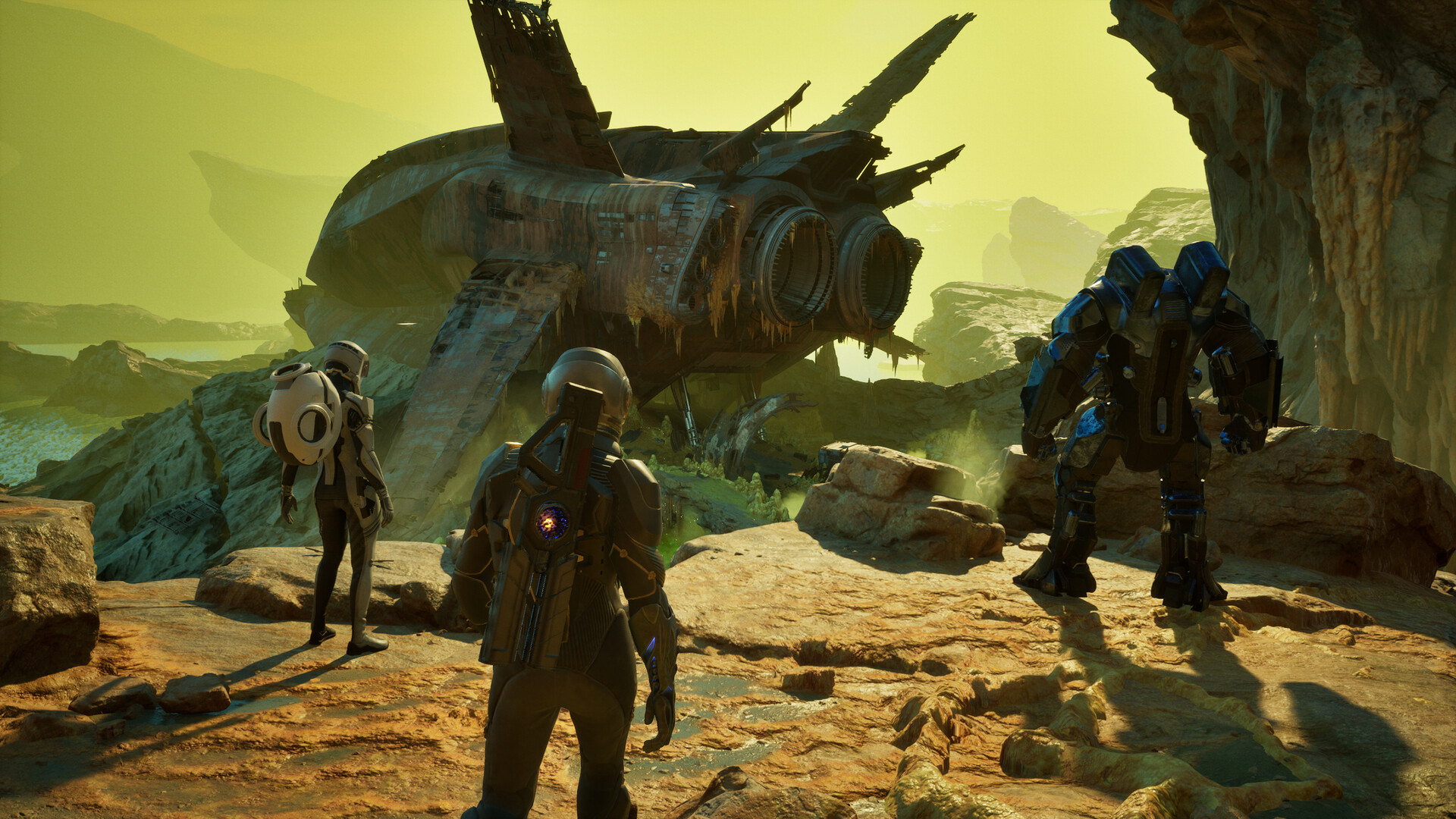
Persepolis is a vertical city sheltered against Lidon's hostile climate, with the Oupávia Space Tower as its most visible landmark. Other Lidon locations include Lyonesse, a coastal district. The dynasty maintains a small fleet of salvage ships, and its most accomplished pilots are inducted into the Traveler caste: relic hunters trusted to make decisions for the dynasty on missions where two-way communication is impossible.
Travelers are not a military. They are agents charged with the only job that crosses the time barrier in both directions: leave Lidon, find the Remnants and other treasures the dynasty needs to survive, and bring back not only the cargo but a decision. Out in the cluster, Travelers negotiate with Celestials, settle scores with rival human factions, and make calls on the spot, knowing that the political situation back home will have shifted by the time they return. Jun Aslan, the player character, is heir to that tradition.
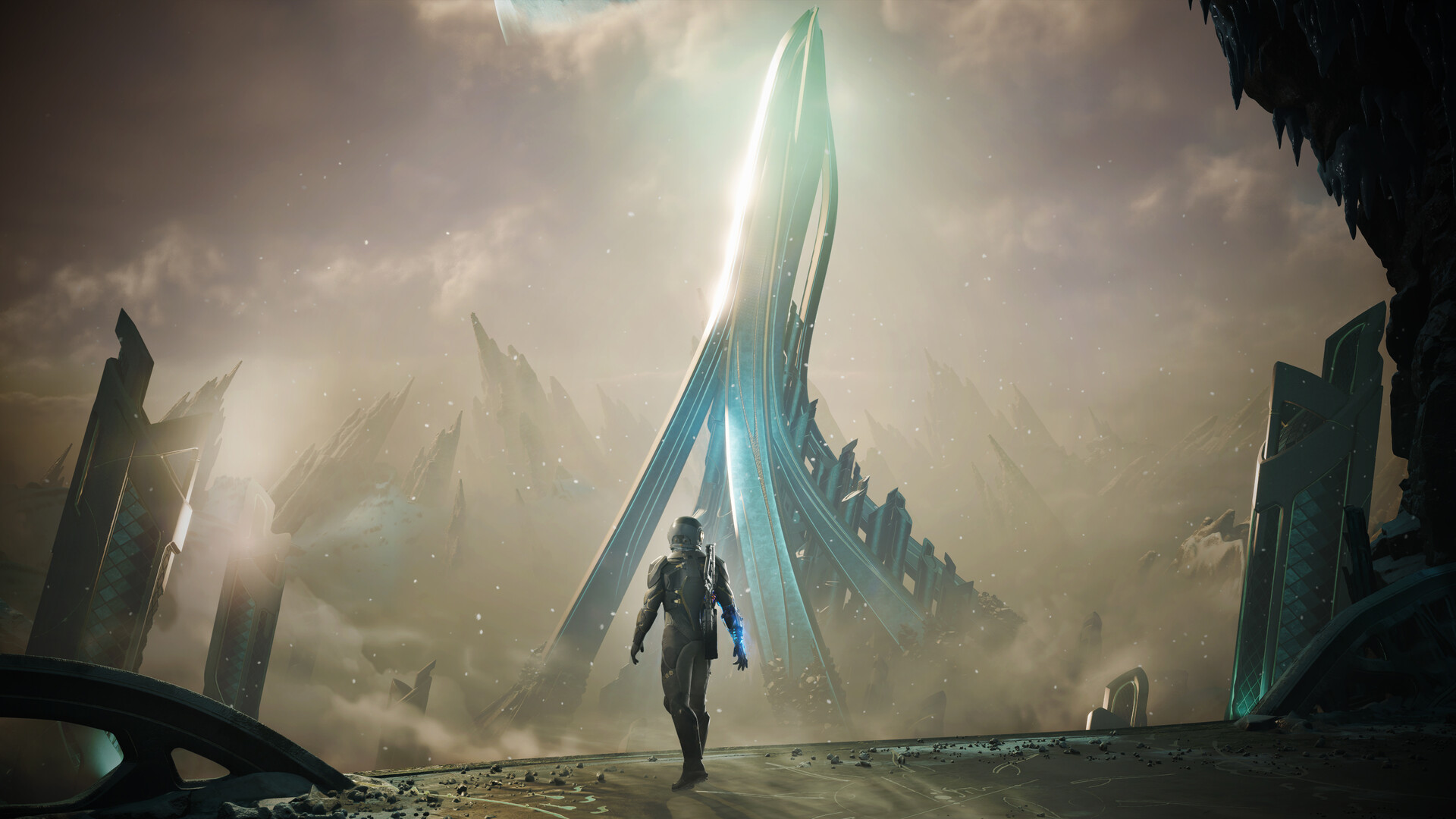
For Jun's personal backstory and the Traveler's tools, see The Traveler: Jun Aslan and The Recycler and Railclaw.
Every interstellar trip in EXODUS is sub-light. The ships are fast enough to take advantage of relativistic effects, which means a Traveler can cross to a star a few light-years away in subjective days, but objective decades will pass at home. The Time Dilation mechanic turns that constraint into the central narrative engine of the game: every mission permanently reshapes who is alive, who is in power, and what the home dynasty looks like when the Traveler comes back.
Most of what a Traveler salvages was made during eras that ended long before humanity's late arks arrived. The official timeline breaks that history into a handful of load-bearing events:
Event or artefact | What it was | Why it still matters |
|---|---|---|
The Formation Wars | Centuries of war between Celestial Dominions over the Eden Worlds | Hundreds and possibly thousands of habitable worlds were destroyed; the cluster nearly ended |
The Laws of the Elohim | A short, inviolable rule set imposed after the Wars, binding Celestials and humans alike | Breaking them costs a society its access to the Gates of Heaven for years or centuries, which collapses its economy |
The Archimedes Engine | A Remnant-Era machine that moves whole planets into habitable orbits | It holds Lidon in position beside Galarus, and it is failing |
The Détenir | The Celestial civilisation that once ruled Lidon | They vanished without explanation; their ruins are what the Aslan Dynasty excavates |
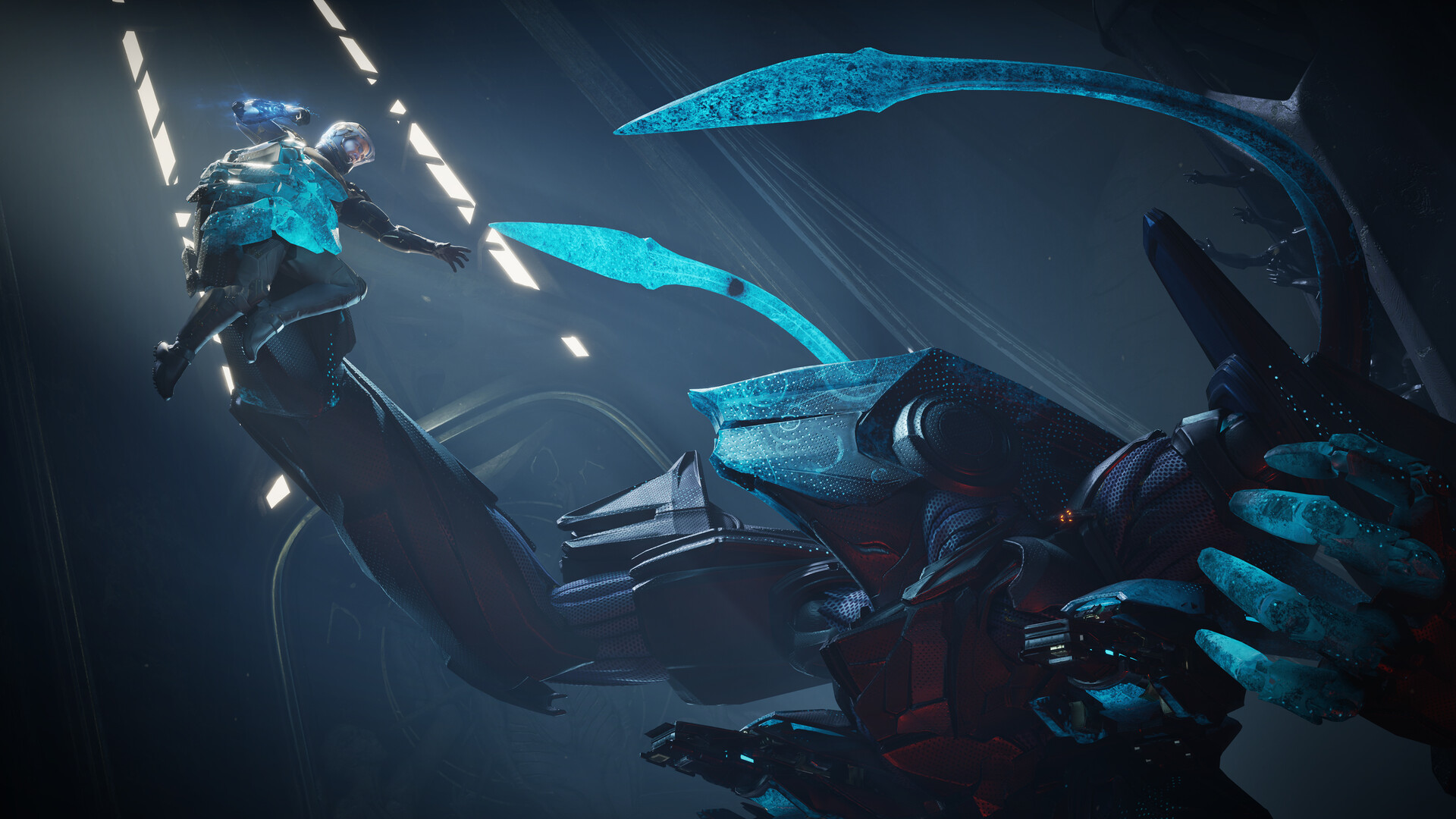
Apocalypse Titans | Automated war machines built to devastate whole planets during the Formation Wars | They went into hibernation roughly fifteen thousand years ago beneath the worlds they ruined |
The Archimedes Engine is the one with a countdown attached. It reshaped the cluster's geography, stabilising orbits, controlling atmospheres, and terraforming dead rock into new Eden Worlds until there were thousands of habitable planets instead of dozens. But the civilisation that built them died out ten thousand years ago and took the knowledge with it, so a failing Engine cannot realistically be repaired. When one goes, the world it supports can turn uninhabitable inside a single generation and everyone left on it becomes a refugee. Lidon runs on one.
The Apocalypse Titans are the other side of that coin: proof that a Remnant powerful enough to save a world is powerful enough to end one. Waking a hibernating Titan would hand humanity a guardian the Celestials would have to respect, or it would hand the cluster a monster nobody can switch off. That ambiguity is the standing argument behind Traveler work, and the reason Remnant recovery is framed as stealing fire from gods rather than shopping.
Travelers come from different homeworlds and answer to different dynasties, and the two things they share are a creed and a working philosophy. The First Principles are four words: assume nothing, question everything. The creed is recited in official material as:
We sail on the edge of lightspeed, where time moves differently. As each day goes by, years pass for those we leave behind. Our service, our sacrifice, discovers worlds, seeds hope, breaks empires. We are the Travelers.
The central threat hanging over the campaign is the Rot, a Celestial virus that is driving humanity toward extinction. It corrupts the worlds it reaches, and the homeworld Lidon is among those it is killing. Jun’s genetic connection to ancient Celestial technology is what makes the search for a way to fight the Rot possible, and it drives missions out into the cluster to recover the relics that might hold an answer. The infestation leaves a physical mark in the field as well: bramble-like growth that the gauntlet Lance ability can clear.
Faction | Description |
|---|---|
| Aslan Dynasty | The player's home dynasty, anchored on Lidon. Salvagers, engineers, and Travelers descended from a late-arriving ark fleet. |
| Celestials | Posthuman descendants of the earliest arrivals. Genetically and culturally separated from baseline humans by 25,000+ years of evolution. |
| Changelings | Engineered subspecies bred by the Celestials for specific roles (combat, labor, infiltration). Sometimes deployable as servants, sometimes hostile. |
| Awakened | Uplifted animals with full sapience. Allies, antagonists, and in at least one confirmed case, party members. |
| Rival Traveler Dynasties | Other human salvager families with their own agendas, contracts, and grudges. They predate the Aslan arrival in the cluster. |
| Elohim | Architects of the Gates of Heaven transit network, treated as foundational figures in the cluster's deep history. Their presence in the player's era is unconfirmed and a recurring mystery. |
For a deeper look at each, see Celestials and Factions. All seven named engineered species are covered on Changelings, and the crystal symbiotes that give humanity its one real edge are covered on Silicates and Daemons.
