
Loading...
Loading...
Will and Magic
August 27, 2026 at 01:08 AM
Corrected the speaker on a style-weaving quotation and removed a melee quotation that could not be verified against any source
"Will" is what the Fable franchise calls magic. It has been part of the series since the original 2004 game. Every Fable title builds its combat around three pillars: Strength (melee), Skill (ranged), and Will (magic). The reboot keeps this structure. Will is the third combat discipline, and it feeds directly into the Style Weaving system that lets you switch between all three mid-combo.
Ralph Fulton, Playground Games' founder and general manager, has been clear that players are free to lean into Will as their primary combat style or ignore it almost entirely. There are no class restrictions. You pick what you want to use, and the game does not lock you out of anything.
Ralph Fulton described the design goal: "That was super important to us, the ability to go from striking with a sword, seamlessly into casting a fireball, seamlessly into using the bow to take out a ranged enemy." Will is not a separate combat mode you switch into. It is part of the same fluid chain as melee and ranged attacks.
Playground Games has been consistent that melee sits at the centre of close-quarters fighting rather than being one option among equals. Light and heavy combos chain together, knock enemies off balance and lead into finishers. Will spells slot into those same sequences: a melee combo can stagger an enemy before a fireball finishes them, or a crowd-control spell can open the exchange and sword strikes can close it.
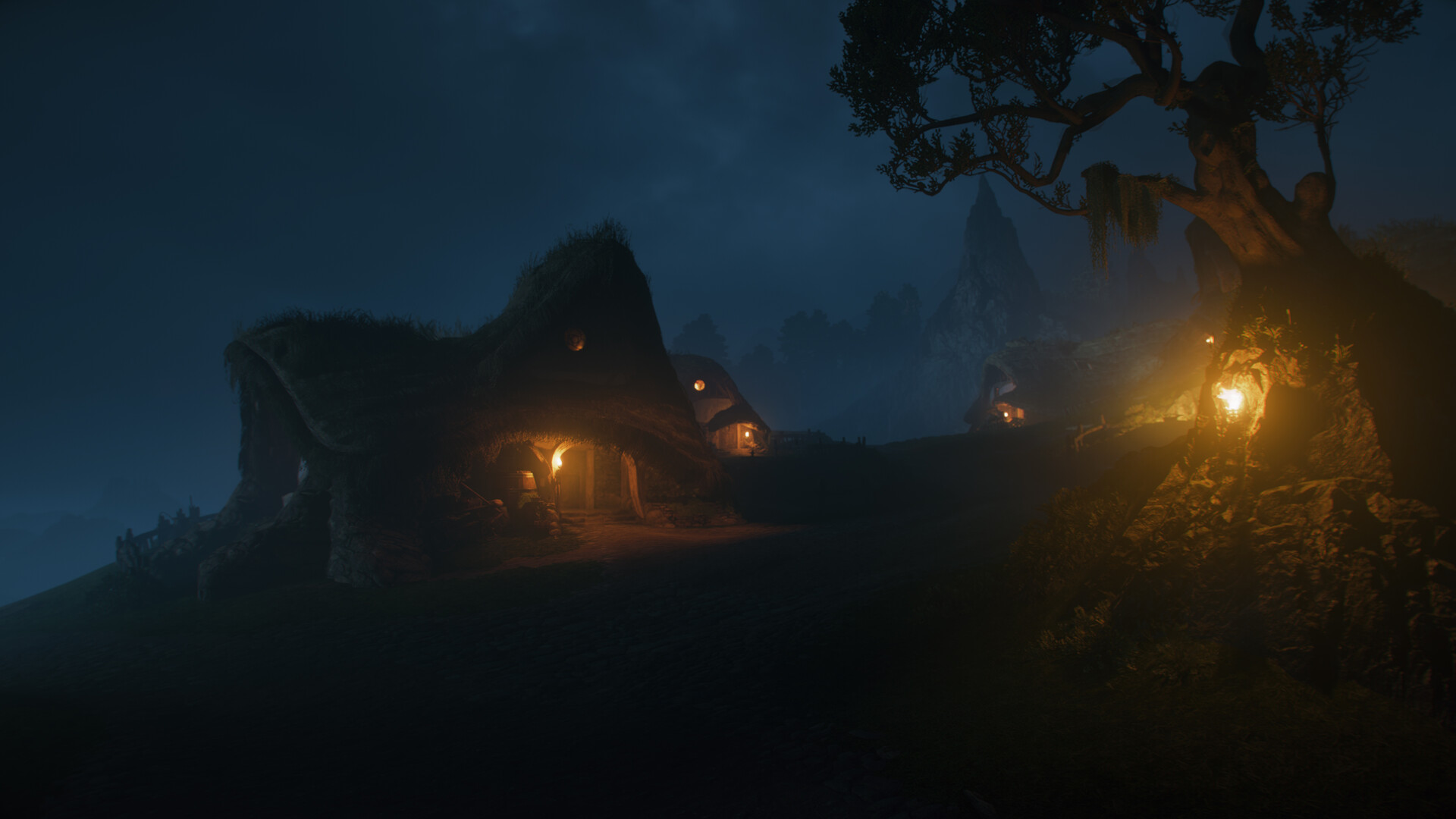
Playground Games named seven spells when it put the game in players' hands for the first time at gamescom 2026. The demo Hero carried a fully stocked spell menu, so this is the clearest picture of the Will roster so far, though it is not necessarily the whole of it.
Spell | What It Does |
|---|---|
Fireball | Tapped for a quick interrupt, or charged up into a room-clearing explosion. The most frequently shown spell across all footage. |
Lightning | Calls down bolts that chain to nearby enemies, which makes it a natural follow-up on a grouped target. |
Blades | Spawns phantom daggers, suited to picking off several distant threats at once. |
Lift | Draws multiple enemies helplessly into the air. Cast a second time while they hang there and the whole group slams back down. |
Rush | A teleport that puts the Hero behind a target for an unexpected melee attack. It also moves vertically, which reaches archers on higher ground. |
Push | Forces surrounding enemies back. Pairs with Rush to get behind someone standing on a ledge and shove them off it. |
Befowl | Turns a target into a chicken. A befowled enemy is effectively harmless and can simply be booted away. Cast on an undead enemy it produces an undead chicken. |
The spells are drawn from a menu of four equipped slots. Holding the right trigger and pressing one of the four face buttons casts the spell in that slot, which then goes on its own cooldown. There are no menus to open mid-fight, and the studio has framed the loadout choice as the thing that shapes a build: a set weighted toward Fireball and Lift plays very differently from one built on Rush and Push.
Which spells suit a fight depends on what is in it, since each of the game's enemies carries its own strengths and weak points. Armored Hollow Folk shrug off ranged attacks, for instance, which puts the weight back on magic and melee.
There are almost certainly more spells than this. What has been shown publicly is just a fraction. But Playground Games has not released a full spell list, and the names of individual abilities beyond "fireball" and "lightning" have not been confirmed.
The Xbox Games Showcase on June 7, 2026 added another crowd-control demonstration to the public record: the player flips a giant toad onto its back with a Will spell, leaving it helpless before a follow-up. It is a clear example of magic that manipulates the battlefield rather than dealing raw damage, alongside the polymorph chicken spell and the repelling wind gust.
Fulton drew an explicit distinction between two categories of Will usage. "You can opt for big damage spells, you can opt for tactical crowd control spells," he told press during a preview event. This suggests the magic system is designed around two broad approaches: raw killing power on one end, and battlefield manipulation on the other.
The polymorph chicken spell is a clear example of crowd control. Turning an enemy into a chicken removes it from the fight temporarily. The wind gust pushes groups back, giving you breathing room. On the damage side, fireballs and AoE attacks are built to destroy. Whether individual spells can be upgraded or specialized further along these lines has not been detailed.
This split matters because of how Style Weaving works. You are never locked into one approach. Hit something with a sword, freeze a group with a control spell, switch to a bow, then back to a big damage fireball. The transitions happen with no frame delay, according to Fulton, so Will spells can be woven into melee and ranged chains naturally.
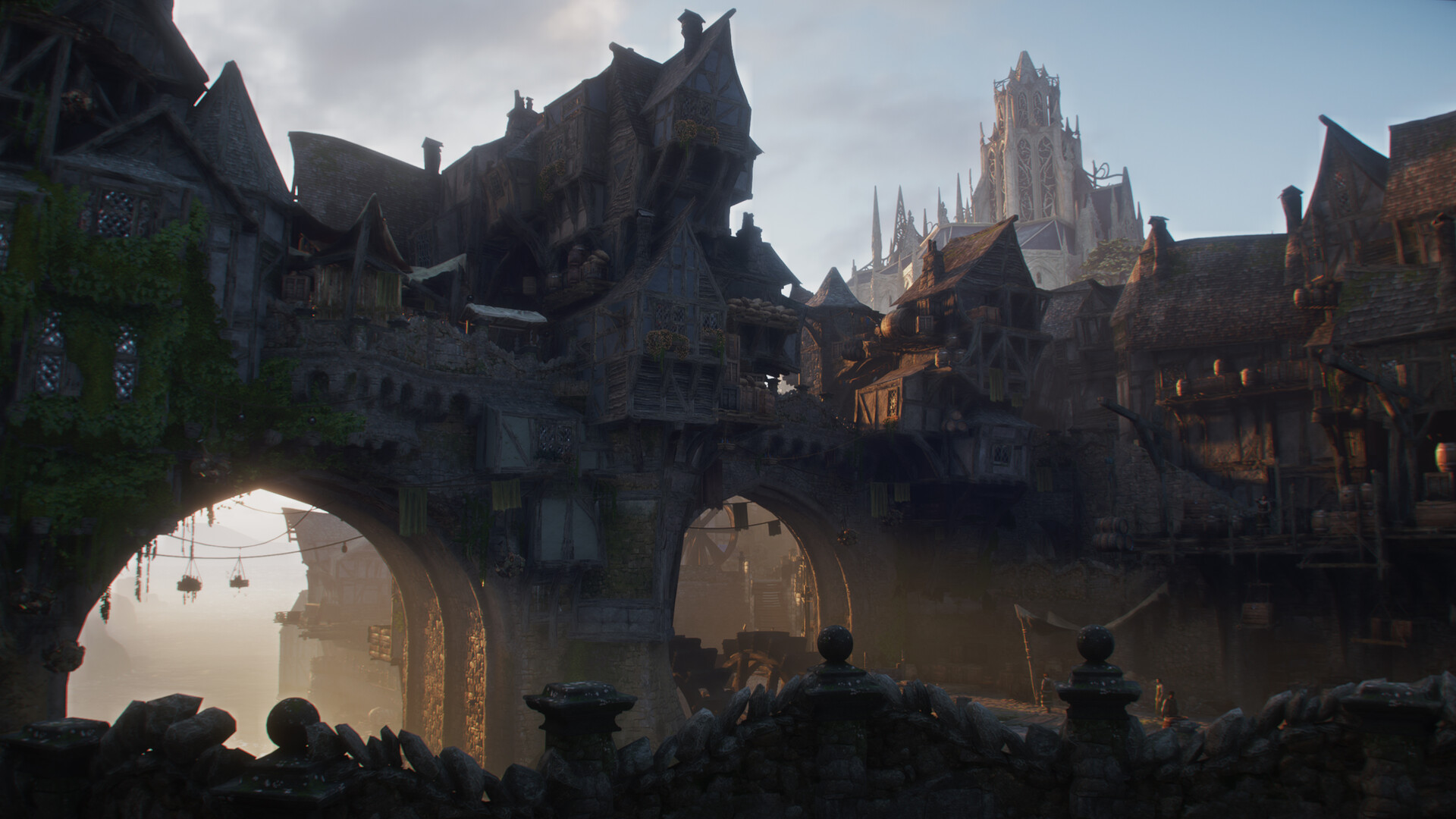
Will is mapped to the player's active ability set. You configure which spells you want available before combat. The exact number of active ability slots has not been confirmed, but the system works alongside melee and ranged abilities in the same loadout. There are no class restrictions on what you can equip.
In practice, the Developer Direct footage showed the player character casting fireballs immediately after a melee swing, then following up with a ranged bow shot. The transitions were seamless. Fulton described the goal as being able to "strike with a sword and then hurl a fireball in a smooth movement," and the footage backed this up. Will spells appear to have distinct wind-up animations but no rigid cooldown bars were visible in the interface shown.
Each enemy type has unique weaknesses, so certain spells may be more effective against certain creatures. Hobbes attack in large groups, making AoE spells practical. Balverines are fast and aggressive, so crowd control might be needed to slow them down before finishing them with Strength attacks.
The 30-minute gameplay deep dive that followed the June 2026 showcase put more of this on display. In it the player turns enemies into chickens and then roasts the flock with fireballs, lifts a cluster of foes off the ground with a small whirling tornado, and blinks behind an enemy to strike from the back. Each of these is a Will effect woven straight into melee, and together they show the spread the system is going for: hard damage, crowd control, and repositioning all available from the same loadout without dropping out of a combo.
Melee being the foundation matters for Will users too. Magic does not remove the need to engage up close. The design encourages weaving spells into melee chains rather than standing at range and casting: knock an enemy off balance with a heavy sword attack, cast a fireball to finish them, then dodge away and pick off a distant target with a bow. The rhythm moves between all three pillars constantly.
This distinguishes Fable's magic from systems in games like Skyrim where you can commit fully to ranged spellcasting. Will is built to be part of a flow, not a standalone approach. You can lean heavily into it, but the combat design pushes you toward mixing styles.
The polymorph spell deserves its own section because it is so characteristically Fable. When you cast it on an enemy, that enemy turns into a chicken. The chicken is alive. It runs around clucking. And you can kick it.
Chickens have been a running joke in Fable since the original game. Kicking chickens in front of NPCs earns you the "Chicken Chaser" reputation tag. The Cockatrice boss is a fire-breathing chicken. The polymorph spell ties the franchise's chicken obsession directly into the combat system.
Whether all enemies can be polymorphed or just certain types (perhaps not bosses) has not been specified. In most games with similar mechanics, boss enemies are immune. Playground Games has not addressed this directly.
Several aspects of the Will system remain unknown. No mana system or resource cost has been shown. Whether spells deplete a bar, use cooldowns, or have some other limiting mechanic is unclear from the footage released so far. Spell progression, meaning how you unlock new spells and whether you can upgrade them, also has not been detailed. The full number of available spells is unknown.
Previous Fable games used an experience point system where combat actions in each pillar earned XP toward that pillar's abilities. Whether this reboot uses a similar approach, or something entirely new, is an open question.
