
The economy in Citystate Metropolis is driven by free-market forces rather than production chains. The player acts as the governor of a city-state: setting taxes, deciding on public spending and regulating how land is built on, while the simulation decides how businesses and households respond. The store page sums up the job: the budget needs to be balanced, taxes have to be collected and hard decisions will have to be made.
A free-market economy
Andy Sztark has said the game is not a supply-chain or planned-economy simulator. In the November 2026 announcement he described the governor's job as finding the right balance between public spending and low taxes, and between aesthetics and the cost of living. Businesses and their executives are simulated; the player does not run companies or factories. The store page describes the mayor's role as creating the conditions for growth and development rather than managing production lines.
The governor's trade-offs
Choice | One direction | The other direction |
|---|---|---|
Regulation | Cheap and unregulated, which speeds up growth | Restricted and gentrified, which boosts tax revenue |
Spending | Higher public spending | Lower taxes |
Design | Aesthetics and higher land value | A lower cost of living |
Housing | Simple, cheap buildings that lower housing costs and help social mobility | Fancy, eco-friendly buildings that attract foreign investors |
According to the store page, possible end goals include an eco-friendly haven, a capitalist powerhouse or a work of art. The developer has said there is no single right answer and no perfect scenario.
Taxes and the budget
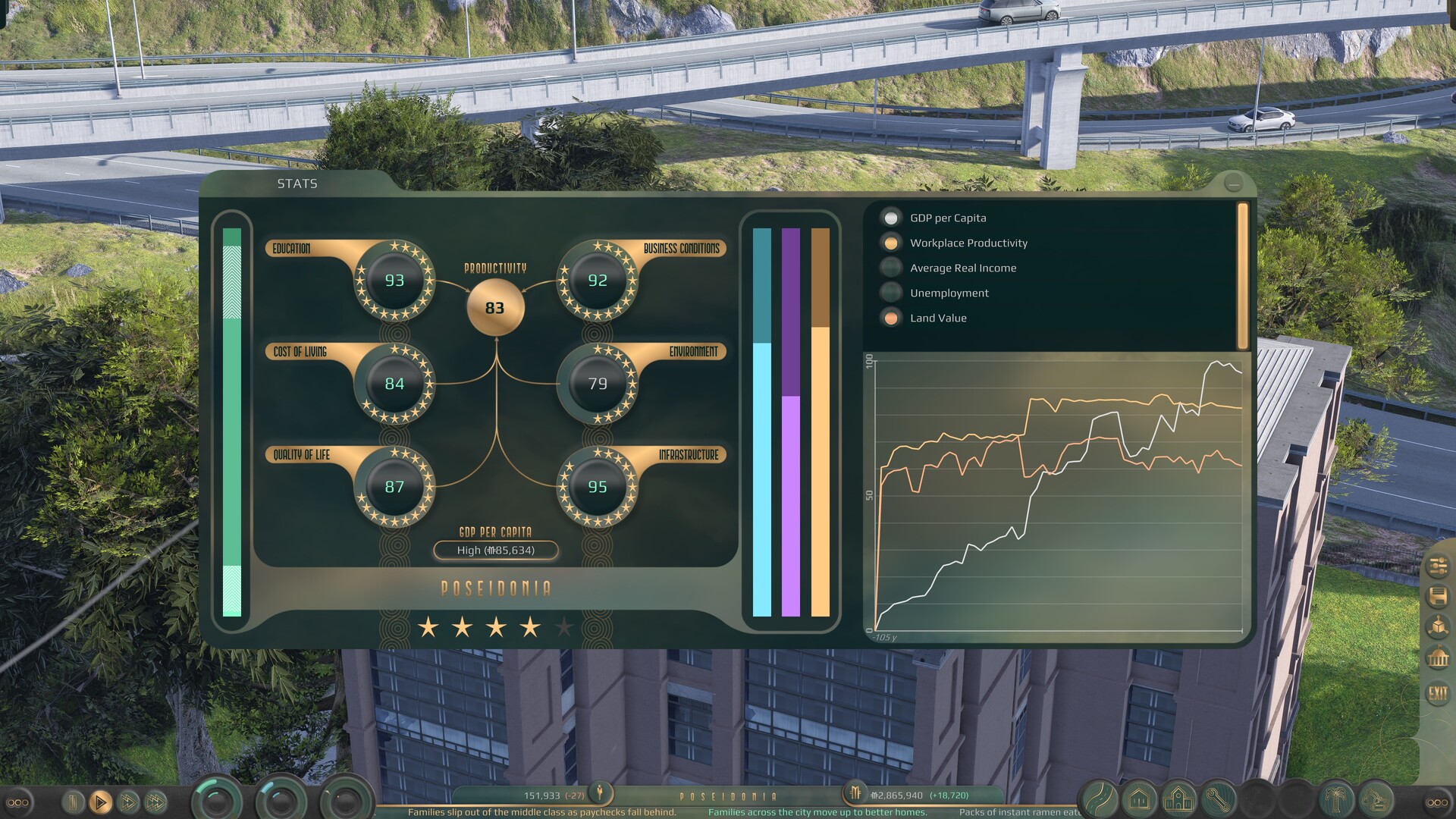
Taxes are collected to fund the city, and the budget has to balance. The Early Access notes on the store list the budget, the economy and traffic as the core simulation systems that are active in the first release. As of November 2026 the developer has not published a list of individual tax types, rates or budget categories, so this wiki does not list them.
Guardrails against bankruptcy
The November 2026 announcement says strong guardrails keep players from going bankrupt. The same passage notes that the nicest-looking buildings only appear in the best-run cities, so good management is still rewarded visually.
Productivity, income and traffic
Traffic feeds into the economy. The developer explained in November 2026 that congestion indirectly affects citizens' income, because longer commutes and longer business deliveries decrease productivity and profits. See Roads and Traffic.
Land value and investment
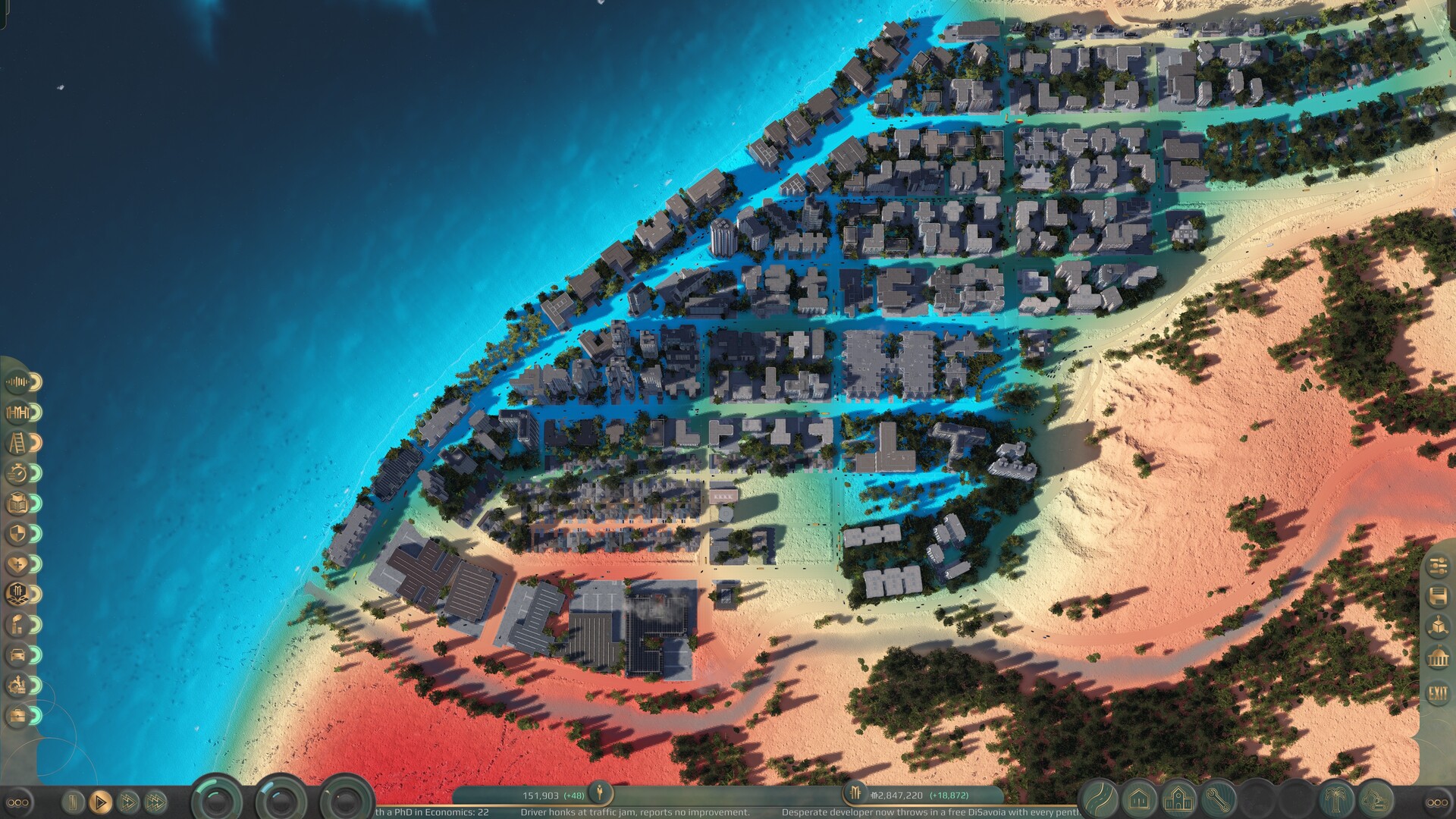
Land value responds to the way the city is built. The store page says fancy, eco-friendly construction increases land value and attracts foreign investors, while cheap construction lowers housing costs. In his February 2025 update the developer added that lot design choices affect a building's affordability and attractiveness. See Zoning and Procedural Buildings.
Politics
Asked in September 2025 whether Metropolis would have more or less politics than his earlier games, Sztark said it has less politics, but that the economic system is deeper because players now have more control over the actual city planning. The aim, he said, is for each design decision to matter at the socioeconomic level.
In his 2023 postmortem of Citystate II, written before most of the game existed, he described his plan for Metropolis as replacing the previous games' policies with a short list of sliders and removing most of the unusual economic variables. That was a design plan at the time. As of November 2026 the developer has not published a list of policies, laws or sliders for the release build, and no election system has been announced.
The game's themes are still openly political in another sense. The November 2026 announcement warns that inequality, economic segregation, social mobility and crime are all simulated, and that players inclined to see it that way may find the game very political.
Related pages
Simulation and Population for the social model behind the economy
Services and Utilities for the services the budget pays for
Gameplay for goals such as highest GDP or maximum human development