
Zoning in Citystate Metropolis is grid-less, and residential, commercial, industrial, service and utility buildings are all generated procedurally. Instead of filling square tiles, the player draws lots of any shape and controls how each building sits on its land. These design choices affect what the building costs to live or work in and how attractive it is, which in turn shapes the population that moves in.
Grid-less zoning
Lots no longer need to be square. The zoning tool can fill any polygonal or curved shape, which allows neighborhoods with a more organic layout. In his February 2025 development update, Andy Sztark explained that a building's general shape is still mostly rectangular, because its actual footprint is based on a grid inside the lot. The assets that feed the procedural generator can still include curves and unusual shapes, which he described as a balance between customization and realism.
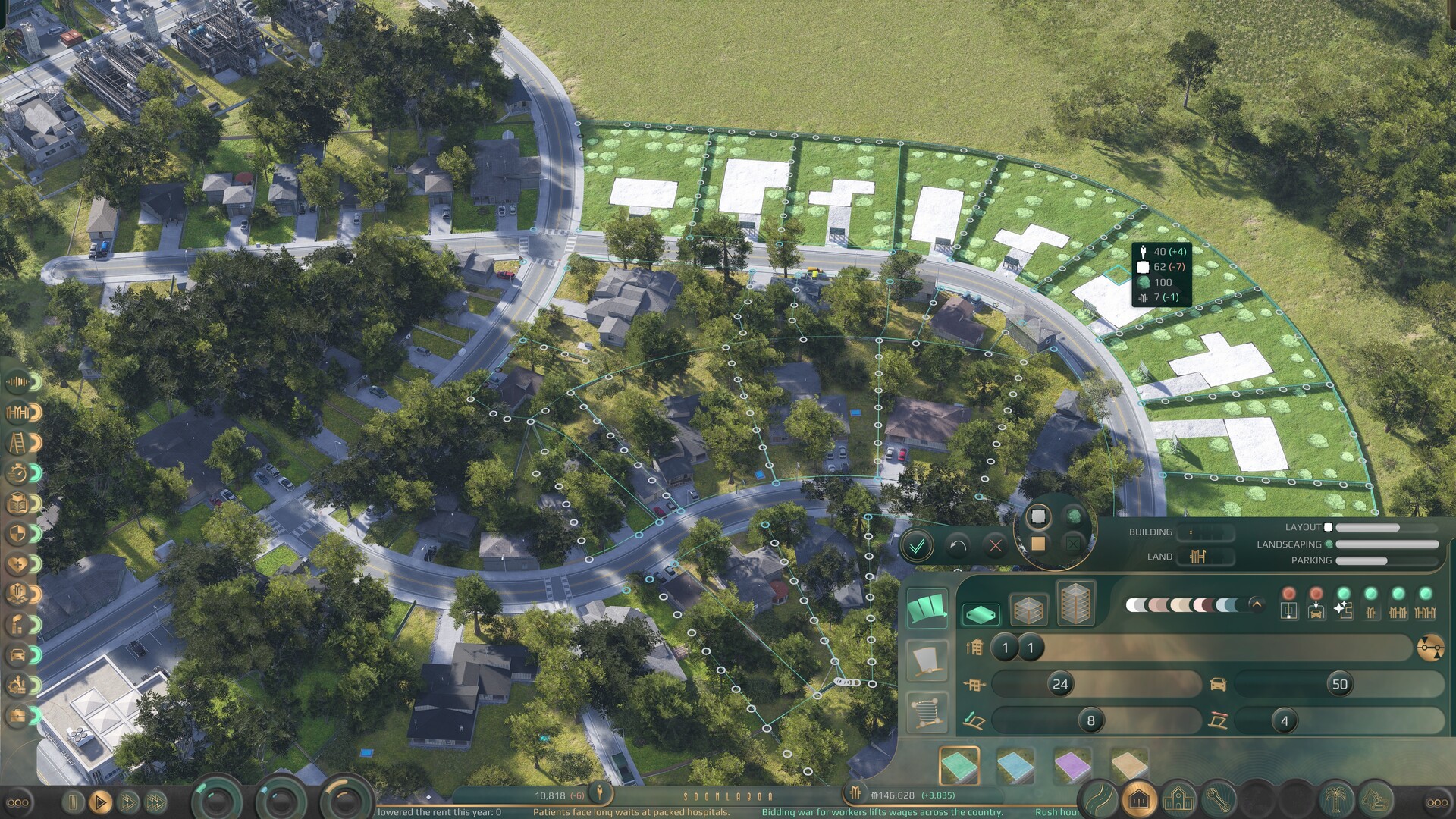
Designing a lot
The developer compares the process to the work of a city planner: the player draws where the building should stand. The store page lists building footprints, setbacks, floor counts and parking spaces among the things the planning tools control. The development update adds that the player can set the size, shape and position of the building and decide how the rest of the lot is used, tile by tile, including how much parking and how many trees it has.
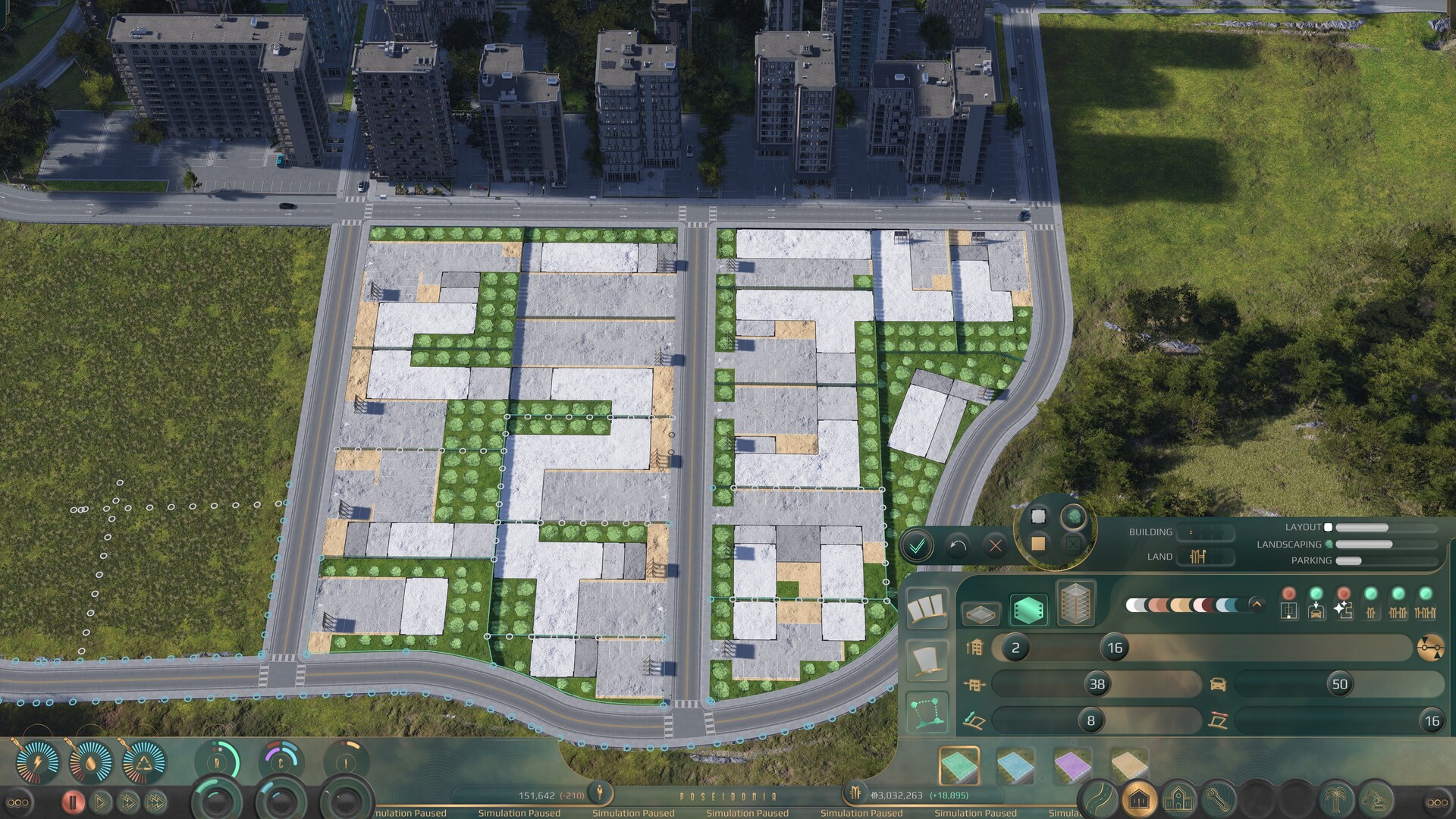
Setting | What it controls |
|---|---|
Footprint | The building's size, shape and position on the lot |
Setbacks | How far the building sits from the lot edges |
Floor count | How tall the building is |
Parking | How much of the lot is given to parking spaces |
Remaining land | How the rest of the lot is used, tile by tile, including trees |
Appearance | Height, width, colors and shapes, designed from the ground up |
Presets and bulk zoning
The level of detail is up to the player. Each building can be designed individually, or the player can pick a preset and zone many lots at once.
Why design choices matter
Lot and building design is the main way the player regulates the city. Sztark described this as the biggest difference from his earlier games: rather than setting policies with sliders and checkboxes, the player sets the rules through urban planning and architecture tools. The choices affect a building's affordability and attractiveness, so there is no single winning layout.
Approach | Typical result described by the developer |
|---|---|
Simple, cheap, lightly regulated buildings | Lower housing costs, faster growth, poverty reduction and more social mobility |
Fancy, eco-friendly, modern buildings | Higher land value, more comfort and beauty, and more interest from foreign investors |
The November 2026 announcement adds that the nicest-looking buildings only appear in the best-run cities, so appearance is also tied to how well the city is managed.
Building categories
In November 2026 the developer said the game has 16 categories of procedural buildings, such as low cost housing, premium housing and dirty industry, plus 10 procedural service buildings such as schools and power plants. He did not publish the full list of categories. The Early Access store notes describe the procedurally generated buildings as residential, commercial, industrial, service and utility buildings.
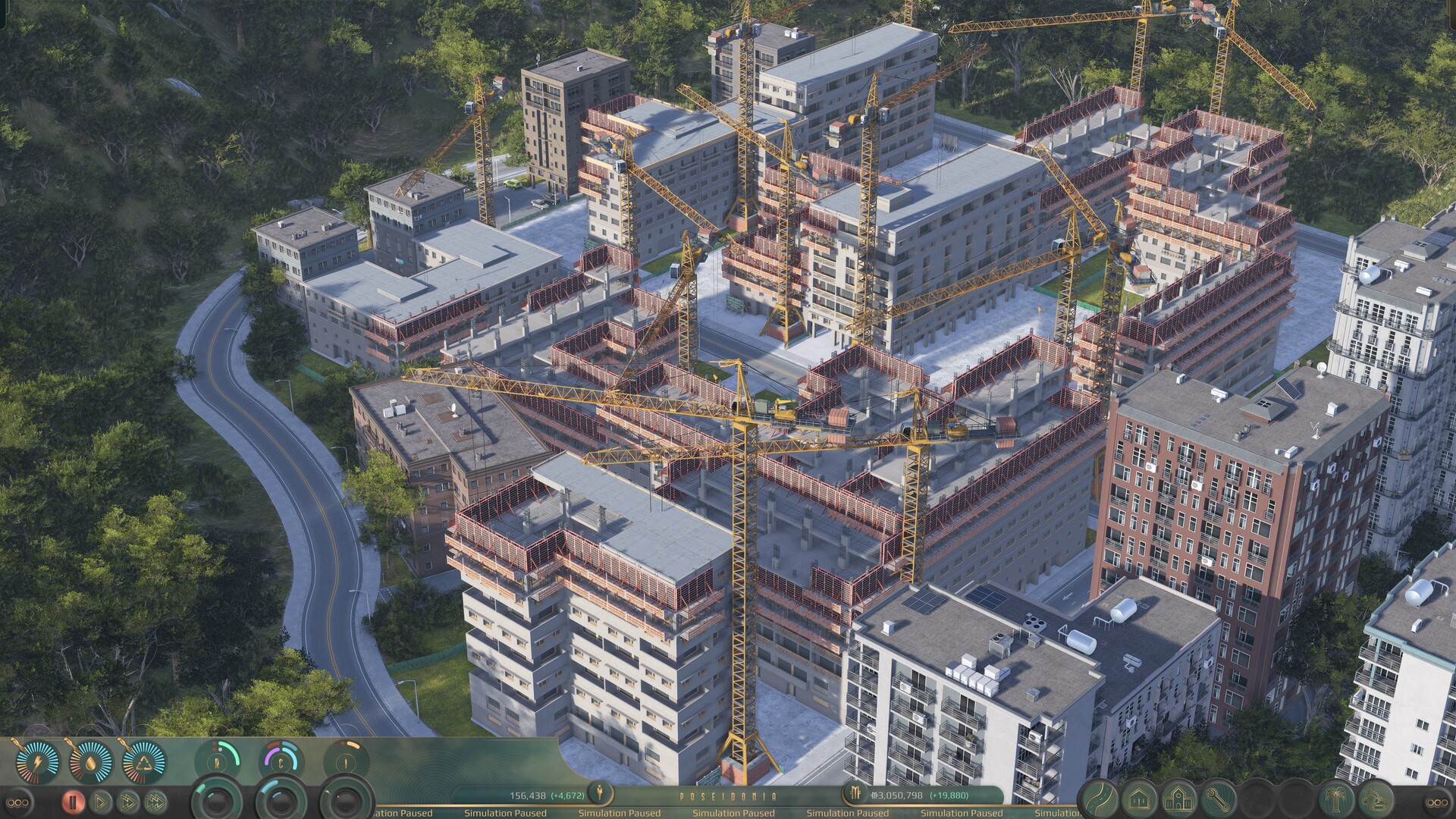
Group | Examples confirmed by the developer | Count |
|---|---|---|
Zoned building categories | Low cost housing, premium housing, dirty industry | 16 |
Service buildings | Schools, power plants, hospitals, police stations, water pumps (see Services and Utilities) | 10 |
Building blocks and styles
Buildings are generated from sets of building blocks. According to the developer, a single set of blocks can produce a wide variety of shapes and sizes to fit any kind of plot. At launch there will be no choice between architectural styles, because creating that many assets alone would take too long. A label seen in previews, "Post Modern", is the name of a color palette the buildings can use, not an architectural style, and the developer said he might remove the text because it confused players.
New styles are expected to come from the community. A tool for importing custom building block sets is already in the game, and the developer has said this structure should make it easy for modders to add styles. See Modding.
Mixed-use buildings
As of November 2026, mixed-use buildings are not in the game. The developer said in November 2026 that he wants to add them at some point. The difficulty is that commute data is organized with homes on one side and workplaces on the other, so a building that is both needs changes to the pathfinding and the economy simulation, as well as new 3D models.
Related pages
Roads and Traffic for the spline road tool that lots attach to
Economy and Budget for how land value and taxes connect to building design
Planned Features for informal housing (slums), which arrives after launch