

Difficulty and Accessibility
Beast of Reincarnation ships with three difficulty modes, Story, Normal and Hard, switchable at any time, plus a Reincarnation+ tier unlocked after the first clear. The design is positioned apart from Soulslike games through strategic depth and accessibility options.
On This Page
Overview
Beast of Reincarnation offers three difficulty modes designed to make the game accessible to the widest possible range of players while still providing meaningful challenge for those who seek it. Director Kota Furushima has been unusually explicit in pushing back against the "Soulslike" label that early coverage applied to the game, positioning Beast of Reincarnation as a different kind of experience. One where strategic thinking and the "joyful dilemma of choice" matter as much as reflexes and execution.
The three modes are Story Mode, Normal Mode, and Hard Mode. Each adjusts the combat experience to suit different player skill levels and preferences, but all three provide access to the full game. The same story, the same world, the same characters, the same content.
Difficulty Modes
Story Mode
The most forgiving setting, Story Mode is designed for players who want to experience Emma and Koo's narrative journey without the pressure of demanding combat execution. Two changes define the mode: parry timing is more forgiving than on Normal, and enemy damage is reduced, so mistimed defence costs less. Nothing else is locked behind the setting, and there is no reward penalty for playing on it. Players still have full access to Bloom Arts and to every other system.
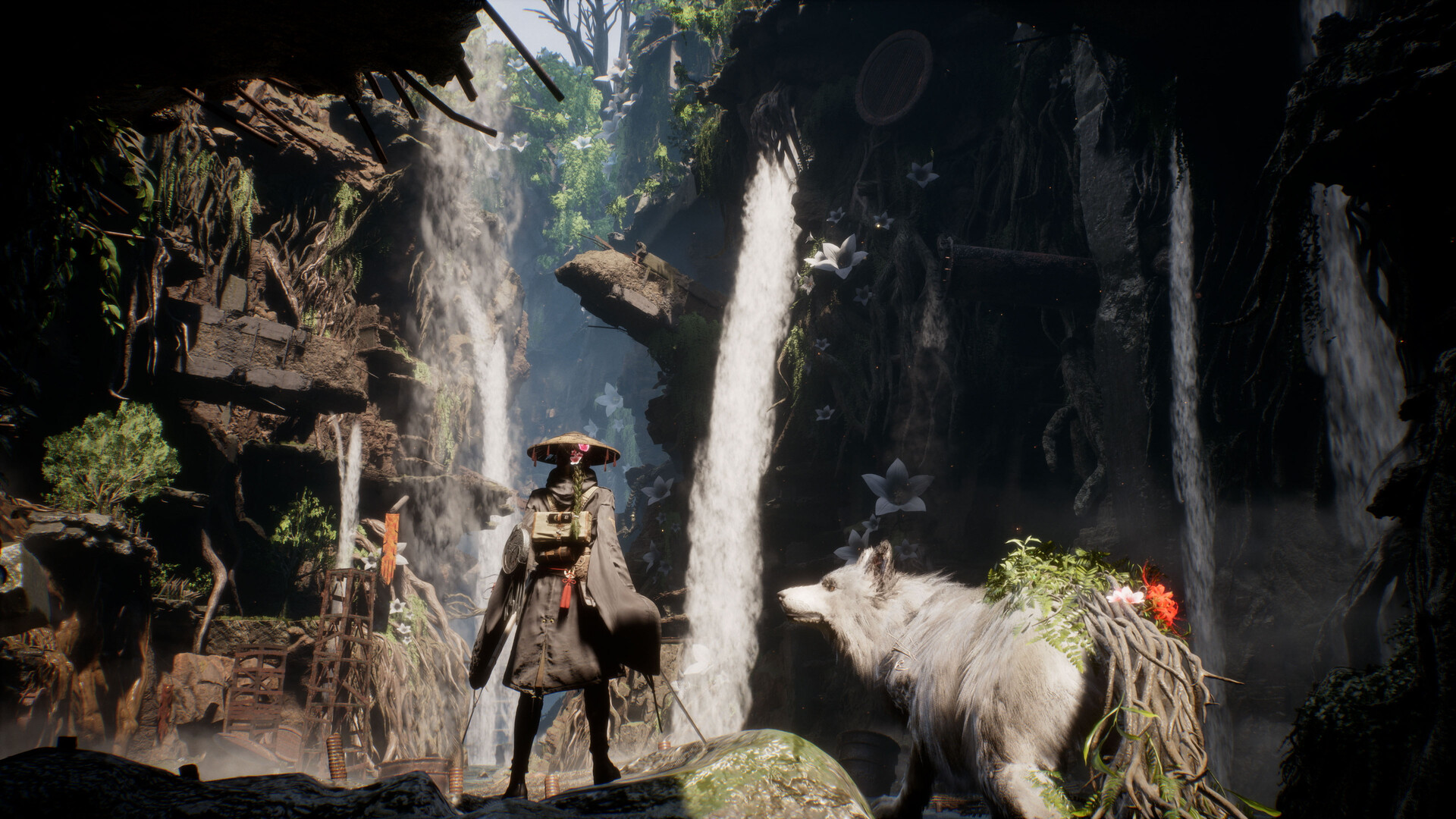
Story Mode is not a passive experience, however. Players still need to engage with the combat system's core mechanics. Parrying, FP management, Bloom Arts selection, and plant ability traversal. The mode simply provides more margin for error, so players can learn and improve without being punished so harshly that they abandon the game. The time-slowing command menu for Bloom Arts provides additional breathing room during challenging encounters, allowing players to pause, assess the battlefield, and make strategic decisions even in the heat of combat.
Normal Mode
The standard experience, Normal Mode balances challenge and accessibility. It requires solid parry timing and tactical deployment of Koo's abilities, but is designed to be completable without mastery-level execution. Normal Mode is the baseline experience that Furushima designed the game around. Challenging enough to create tension and satisfaction from victories, forgiving enough that most players can progress through trial and error.
On Normal Mode, the skill tree and Spirit Stone systems become more important for progression. Players who invest wisely in their builds, choosing complementary skill trees, equipping synergistic Spirit Stones, and selecting appropriate Bloom Arts for each encounter, will find the experience manageable. Those who neglect build optimization may need to grind or reconsider their approach.
Hard Mode
The most challenging setting, Hard Mode demands precise parry timing and punishes mistakes severely. Enemy attacks deal significantly more damage, timing windows are tighter, and encounters require near-optimal use of all available systems, weapons, Bloom Arts, plant abilities, Spirit Stones, and skill tree synergies.
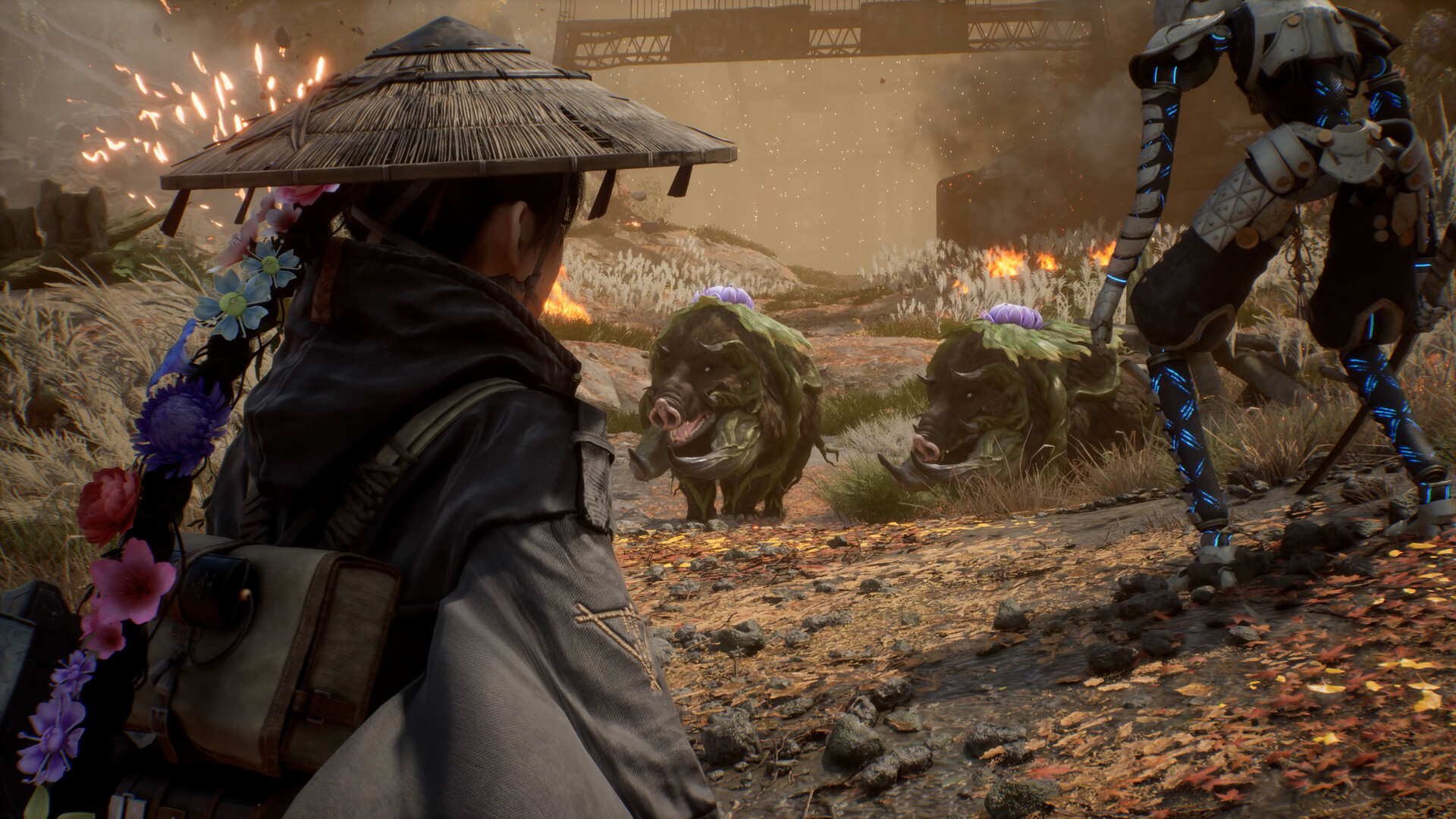
Hard Mode approaches Soulslike-level difficulty for players who want that kind of experience. However, even on Hard Mode, the game retains its core identity as a hybrid action-command RPG. The time-slowing command menu still provides tactical breathing room, Koo's abilities still offer strategic options that pure action games lack, and the three-tree skill system still allows players to specialize in approaches that play to their strengths. Hard Mode asks for precision, but it does not remove the strategic layer that distinguishes Beast of Reincarnation from pure action games.
Switching Difficulty
The difficulty setting is not a one-time commitment. It sits in the Gameplay tab of the in-game Settings menu, reachable from the pause screen, and it can be changed at any point in a run. Dropping to Story for a boss that has become a wall and going back up afterwards is a supported way to play rather than a workaround. No achievement or trophy is tied to a difficulty setting, so the full completion list is reachable on Story.
Reincarnation Plus
Clearing the game once unlocks a fourth setting, Reincarnation+, which applies to New Game Plus runs. Enemy attack power climbs with each additional cycle, so the setting gets harder the more times a save has been completed, and it cannot be swapped out for one of the three standard modes while a New Game Plus run is active.
The Cost of Dying
There is no dropped-currency mechanic and no lost progress on death. Dying costs the run back to the last rest point, nothing more, which is the single largest structural difference from the genre the game is usually compared to. Resting at a campsite does restore defeated enemies, so the exploration rhythm will still feel familiar.
Director Quotes on Difficulty Design
Furushima has provided unusually detailed public commentary on his approach to difficulty, making his design intent clear through specific statements:
"We're trying to make it so that even people who aren't good at action games can enjoy it." This foundational statement establishes accessibility as a core design goal, not an afterthought.
"I don't intend for players to never be able to clear the game on their first try, or to have to retry dozens or hundreds of times." A direct rejection of the Soulslike design philosophy where repeated failure is expected and even celebrated. Furushima wants players to succeed.
"There will be times when you get defeated, and I want players to enjoy trial and error, trying different fighting styles next time, or changing Koo's skills." Defeat is expected but positioned as a learning opportunity rather than a punishment. The key phrase is "changing Koo's skills". Furushima envisions defeat as a prompt to experiment with different builds and strategies, not simply to "get good" at execution.
These quotes reveal a coherent design philosophy: death should happen, but it should be instructive rather than punishing. When players fail, the game wants them to think about why they failed and experiment with different approaches, different Bloom Arts, different skill tree investments, different Spirit Stone loadouts, different weapons rather than simply retrying the same approach with better reflexes.
Accessibility Through Design
Beyond the three difficulty modes, several core design decisions make Beast of Reincarnation inherently more accessible than typical action RPGs:
Time-Slow Command Menu
Opening Koo's Bloom Arts command menu dramatically slows time, providing regular breathing room during even the most intense combat sequences. This is not a pause screen (time continues to flow, albeit slowly) but the reduction in pace is significant enough to give players time to assess the battlefield, review their options, and make deliberate strategic decisions. This mechanic is available on all difficulty modes and ensures that the game never demands sustained twitch reflexes without periodic moments of calm.
Hybrid Combat System
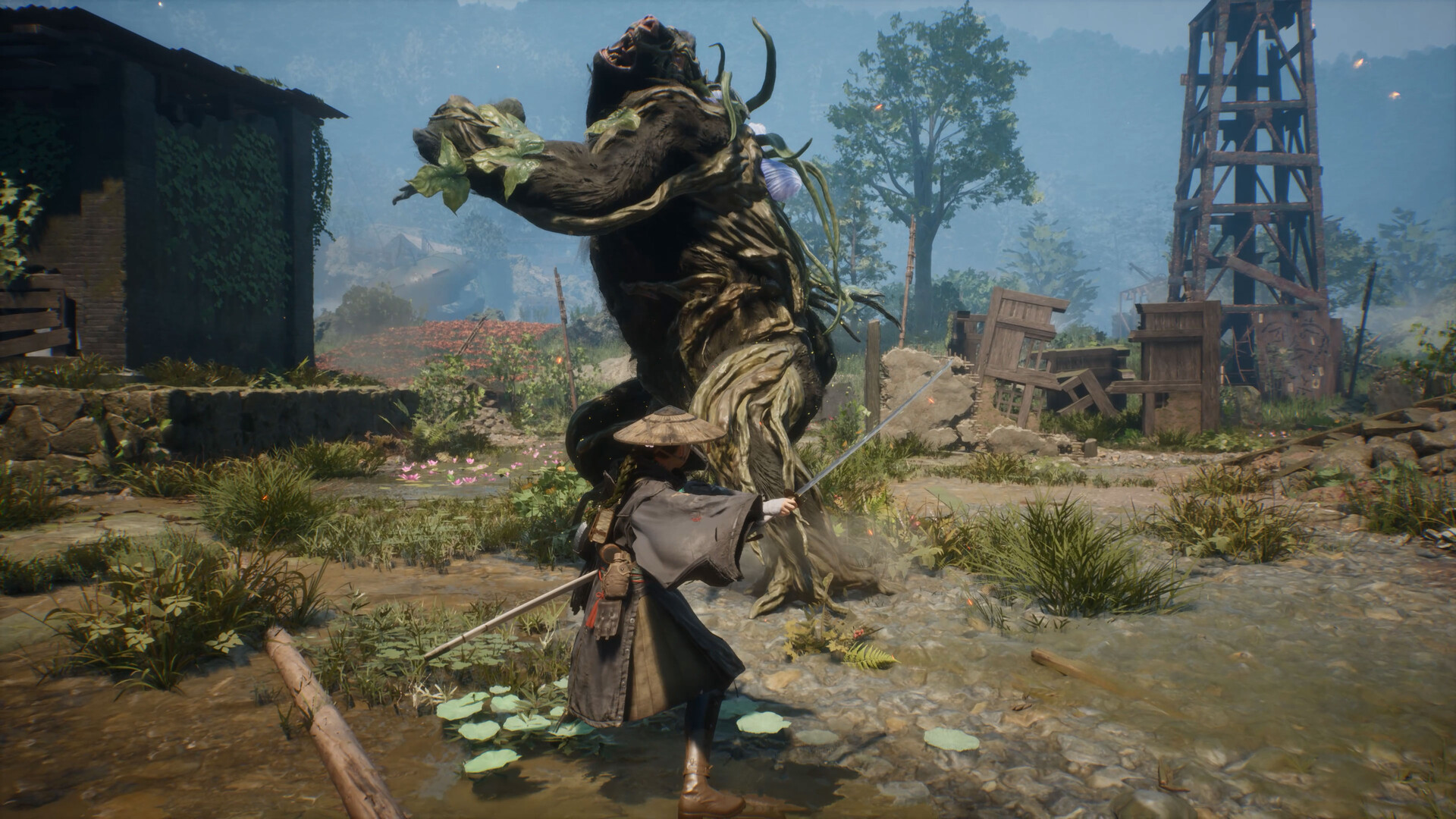
The blend of real-time action and command-based strategy means that pure reflexes are never the only path to victory. A player with slower reaction times can compensate through tactical thinking: choosing the right Bloom Art at the right moment, managing FP efficiently, positioning advantageously using plant abilities, and building toward loadouts that provide defensive sustainability. The command-based half of the combat system is designed to complement the action half, so strategic thinking can make up for mechanical limitations.
Build Customization Depth
The game's extensive customization systems, six skill trees (three per character), six Spirit Stone slots with parry-stacking bonuses, Bloom Arts mods, multiple discoverable katanas, and Koo's Charms, allow players to build around their strengths. A player who struggles with parry timing can invest in long-range skill trees and fight from distance. A player who finds direct combat overwhelming can specialize in stealth. The system supports multiple valid approaches rather than demanding one specific execution path.
Trial and Error as Design Philosophy
Furushima's explicit encouragement of trial and error suggests that the game is designed to support experimentation. When players fail, they are encouraged to try different fighting styles, change Koo's skill configuration, equip different Spirit Stones, or approach encounters from different angles. This reframes difficulty not as a wall to overcome through repetition but as a puzzle to solve through creativity. A much more accessible framing that welcomes players of all skill levels.
Post-Launch Accessibility and Balance Changes
Readability and comfort were the two loudest strands of launch feedback, and every post-launch patch has gone after both. The August 9 update adjusted text size throughout the game and made the Interact button remappable. The August 15 update went further, adding five subtitle sizes and freely assignable keybinding, including support for mouse side buttons. The August 24 update then delivered the two features that had topped the request list since launch, cutscene skipping and ultrawide support, along with both queued healing changes.
Change | Patch | What It Does |
|---|---|---|
Game-wide text size adjustments | August 9 | Raises the size of interface text across the game |
Remappable Interact button | August 9 | Lets the Interact action be moved off its default binding |
Parry window adjustment | August 9 | Changes the parry timing while Emma is taking damage |
Boss balance pass | August 9 | Adjusts boss encounters across all three difficulty settings |
Normal encounter balance | August 9 | Retunes general enemy encounters on Normal only |
Subtitle size options | August 15 | Adds Extra Small through Extra Large; sizes above Medium apply to cutscene subtitles only, to stop gameplay subtitles overlapping other interface elements |
Expanded keybinding | August 15 | Interact can be assigned to any button or key, and mouse side buttons are now bindable |
Camera distance options | August 15 | Adds Close, Medium and Far player camera distances |
Auto-target defaults off | August 15 | Auto-Target for Attack, Parry and Switch now default to OFF for new configurations; existing settings are left alone |
Extra objective markers | August 15 | Adds navigation markers along the early story route |
Fall and water damage removed | August 15 | Emma no longer takes damage from falls or partial submersion |
Bloom Arts buff | August 15 | Increases Bloom Arts damage and healing output |
Uninterruptible finishers | August 15 | Surrounding enemies can no longer interrupt Execution and Assassination animations, including their Assist variants |
Shortened Pilgrim's Zone route | August 15 | The main route now runs straight to the Belfry without the Cave or Stone Chamber detour |
Skippable events and cutscenes | August 24 | Hold the Interact button to skip; a skip indicator in the bottom-right corner marks which events and cutscenes qualify. Staged rollout, so coverage is partial and still expanding |
Ultrawide monitor support | August 24 | Native support for most ultrawide and super-ultrawide displays |
Frame generation | August 24 | DLSS and FSR frame generation, switchable in the settings menu |
Faster healing | August 24 | Healing items usable the instant damage lands, and a shorter movement slowdown while healing |
Shrunken text fix | August 24 | Corrects text that rendered unintentionally small in some places |
Clearer sight lines | August 24 | Koo no longer obstructs the player's field of view, and Emma's landing position after a jump was corrected |
Film grain and chromatic aberration toggles | August 28 | Both effects can be switched off. Added for PC first, then extended to consoles on September 8 |
Cutscene post-processing toggle | August 28 | Turns post-processing off inside cutscenes, the last display option that had been queued since launch. Console parity followed on September 8 |
Knockback recovery on D-Pad Up | August 28 | A second input for getting up out of a knockback, alongside retuned invulnerability windows during knockback and recovery |
Wider pickup range | August 28 | Interaction range on ordinary items increased, and full stacks pushed down the priority order so they stop stealing the prompt |
Hold-to-aim | August 28 | Ranged aiming became a hold input rather than a toggle, with the aim buffered during slides, rolls and standard slashes |
Wider cutscene skipping | September 8 | Skip coverage extended to selected events and cutscenes up to The Great Wall Terraces zone |
Faster cutscene pacing | September 8 | Dialogue pauses and cut lengths shortened in some scenes |
Flower node skill reset | September 8 | Skills hanging off the flower nodes of the skill tree can be reset without a full respec |
The August 24 update cleared most of that backlog. Events and cutscenes can now be skipped by holding the Interact button, with an indicator in the bottom-right corner marking which ones support it; the developer had described the implementation as more technically involved than expected and is rolling skip coverage out in stages, so some cutscenes are covered and the rest are still queued. Ultrawide and super-ultrawide monitor support went live, frame generation arrived as a DLSS and FSR toggle in the settings menu, and both healing changes landed: healing items can be used the moment damage lands, and the movement slowdown while Emma heals is shorter. The fix for text that rendered unintentionally small also shipped. What remains queued is a post-processing toggle, the rest of the skippable cutscenes, further event and cutscene presentation work, balance passes on Blade Arts and Bloom Arts, more water submersion detection, and further invisible wall adjustments. Current status for all of these is tracked under Post-Launch Updates.
A Fourth Difficulty Is Planned
The version 1.0.11 notes, published September 8, 2026, add two difficulty items to the list of work the team has committed to publicly: a difficulty mode above Hard, and a set of increased difficulty options for New Game Plus. Neither has shipped and neither has been named or dated. Until one does, the three settings described above plus Reincarnation Plus are the complete list, and the section on Hard Mode below still describes the ceiling.
Read alongside the rest of the queued work, this is the first sign of the patch programme moving past comfort fixes and toward content for players who have already finished the game. It also sits oddly next to the accessibility framing the director has used since before release: the settings added since launch have almost all lowered the floor, and these two would be the first to raise the ceiling.
Not a Soulslike
Despite surface-level comparisons to Soulslike games (third-person action RPG with parry mechanics, challenging boss encounters, and a dark atmospheric setting) Furushima has been firm and consistent that Beast of Reincarnation is a distinct experience. The comparison is understandable but misleading.
The core distinction is the strategic command-menu layer. Furushima drew on his prior experience designing turn-based battles to create what he calls the "joyful dilemma of choice" the satisfying tension of deciding which ability to use, when to use it, and how to combine multiple options for maximum effect. This strategic dimension is completely absent from Soulslike games, which emphasize pure action execution, pattern recognition, and mechanical mastery.
Additional features that distinguish Beast of Reincarnation from Soulslike design:
Three difficulty modes Soulslike games famously offer a single, fixed difficulty. Beast of Reincarnation's three modes, including the explicitly forgiving Story Mode, reflect a different design philosophy.
Time-slow command menu No Soulslike game provides a mechanic that slows time during combat. This feature alone transforms the pacing and accessibility of every encounter.
Companion command system The entire Koo/Bloom Arts system adds a tactical dimension that has no equivalent in Soulslike design. Players are managing two characters, not one.
Trial and error, not punishment Furushima explicitly wants defeat to prompt strategic experimentation, not rote repetition. Dying in Beast of Reincarnation should make players think about their build, not just their timing.
Emotional accessibility Furushima's quotes consistently emphasize enjoyment, not challenge. The game is designed to be fun for everyone, not to test the limits of skilled players.
The distinction matters because Soulslike expectations can deter players who would otherwise enjoy Beast of Reincarnation. Furushima's messaging has been consistent on the point: the game is meant to be accessible, it welcomes players who are not good at action games, and it offers strategic alternatives to pure reflex-based play. That is a deliberate effort to reach an audience broader than the Soulslike community.