

Overview
Team Skills are a confirmed new combat feature in Hero's Adventure: Another Tale. They are one of two additions, alongside Shield Break Combos, that enhance the turn-based combat the game carries over from the studio's earlier wuxia RPG. A Team Skill is a cooperative ability performed together with your party, and it is described as the kind of move that can tip the balance of a fight. Where a single attack chips away at an encounter, a well-timed Team Skill is meant to be a turning point.
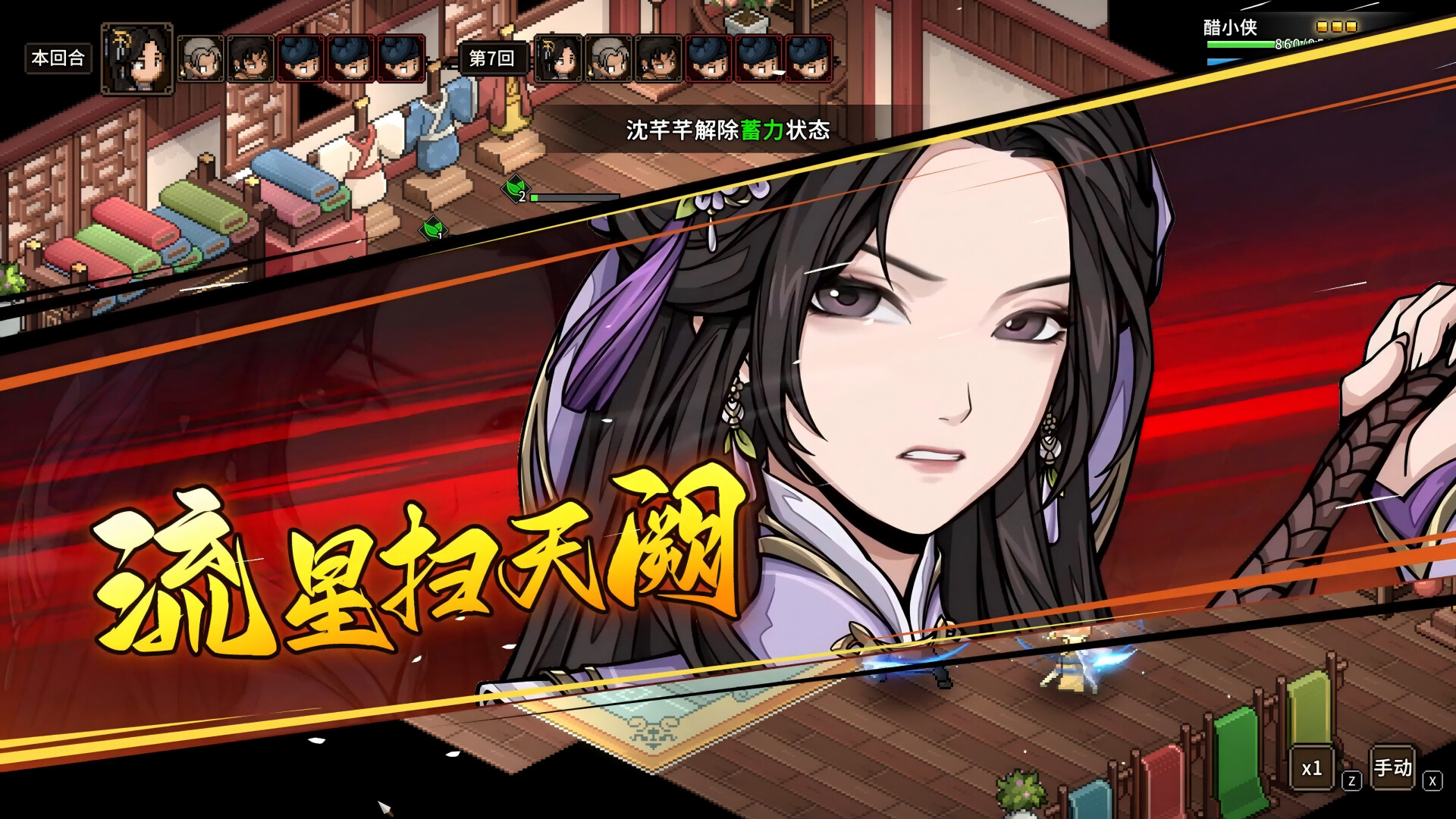
This page explains the concept as it has been publicly described. The exact pairings, costs, and effects of Team Skills have not been detailed yet, so the focus is on what the feature is meant to be rather than on specifics the studio has not shared.
How It Is Described
Two ideas define Team Skills as they have been presented:
Cooperative by nature. These are skills carried out together with the party, not solo techniques. They depend on having allies in the fight beside you.
Fight-deciding potential. A Team Skill can tip the balance of a fight, marking it as a high-impact option you reach for at the right moment rather than spamming every turn.
Because Team Skills are cooperative, they are closely tied to your Companions. You meet and bond with companions over the course of the journey, and each one carries their own signature techniques. The game states that the right ally can swing a difficult battle in your favor, and Team Skills are a clear expression of that: combat rewards bringing in companions whose abilities work well together. Choosing who fights alongside you, and how their strengths line up, becomes part of preparing for a fight.
Why a Party Move Matters: Formation
The clearest confirmed reason a cooperative move earns its place is that this game asks you to think about how the two sides line up before the first blow lands. The studio gave one concrete rule when it described the demo: an enemy standing behind a front rank cannot be hit by an ordinary single-target move. A protected target has to be reached some other way, and the studio said more positioning rules are there to be found in play.
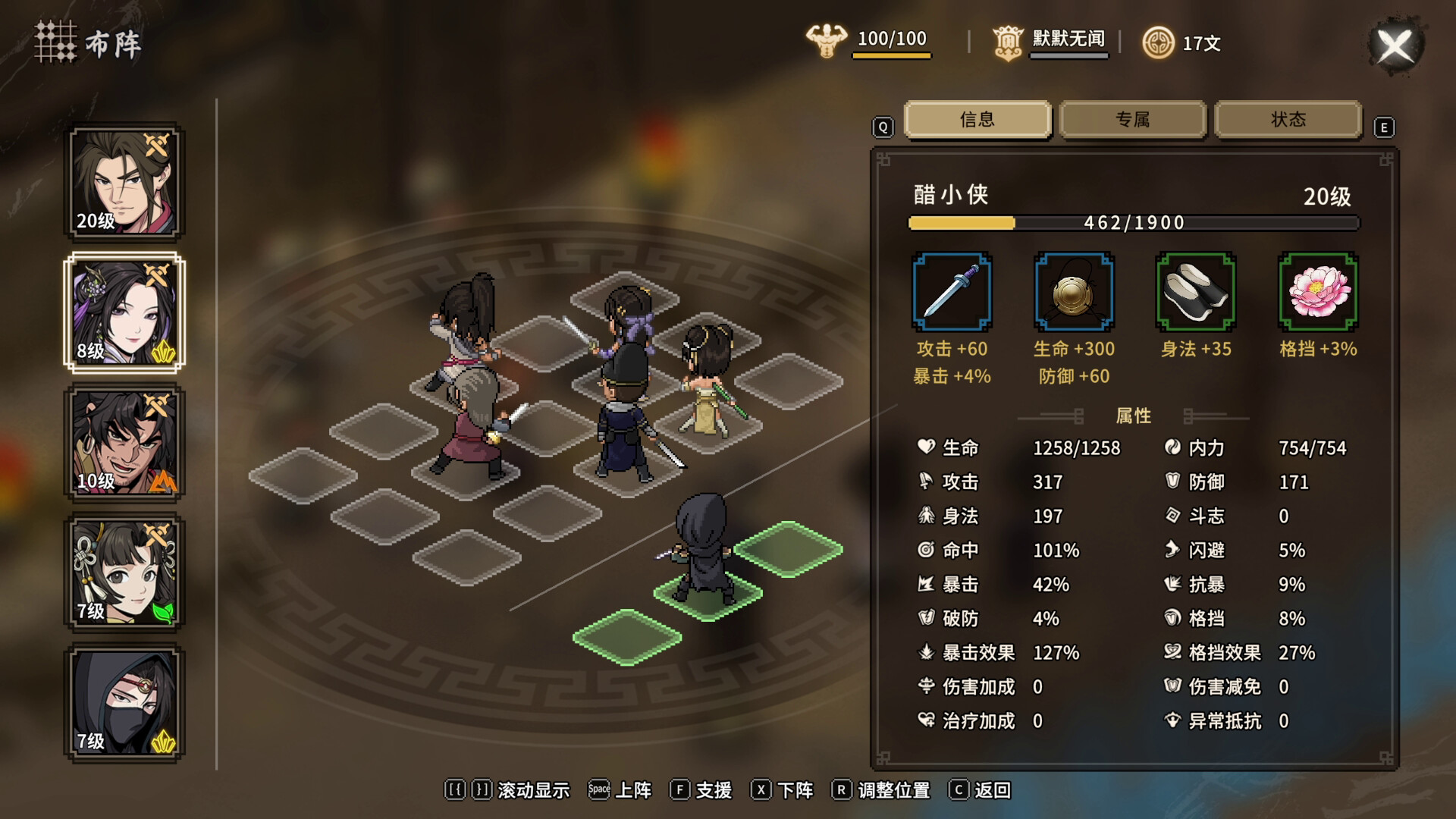
That single rule reframes what a party is for. If the fighter you most need to remove is shielded by the line in front of them, raw single-target damage is the wrong tool, and the answer has to come from somewhere else in your roster. Cooperative options and companion techniques therefore have a job that ordinary attacks cannot do, which is why deciding who deploys, and where, sits alongside deciding what to press each turn. See Combat System for how positioning fits the rest of the system.
Companions Carry the Elemental Answer
The studio has been explicit that combat in this game leans on allies far more than in its earlier work, and it gave the reason: companions trained in different martial arts are how you exploit the elemental weakness of a given enemy. Because a fighter's attack attribute comes from their weapon, internal Manual and equipped techniques rather than being fixed at the outset, a varied party covers more of the five-element cycle than any single character can. See Shield Break Combos for the counter-attribute route into a Weakened State.
Roster size gives that some scale. The full game has thirteen companions, each with their own side stories and character events, while the February 2026 demo let players meet four of them. The studio has said companions are met one at a time as the story unfolds rather than acquired at random, and that although some carry more story weight than others, every one of them has been given a moment of their own. Party composition is therefore something the story hands you gradually rather than something you assemble freely from the start. See Companions for the roster as it currently stands.
Bonds That Reach Beyond the Battlefield
Companions also carry special traits shaped by their own backgrounds and histories, and the studio has said that once you build a deep enough bond, a companion will pass on what they know. The one published example is a disguise skill that lets you slip into places ordinarily closed to you. That is an exploration payoff rather than a cooperative attack, but it comes from the same source as a Team Skill does: the strength of the relationship with the ally standing next to you. See Relationships and Bonding.
A Note on the Name
As with its counterpart, this feature has appeared under more than one English name. The September 2025 reveal called the party-move addition Team Attacks; the current store description calls it Team Skills. No mapping between the two sets of wording has been published, so this wiki uses the current name and records the earlier one only as history.
What Is Not Yet Detailed
The studio has not revealed the underlying rules for Team Skills. To keep this page accurate, the following are flagged as unknown rather than invented:
Detail | Status |
|---|---|
Which characters can pair for a Team Skill | Not yet revealed |
Any resource or action cost to perform one | Not yet revealed |
The exact effects each Team Skill produces | Not yet revealed |
The names of individual Team Skills | Not yet revealed |
How they interact with Shield Break Combos | Not yet revealed |
How many companions can be fielded in a single battle | Not yet revealed |
No skill names, damage values, or costs are listed here, because none have been confirmed. When the studio details the system, this page will be updated with the specifics.
Relation to Other Systems
Team Skills are part of the larger Combat System, which is turn-based and party-based. They work alongside Shield Break Combos, the other confirmed new combat addition, and they draw directly on your Companions and their signature techniques. Together these features are framed as ways to add depth to the returning turn-based combat rather than to replace it.
See Also
Combat System
Shield Break Combos
Companions