

Overview
Hero's Adventure: Another Tale is built around a simple but far-reaching idea: there is no fixed hero's path. The protagonist is a spirited youth, male or female, who leaves a comfortable home and steps into the jianghu, the martial world, chasing freedom rather than a destiny written for them. From that moment on, the journey is described as yours alone, and the shape it takes depends on the decisions you make. This page explains why branching choice sits at the heart of the experience and how it leads toward different Endings.
No Fixed Hero's Path (Confirmed)
The game makes a point of refusing to hand the player a single, predetermined role. You are not forced to become the noble savior of the realm, and you are not locked into villainy either. The two reference points the game offers are deliberately broad:
You can uphold justice as a righteous hero, intervening on behalf of others and building a reputation as someone the martial world can rely on.
Or you can roam free as a carefree wanderer, following your own whims through the jianghu without binding yourself to anyone's cause.
These are described as ends of a spectrum rather than two rigid presets, and the space in between is where most of the playing happens. Because the protagonist starts with no martial standing and no obligations (see Character Progression), the choice of who they become is genuinely open from the start.
Every Choice Carries Weight (Confirmed)
What gives these decisions their teeth is the reach of their consequences. The game states that every choice shapes outcomes on three widening scales:
Scale of Impact | What It Means |
|---|---|
Your own survival | Decisions affect whether and how the protagonist endures the dangers of the martial world. |
The fate of others | Your actions ripple outward to the people around you, helping or harming those whose lives you touch. |
The destiny of the jianghu | At the widest scale, your path may help shape the destiny of the martial world itself. |
This framing matters because it tells you that choices are not cosmetic. A decision made for one reason can echo into the lives of others and, taken together with everything else you do, contribute to the larger arc of the world you are moving through.
How Branching Drives the Experience
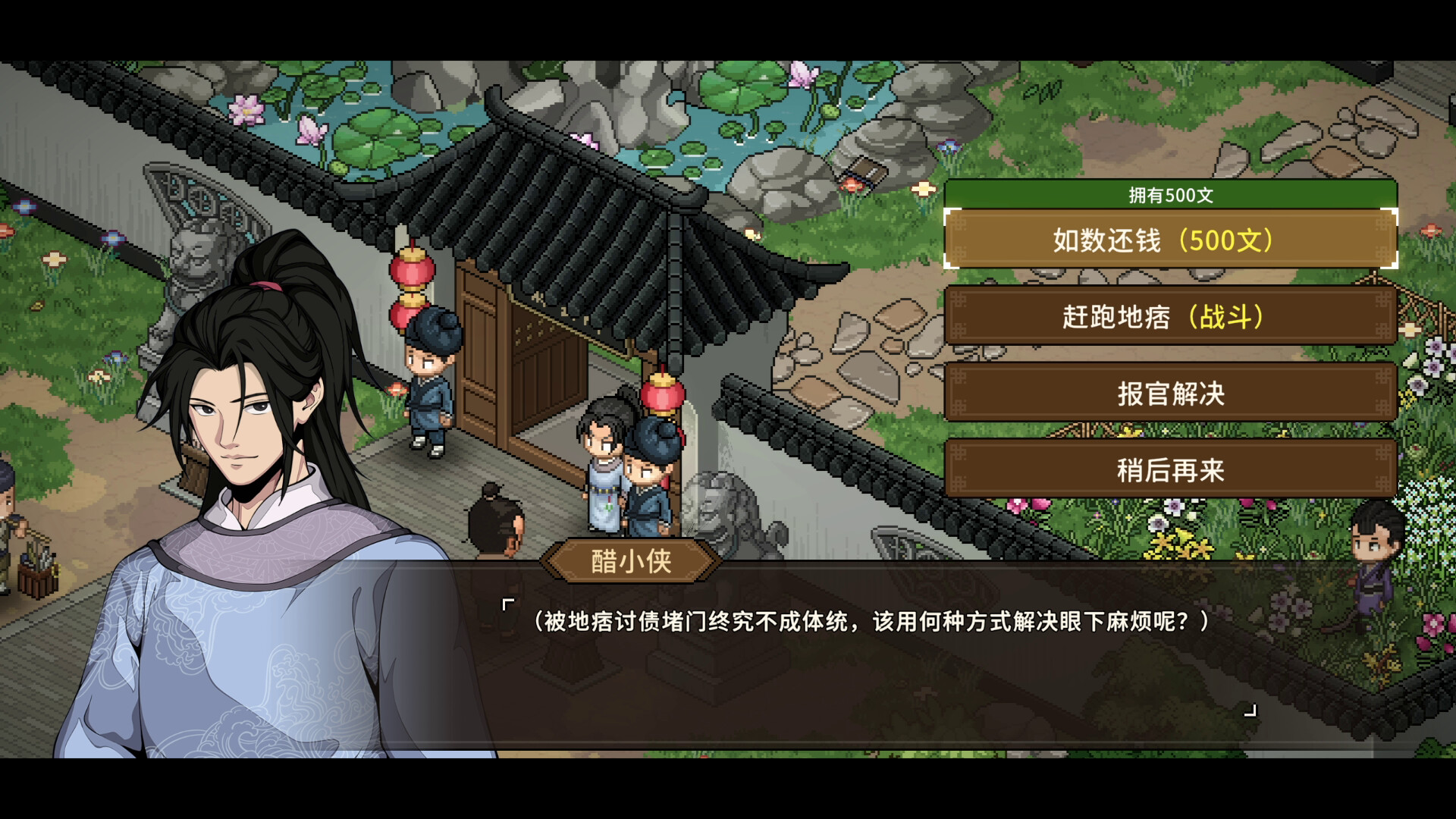
Because the protagonist has no scripted role, the story is steered by the player rather than by a fixed plot. That puts choice at the center of moment-to-moment play in a few ways:
Identity is emergent. Whether you read as a righteous hero, a carefree wanderer, or something in between is the sum of the choices you make, not a class you pick at the start.
Relationships respond to your conduct. The people you meet, including the Companions you can bond with, react to how you carry yourself. The way you treat the world helps determine who stands with you. See Relationships and Bonding for more.
The world is unsettled and reactive. The story unfolds after the events of the previous title, in a new dynasty where old grudges and fresh rivalries spread through tangled factions. A landscape this contested gives consequential choices somewhere to land. See Setting and Story and Factions and Sects.
The practical upshot is that two players can travel very different roads through the same jianghu, and the difference comes down to what they decided along the way.
Where Choices Lead: Multiple Endings
The clearest payoff of all this branching is that the game has four endings plus one True Ending tied to the path you choose. The absence of a fixed hero's path means there is no single "correct" conclusion to reach; instead, the destination reflects the journey. The specific conditions that lead to each ending, and how the True Ending is unlocked, have not been detailed. For the full picture of how this works and what is and is not yet known, see Endings.
What Is Not Yet Revealed
The game confirms that choice is central and that it influences survival, the fate of others, and the destiny of the jianghu, but it has not published specific branch points, decision trees, or named outcomes. Particular dilemmas, the exact mechanics behind tracking your path, and how reputation or alignment are measured are all unconfirmed. Treat any specific choice or its result as not yet revealed until the developer details it.