

Mission structure
A Whisper of Fall: Jinyiwei uses sandbox "box garden" levels (箱庭, hakoniwa) rather than a continuous open world. Producer Liu Qiwei chose this structure to focus on "details and gameplay instead of making a huge map." Each mission is a large, self-contained environment with interconnected spaces, hidden routes, and multiple completion methods.
Box Garden Design
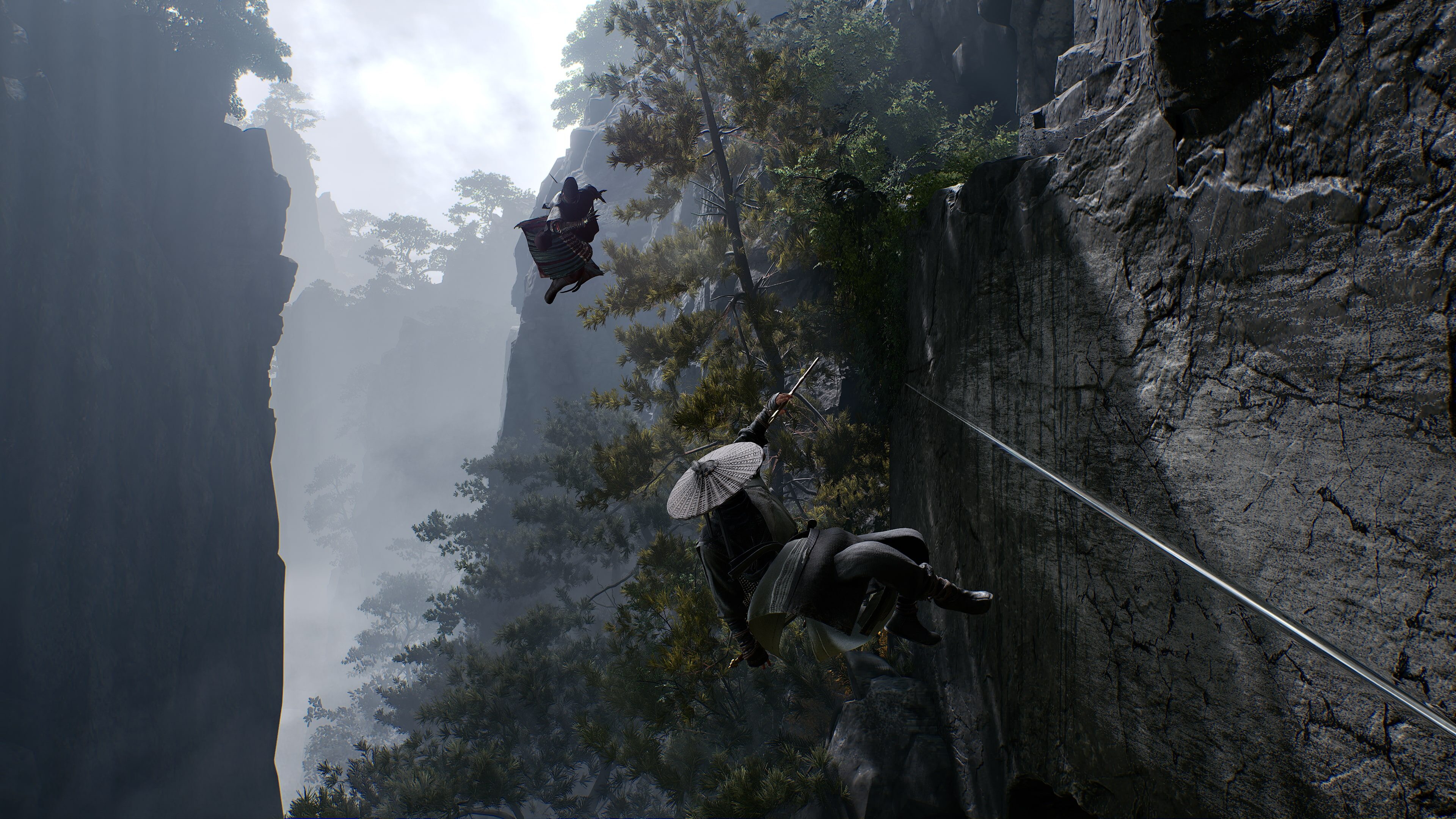
Each level is a dense, hand-crafted environment with vertical layering (ground, rooftops, interiors), multiple entry points, and hidden areas that reward exploration. The design prioritizes depth over breadth. A single mission area has enough content and branching to sustain multiple hours of play.
The Deng Yang mission
The demo mission illustrates the box garden philosophy. The player pursues Deng Yang, a renegade Thousand-Man Commander, while competing against a Southern Commandery elite squad also hunting him. Two broad approaches:
Speed-run (approximately 10 minutes) Skip all encounters, parkour directly to Deng Yang. The player arrives without equipment upgrades and fights a harder boss.
Methodical exploration Engage five Southern Commandery officers as sequential mini-bosses, each blocking a different route. Defeating them rewards fire-resistance equipment (directly countering Deng Yang's fire attacks), superior weapons, and recovery items.
Hands-on coverage of the demo described spending the full two-hour session exploring branches of this single mission without seeing all possible events and outcomes.
Time Lock
Demo missions run on an invisible Time Lock system: the amount of time the player spends in combat along the way silently shifts what happens later in the level. Depending on how long fights take, mid-mission events, the encounter that closes the level, and even story beats can change. The system makes the player choose a pace, whether to parkour straight through, fight everything, or pick a middle path, and each choice draws a different route through the level's complex terrain.
This dynamic structure works alongside the Heavenly Deduction rewind ability and the Sandbox-Style Levels design, so a single map can be replayed with materially different enemies, events, and outcomes from one run to the next.
Level-Design Inspiration
The studio has cited the classic wuxia film New Dragon Gate Inn (新龙门客栈) as the narrative model for its missions: several rival factions converging on one confined space, each pursuing its own goal, each affecting the larger story in different ways. Rather than a sprawling open world, the developers concentrate that web of competing interests into the dense, self-contained box garden levels.
Mission Types
Objectives vary between missions. Types described include theft, pursuit, assassination, and investigation. Each type encourages different combinations of the game's systems. A theft mission emphasizes stealth and traversal, while an assassination mission demands combat preparation and intelligence gathering.
Branching Outcomes
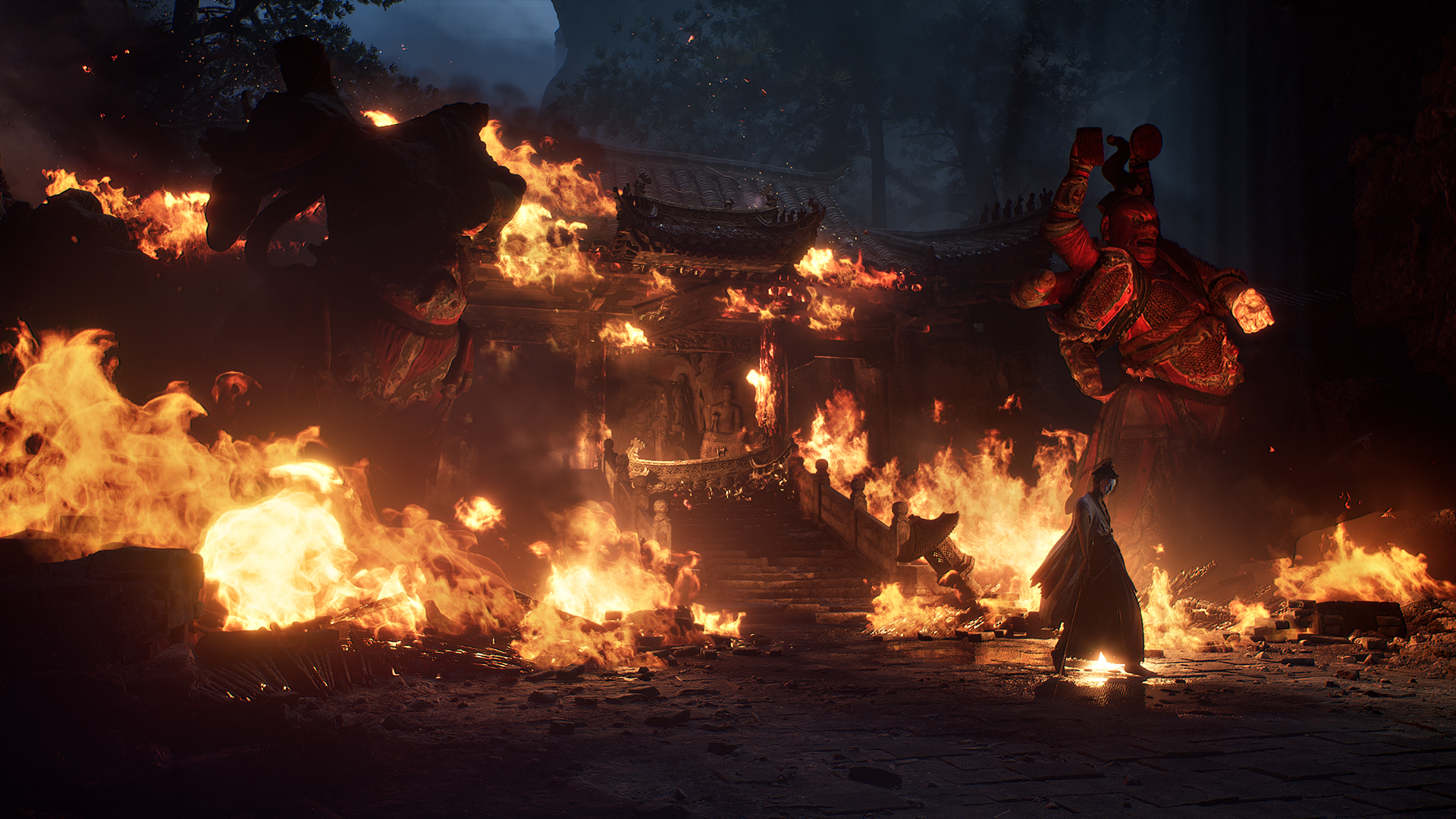
Missions are not linear. The Deng Yang demo had five distinct ending variations. Combined with Heavenly Deduction, players can explore multiple branches within a single playthrough by rewinding to earlier nodes. Different choices yield different experience, items, and story consequences.
Rewards and Trade-Offs
Different approaches yield different rewards. There are no "correct" choices. A branch involving more combat grants more experience. A branch emphasizing investigation reveals story context that changes later events. The Choices and Endings system means decisions have consequences beyond immediate loot.