
Loading...
Loading...
The Demon-Infested Three Kingdoms
August 27, 2026 at 09:52 AM
Corrected the opening boss image description from serpentine to dragon
Wo Long 2: Wings of Ember unfolds in a dark-fantasy retelling of China's Three Kingdoms, the turbulent age that followed the decline of the Eastern Han dynasty. It is set in the late Eastern Han period, when contending warlords vied for supremacy, here twisted further by a supernatural threat. Demons and fiends overrun this world, turning historical conflict into a struggle against monstrous forces as well as human armies.
The single largest change from the first game is structure. Where the original was built from linear, stage-based missions, the sequel uses an open-world map. The producer has described it as not merely a place to walk through but a battlefield in its own right: what the player does in one area can shift the wider tide of the war and change other parts of the map. The team has said this feedback loop is its answer to the flat, repetitive exploration that open worlds often fall into.
The morale system that gated boss fights in the first game has been reworked to suit that shape. Rather than planting every flag in a level before a boss becomes survivable, morale is now meant to be built through exploration and used to press an advantage. The build shown to press put shape on that. Morale is tracked by zone rather than across a whole level, so each stretch of terrain carries its own enemy morale rating and the player carries a rating into it. Three ways of shifting it were on show: planting the smaller battle flags scattered across the map, taking enemy strongholds, and shooting down with a bow the kite-like banners the enemy flies overhead. The gap now moves from both ends rather than one. Killing enemies still lifts the player's own rating, while planting flags and clearing camps drive down the rating of the enemies in that zone, and beating an elite or a camp boss pushes it down further. Larger flags double as rest points. Nothing forces a route, but a boss can sit several ranks above a player who walks in early, so the order in which the map is opened up is itself the difficulty setting. See Combat for the systems that sit on top of the map.
Two engagements have been named as playable stages, both far larger than anything in the first game. The Battle of Changban puts Liu Bei's forces against Cao Cao's overwhelming numbers. The Battle of Red Cliffs, where fire sweeps the river and the fate of the realm is settled, is the campaign the sequel builds toward. Reaching that scale is why the studio rebuilt the map, and the producer has said the level design became markedly more three-dimensional to support it.
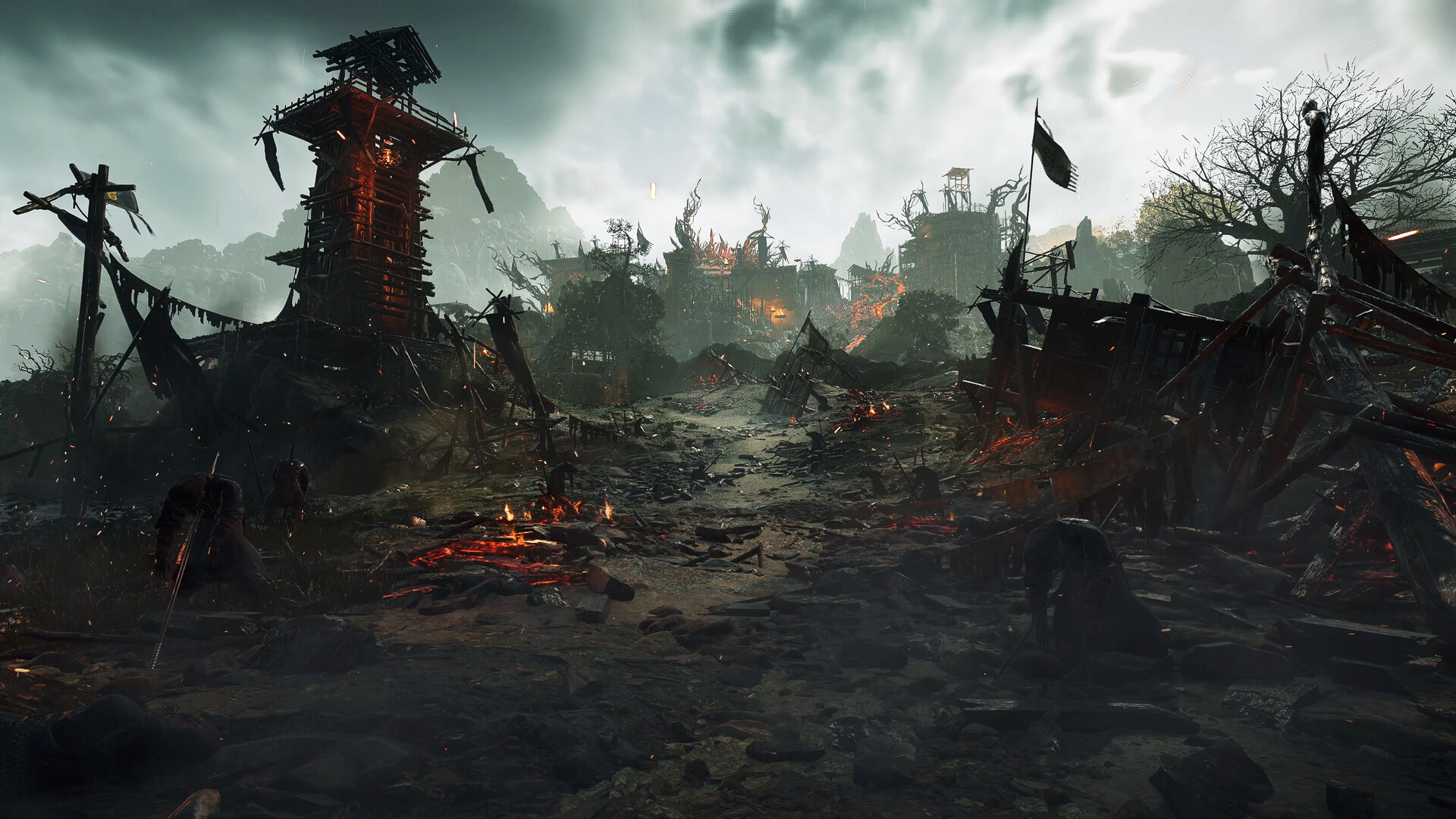
The world is designed around vertical movement. The champion can kick off walls and run along walls and eaves, and enemies frequently fight in the air, so routes climb as often as they cross. The team deliberately kept falls forgiving: stepping off a ledge costs a small amount of health and returns the player to the path rather than killing a run. Fighting on the surface of water has been considered, but swimming and fighting underwater is not planned.
Confirmed adversaries range from rank-and-file soldiers and powerful warlords to deadly demons and fearsome fiends, including flying enemies that force the fight upward. The reveal showed towering foes and dramatic set-piece encounters, and the sequel carries forward the demon-haunted vision established by the first game, set in the period after it. The elixir of immortality remains the engine of the conflict, hunted by warlords and entangled with the demons loose across the land, as described under Setting and Story.
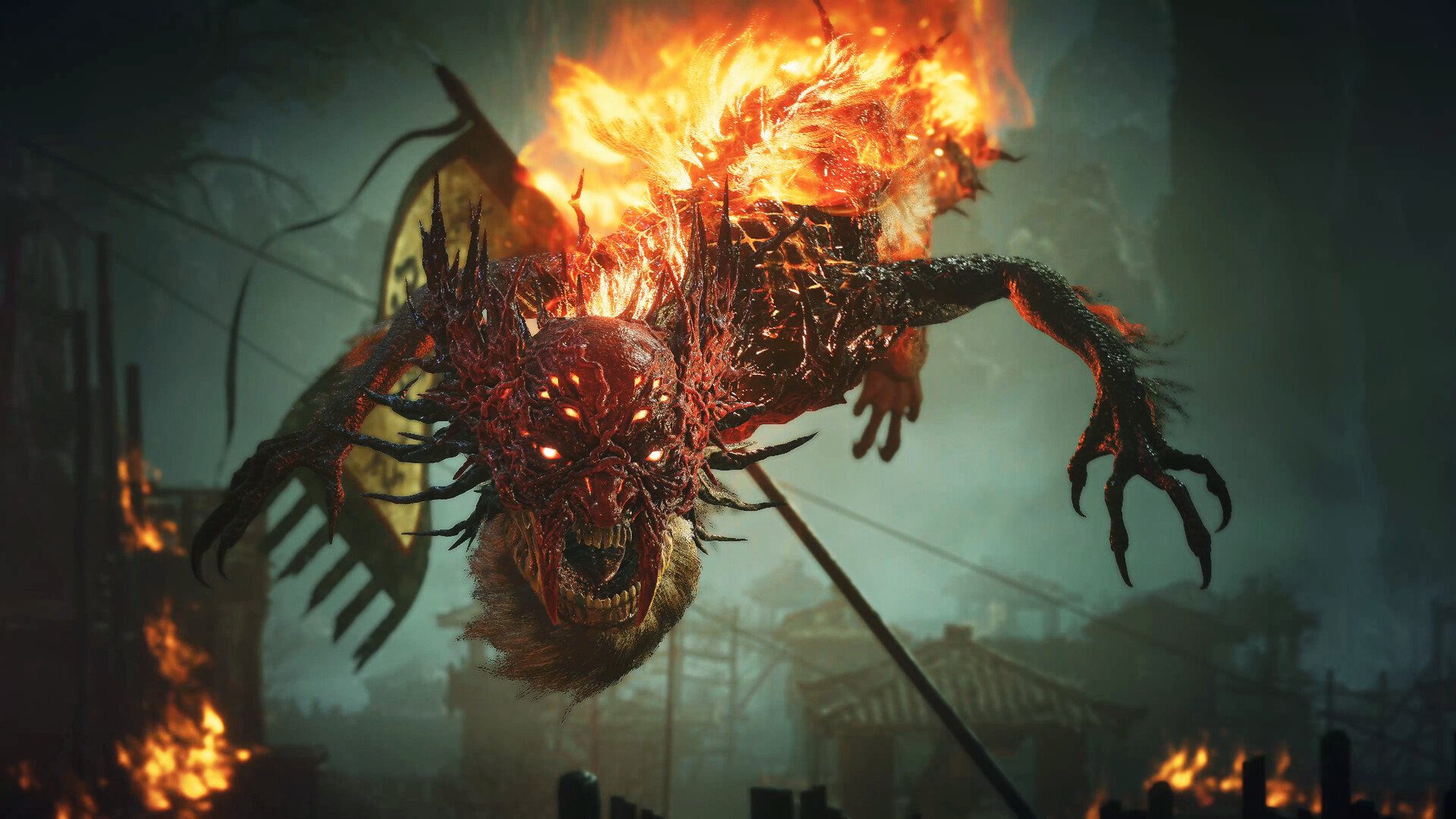
The build shown to press filled in what garrisons the ground. Elite soldiers and lesser bosses hold the camps. A dragon-like fiend wreathed in flame opened the demonstration, spending most of the fight airborne, raining fireballs and diving with a breath attack, and Huang Zhong holds a corner of the Changban map as a boss-tier human opponent. Bringing it down is what the new focus jump is there to teach, since the answer is to meet its fireballs in the air. Official screenshots show a fiend of the same kind hanging over a burning settlement, and a vast fire given arms and claws rising among war junks on the river. Full entries for the named figures are collected under Characters.
The rank and file were filled in too. Red-tinged fiends move in groups and hit hard with a narrow set of attacks, shield-carrying soldiers hold a tight guard that the focus techniques are built to break, and boars charge in a straight line. Camps scattered across the map are held by elites and smaller bosses, which is what makes clearing one worth the detour. Dying to a boss no longer sends the player back to the last flag: a marker outside the arena returns them to its door instead.
Beyond Changban and Red Cliffs, the sequel's specific regions, factions and landmarks have not been detailed, and no map has been shown. For now the world is defined by its two confirmed campaigns, its open structure and its tone.
