Loading...
Loading...
Gameplay and Mechanics
August 27, 2026 at 12:13 AM
Added the systems observed in the August 2026 hands-on demo and corrected the platform feature claim
Metro 2039 is a story-driven, single-player first-person shooter. 4A Games has described it as a return to the series' roots after the more expansive structure of Metro Exodus, with a deliberate focus on the confined tunnels and tense, resource-scarce gameplay that defined the earlier entries. The information on this page reflects what has been shown and confirmed in pre-release materials; many systems have not yet been detailed.
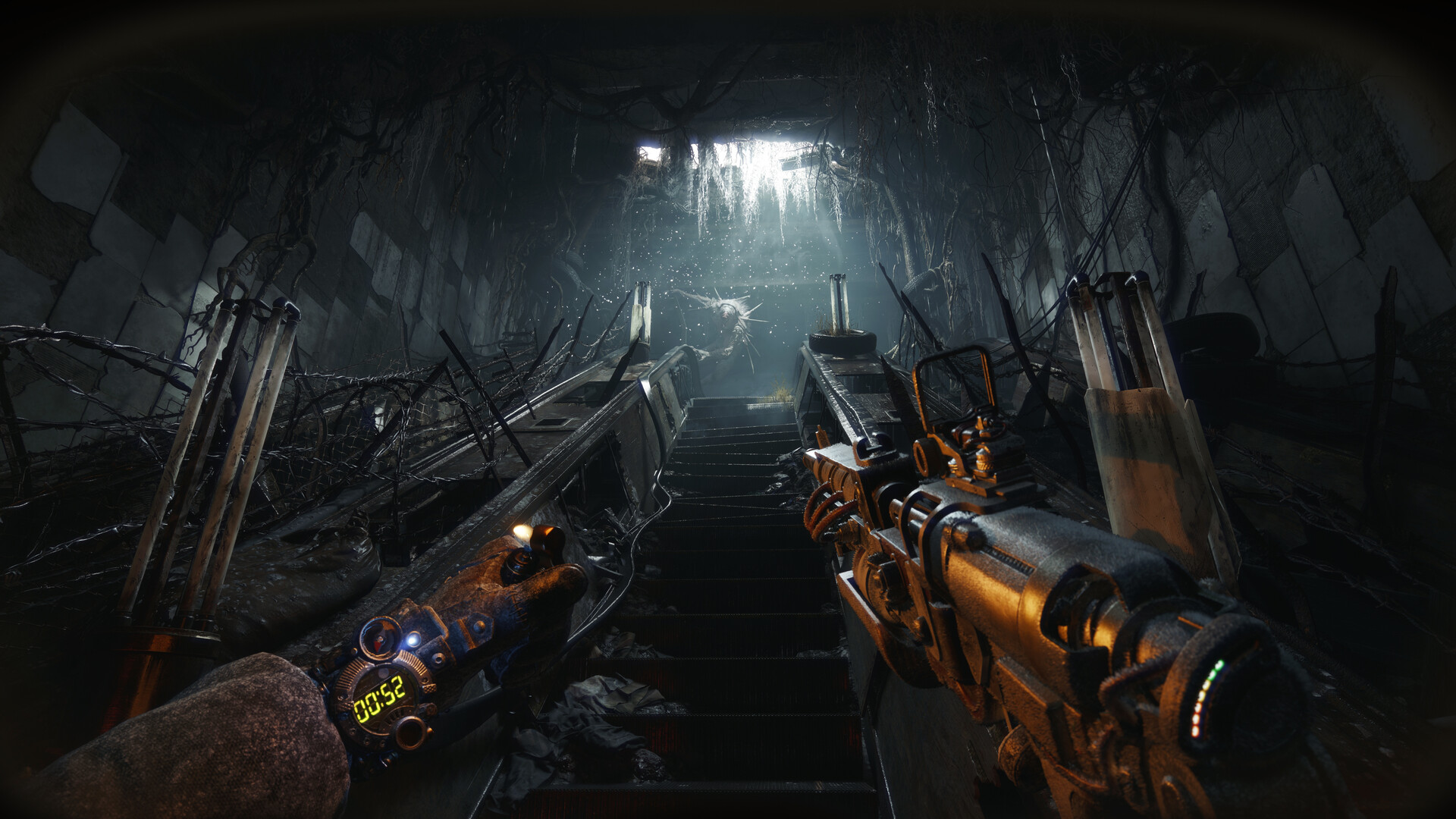
The game returns to the confined tunnels and stations of the Moscow Metro, the setting that defined the earliest entries in the series. Players follow The Stranger through a sequence of environments set primarily underground. 4A Games has framed this as an intentional creative choice to restore the sense of pressure and confinement that the tunnels provide. The exact balance between linear sequences and more open exploration has not been detailed before launch.
A June 2026 gameplay trailer confirmed that exploration is not limited to the tunnels. A substantial portion of the game takes place above ground, in the ruins of Moscow and the surrounding area. The claustrophobic underground remains a defining pillar, but surface environments form a significant part of the world the player moves through.
4A Games summarised what that trailer was meant to demonstrate: close and claustrophobic stealth-action combat, exploration of both the tunnels and the surface, the series' established mechanics, and survival elements presented through the world rather than through menus. The studio also said the trailer hints at new items, new mutant variants, reworked versions of familiar equipment, and new ways to move through or exploit the environment, without naming most of them.
Combat in Metro 2039 is presented as tactical and deliberate rather than action-oriented. The reveal footage shows The Stranger engaging enemies carefully, managing limited ammunition, and treating each encounter as a resource expenditure to be weighed against the cost of fighting. Hand-crafted, improvised weaponry is a central visual and mechanical motif: the guns shown are battered, functional tools built from whatever materials survived the apocalypse. These hand-crafted weapons are paired with melee knives, which serve as silent, ammo-conserving close-quarters tools.
Weapon maintenance is part of the gameplay, consistent with the series' tradition of treating firearms as objects that can jam, misfire, and require upkeep. Ammunition is scarce, making every shot a considered decision. The enemies confirmed for the game include the Nosalises, large and ferocious mutant creatures, as well as human soldiers belonging to the Novoreich.
The same June 2026 gameplay trailer added the first named gear to this arsenal: a stealth weapon called the Shatun, suited to quiet takedowns, and a new breaching charge for blasting through barriers in both combat and exploration.
Survival systems return as a core layer of play. A gas mask with replaceable filters is confirmed: hazardous areas require a working mask, and filters are a consumable resource that must be tracked and replaced before they run out. This ties breathing in toxic environments to the same scarcity pressure that governs ammunition and supplies.
The reveal footage includes sequences in which The Stranger moves through areas without engaging enemies directly, slipping past threats rather than fighting them. Stealth and avoidance appear to be viable approaches to at least some encounters. The demo played at Gamescom in August 2026 put some of those mechanics on show: guard patrol behaviour can be watched from cover, sentries can be taken out quietly one at a time, and the flashlight needed to see in dark places also gives away where the player is standing. The same session moved the player from fighting to avoidance after repeated attempts to take on a pack of Nosalises went badly, and the account of it describes Metro 2039 as much more a game about avoiding conflict except when necessary. The underlying noise and line-of-sight rules have not been published.
Metro 2039 continues the series tradition of using a diegetic interface: information that in other games would appear as on-screen overlays is instead presented through objects and actions visible within the game world. The reveal footage shows The Stranger checking a wristwatch rather than reading from a heads-up display timer. This approach keeps the player grounded in the world and reinforces the atmosphere of immersion and danger. A hands-on demo shown in August 2026 carried that principle across almost every system the player touches.
4A Games ran a hands-on demo of Metro 2039 at Gamescom in August 2026, and the press and creators who played it published their impressions on 26 August. One account covers roughly two hours taken from the middle of the game. Everything in this section describes that build as it was played before release rather than the finished game, and any of it can change.
What it showed most plainly is how little of the interface sits on top of the world. Almost nothing the player needs arrives through a menu.
System | How the Demo Presented It |
|---|---|
Inventory and crafting | The player sets the backpack down on the ground or on a crafting table and opens it up, rather than pausing into a menu. |
Filter timer | Remaining radiation filter time is shown on a digital watch the player has to actively look at, with audible beeps as it runs down. |
Aiming | There is no crosshair. A variety of iron sights and optics are crafted onto individual guns instead. |
Map and objectives | A physical folio the player pulls up, turned over to read the current objectives handwritten on the back. |
Saving | Marking an X in a logbook by the exit of the settlement. |
Light | A flashlight that is as necessary for seeing in some areas as it is a liability for revealing the player's location. |
Smaller physical details work the same way. A lighter burns cobwebs out of the way. A windowpane struck with the butt of a gun cracks under the first blows and breaks on the third. The account of the session describes the cumulative effect as a world that answers like a place rather than a level, and as something that raises the tension rather than simply decorating it.
The demo also passed through two settings that had not been shown before. One was a Metro station settlement busy with residents going about their day, of the kind described on Setting and World. The other was a horror set piece in a haunted school, where notes left around the building explain what happened there and set up a puzzle involving animal masks and lighting candles in an order the notes give away.
4A Games specifically highlighted a feature they call "Frozen Stories": handcrafted environmental micro-narratives scattered through the game world. These are moments of environmental storytelling, scenes composed of objects, bodies, written notes, and physical arrangements that tell a small story about what happened in that location without any character explaining it. Players who look carefully will piece together these vignettes, while players who move quickly may pass through without noticing them.
This kind of environmental storytelling has roots throughout the Metro series but is being treated as a named and deliberate design pillar in Metro 2039.
Resource scarcity is a core tension in the gameplay. Ammunition, mask filters, crafting materials, and supplies are presented as genuinely limited, making resource management a significant part of play. The reveal emphasized the hand-crafted nature of the weaponry, suggesting that players will assemble and maintain their tools from scarce components. The Gamescom demo in August 2026 showed the economy underneath it. Crafting ran on two common materials, metal and chemicals, which fed the standard consumables such as ammunition and gas mask filters, with a separate and rarer resource reserved for weapon attachments. The account of that session describes the effect as fewer scavenging chores and more decisions about where a finite supply should go. How much of that carries into the finished game, and what the rest of the crafting system covers, has not been detailed before launch.
Two categories of enemy have been confirmed in pre-release materials. The Nosalises are large, ferocious mutant creatures, representing the feral danger of the Metro tunnels. In the August 2026 demo they stalk the surface as well, described in the account of that session as bear-sized, mole-like animals that hunt in packs across open ground. Human enemies belonging to the Novoreich represent the organized, ideologically motivated threat. The reveal footage shows encounters with both types, and 4A Games has promised new enemy types that have not yet been named.
For the June 2026 gameplay trailer, 4A Games said it hints at new mutant variants beyond the Nosalises, though these new creatures have not been named, alongside new items for the player to find and use.
Outside the systems shown in trailers, the store listings confirm a strictly single-player game with achievements, cloud saves and full controller support. No multiplayer or co-operative mode is listed anywhere. Those platform-level details, along with the game's content ratings, are collected on Platforms and Age Ratings.