
Loading...
Loading...
Boss Encounters
April 4, 2026 at 11:54 PM
Embedded 1 image from gallery
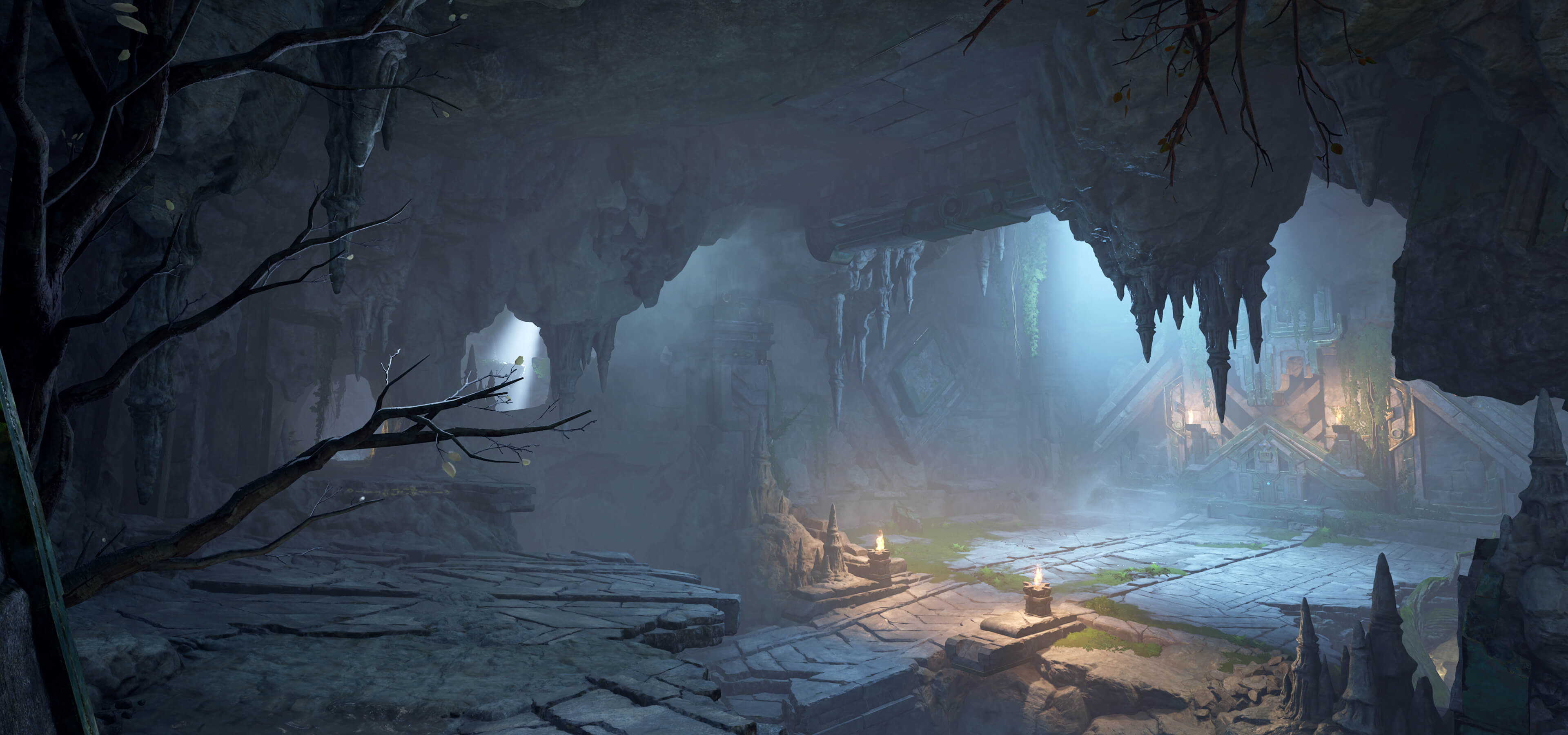
Boss encounters are among the most challenging and rewarding combat experiences in Honor of Kings: World. These large-scale fights pit the Flowborn (solo or in a multiplayer party) against powerful creatures drawn from Chinese mythology and original designs. Bosses feature multi-phase fights with escalating mechanics, destructible body parts, and a posture system that rewards sustained aggressive play. Defeating certain bosses also unlocks Spirit Summoning abilities that players can use in future encounters.
Every boss has a posture gauge (also called the Tenacity bar) that fills as the player lands attacks. Different weapons contribute different amounts to the gauge per hit. The Hammer contributes the most per swing, while the Ring Blade fills the gauge through rapid, frequent hits. When the posture gauge is completely filled, the boss becomes staggered for several seconds, creating a critical DPS window where the boss cannot attack or defend.
Breaking a boss's posture is often the most efficient way to deal large amounts of damage in a short time. Coordinating posture breaks with the party's strongest burst abilities is a key strategy in group play.
Many bosses have multiple targetable body parts, each with its own health threshold and status effects. Focusing damage on specific limbs or weak points can trigger localized staggers, disable certain attack patterns, or expose hidden vulnerabilities. For example, targeting a flying boss's wings may ground it temporarily, while attacking a boss's weapon arm might reduce the speed or range of its melee attacks.
Boss encounters progress through multiple phases as the boss loses health. Each phase introduces new attack patterns, environmental hazards, or mechanical changes. A boss might gain elemental shields in its second phase, summon reinforcements in its third, or transform its body entirely for the final stretch. Learning the transitions between phases and adjusting strategy accordingly is essential for consistent victory.
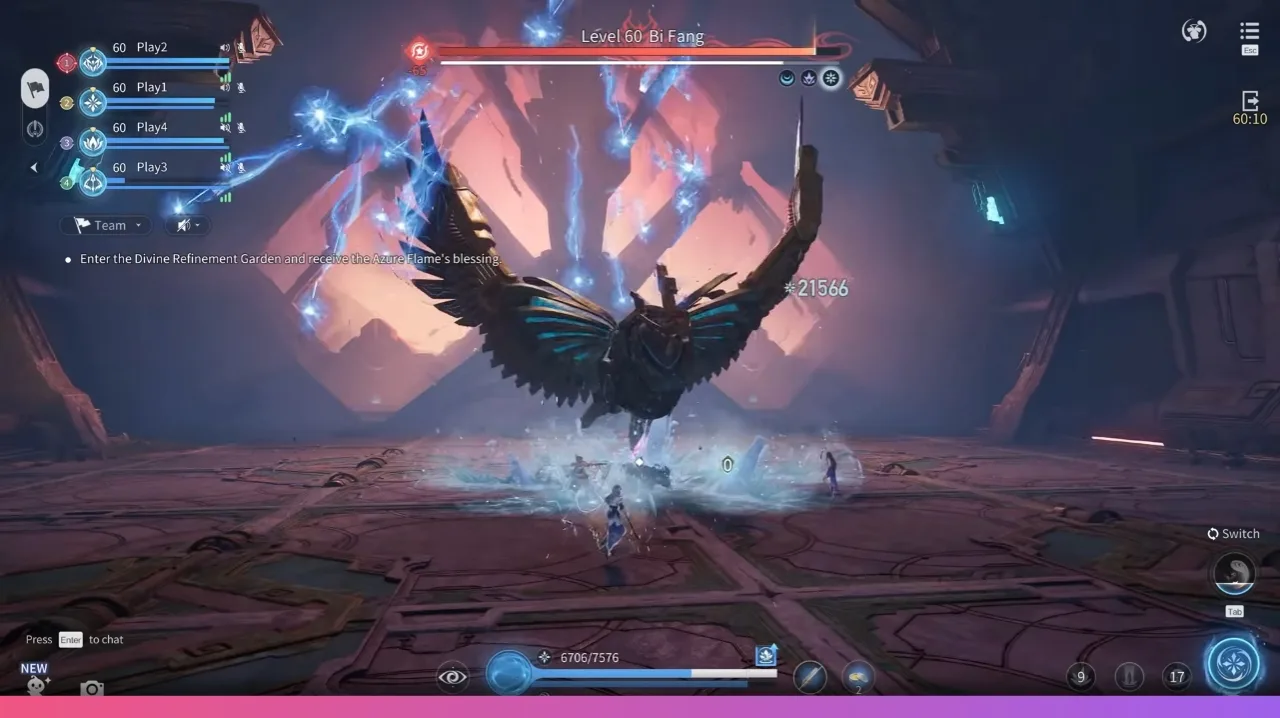
Bi Fang is a mythological creature drawn from the Shanhaijing (Classic of Mountains and Seas), described in Chinese mythology as a one-legged bird associated with fire and calamity. In Honor of Kings: World, Bi Fang has been reimagined with a striking design that blends organic avian features with mechanical, almost cybernetic elements. The result is a towering winged creature whose body crackles with electrical energy.
Bi Fang has been featured in official trailers since early 2025 and serves as one of the game's showcase boss encounters. In combat, Bi Fang uses electrified area-of-effect ground attacks that force players to stay mobile. It can project elemental shields that require coordinated team damage to break through, making it a fight that emphasizes group coordination over individual skill. Its aerial phases require ranged attacks or well-timed counters to bring it back to the ground.
The Puppet Master was one of the primary boss encounters available during the Gamescom 2025 demo. This humanoid boss fights by summoning multiple puppet minions that swarm the player, requiring effective crowd-control strategies and smart use of area-of-effect weapons like the Ring Blade.
The Puppet Master's key mechanical feature is its stagger vulnerability after using its Ultimate ability. When the boss commits to its Ultimate attack (a large-scale puppet swarm), there is a recovery window during which its posture gauge fills much faster than normal. Players who survive the Ultimate and immediately counterattack can break the boss's posture and open a substantial DPS window. Managing the puppet adds while waiting for this opening is the central challenge of the fight.
The Bianlian Monkey is a giant simian boss whose design is inspired by the traditional Chinese theatrical art of Bian Lian (face-changing). In Sichuan opera, performers rapidly switch between colorful masks to convey different emotions. The Bianlian Monkey translates this concept into gameplay by wearing multiple masks, each of which grants entirely different attack patterns.
This boss was prominently featured in the GDC 2025 demo. When the Monkey switches to its fire mask, it unleashes massive fire-breathing attacks that cover large areas of the arena. Its melee mask triggers aggressive rush-down combos that close distance rapidly. Its frenzy mask puts the Monkey into an enraged state with faster, less predictable attacks. Players must recognize which mask is active and adjust their positioning and strategy accordingly. The mask transitions happen at health thresholds and on timed intervals, keeping the fight dynamic throughout.
In addition to instanced boss encounters found in dungeons and story missions, Honor of Kings: World features world bosses that spawn in the open world across the regions of Primaera. These bosses are visible to all players in the area and can be engaged by anyone who is nearby. World bosses tend to have very large health pools designed for multiple players to chip away at simultaneously.
World boss spawns follow set schedules or trigger conditions, and defeating them rewards all participants with loot scaled to their contribution. These encounters encourage impromptu cooperation between players who happen to be exploring the same region, adding a social and unpredictable element to open-world gameplay.
After defeating certain bosses, players can gain the ability to summon those bosses' spirits during future combat encounters. Spirit Summoning is a powerful combat tool that calls forth a spectral version of a defeated boss to perform a signature attack on the player's behalf.
For example, after defeating a boss associated with ice abilities, the player might gain a Spirit Summon that calls down an ice array dealing heavy area damage. Spirit Summons are typically tied to a long cooldown and serve as a strategic trump card during difficult fights. The system rewards players for engaging with boss content and provides a tangible, lasting benefit beyond just loot drops. Spirit Summoning synergizes with the dual-class system, giving players a third offensive tool alongside their two equipped Flow styles.