
Loading...
Criminal Profile
November 27, 2026 at 02:36 PM
Added 1 internal link
Criminal Profile is a reputation system in Grand Theft Auto VI that tracks how each protagonist commits crime rather than how much crime they commit, on a five step scale: Professional, Hardened, Violent, Psycho and Irredeemable. It is tracked separately for Jason and Lucia and decides how you earn permanent Focus and whether the police will let you surrender. Irredeemable is permanent once reached.
Rockstar first described it during a studio preview reported in early September 2026, and it shipped in the released game on 19 November 2026 as a five step scale running from Professional down to Irredeemable. It is a separate layer from the police response, and it is the first system in the game confirmed to record a lasting judgement about behaviour rather than a moment-to-moment state.
The system is tracked separately for Jason Duval and Lucia Caminos. Nothing one of them does moves the other's rating, so the two leads can end a playthrough with very different profiles: a careful Professional Jason can share a safehouse with an Irredeemable Lucia, or the other way round. The profile matters for three reasons. It decides how you earn permanent Focus, it decides whether the police will let you surrender, and together with the couple's relationship level it shapes the choices and cutscenes you get at the end of the story.
The released game uses five profiles: Professional, Hardened, Violent, Psycho and Irredeemable. You can climb back up from the first four by changing how you play. Irredeemable is permanent once reached, and the only way out of it is to load a save made before you crossed the line.
Profile | How You End Up Here | Focus or Permanence | Surrender to Police |
|---|---|---|---|
Professional | Avoid unnecessary fights and complete crimes quietly with stealth and dialogue | Stealth takedowns raise Focus. Non-lethal takedowns and good deeds grant permanent Focus. | Possible |
Hardened | Kill when fired upon but never start trouble; never harm police or innocent civilians | Stealth takedowns raise Focus. Non-lethal takedowns and good deeds grant permanent Focus. | Possible |
Violent | Kill indiscriminately, including gang members and police, without rampaging for its own sake | Headshots raise Focus. | Possible |
Psycho | Repeatedly murder innocents, including defenceless animals | Headshots raise Focus. | Not allowed |
Irredeemable | Keep rampaging from Psycho, especially by blowing up civilians and their vehicles | Permanent once reached. No bonus Focus from any action. | Not allowed |
Apart from Focus and the way the police treat you, there is little practical difference between the profiles while you play. At Psycho and Irredeemable, police are more likely to use lethal force during an encounter.
Profile | Actions That Push You Toward It |
|---|---|
Professional | Clean, quiet crime: threaten staff during a robbery without hurting anyone, slip into a store's backroom with the Snap Gun (a story unlock in Chapter 3), destroy the security tapes, switch off the alarm, and leave before the police turn up. Robbing a store without setting off the alarm and getting away cleanly both count. |
Hardened | Shoot enemies in the limbs, such as the legs or shoulders, so they drop and crawl along the ground. A yellow hit marker confirms the takedown. Leave them alive. |
Violent | Kill civilians and police. |
Psycho | Kill domestic animals such as dogs and cats, kill police and civilians in large numbers, or drive over gravestones in a graveyard. Some especially brutal kills add to it now and then, such as throwing civilians off their boats and then running them over, or throwing bodies off buildings into the street. |
Irredeemable | Keep stacking up Psycho actions without doing anything non-violent to pull the profile back. |
Every playthrough starts at Professional for both characters. You hold the rating by staying undetected, keeping casualties down and avoiding aggression that the job does not call for. Threatening people does not count against it, so holding up a cashier or intimidating a witness is safe as long as nobody gets hurt.
Professional is the cleanest rating available. A run with no kills at all cannot be done, because some killing is unavoidable, so avoid unnecessary violence. Sneak past guards, talk your way out of confrontations, and when a fight cannot be avoided, enter Focus Mode (L3 and R3 together on PS5) and aim for the yellow non-vital points on enemies instead of the head. Each unnecessary kill pushes you toward Hardened.
Driving is the easiest way to lose the rating by accident. Running down a pedestrian or causing a fatal crash costs you quickly, and killing a police officer is out of the question. If you do slip, you can work your way back by avoiding violence, defusing arguments with words and committing crimes without being detected.
The usual ways to slip from Professional to Hardened are a stealth approach that goes wrong, a few minor casualties and the use of force.
Hardened is where most players land if they are neither trying for Professional nor playing recklessly. It fits a character who shoots back when shot at but does not go looking for trouble. Non-lethal play still counts here, and stealth still rewards you with Focus. The two things that knock you out of Hardened fast are killing police and hurting innocent bystanders; either sends you down to Violent.
At Professional or Hardened, non-lethal hits in combat can refill part of the active Focus meter. Thoughtful actions can also build progress toward a permanent Focus increase. See Focus for the difference between refilling the meter and raising the stat.
Violent covers a character who kills freely, innocent or not, and has no problem shooting police. Players often drift here by fighting their way out of police encounters instead of escaping and letting the heat die down. What separates Violent from Psycho is that the violence still serves a purpose rather than being chaos for its own sake. Headshots raise your Focus while you hold this rating.
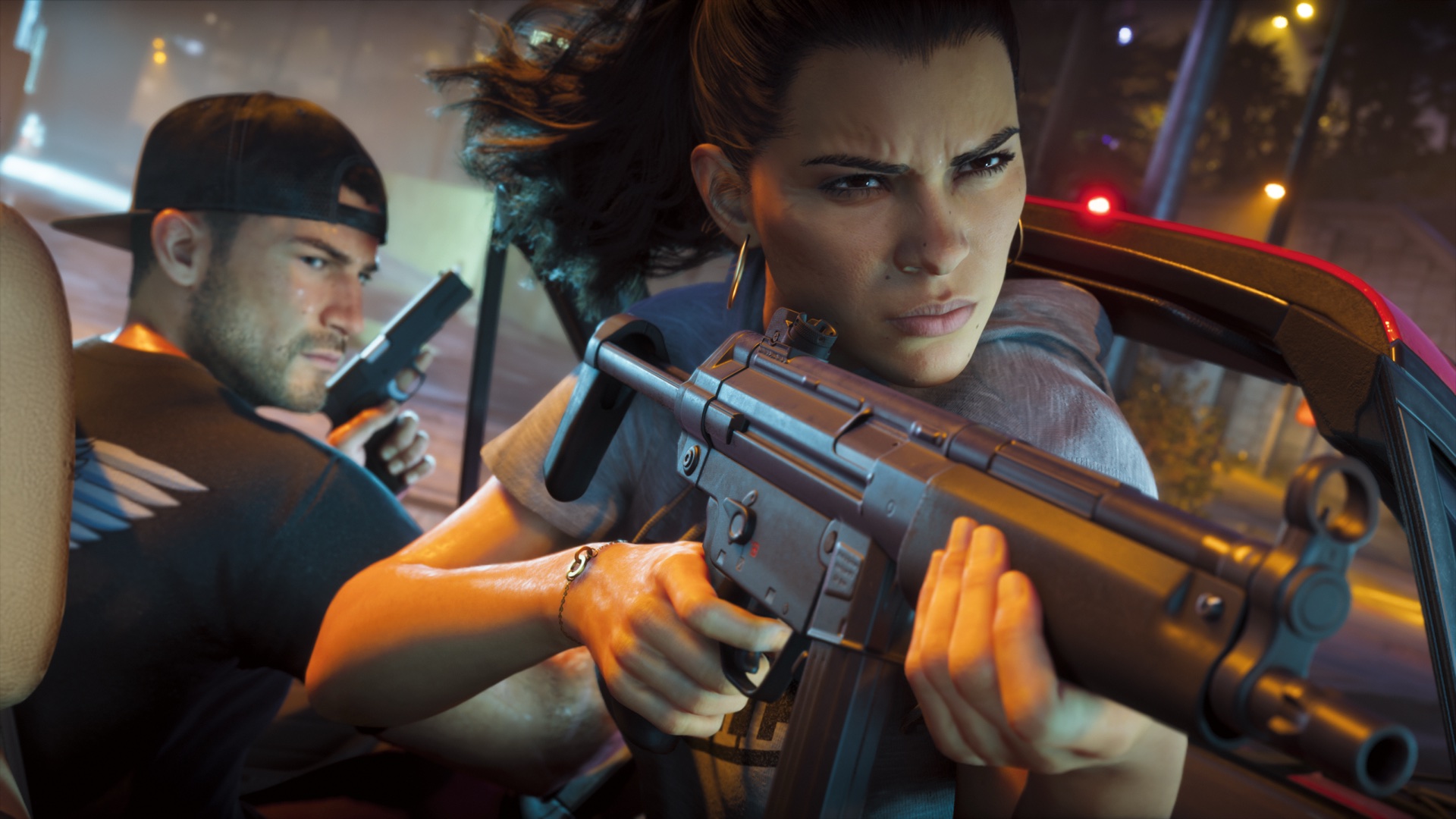
Psycho is the rating for a character who keeps murdering innocent people, animals included, and who chases high wanted levels for fun. Its main penalty is that the police no longer accept your surrender. You can still escape a pursuit. Headshots still grant bonus Focus at this level. Continuing to behave this way leads to Irredeemable.
Police are more likely to use lethal force during an encounter at Psycho. Domestic animals count heavily here: killing dogs and cats is one of the clearest Psycho actions, and so is driving over gravestones in a graveyard.
Irredeemable is the bottom of the scale and the only profile you cannot leave by changing your behaviour. An Irredeemable character earns no bonus Focus from anything they do and cannot surrender to the police.
It removes profile-based Focus bonuses, and officers are more likely to use lethal force when you commit a crime. The rating alone does not make them attack you for walking past. Since it cannot be undone, the safest habit is to mix in non-violent play whenever a character starts to slide toward Psycho.
Killing police helps push a character to Psycho, but once there it moves the profile toward Irredeemable only slowly. The quickest route down is to repeatedly blow up civilian vehicles and groups of civilians. Killing civilian after civilian takes you from Psycho to the edge of Irredeemable, where the game starts warning you.
Rob Nelson of Rockstar North has described Irredeemable as the way out for players who do not want the system. In an interview published on November 26, 2026, he said you can still go on rampages and "smash your Criminal Profile until it breaks," and he summed up the resulting state as the player saying "I reject your criminal profile system! I don't want it."
When a character is close to Irredeemable, time slows and the purple Psycho emoji appears on that character's portrait in the bottom right corner of the screen, then begins to crack. You get three of these slow-motion cracking warnings as you keep pushing. After the last one the emoji breaks for good and the purple Psycho icon is replaced by the grey Irredeemable icon. Make a save before you reach this point if you want the option to undo it.
Stage | What You See |
|---|---|
Approaching Irredeemable | Time slows and the purple Psycho emoji shows on the character's portrait |
Warnings | The emoji cracks in slow motion, three times in total, as you continue |
Irredeemable | The emoji fractures permanently and turns into the grey Irredeemable icon |
Being Irredeemable does not lock the couple's relationship. It can be hard to raise the relationship much while the two characters hold very different profiles, but every relationship level is still reachable with one or both of them Irredeemable. See Sex and Romance for how the relationship level works.
Open the map with Touchpad (PS5) or View (Xbox), then press L1 (PS5) or LB (Xbox) to move to the Jason & Lucia tab. On that screen, press Left on the D-pad for Jason's details and Right on the D-pad for Lucia's.
Holding Right on the D-pad during play is a quicker way into the same Jason and Lucia view.
On the Jason & Lucia tab, select a character and their current rating appears at the top of the screen. During normal play you can also hold a button to show the profile icon in the bottom right corner, without opening any menu.
Two things move a profile: the decisions you make in story missions and the way you play between them.
Some missions stop to ask you to make a decision, and the option you pick nudges the profile toward the professional or the violent end. Sparing people who do not need to die, choosing the outcome with the fewest deaths and steering away from chaos all count as professional. Executing people needlessly and choosing the loud, explosive or dramatic version of a mission count as violent.
One early example comes at the end of Hey Arnold!, where Jason corners Arnold on the dock: shooting him moves Jason toward Hardened, while choosing Spare is the gentler option.
Killing that the story requires does not count against you. In Tourist Trap, for example, Lucia has to shoot her way past the police while getting Jason to the boat, and those kills leave her profile untouched.
Everything you do in the open world adds up in small steps: how you shoot, how you drive, how you get into guarded compounds and how you deal with the police.
Action | Effect on the Profile |
|---|---|
Using non-lethal weapons on gang members or police | Depends on the action; shooting to incapacitate contributes toward Hardened |
Shooting to incapacitate (yellow hit markers) rather than to kill | Toward Hardened |
Avoiding detection, using stealth and talking your way out of conflict | Toward Professional |
Stealth takedowns, such as grabbing an enemy from behind or using quiet melee attacks | Toward Professional |
Starting fights and using lethal force on enemies | Toward Hardened |
Using explosives | Toward the violent profiles; an explosion sometimes only incapacitates, but you cannot control that |
Attacking bystanders or passers-by | Always toward Violent, with one exception below |
Hitting pedestrians with a vehicle, especially hard enough to incapacitate or kill | Toward Violent or Psycho |
Killing police | Toward Psycho; slow progress toward Irredeemable once already Psycho |
Repeatedly blowing up civilian vehicles and groups of civilians | Fastest route to Irredeemable |
The exception for civilians is a fight started through the interaction system. If you or a bystander picks a fight that way, the civilian is treated as an enemy and a fistfight with them does not affect your profile. The police can still be called, so the wanted level is a separate risk.
During a robbery, switching off an alarm before it sounds and erasing available security footage can improve your Criminal Profile. Watch for the profile notification after each action. See Robberies and Heists for preparation.
The hidden trophy or achievement Actions Speak Louder (description: "Choices made (for better or worse)") needs 500 actions that affect your Criminal Profile. Every robbery and every fight with enemies counts, so most players earn it without trying. Click the trophy in the trophy list to see how many of the 500 you have.
Turn on the profile notifications at Settings > UI > HUD Notifications > Criminal Profile. With them on, a small demon face appears on the right side of the screen each time an action counts.
If you still need it at the end, running over civilians and police with a car adds actions quickly, but it drags the profile toward Psycho.
No trophy depends on which profile you hold, and every activity can be completed with a violent profile. Avoid Irredeemable only because it is permanent and makes the police more aggressive.
See Trophies and Achievements for the full list.
Staying Professional pays off in two ways. The first is Focus: at Professional (and at Hardened) the meter grows when you perform thoughtful actions or incapacitate enemies without killing them. Focus slows the action down, by an amount that depends on whether Jason or Lucia is in combat, and it is shown on screen by a purple eye icon. The second is distance from Irredeemable. Keeping crimes clean and free of casualties keeps you far from the one profile with permanent consequences for Jason and Lucia.
Helping civilians who need it and petting animals both count as thoughtful actions. Petting is the quickest: walk up to a domestic animal such as a cat or a dog, choose Praise, then choose Pet. See How to Pet Animals for more. In Chapter 2, the three cats that live around the Starlet Motel are an easy source: petting and feeding them gives a Focus boost and counts toward a Professional profile.
In missions, sneak past opposition where you can, and when enemies confront you, try to defuse the situation before it turns into a fight. If a shootout starts anyway, shoot enemies in the legs. These firearm incapacitations contribute toward Hardened rather than guaranteeing Professional. At Professional or Hardened, they can still earn Focus.
Provoking a pedestrian turns an encounter into a confrontation. Taunt someone standing close to you with L2 and Cross (PS5) or LT and A (Xbox). A melee hit also provokes the target, as long as it does not knock them out. How the person reacts depends on who they are and what they carry.
NPC Type | Reaction | Result |
|---|---|---|
Passive civilian | Flees or ignores you | Runs off or walks away without fighting back |
Normal civilian | Fist fight | Fights you hand to hand |
Armed or hostile | Draws a weapon | Goes straight to a firefight or armed melee |
Harming or killing a civilian lowers your profile, and it makes no difference whether you meant to do it. Since a profile that reaches Irredeemable stays there for the rest of the game, keep fights with civilians to a minimum, especially while you are working through the main story.
Civilians do not always take an attack quietly:
They fight back. The person you hit may retaliate, and some pedestrians carry guns and open fire as soon as you attack them. People attacked in front of witnesses are also more likely to fight back. A civilian can even lash out at other NPCs, drawing them into the fight.
Bystanders flee and call for help. Other civilians run away and call for help. Deal with the situation quickly, because once they are far enough away they may phone the police and give you a wanted level. Witnesses can also step in and attack you themselves.
Police on the scene react at once. Attacking or killing a civilian in front of an officer gives you a wanted level immediately. The worse the crime, the more stars you get: a punch brings a low level, while a killing brings a much higher one and officers may shoot to kill.
Protests are random events that can appear almost anywhere, though you meet them most often along highways and at the roadside. The camera turns toward the protestors when you get close. You can encourage or discourage them, and the choice leads to different outcomes. Talking to protestors can also unlock side quests.
Protestors can be attacked and killed like any other NPC, and they count as civilians: attack one and the others run off and call for help, and the police may be called in and arrest you if they catch you. See Getting Arrested for what an arrest costs.
Two factors decide which endings are available in the final chapter: the Criminal Profile of each character and the relationship level between Jason and Lucia. Depending on where both profiles sit and how close the couple are, you are offered different choices, outcomes and cutscenes at the end of the game. If you care about a particular ending, decide early which profiles you want to aim for; if you do not, play as you like and see where the story lands.
Not every account of the game agrees on this point: some players describe the profile as changing only Focus and the way the police treat you, with no wider effect.
The September 2026 preview descriptions supplied names without detailed thresholds. Rob Nelson, co-studio head at Rockstar North, said in August 2026 that "there is a system that tracks what sort of criminal you are," and that consistently using unnecessary violence shifts it. Rockstar has said the system is not meant to portray Jason and Lucia as do-gooders; it tracks whether each keeps their crimes professional or commits unnecessary violence, with in-game consequences for their reputation. Previews also described the game's interconnected systems as letting players role-play as heavily or as lightly as they want. Previews of the Extended Look described it as something other than a simple good-or-evil axis.
Speaking before release, in remarks relayed on November 26, 2026, Nelson admitted that Rockstar expected part of the audience to "reject this new stuff." His point was that the profile takes nothing away: any way of playing still works, and the system only adds choices, or as he put it, "now you have other options."
Before launch, a list of tier names (Professional, Aggressive, Violent and Psycho) circulated as if it came from Rockstar, but it came from a video creator, not from the studio. The released game shares three of those names, but its five profiles are Professional, Hardened, Violent, Psycho and Irredeemable; there is no Aggressive rating.
An October 2026 demonstration, played by Nelson on a PlayStation 5 build, described a scale from Professional to Irredeemable, displayed with angel and devil icons. In that demo enemies could be knocked out or scared off instead of killed, and shooting first led toward a violent profile. Rockstar said the profile influences how Jason and Lucia's story plays out: the system decides what kind of criminals they are, not whether they are criminals.
Property | What Is Known |
|---|---|
Tracked per protagonist | Jason and Lucia carry separate profiles, and the actions of one do not affect the other. Because missions are distributed between them, the pair can diverge over a playthrough. See Character Switching. |
Surfaced as notifications | Changes to a profile are announced to the player through notifications, and those notifications can be switched off in settings without disabling the system itself. |
Shown on screen | Each character's current profile can be checked in the Jason & Lucia tab of the map screen, and the Psycho and Irredeemable states appear as an emoji on the character portrait. |
Professional or violent | Rockstar has said the profile tracks whether each character keeps their crimes professional or commits unnecessary violence, rather than casting the pair as do-gooders. |
Comparable in intent | Preview coverage compared it with the honour system of Red Dead Redemption 2, the studio's previous open-world western, which tracked how a player behaved rather than how far they had progressed. Nelson has since confirmed the link: he said that game's player choice and agency, and the way it shaped the story, "was a hard thing to ignore and walk away from." |
Separate from the wanted level, but felt by the police | The profile is not the six star wanted meter, which measures what the police currently know rather than any long-term reputation. It does change police behaviour: a Psycho or Irredeemable character is never allowed to surrender, and officers are more likely to use lethal force during an encounter. See Wanted System. |
Tied to the ending | Both profiles, together with the relationship level, decide which final choices and cutscenes you see. |
The game shows five profiles, but numeric thresholds remain undocumented:
Exact thresholds for changes between the profiles. At launch the game shows no numeric thresholds; profiles shift gradually with your actions, and the slide into Irredeemable is signalled by three warnings.
Whether pedestrians, gangs, police or mission availability respond to a profile state, and how strongly. At launch the police refuse surrender from Psycho and Irredeemable characters, and the profile affects the ending; responses from pedestrians, gangs and mission availability have not been described.
Whether the profile persists or carries any effect after the story ends. This remains undescribed.
Whether the profile appears on screen as a meter or exists only as the notifications described above. At launch it is shown in the Jason & Lucia tab of the map screen, alongside the notifications.
Material circulating from unauthorised sources has been read as showing a morality indicator, but none of it has been confirmed by Rockstar and none of it is treated as evidence here.
Several systems in Grand Theft Auto VI respond to how the player behaves, and the Criminal Profile is distinct from each of them. The Wanted System tracks what the police have identified in the moment, and resets once heat is shed. The Social Media System covers how bystanders record and circulate what the protagonists do, which is a world reaction rather than a stored score. The Law Enforcement agencies enforce the immediate wanted state; the profile separately records longer-term conduct, though it decides whether those agencies will accept a surrender.
The profile is longer-lived than any of those, and because it is held per protagonist it can diverge between the two leads in a way the wanted level cannot. See Gameplay Mechanics for the wider set of systems, and Extended Look for the showcase in which most of them were first shown.