
Loading...
Loading...
The Colossal Robot
August 17, 2026 at 03:15 PM
Added the detached-head image the project grew from, a section on why this is not a robot versus robot fight, and how the bond differs from earlier companion pairings
A defining element of gen ATLAS is the colossal robot the player encounters while journeying through the world. Official materials describe it as a machine whose overwhelming power opens paths to places once beyond reach, transforming the player's conception of the world.
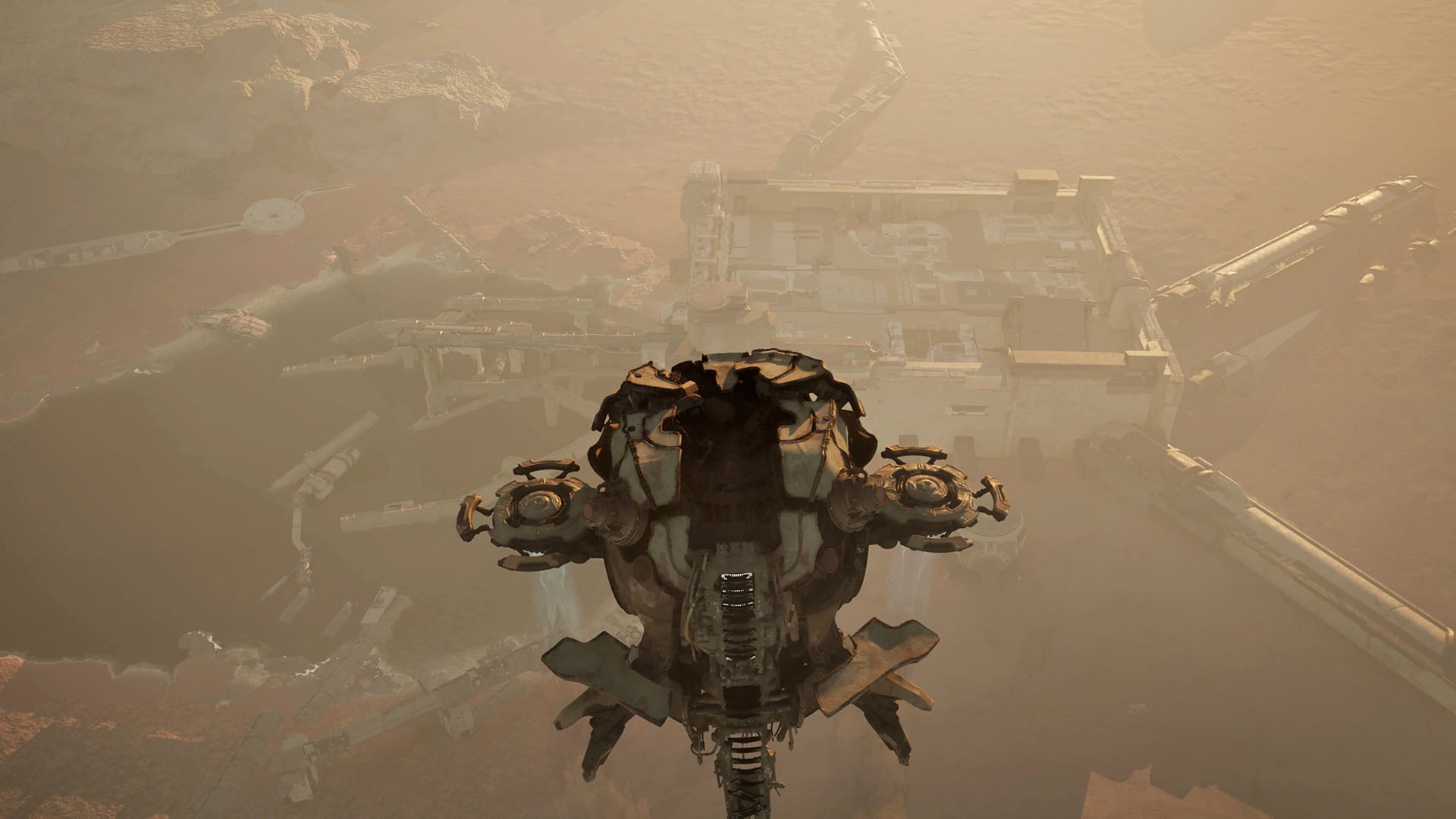
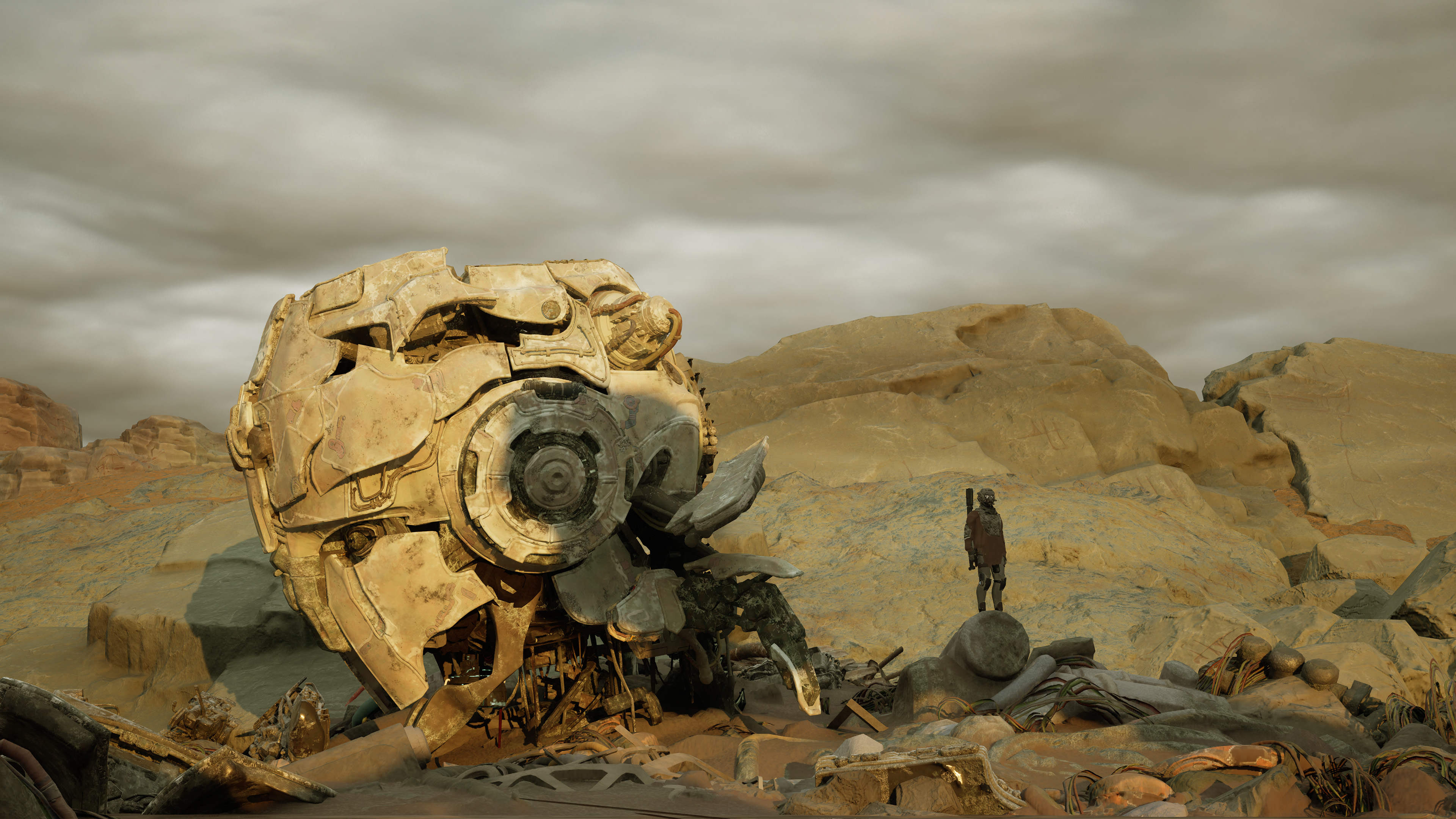
In gameplay footage, the central machine takes the form of a giant robot head that can fly freely across the world on its own. It can attach to the derelict bodies of other giant machines scattered on the surface, taking control of them and bringing them back to life. Key art published by the studio shows more than one of these head units lying detached in fields of machine wreckage, each a shell of segmented armour plates wrapped around a large circular core, with the player character standing nearby for scale.
The director has described the robot head as serving several roles for the player character rather than a single one. At times it acts as a means of transportation, much like a vehicle. At other times it serves as a navigator, or it becomes a functional tool. It is also framed as a partner, continuing the studio's history of building a bond between the player and a companion character.
To use the machine, the player onboards into the robot head, then moves to connect it to a robot torso or body. Joining head and body opens up new ways to navigate the world, whether by combat or through puzzle mechanics.
The relationship is meant to sit apart from the companion bonds in the director's earlier games. Ueda has said it is not the familiar arrangement of protecting a companion or being protected by one, and that it will not map one to one onto how players read those earlier pairings. How the bond lands is left to the player rather than steered.
Once joined to a body, the combined machine can achieve feats far beyond the human-scale character, such as lifting and swinging an enormous pillar. Footage also shows machine-against-machine combat, including tearing the head from a rival giant. The contrast between the small protagonist and the enormous machine is a core part of the experience.
Progression is tied to the machine as well: the player can tinker with and upgrade the robot head over the course of the journey. See Gameplay and Traversal and Exploration for how it is used.
The machine-against-machine footage is not the point of the game. Ueda has said the takeaway from the trailer should not be an all-out robot versus robot fight about who wins. He does not treat the robots as weapons so much as mechanical beings that simply exist in this world, and has pointed instead to the act of joining head and torso, the sense of weight and movement that follows, and the way their presence lets the player navigate and reshape the world. He has also said there is no equivalent here of the mixture of triumph and mourning that came with felling the giants in one of his earlier games.
The robot sits at the origin of the whole project. Ueda has said that wanting to build something around giant robots was the first idea, and that the machine was designed almost from the beginning. The science-fiction setting grew out of that starting point rather than the robot being fitted into a world that already existed.
He has described the seed of it as a single picture he could not shake: a robot with its head detached, carrying that head under its own arm. He knew he wanted the image in the game somehow, and the project grew outward from there.
Ueda has described the look of the machine as a deliberate middle ground. It is neither a polished hero robot nor a wreck that is falling apart, but something held in a neutral zone between the two. He has said his robots are grounded in the reality of the world rather than given the toy-like, playful quality common to much mecha media, so their weight and movement feel believable.
