

This article is a stub
It lacks sufficient information and needs to be expanded. You can help by adding more content.
Embers of the Uncrowned is an isometric dark fantasy MMORPG developed and published by NEXON. The game was officially announced on April 23, 2026, alongside a Steam store listing and a cinematic titled "An Elf". It is built around fast, skill-based combat, three distinct combat classes, a settlement-building progression layer, and cooperative endgame content including Domain Bosses and large-scale raids. A free playable demo is scheduled to run during Steam Next Fest from June 15 to June 22, 2026. See the Steam Next Fest Demo article for participation details and rewards.
Quick Facts
Field | Detail |
|---|---|
Title | Embers of the Uncrowned |
Developer | |
Publisher | |
Genre | Isometric dark fantasy MMORPG |
Perspective | Isometric |
Modes | Online PvP, Co-op |
Platform | |
Required OS | Windows 11 (64-bit) |
Anti-cheat | Kernel-level NGS |
Announcement | April 23, 2026 |
Demo | Steam Next Fest, June 15 to June 22, 2026 |
Full Release | To be announced |
Languages | English, Simplified Chinese, Russian, German, Spanish, Portuguese |
Premise
The game is set on a continent that has been ravaged by an elven invasion. Corrupted creatures plague the land, noble houses have fallen, and the surviving population has been pushed into ruin. The world is described as filled with hidden stories, tragic narratives, and cruel secrets, framing the setting as one where every region carries the weight of recent atrocity rather than ancient legend.
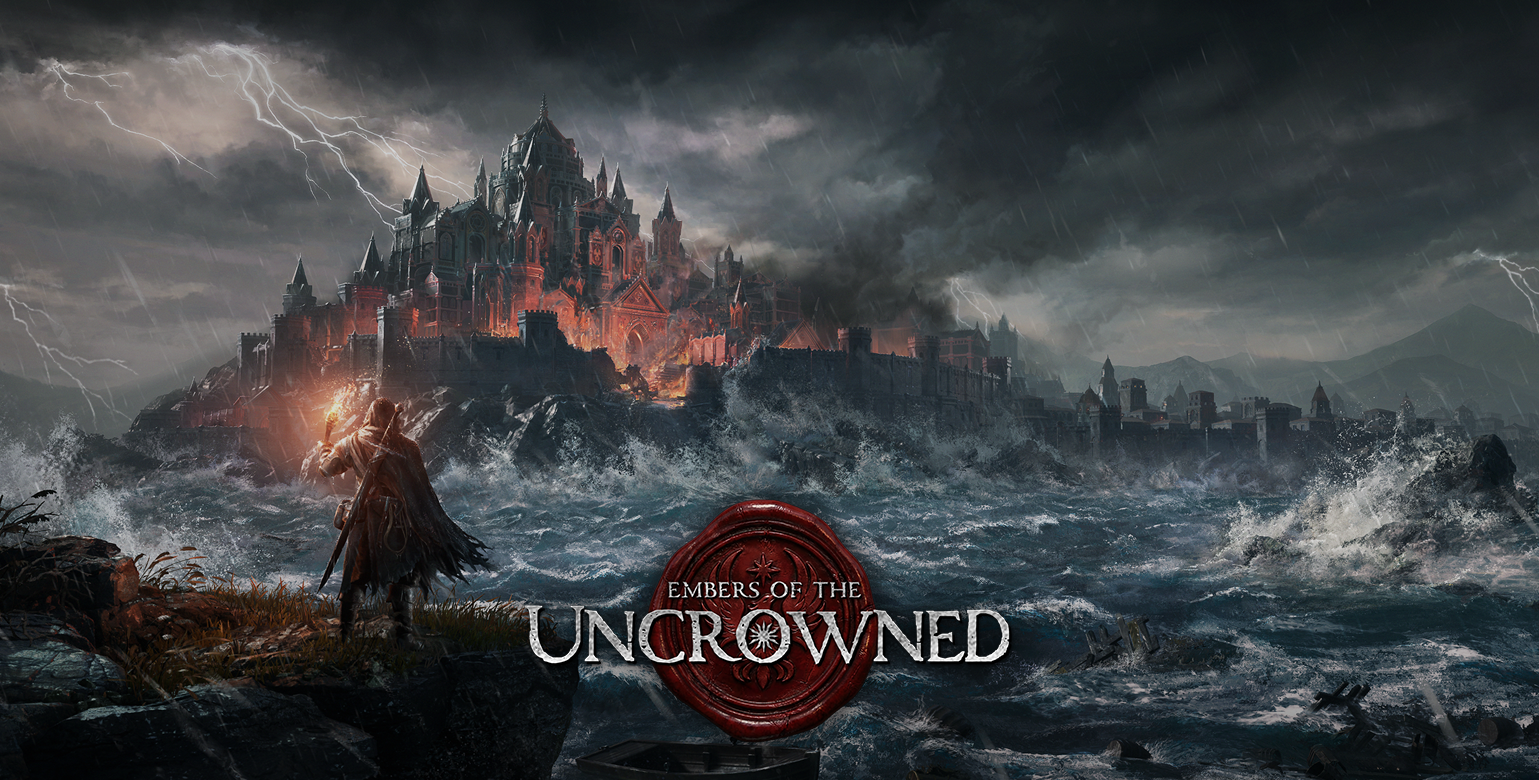
The player takes the role of the illegitimate heir of House Harborwell, a noble family devastated by the invasion. Cast out from the family seat, the protagonist spent years living as a mercenary before being drawn back to the homeland by circumstance and obligation. The central arc of the campaign concerns reclaiming the family's lost lands, rebuilding a base of power, and asserting the protagonist's place as the rightful lord of a house that no longer formally recognizes them.
The opening cinematic introduces the elven antagonist Bella, a silver-haired elf who slaughters a contingent of human knights using liquid silver tendrils that drain the blood from her victims. A phoenix signet ring is shown on her hand as she walks away from the carnage. The wider conflict against the elven invasion forms the backbone of the unfolding narrative.
Gameplay
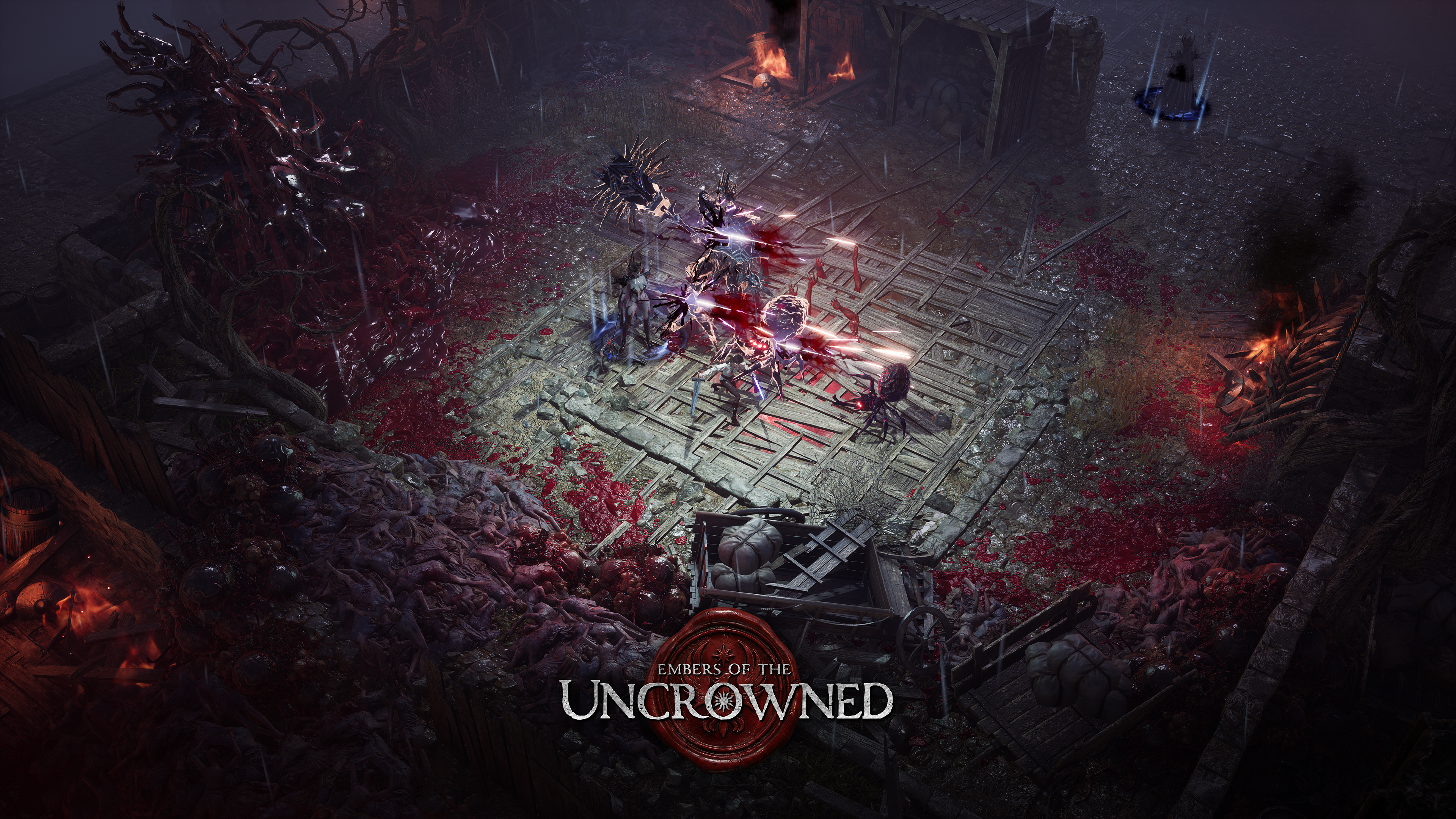
Embers of the Uncrowned is played from a fixed isometric camera and emphasizes fast, deliberate, skill-based action. Combat avoids tab-targeting in favor of direct positional play: attacks land based on aim and timing, and several mechanics push players to read enemy patterns rather than trade hits. Three systems anchor moment-to-moment encounters.
Spell Interruption
: dangerous boss skills can be broken when struck at the correct moment, rewarding players who learn enemy windups.
Stagger System
: building stagger on a target opens a limited window where the enemy is vulnerable to burst damage.
SP-based Evasion
: dodging lethal attacks consumes a finite SP resource, so positioning and movement decisions matter as much as raw reaction speed.
Outside of combat encounters, the gameplay loop weaves together character progression, base development, and group play. Players liberate territory, recruit companions who fight alongside them with synergy effects, take down Domain Bosses tied to specific regions, and group up for raids that the development team has positioned as endgame content requiring coordinated tactics.
Classes
Three playable classes have been confirmed at announcement, each with its own dedicated skill tree and identity. Class selection determines the protagonist's combat style, animations, and skill-gem loadout options.
Class | Style | Role |
|---|---|---|
Agile longsword melee | Swift, mobile swordsmanship focused on chained strikes | |
Two-handed great axe | Heavy, punishing single blows and burst damage | |
Wind and lightning magic | Ranged elemental control with mobility tools |
Detailed kit breakdowns, recommended skill paths, and class-specific rotations live on each class page.
Progression Systems
Character power growth is layered across several systems that operate in parallel rather than as a single linear track. The intent is to give players multiple knobs to turn whenever they want to make their character stronger.
Skill Gems
Skill gems are slotted into a class skill tree to modify, augment, or unlock combat abilities. They function as the primary build-defining choice, allowing two players of the same class to reach significantly different playstyles.
Gear Enhancement
Gear Enhancement is the equipment progression track. Weapons and armor can be upgraded over time, and the system is presented as the long-tail goal for players who want to push their character into the highest difficulty content.
Bloodline Awakening
Bloodline Awakening awakens the protagonist's ancient bloodline power, layering an additional progression dimension on top of class skills and gear. It is tied directly to the protagonist's identity as an heir of House Harborwell and the broader mystery of the family's lineage.
Settlement and Companions
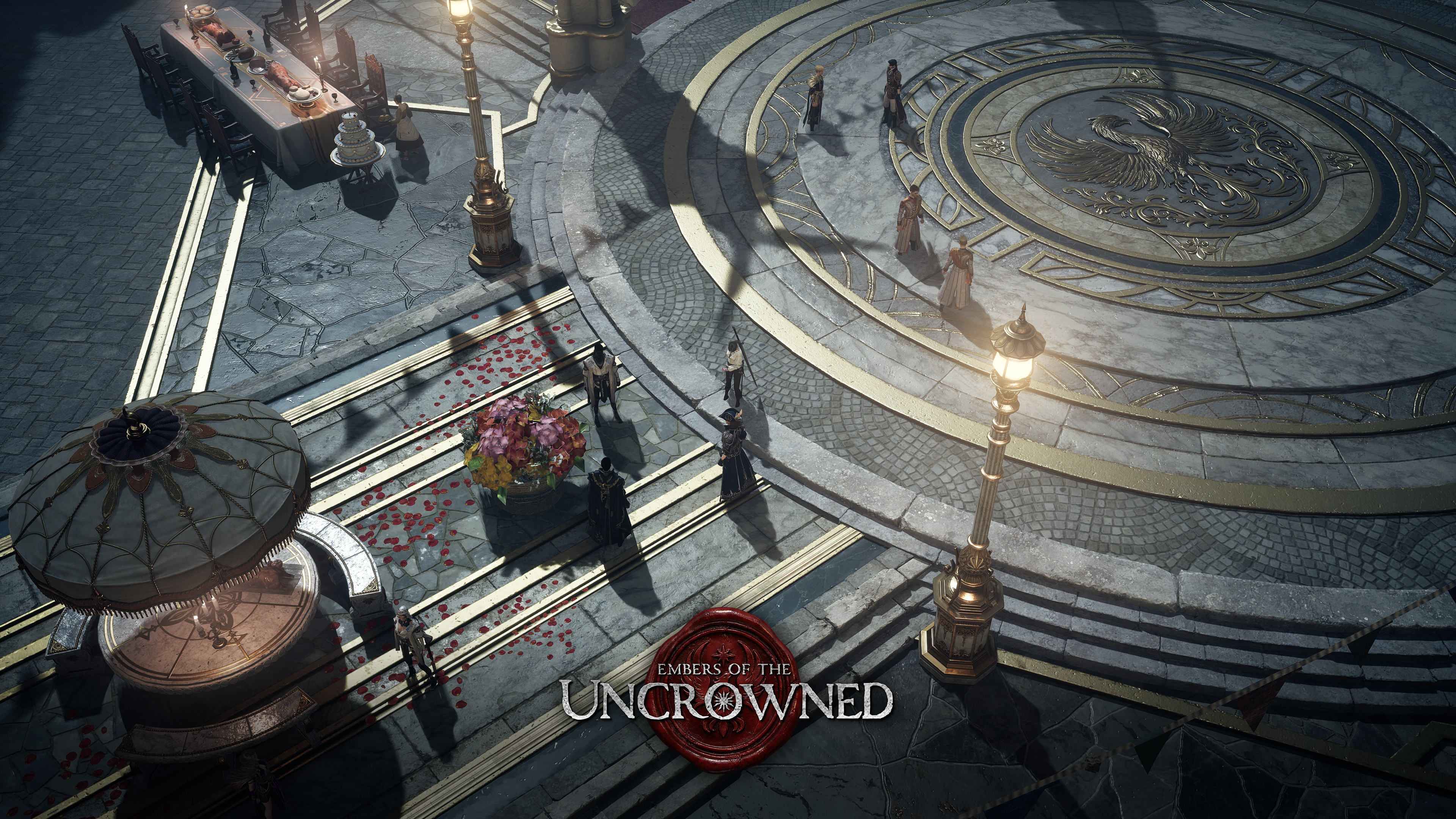
Settlement Building is a major non-combat pillar. The player begins with a modest camp and gradually develops it into a lively city as more land is reclaimed, more resources flow in, and more allies are recruited. Settlement progress is tied to the broader campaign of pushing back the invasion: clearing a region opens new construction options, and rebuilt infrastructure unlocks gameplay services.
Recruited companions join the player both in the world and in combat, with synergy effects that interact with the player's class and build choices. Companions are framed as loyal allies tied to the protagonist's cause rather than disposable mercenaries, making their recruitment a narrative as well as mechanical event.
Endgame and Cooperative Content
The endgame is built around two pillars of group play. Domain Bosses are large enemies tied to specific territories. Defeating them is required to fully liberate a region and unlocks further settlement growth in that area, so they sit at the intersection of progression and exploration.
Raids are the largest cooperative encounters in the game. The development team has described them as demanding perfect cooperation and flawless tactics, putting them in the same design space as the high-difficulty group content seen in other MMORPGs. Raids are positioned as a long-term goal for organized groups.
Character Customization
Character customization covers detailed face and body editing, with a costume system that allows mixing parts across outfits. Gender selection has been confirmed as a planned feature, though it will not be available in the initial Steam Next Fest demo build.
Visual Style and Tone
The game leans into a dark fantasy aesthetic with brutal, gory presentation. The reveal cinematic emphasizes visceral on-screen violence, and in-engine footage shown alongside the announcement carries the same weight: ruined villages, bloodstained snow, and oppressive lighting. The world's tone is closer to grim historical fantasy than high-magic spectacle, even though magic-using classes such as the Stormbringer exist alongside the melee combatants.
Demo and Release
A free, time-limited playable Steam Next Fest demo runs from June 15, 2026 to June 22, 2026. Participants receive in-game cosmetic rewards that will be granted at full launch. The demo build is the first hands-on opportunity for the public, and it is the development team's primary public-test milestone.
A full release date has not been announced. The Steam page lists Windows 11 (64-bit) as the required operating system and confirms support for online PvP and co-op. A console release has been mentioned as a possibility but is not confirmed. The full platforms and release article tracks any updates to release timing and platform availability.
System Requirements
The Steam page lists the following requirements at announcement. Anti-cheat is handled by NEXON's kernel-level NGS solution. The Steam page also discloses that the game uses AI-generated content in some visuals, marketing assets, and localization. See the dedicated system requirements article for ongoing updates.
Spec | Minimum | Recommended |
|---|---|---|
CPU | Intel Core i5-3570 / AMD FX-8350 | Intel Core i5-9600 / AMD Ryzen 5 2600X |
Memory | 8 GB RAM | 16 GB RAM |
GPU | GeForce GTX 1060 / Radeon RX 580 | GeForce RTX 2060 / Radeon RX 5700 XT |
Storage | 30 GB | 30 GB |
DirectX | Version 11 | Version 11 |
OS | Windows 11 (64-bit) | Windows 11 (64-bit) |
Monetization
NEXON has publicly committed to a non-pay-to-win model for Embers of the Uncrowned. All gear, progression items, and essential consumables are stated to be obtainable through gameplay rather than gated behind real-money purchases. Specific cash-shop policies, including whether the game will launch as a buy-to-play or free-to-play title, have not been finalized in public communications. The monetization article tracks these details as they are confirmed.
Development
The game is developed by an internal NEXON team formed specifically as a PC-focused division, separate from the publisher's mobile-game studios. The team has described itself as composed of hardcore MMORPG veterans and has been working on the project for several years prior to the public reveal. The development engine has not been publicly disclosed.
Where to Begin
New players preparing for the demo or tracking the game ahead of release should start with the Getting Started guide, then read the individual class pages to choose a starting archetype. The Combat page covers the moment-to-moment mechanics that the demo will show, while the progression-system pages explain the long-term build path that defines a fully developed character.