Loading...
Loading...
Seasonal Cycles
May 16, 2026 at 07:09 AM
Content update (2026-05-16): added 2 screenshots
Seasonal cycles are one of the load-bearing simulation systems in Witchbrook. The game runs a full four-season calendar across Mossport, and the city reshapes itself across the year in visible, mechanical, and social ways. Each season changes what resources are available, how the city looks and sounds, how NPCs dress and behave, and which festivals appear on the calendar. The academic year at Witchbrook College is layered on top of the seasonal calendar, so semester pacing and festival pacing reinforce each other.
Witchbrook's developers have publicly framed the city as living and breathing alongside the calendar. The passing of the seasons changes the city in many ways: different resources and jobs are available at different times, the city itself adapts, NPCs change their clothing and routines, and decorations across town shift to match the time of year. The day-night cycle stretches and contracts with the season, and the soundtrack uses seasonal variants for each track so the music drifts with the weather rather than cutting between fixed loops.
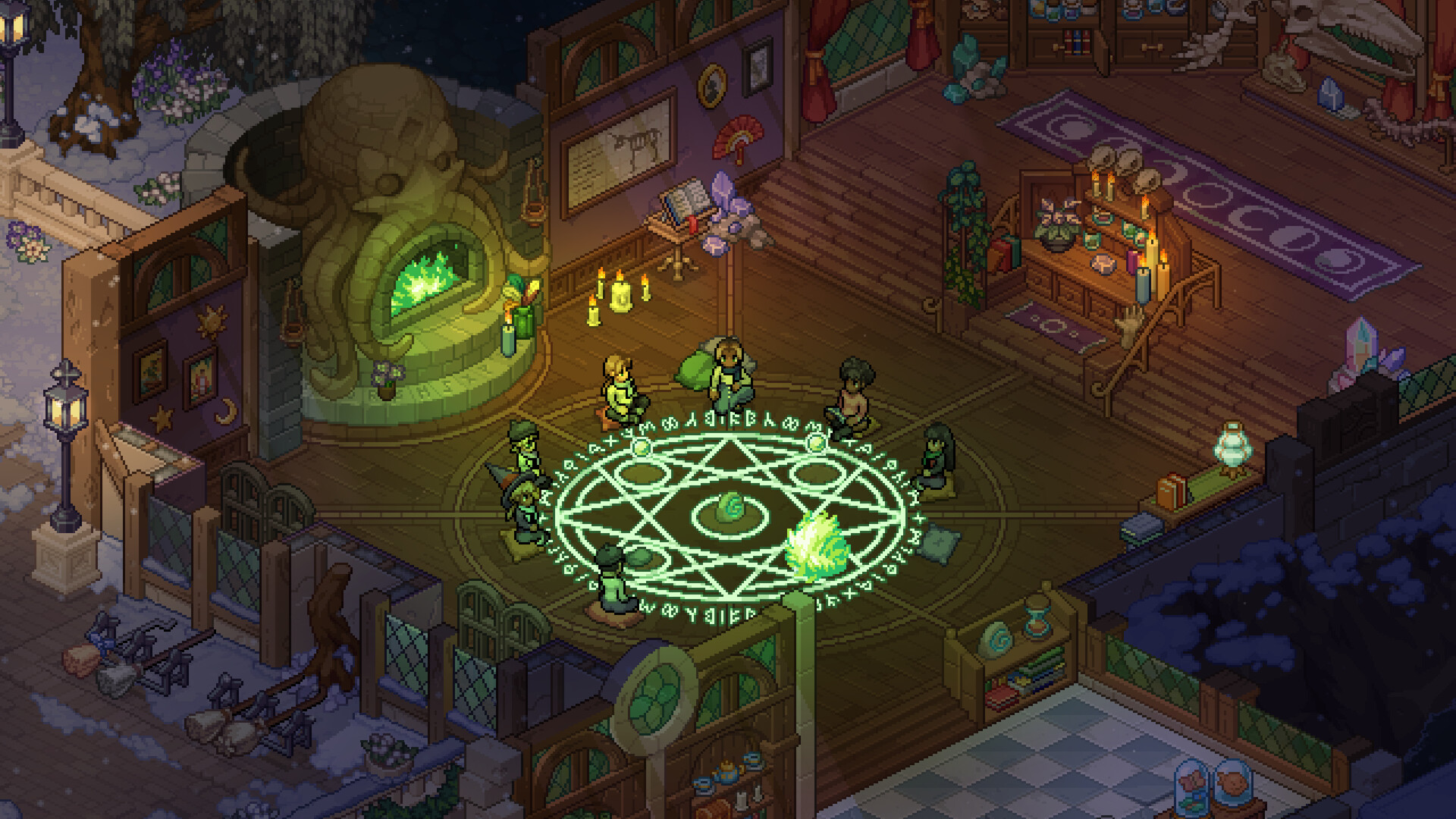
That seasonal layer is what gives Witchbrook a sense of forward motion. A player who plays through a full year sees the town transform around them, and the same locations look and feel different depending on when the player walks through. The seasonal layer also drives a lot of the romance and friendship loop indirectly, by giving covenmates and townsfolk a steady supply of shared experiences across the calendar.
The day-night cycle adjusts its length depending on the season. Long summer days give the player more usable daylight hours, and long winter nights compress the bright window into a shorter stretch. The studio has used that detail to anchor the seasonal feel: a winter morning in Mossport starts later and feels darker than a summer one, and the player's class and chore schedule reads against that shifting window of usable light.
Practically, that means the same daily routine produces a different mood depending on where the player is in the calendar. Walking to class on a long summer evening still feels bright; walking the same route in midwinter happens against fading light, street lamps wrapped in winter garlands, and shop windows already glowing with candy canes and baubles.
Season | City and Mechanics |
|---|---|
Spring | Mossport fills with flowers, planting picks up across gardens and the boardwalk planters, and the city builds toward the Tulip Festival as the seasonal centerpiece. |
Summer | Long days extend usable daylight hours, beach activity peaks at Parasol Sands and the harbour stays busy, with quieter scenic stretches captured in summer Oracle features. |
Autumn | Resources and jobs shift toward harvest and storage, the academic year reaches its middle stretch, and the soundtrack moves toward warmer, slower variants. |
Winter | Darker mornings and shorter days arrive with snow, festive lights are strung across porches, store windows fill with candy canes and baubles, bus stops gain large red bows, and nutcrackers and decorated trees appear throughout town. |
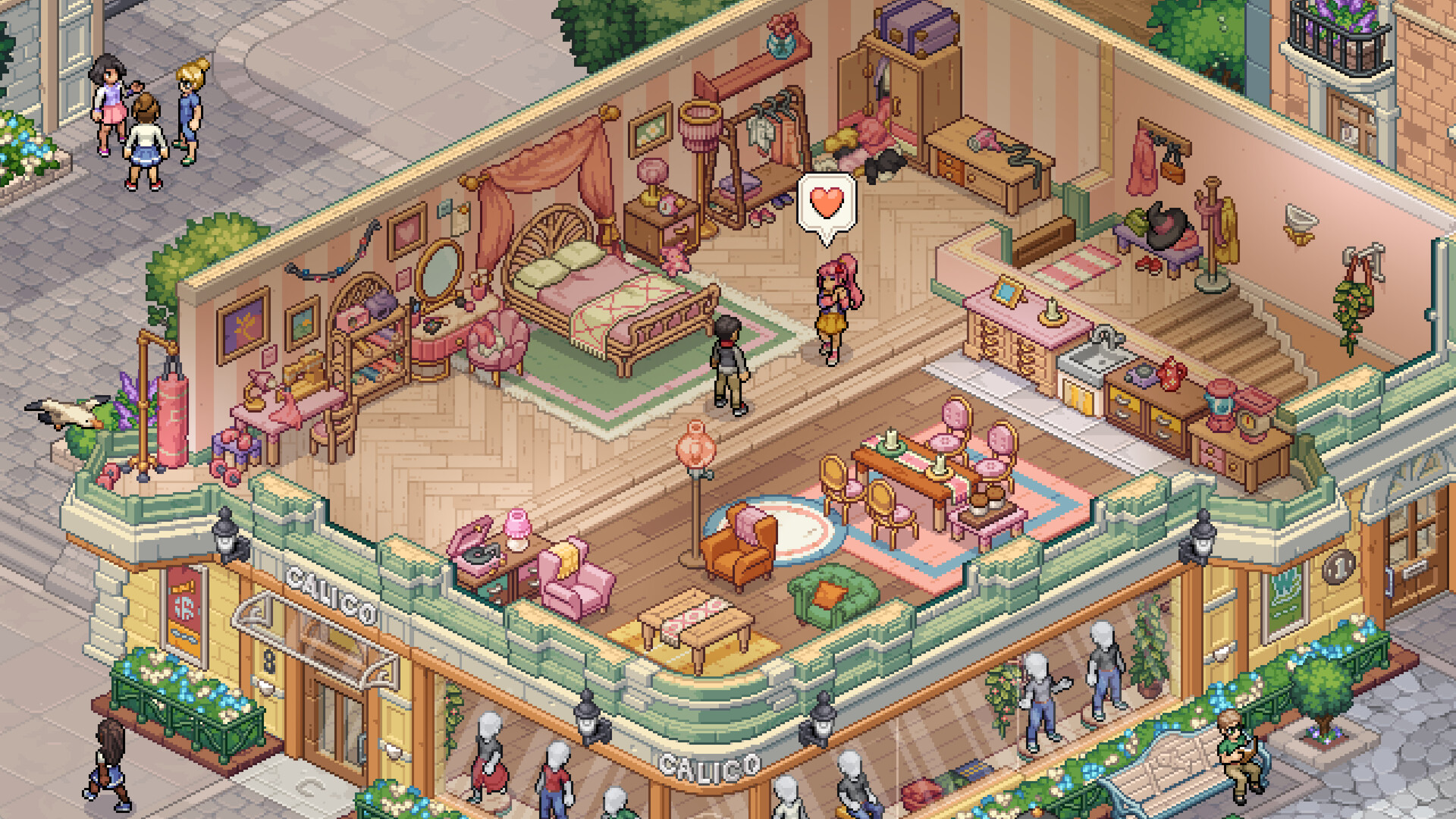
The Tulip Festival is the named spring centerpiece in the seasonal calendar. The studio has used spring to mark the city's gradual return to color: the streets and gardens fill with flowers over the course of the season, and the Tulip Festival lands as the headline event in that arc. Like other seasonal festivals, it slots into the broader town calendar and produces the kind of shared events that the romance system treats as natural relationship beats.
Winter is the most visually transformed season Chucklefish has shown so far. The team has published environment art covering the changes that arrive when winter lands: snow on the streets, festive decorations on residential porches, decorated store windows, garlands on lamp posts, and seasonal additions to the bus stops. Daily activities continue against that backdrop, including the same magical studies, crafting, foraging, and rituals that drive the rest of the year, so winter does not so much change what the player does as it changes the room around them while they do it.
Soundtrack work shifts in step. Composer David Fenn has written seasonal variants for each track, and the studio has flagged that the music adapts to context, including distinct versions for broom-riding and interior spaces, with seamless transitions rather than hard cuts.
NPCs adjust to the season alongside the city. The studio has called out wardrobe shifts like scarves in winter and umbrellas in the rain, and described NPCs changing their daily routines in response to weather and seasonal events. Festivals create scheduled gathering points across the calendar, and the broader NPC simulation runs both inside and outside the player's view so the city's routines persist whether the player watches them or not.
System | Seasonal Hook |
|---|---|
Different flora is available in different seasons, which feeds directly into the herbal teas, salves, and potions students brew. | |
Daytime tarot work shifts with the calendar, and the night sky used in constellation studies changes through the year. | |
Seasonal jobs and townsfolk problems rotate with the calendar, so the kinds of side errands available change as the year passes. | |
Seasonal festivals provide scheduled events that the romance system treats as natural relationship beats, with prom as the marquee end-of-arc event. | |
Semester structure and exam windows are timed against the seasonal calendar. |
Mossport covers the city itself in detail. Academic Year describes how semesters and exams sit on top of the seasonal calendar. NPC Simulation covers the underlying daily routines that drive how NPCs respond to the season.