

Exploration in Tianji: Shadow of the Ancients covers two layers: a painted overworld map and the towns, dungeons and grottoes reached from it. The published description gives climbing, swimming and environmental puzzles as the ways the player covers ground, and the announcement adds that these bring greater verticality and challenge to each area. A grappling hook is used to reach terrain ordinary movement cannot.
The Simplified Chinese and Japanese editions of the store description carry a line the English edition leaves out: that the game takes in some design concepts from action games. The English edition gives the traversal list and nothing more.
Encounters on the Field
Enemies are visible on the map rather than triggered at random, a model the Chinese materials name 明雷. The player decides whether to engage at all, and enemies far below the party's level can be cleared with a hit on the map without entering a battle, which keeps the pace up when moving through an area.
Striking an enemy first on the field grants the party the initiative going into the fight.
An ambush gives a large lead in the turn order and, by one account, starts every character with one point of the skill resource already banked. That account adds that an ambush does not require approaching from behind.
How the encounter is entered therefore decides part of the opening state of the battle. See Combat for what happens once it starts.
The World Map
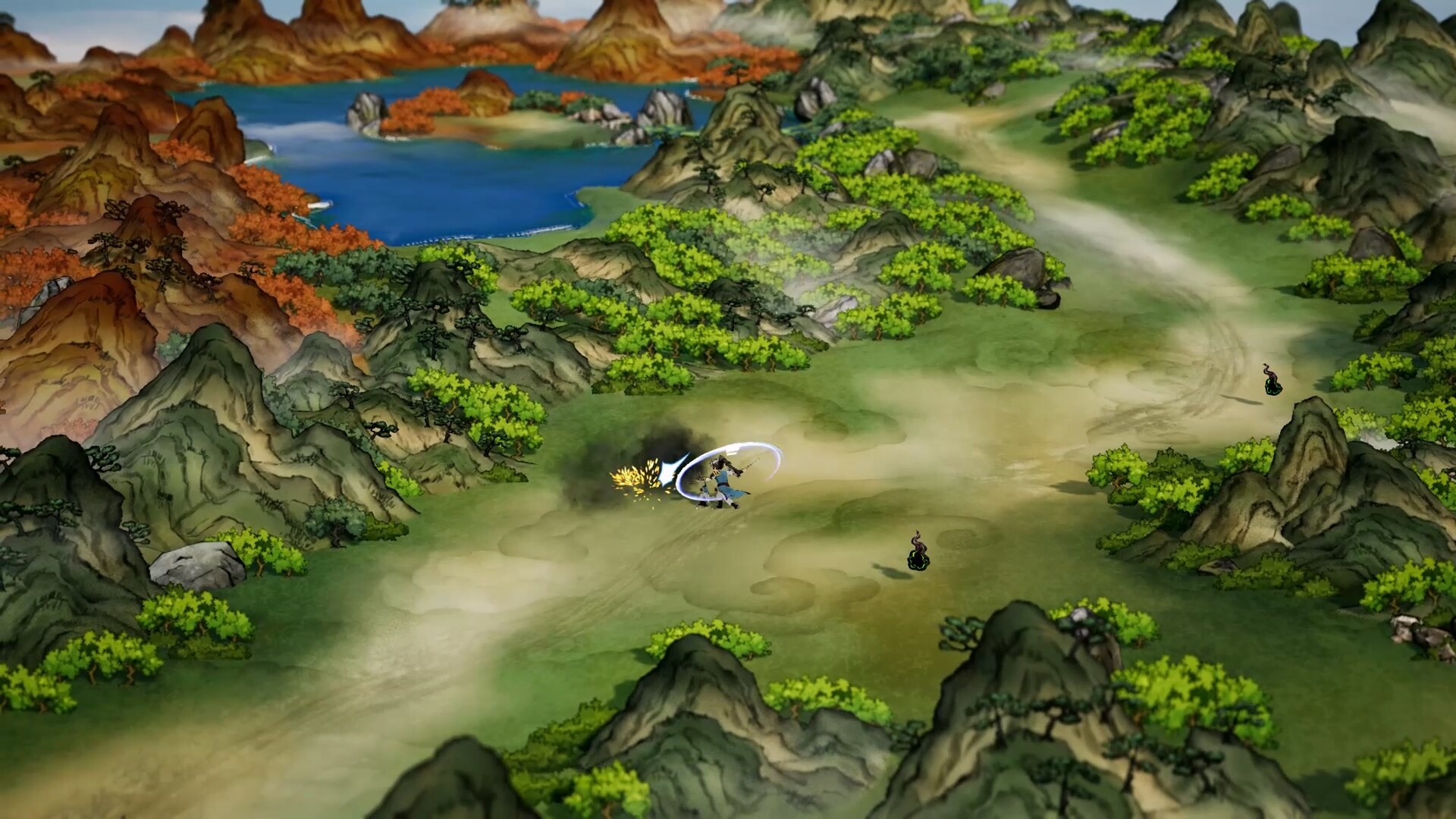
The overworld is drawn in the same landscape-painting style as the rest of the game, and published screenshots show shadowy enemy figures roaming across it. One hands-on account of the preview build describes those world-map enemies as appearing as black mist whose contents are not known until the fight starts, and as being easier than the enemies inside dungeons. The same account puts the weight of exploration on the world map rather than inside dungeons.
Dungeons
One hands-on account describes the dungeons in the preview build as largely linear, with sparse enemy placement and few branching routes, and with shortcuts available once opened. Dungeon enemies are shown in full on the field rather than as mist, and are close to unavoidable, functioning more like placed obstacles than like random encounters. This is a single account of one demo section and may not describe the finished game.
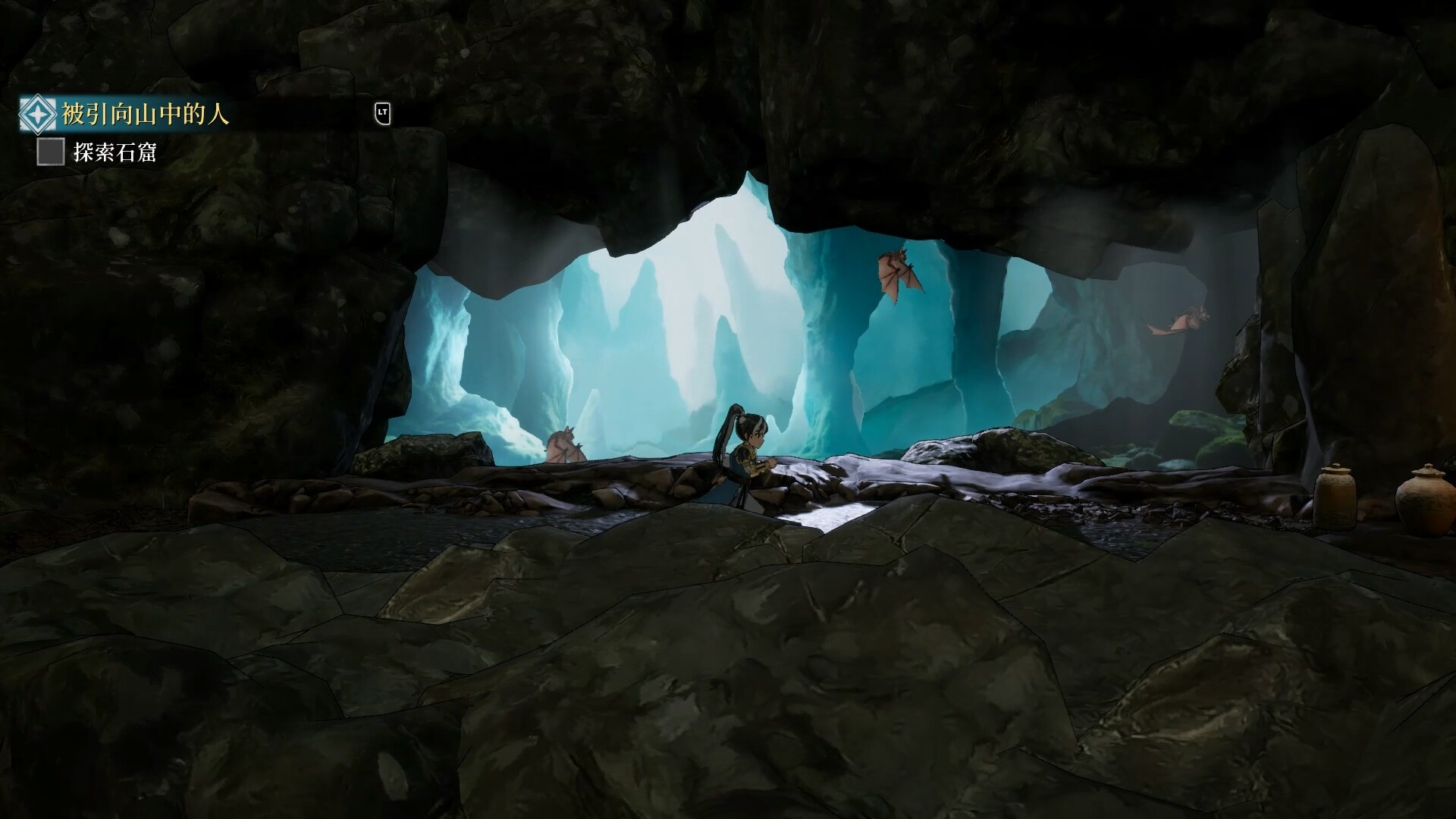
The one quest name that exists in public material comes from a grotto screenshot: a tracker reading 「被引向山中的人」 with the objective 「探索石窟」, to explore the grotto. No English name for that quest has been published.
Towns
Towns hold merchants, inns and NPCs, and are the layer where the day and night cycle applies. Which NPCs are present and which services are open changes with the time of day, and both hands-on accounts of the preview build reported that independently.
Side quests in the demo were largely fetch and search tasks that paid out experience and items. NPC dialogue changes between before and after a quest is accepted, so talking to the same person twice is not redundant.
Things to Find
Treasure chests are placed on the field for the player to find. Skill books are among the items that can be picked up while exploring, and they grant skill points on top of the ones earned by levelling. Companions gather their own uses out of the world as well: each has an out-of-combat skill covering cooking, refining equipment, upgrading Cores and trading in rare items.
Not Yet Published
As of 12 September 2026, four days after the reveal, no town, region or dungeon had a published proper name beyond Bashu and the unnamed millennium-old underground city, no map, fast-travel or waypoint system had been described, no collectible set had been named, and no item or equipment names existed anywhere in public material. The single known quest name above is the only one in the entire public corpus.