

TARAE: The Unbound is played from a top-down camera. The studio has been unusually specific about not wanting the game filed under hack-and-slash, and has said it pushed for the action RPG label instead and then aligned its boss design and its class combat styles to match. The reason given is a design priority: the studio wanted player control, timing and positioning to matter throughout, rather than having outcomes decided almost entirely by how well a build inflates its numbers. That framing runs through most of what has been shown.
Moment to Moment
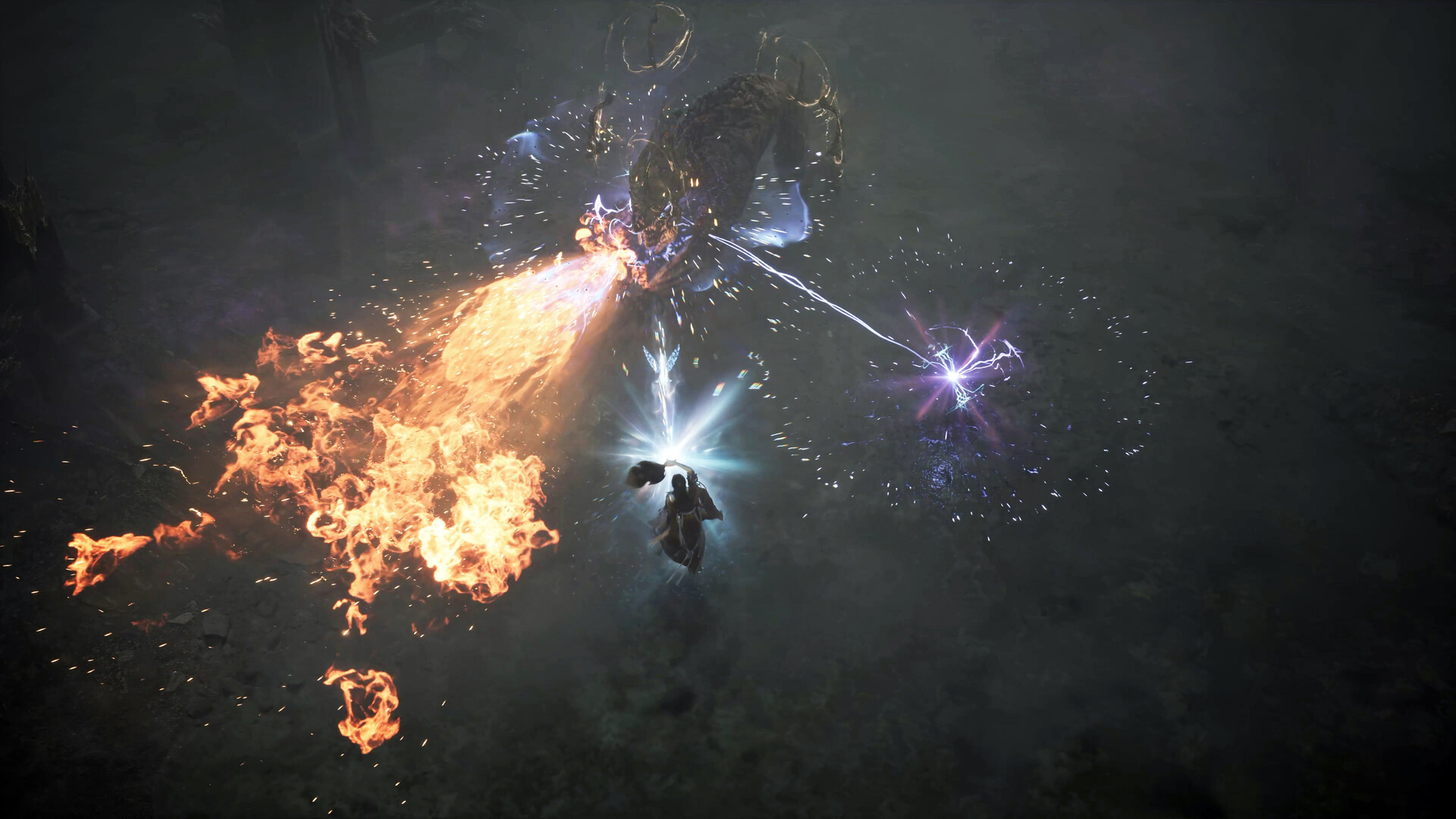
Two loops alternate. The first is crowd clearing, described in the published material as sweeping through battlefields packed with enemies using a wide arsenal of skills and chained attacks, with heavy emphasis on the physical feedback of each connecting hit. The second is the set-piece fight, where a single powerful enemy demands pattern reading, well-timed evasion and counterattacks. The published material stresses that the second loop is not a numbers check: bosses have their own attack patterns and their own battlefield mechanics, and every foe is meant to demand a different answer. Combat goes through the mechanics in detail.
Exploration sits between the two. Players travel across Taegwido and into the rifts that opened when the boundaries of the Six Realms broke, looking for the Sources that can restore the cycle of reincarnation. The environments are varied by design: quiet temples, ruined capitals, war-scarred country and phantom-haunted streets, each described as carrying its own character and its own story. Hands-on play added one concrete world interaction: altars and similar objects can be triggered, which spawns enemies that then drop items, so parts of the map hand out a fight-and-loot loop on top of whatever the story has sent the player there to do.
Campaign
The campaign is single-player. The studio has said this was a deliberate choice rather than a limitation, on the grounds that adding online play to a campaign usually forces compromises in presentation for synchronisation reasons, and that it preferred to keep the narrative delivery intact. The stated top priority is a heavy narrative with the feel of a traditional premium release, and the studio has said it wanted the story not to be crowded out by growth and farming.
A target length has been given, with an explicit caveat attached. The studio described a target playtime of roughly forty hours and immediately noted that development is ongoing and that it could not give a definitive answer. Treat that as an aim, not a specification.
Endgame
After the campaign, the emphasis shifts. The studio has described the endgame as the part of the game built around build-crafting, and said that deep build optimisation, farming and player trading are things it expects to happen mostly there rather than during the story. Full details of endgame content have not been published.
Two specific quality-of-life intentions were described. Players raising an additional character should not have to replay the single-player campaign in full to reach endgame content, with the design aiming to let a new character start from a certain level of growth. And item drops are expected to work differently in the two halves: during the campaign drops match the class being played, while in the endgame the direction described was to let players choose whether items drop for their own class or for other classes. See Builds and Progression.
Cooperative play belongs to this half of the game. The campaign is single-player by design, and online cooperative play was described as an endgame feature rather than something that runs alongside the story. There is also no conventional lobby: rather than a hub, the studio said the Seekers gather during story progression in places where they can be looked at. This page is the reference point for the endgame description on this wiki; the shorter summaries on Builds and Progression and Seekers follow it. Accurate as of 12 September 2026.
Multiplayer
Storefront listings for the game include multi-player, co-op and online co-op categories alongside single-player, so cooperative play exists in some form. The studio has described cooperative play as currently planned for four players, with a comment that it could be as many as five but that four is the expectation. That is a plan rather than a shipped feature, and the exact number should be treated as unsettled. Where it sits in the game has been described more firmly than how many people it holds: cooperative play was placed in the endgame, not in the campaign.
Competitive play is a different matter. The studio drew a firm line on it, saying that it considers player versus player difficult to make work in this genre and that it leans toward expanding the cooperative side instead. No competitive mode has been announced.
Business Model and Live Operations
The model described so far is buy-to-play, aligned with the plan for a simultaneous PC and console launch, and the studio has said that anything beyond that is still to be discussed with the publisher and that nothing is finalised. One commitment was stated plainly: the studio said it will not include monetisation that boosts stats or sells step-by-step stat increases. Operations were described as seasonal, so content can be refreshed term by term, with new characters planned as downloadable content and later episodes continuing the same way.
Presentation Options
Because the camera sits far back, the studio was asked how players are supposed to appreciate character detail it says it invested heavily in. The answer given was that zooming in and out and changing outfits are supported through the inventory and customisation menus, and that rather than building a separate lobby space, characters gather during story progression in places where their details can be looked at. Storefront feature tags also list adjustable difficulty, full controller support, save anytime and playable without timed input.
Not Yet Confirmed
Everything listed below is accurate as of 12 September 2026.
The exact co-op player count, and whether any part of the campaign can be played cooperatively. Coverage of the reveal briefings places cooperative play in the endgame, but no mode list has been published.
Any named endgame activity, difficulty tier, season structure or reward track.
How player trading works, and whether it is direct, auction-based or something else.
The final campaign length, and whether difficulty options change it.
Price, edition list and the final business model beyond the stated buy-to-play intent.
Whether there is offline play, cross-platform play or cross-progression.