
Loading...
Loading...
Anomaly Commissions
April 23, 2026 at 10:57 AM
Added horror vs combat commission split, High Risk Anomaly Fight tier ladder (43 through 88), commission initiation and area warnings, object anomalies and nullification, and multiplayer flag
Anomaly Commissions are the core mission type in Neverness to Everness. These commissions task players with investigating and resolving supernatural anomalies that threaten the city of Hethereau. They form the backbone of the game's PvE content, driving both the main storyline and the endgame loop. Every commission accepted through the Eibon Antique Shop provides a general idea of the location and nature of the anomaly the player will face, though the details often unfold in unexpected ways once the investigation begins.
The Eibon Antique Shop stays afloat financially by taking on Anomaly Commissions from the public. Citizens, businesses, and local organizations post requests whenever supernatural disturbances arise that the Bureau of Anomaly Control cannot prioritize or respond to quickly enough. The player character, Esper Zero, joins Eibon as its first unlicensed Anomaly Hunter, lending their unique abilities to help the shop clear its commission backlog.
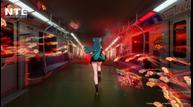
This setup provides the narrative frame for the entire mission structure. The player is not a government agent or a guild mercenary; they are an antique shop employee moonlighting as a supernatural problem-solver. The financial pressure on Eibon shapes which jobs the crew accepts and what risks they are willing to take, giving commissions a grounded, underdog quality even when the threats themselves are anything but small.
Each Anomaly Commission begins at the commission board inside the Eibon Antique Shop. The briefing provides a rough location, a description of the reported disturbance, and sometimes background on the client who submitted the request. From there, the player travels to the designated area in or around Hethereau to begin the investigation.
The structure of a commission typically follows three phases. First, the player gathers information at the scene, examining clues, speaking to witnesses, or tracking environmental disturbances. Second, the source of the anomaly is identified and the player must confront it directly. Third, the anomaly is resolved, either through combat or through a non-violent solution depending on the commission.
Not every commission plays out the same way. Some investigations focus heavily on tracking clues and following leads before any fighting begins. Others drop the player straight into the action from the moment they arrive. The variety keeps the commission loop from becoming repetitive, as the game treats anomalies less like generic mob encounters and more like self-contained stories. One commission might involve dealing with "Mysties" causing trouble at a local hot pot restaurant, while another might place the player inside a surreal maze that defies normal logic.
Some Anomaly Commissions culminate in a full boss fight against an Anomaly Boss. These bosses are among the most memorable encounters in the game, each bringing a unique fighting style, distinct mechanics, and a rich backstory that ties into the lore of Hethereau. The stories behind these bosses shed light on the city's complex history and the mysteries surrounding why anomalies manifest in the first place.
Understanding an Anomaly Boss's motivations and origins is part of the commission experience. The narrative details provided during the investigation phase offer context for who or what the boss once was and what drove them to become an anomaly. This design choice turns boss encounters into something more than a gear check; they become a payoff for the detective work that preceded them.
Defeating certain Anomaly Commission Bosses can reward players with unique Arcs (weapons) that cannot be obtained through other means. These boss-exclusive drops make commission bosses a valuable target for players looking to expand their arsenal beyond what the gacha system and standard progression provide.
Anomaly Commissions exist alongside several related commission systems. While they share the same general framework of accepting a job, investigating, and resolving, each type serves a different purpose and targets a different tier of player readiness.
Type | Description |
|---|---|
Standard Anomaly Commissions | The core missions available through the Eibon commission board. These range in difficulty from straightforward investigations to encounters with full Anomaly Bosses. Some are purely combat-focused, while others are non-violent puzzles that require observation and problem-solving. |
A more challenging variant with significantly tougher enemies and greater rewards. High-Risk Commissions test a player's combat readiness, team composition, and mastery of mechanics like parrying, stagger management, and Esper cycle rotations. These commissions are part of the endgame content loop. | |
A separate system focused on city-based tasks rather than anomaly hunting. City Commissions involve civic duties and community requests across Hethereau's districts. They contribute to City Tycoon progression alongside Anomaly Commissions. |
In addition to these commission types, the endgame introduces further challenge modes such as Circle Bounty, Anomaly Dungeons, and the Pink Paws Heist, each offering distinct encounters and reward structures for experienced players.
Completing Anomaly Commissions yields standard rewards including experience points, currency, and materials used for character and equipment upgrades. The rewards scale with commission difficulty, making higher-tier commissions worth the additional effort and preparation they demand.
More importantly, completing commissions contributes directly to City Tycoon progression. City Tycoon is Hethereau's overarching advancement system that unlocks new facilities, businesses, and quality-of-life improvements across the city as the player levels it up. Meeting specific requirements such as finishing a certain number of commissions or acquiring particular resources raises the player's City Tycoon level, which in turn grants access to features like the garage, the ability to own property, and the Hunter Exchange. Some characters are also gated behind City Tycoon milestones.
The combat system's depth ensures that commissions remain engaging even when replayed. Players field a party of up to four characters, each equipped with Arcs and Consoles, and belonging to a specific Esper element. Chaining Esper abilities between characters generates powerful elemental reactions through the Esper Cycle, and learning to exploit these reactions is central to clearing tougher commissions efficiently.
Boss commissions in particular reward players who learn attack patterns and optimize their team rotations. Parrying, stagger management, and well-timed character swaps separate a smooth commission clear from a drawn-out struggle. This mechanical depth gives the commission loop its staying power at endgame, where faster and cleaner clears become a goal in their own right.
Tip | Details |
|---|---|
Read the commission briefing carefully. The description often hints at whether the encounter will be combat-heavy or puzzle-oriented, allowing you to prepare accordingly. | -- |
Pay attention to the backstory of Anomaly Bosses during investigation phases. Understanding their lore can reveal weaknesses or telegraph specific attack patterns. | -- |
Build a versatile roster of characters with varied Esper elements. Some commissions feature enemies with specific elemental vulnerabilities, and having the right team composition makes a noticeable difference. | -- |
Do not skip commissions even if the rewards seem modest. The City Tycoon experience they provide accumulates over time and unlocks features that benefit all areas of gameplay. | -- |
Once you are comfortable with standard commissions, push into High-Risk Commissions for better loot and greater challenges. They are the natural next step before tackling the endgame's toughest content. | -- |
A portion of Anomaly Commissions lean directly into horror rather than combat. These are cases where the threat is atmospheric and psychological rather than a brawl, and they push the player through a dread-heavy investigation instead of a fight loop. The current beta has pushed horror further than the previous test build, with the Nullification process for some cases involving long stretches of tension, environmental puzzles, and stalker-style pursuers rather than traditional Anomaly Bosses.
The The Hospital, sometimes referenced in-lore as the Nameless Hospital, is a flagship example of this style. The setting is a shuttered medical facility whose records describe an outbreak of anomalous infection: patients admitted with unexplained itching and scratch wounds, compulsive bandaging, extreme sensitivity to light and sound, and behavior that staff could not distinguish between psychiatric disorder and anomaly influence. Commission notes trace the outbreak through a patient coded A&05, the transfer of caregivers to observation wards, the isolation of the infected, and a hospital-wide emergency alert. The atmosphere is deliberately oppressive, and horror-focused commissions like this one function more as survival investigations than combat encounters.
When the player enters a designated horror-focused commission area, the game displays a warning popup stating that the content contains mild horror elements. This prompt is the clearest in-game signal that a commission has been flagged as a horror case rather than a standard combat case.
The other major branch of Anomaly Commissions is combat-focused. These plays run closer to open-world boss duels and culminate in a direct fight, rather than an extended investigation. Within this branch, High Risk Anomaly Fights form a ladder of progressively harder overworld boss encounters. Each rung raises the enemy level and layers extra mechanics on top of the base fight, so clearing the higher tiers requires both better gear and sharper play than the lower ones. Enemies for these fights can be located and tracked directly from the map menu, which makes them easy to queue up once a player has completed the core mission critical path.
The confirmed High Risk Anomaly Fight tiers are listed below.
Tier | Boss Level | Notes |
|---|---|---|
I | 43 | Entry rung of the High-Risk Commissions ladder. Introduces the base fight before extra mechanics stack on at higher tiers. |
II | 53 | Raises enemy level and layers on an additional mechanic over the Tier I baseline. |
III | 63 | Mid ladder. Further enemy-level bump with another mechanic stacked on, increasing the pressure on team rotations and defensive timing. |
IV | 73 | Upper-mid tier. Tests mastery of combat fundamentals such as parrying, stagger, and Esper cycle reactions. |
V | 83 | Late-ladder challenge. Adds another mechanical wrinkle on top of the compounding stack from earlier tiers. |
VI | 88 | Current ceiling of the ladder. Highest enemy level and the broadest mechanic stack, intended as an overworld difficulty capstone. |
Because the tiers are progressive, the intended path is to climb them in order. Clearing a lower tier typically signals that the player has the gear and mechanical comfort to take the next one, and each step tends to expose weaknesses in team composition that the previous step did not.
A commission does not always begin at the Eibon Antique Shop commission board. Many are triggered by stumbling into an in-world client, and the initiation cue is often a small, easily missed encounter rather than a formal quest hand-off. For horror cases like the Nameless Hospital, the trigger is finding a man muttering at a wall in an otherwise empty stairwell of the hospital site. Approaching and speaking with a figure like this is what flips the area into an active commission instance for the player.
Once an area is designated as an active commission zone, a static-style warning popup confirms entry. For horror-flagged cases this is the same prompt noting that the content contains mild horror elements. The popup acts as both a content notice and a mechanical cue: from that moment forward, commission-specific rules apply to the zone, anomaly-tied doors and elevators behave as the scenario requires, and the normal overworld fade between rooms is replaced with the case's own logic.
Not every commission comes from a person. Everyday objects in Hethereau can also become the source of a case. An elevator, for example, can turn into an object anomaly through a malfunction that reroutes the cabin to anomalous realms instead of its intended floors. Cases like this present as ordinary building infrastructure on the surface, but anyone who rides the fixture is pulled somewhere that should not exist, which is why citizens flag them for anomaly hunters.
Object anomalies can self-resolve. If the affected object is simply avoided long enough, its anomalous state nullifies on its own. The elevator example nullifies after roughly a year of residents using the stairs instead of the cabin. In practice, waiting out an object anomaly is rarely the preferred outcome: the object is still unusable throughout that period, and citizens typically ask an anomaly hunter from the Eibon Antique Shop to resolve the issue actively rather than lose the fixture for that long. Resolving an object anomaly manually therefore follows the standard commission flow, with the investigation centered on the anomaly object itself rather than on a person or creature.
Some Anomaly Commissions are multiplayer-capable. When a case supports co-op, the commission menu flags it as multiplayer-capable on the entry panel, and the player can either queue it with other hunters or still take it on solo. The The Hospital is an example of a case with the multiplayer flag present in the commission menu, even though it can be cleared alone.
The multiplayer flag does not change what the commission is about. A horror case stays a horror case and a combat case stays a combat case whether the party is one Appraiser or a full group. What it does change is who is available to help carry the investigation phase, who can cover flanks during the final confrontation, and how the atmosphere lands. Horror-focused commissions in particular often feel very different with another player present, though the scripted pressure, stalker entities, and area warnings still trigger the same way.